


 Home
Home
Cosmos3, First Fully Open-Source Multimodal Physical AI Model, Debuts; NVIDIA Co-Founds Cosmos Alliance
Significant progress has been made in physical artificial intelligence. On June 1, NVIDIA officially launched Cosmos3, an open-world foundational large model for physical AI. As the first fully open-source and multimodal physical AI large model in the world, it uses an innovative hybrid Transformer architecture that combines visual reasoning, world generation, and action prediction into a single system. This could dramatically shorten the physical AI training and evaluation cycle from months to just days.
Cosmos3 offers a fresh solution to the long-standing industry challenge of "difficulty generalizing in real-world scenarios with limited data and fragmented simulation frameworks." The model was trained on a massive physical AI dataset containing billions of text, images, videos, audio, and motion trajectories. It can naturally understand and generate cross-modal content, achieving industry-leading accuracy in physical simulation.
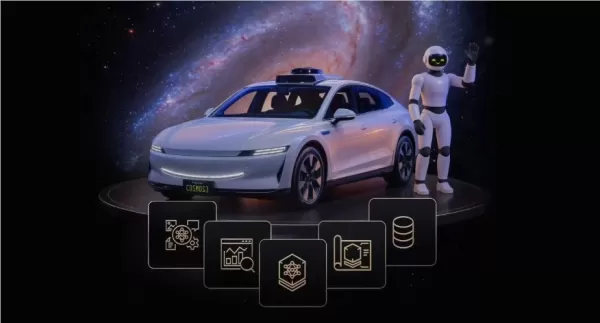
On the technical side, Cosmos3 innovatively combines a reasoning Transformer with a generative Transformer. The model first deeply analyzes object interaction rules, motion states, and spatiotemporal relationships, then accurately generates video and predicts action trajectories. This design gives it strong multimodal understanding of images and text, the ability to simulate and predict physical environments, and action strategy capabilities to help robots complete specific tasks. In several mainstream physical AI benchmarks, including Artificial Analysis, Physics-IQ, and RoboLab, Cosmos3 ranks among the top open-source models.
To accommodate different development stages, NVIDIA has released multiple versions: Cosmos3Super, focused on secondary training of robot and autonomous driving models with extreme precision, and Cosmos3Nano, which can perform high-quality video parsing and action reasoning in seconds. Both are now officially available. The Cosmos3Edge version, designed for real-time inference on edge devices, is also on the release roadmap.
Alongside the large model launch, NVIDIA co-founded the "NVIDIA Cosmos Coalition" with leading world model research teams and AI developers worldwide, including Agile Robots, Black Forest Labs, Generalist, LTX, Runway, and Skild AI. NVIDIA founder and CEO Jensen Huang stated that with continuous breakthroughs in multimodal reasoning and world models, the transformative era of physical AI has arrived. The release of these cutting-edge open-source models will help developers around the world achieve technological leaps and create the next generation of intelligent systems capable of perceiving, reasoning, and acting in the real world.
Related article
 DeepMind CEO Hassabis: I sleep six hours a day, usually feel energetic around 1 a.m.
Fortune recently featured an interview with Demis Hassabis, CEO of Google DeepMind, revealing his unconventional approach to rest and productivity. Hassabis disclosed that he sleeps very little, structuring his waking hours into two distinct work blo
OpenAI, Anthropic Vie for Market Share Despite Revenue Shortfalls
Despite recent reports suggesting OpenAI missed revenue targets, creating pressure on tech stocks this Tuesday, private AI lab investors remain resilient. Seasoned backers have confirmed they will not reduce investment despite negative media coverage
California AV Compliance: A New Era of Tickets, Geofences, and 1M Miles
Guident operates an AuveTech shuttle in South Florida, managing a four-mile route in West Palm Beach and a one-mile route in Boca Raton using its remote monitoring technology. | Credit: GuidentCalifornia is redefining the regulatory landscape for dri
Related Special Topic Recommendations
chatbot
DeepMind CEO Hassabis: I sleep six hours a day, usually feel energetic around 1 a.m.
Fortune recently featured an interview with Demis Hassabis, CEO of Google DeepMind, revealing his unconventional approach to rest and productivity. Hassabis disclosed that he sleeps very little, structuring his waking hours into two distinct work blo
OpenAI, Anthropic Vie for Market Share Despite Revenue Shortfalls
Despite recent reports suggesting OpenAI missed revenue targets, creating pressure on tech stocks this Tuesday, private AI lab investors remain resilient. Seasoned backers have confirmed they will not reduce investment despite negative media coverage
California AV Compliance: A New Era of Tickets, Geofences, and 1M Miles
Guident operates an AuveTech shuttle in South Florida, managing a four-mile route in West Palm Beach and a one-mile route in Boca Raton using its remote monitoring technology. | Credit: GuidentCalifornia is redefining the regulatory landscape for dri
Related Special Topic Recommendations
chatbot
 Best AI Roleplay Chat Apps for Language Practice, Interview Prep, and Daily Fluency
2026 Latest Best Top-rated AI Roleplay Chat Apps for Language Practice, Interview Prep, and Daily Fluency! XIX.AI curates a powerful game-changing collection that offers free vs paid comparison, real-world tests, and updated rankings weekly. These must-try tools help you boost writing skills, overcome fluency challenges, and improve communication efficiency across all daily scenarios. Explore now to discover your perfect tool for language growth!
 10 tools
 xix.ai
Music composition
AI Stem Separation Tools for Remix Production, Sampling Prep, and Karaoke Masters
xix.ai
Music composition
AI Stem Separation Tools for Remix Production, Sampling Prep, and Karaoke Masters
2026 Latest Best Top-rated AI Stem Separation Tools Curated for Remix Production, Sampling Prep, and Karaoke Masters. These powerful game-changing tools offer real-world tests to deliver precise audio isolation, boosting productivity significantly. XIX.AI provides a weekly updated free vs paid comparison guide to help you find the must-try solution that suits your needs. Explore now to unlock your AI edge.
8 tools
xix.ai
Data Analysis
AI SQL Copilots for Revenue Dashboards, Funnel Analysis, and Product Metrics
2026 Latest Best AI SQL Copilots Ranked Top-Rated! XIX.AI curates a powerful game-changing collection for weekly updated real-world tests. These must-try tools help you generate accurate revenue dashboards, analyze sales funnels, and track product metrics swiftly, boosting productivity massively. Explore now to Discover your perfect tool for data-driven decision making! 238 characters
9 tools
xix.ai
Music composition
Best AI Melody Writing Tools for Song Drafts
2026 Latest Best Top-Rated AI Melody Writing Tools for Song Drafts! XIX.AI has curated a highly powerful game-changing collection that goes through rigorous real-world tests to deliver the best writing experience. You can find detailed free vs paid comparisons, accurate rankings, and must-try options designed to help you create stunning song drafts effortlessly and boost your creative productivity significantly. Explore now to discover your perfect tool!
8 tools
xix.ai
chatbot
Best AI Conversation Trainer Tools for Interview Practice
2026 Latest Best Top-rated AI Conversation Trainer Tools for Interview Practice are here on XIX.AI! This curated collection features powerful, game-changing tools that go through rigorous real-world tests to deliver accurate feedback. You’ll find a free vs paid comparison and detailed rankings to help you choose the must-try option that boosts your confidence and skills. Explore now to Discover your perfect tool for interview success!
12 tools
xix.ai
Design & Art
Best AI Style Transfer Tools for Creative Experiments
2026 Latest Best Top-rated AI Style Transfer Tools for Creative Experiments! XIX.AI has curated a powerful, game-changing collection of must-try tools that deliver exceptional results through real-world tests and rigorous rankings. These top solutions help creatives boost productivity significantly by accelerating content creation and unlocking endless creative possibilities. Explore now to discover your perfect tool and start creating today!
9 tools
xix.ai

 Comments (0)
0/500
Comments (0)
0/500
Significant progress has been made in physical artificial intelligence. On June 1, NVIDIA officially launched Cosmos3, an open-world foundational large model for physical AI. As the first fully open-source and multimodal physical AI large model in the world, it uses an innovative hybrid Transformer architecture that combines visual reasoning, world generation, and action prediction into a single system. This could dramatically shorten the physical AI training and evaluation cycle from months to just days.
Cosmos3 offers a fresh solution to the long-standing industry challenge of "difficulty generalizing in real-world scenarios with limited data and fragmented simulation frameworks." The model was trained on a massive physical AI dataset containing billions of text, images, videos, audio, and motion trajectories. It can naturally understand and generate cross-modal content, achieving industry-leading accuracy in physical simulation.
On the technical side, Cosmos3 innovatively combines a reasoning Transformer with a generative Transformer. The model first deeply analyzes object interaction rules, motion states, and spatiotemporal relationships, then accurately generates video and predicts action trajectories. This design gives it strong multimodal understanding of images and text, the ability to simulate and predict physical environments, and action strategy capabilities to help robots complete specific tasks. In several mainstream physical AI benchmarks, including Artificial Analysis, Physics-IQ, and RoboLab, Cosmos3 ranks among the top open-source models.
To accommodate different development stages, NVIDIA has released multiple versions: Cosmos3Super, focused on secondary training of robot and autonomous driving models with extreme precision, and Cosmos3Nano, which can perform high-quality video parsing and action reasoning in seconds. Both are now officially available. The Cosmos3Edge version, designed for real-time inference on edge devices, is also on the release roadmap.
Alongside the large model launch, NVIDIA co-founded the "NVIDIA Cosmos Coalition" with leading world model research teams and AI developers worldwide, including Agile Robots, Black Forest Labs, Generalist, LTX, Runway, and Skild AI. NVIDIA founder and CEO Jensen Huang stated that with continuous breakthroughs in multimodal reasoning and world models, the transformative era of physical AI has arrived. The release of these cutting-edge open-source models will help developers around the world achieve technological leaps and create the next generation of intelligent systems capable of perceiving, reasoning, and acting in the real world.








 DeepMind CEO Hassabis: I sleep six hours a day, usually feel energetic around 1 a.m.
Fortune recently featured an interview with Demis Hassabis, CEO of Google DeepMind, revealing his unconventional approach to rest and productivity. Hassabis disclosed that he sleeps very little, structuring his waking hours into two distinct work blo
DeepMind CEO Hassabis: I sleep six hours a day, usually feel energetic around 1 a.m.
Fortune recently featured an interview with Demis Hassabis, CEO of Google DeepMind, revealing his unconventional approach to rest and productivity. Hassabis disclosed that he sleeps very little, structuring his waking hours into two distinct work blo
 OpenAI, Anthropic Vie for Market Share Despite Revenue Shortfalls
Despite recent reports suggesting OpenAI missed revenue targets, creating pressure on tech stocks this Tuesday, private AI lab investors remain resilient. Seasoned backers have confirmed they will not reduce investment despite negative media coverage
California AV Compliance: A New Era of Tickets, Geofences, and 1M Miles
Guident operates an AuveTech shuttle in South Florida, managing a four-mile route in West Palm Beach and a one-mile route in Boca Raton using its remote monitoring technology. | Credit: GuidentCalifornia is redefining the regulatory landscape for dri
OpenAI, Anthropic Vie for Market Share Despite Revenue Shortfalls
Despite recent reports suggesting OpenAI missed revenue targets, creating pressure on tech stocks this Tuesday, private AI lab investors remain resilient. Seasoned backers have confirmed they will not reduce investment despite negative media coverage
California AV Compliance: A New Era of Tickets, Geofences, and 1M Miles
Guident operates an AuveTech shuttle in South Florida, managing a four-mile route in West Palm Beach and a one-mile route in Boca Raton using its remote monitoring technology. | Credit: GuidentCalifornia is redefining the regulatory landscape for dri

2026 Latest Best Top-rated AI Roleplay Chat Apps for Language Practice, Interview Prep, and Daily Fluency! XIX.AI curates a powerful game-changing collection that offers free vs paid comparison, real-world tests, and updated rankings weekly. These must-try tools help you boost writing skills, overcome fluency challenges, and improve communication efficiency across all daily scenarios. Explore now to discover your perfect tool for language growth!
10 tools
xix.ai
2026 Latest Best Top-rated AI Stem Separation Tools Curated for Remix Production, Sampling Prep, and Karaoke Masters. These powerful game-changing tools offer real-world tests to deliver precise audio isolation, boosting productivity significantly. XIX.AI provides a weekly updated free vs paid comparison guide to help you find the must-try solution that suits your needs. Explore now to unlock your AI edge.
8 tools
xix.ai

2026 Latest Best AI SQL Copilots Ranked Top-Rated! XIX.AI curates a powerful game-changing collection for weekly updated real-world tests. These must-try tools help you generate accurate revenue dashboards, analyze sales funnels, and track product metrics swiftly, boosting productivity massively. Explore now to Discover your perfect tool for data-driven decision making! 238 characters
9 tools
xix.ai

2026 Latest Best Top-Rated AI Melody Writing Tools for Song Drafts! XIX.AI has curated a highly powerful game-changing collection that goes through rigorous real-world tests to deliver the best writing experience. You can find detailed free vs paid comparisons, accurate rankings, and must-try options designed to help you create stunning song drafts effortlessly and boost your creative productivity significantly. Explore now to discover your perfect tool!
8 tools
xix.ai

2026 Latest Best Top-rated AI Conversation Trainer Tools for Interview Practice are here on XIX.AI! This curated collection features powerful, game-changing tools that go through rigorous real-world tests to deliver accurate feedback. You’ll find a free vs paid comparison and detailed rankings to help you choose the must-try option that boosts your confidence and skills. Explore now to Discover your perfect tool for interview success!
12 tools
xix.ai

2026 Latest Best Top-rated AI Style Transfer Tools for Creative Experiments! XIX.AI has curated a powerful, game-changing collection of must-try tools that deliver exceptional results through real-world tests and rigorous rankings. These top solutions help creatives boost productivity significantly by accelerating content creation and unlocking endless creative possibilities. Explore now to discover your perfect tool and start creating today!
9 tools
xix.ai












