


 Home
Home
Claude Mythos Debuts at $125 per 1M Tokens; Frugal Mountain Cave Man Method Gains Popularity
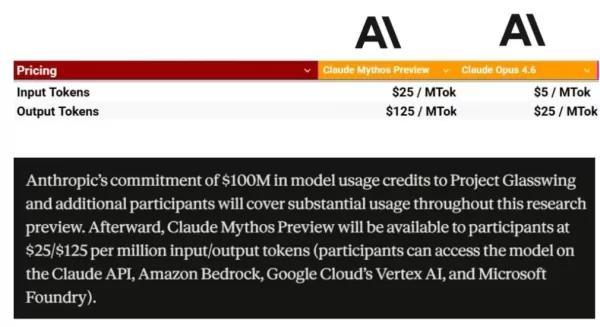
Recently, Anthropic launched the AI model Claude Mythos, described as its most powerful release yet. However, the pricing has sent shockwaves through the developer community: output costs are set at $125 per million tokens, nearly eight times that of the current flagship Claude Sonnet 4.6.
Key Focus: The Prohibitively Expensive Mythos
The pricing structure of Claude Mythos signals a new era of AI computing power premiums:
Exorbitant Costs: Input and output are priced at $25 and $125 per million tokens, respectively. In contrast, Claude Sonnet 4.6 costs just $3 and $15.
High Barrier to Entry: Because of its extreme power and cost, the model is not yet accessible to regular users. Some Reddit users have joked that even a simple "Hello" could consume 13% of a monthly token allowance.
Geek Self-Rescue: The Viral "Caveman" Saving Method
With token costs rivaling gold, developers have turned to extreme cost-saving tactics. One project, aptly named Caveman, quickly went viral on GitHub:
Core Logic: It forces the AI to cut out all pleasantries (like "It's a pleasure to serve you"), eliminate articles, avoid vague small talk, and output only essential technical terms.
Impressive Results: Tests indicate that this "caveman language" mode can save roughly 65% of tokens without sacrificing output accuracy.
Scientific Basis: Studies show that forcing the model to produce concise responses not only reduces costs but also eliminates the negative effects of overthinking, boosting accuracy on some benchmarks by 26%.
Practical Tips: 10 Token-Saving Hacks
Beyond technical workarounds, everyday users can dodge the "token assassin" by tweaking their interaction habits:
Edit In Place: If a result falls short, use the "Edit" button to refine the original prompt, preventing repeated charges from lengthy conversations.
Cut Conversations Short: Begin a fresh chat every 15–20 messages to avoid context buildup turning into a token black hole.
Combine Questions: Bundle multiple instructions into a single message to cut down on system loads.
Use Project Space Wisely: Upload lengthy documents to Projects and leverage caching so the document isn't re-scanned repeatedly.
Downgrade When Possible: Delegate simple tasks like grammar checks to cheaper models such as Haiku, reserving the costly Claude Mythos for heavy lifting.
Take Advantage of Off-Peak Hours: Avoid the peak window from 5 AM to 11 AM Pacific Time to benefit from lower costs.
Conclusion: From Wastefulness to Precision
From short messages in the year 2000 that were charged by the word, to today's large models billed by the token, our pursuit of communication efficiency has come full circle. This is the high-cost AI era ushered in by Claude Mythos .
Related article
 DeepMind CEO Hassabis: I sleep six hours a day, usually feel energetic around 1 a.m.
Fortune recently featured an interview with Demis Hassabis, CEO of Google DeepMind, revealing his unconventional approach to rest and productivity. Hassabis disclosed that he sleeps very little, structuring his waking hours into two distinct work blo
OpenAI, Anthropic Vie for Market Share Despite Revenue Shortfalls
Despite recent reports suggesting OpenAI missed revenue targets, creating pressure on tech stocks this Tuesday, private AI lab investors remain resilient. Seasoned backers have confirmed they will not reduce investment despite negative media coverage
California AV Compliance: A New Era of Tickets, Geofences, and 1M Miles
Guident operates an AuveTech shuttle in South Florida, managing a four-mile route in West Palm Beach and a one-mile route in Boca Raton using its remote monitoring technology. | Credit: GuidentCalifornia is redefining the regulatory landscape for dri
Related Special Topic Recommendations
writing
DeepMind CEO Hassabis: I sleep six hours a day, usually feel energetic around 1 a.m.
Fortune recently featured an interview with Demis Hassabis, CEO of Google DeepMind, revealing his unconventional approach to rest and productivity. Hassabis disclosed that he sleeps very little, structuring his waking hours into two distinct work blo
OpenAI, Anthropic Vie for Market Share Despite Revenue Shortfalls
Despite recent reports suggesting OpenAI missed revenue targets, creating pressure on tech stocks this Tuesday, private AI lab investors remain resilient. Seasoned backers have confirmed they will not reduce investment despite negative media coverage
California AV Compliance: A New Era of Tickets, Geofences, and 1M Miles
Guident operates an AuveTech shuttle in South Florida, managing a four-mile route in West Palm Beach and a one-mile route in Boca Raton using its remote monitoring technology. | Credit: GuidentCalifornia is redefining the regulatory landscape for dri
Related Special Topic Recommendations
writing
 AI Article Outline Tools for Long Form Writing
2026 Latest Best Top-Rated AI Article Outline Tools for Long Form Writing! This curated collection features powerful, game-changing tools that deliver accurate, structured outlines with real-world tests to boost writing efficiency significantly. XIX.AI is part of this elite selection. Get a free vs paid comparison to help you choose the perfect tool. Explore now and Unlock your AI edge!
 9 tools
 xix.ai
chatbot
Best AI Roleplay Chat Apps for Language Practice, Interview Prep, and Daily Fluency
xix.ai
chatbot
Best AI Roleplay Chat Apps for Language Practice, Interview Prep, and Daily Fluency
2026 Latest Best Top-rated AI Roleplay Chat Apps for Language Practice, Interview Prep, and Daily Fluency! XIX.AI curates a powerful game-changing collection that offers free vs paid comparison, real-world tests, and updated rankings weekly. These must-try tools help you boost writing skills, overcome fluency challenges, and improve communication efficiency across all daily scenarios. Explore now to discover your perfect tool for language growth!
10 tools
xix.ai
Music composition
AI Stem Separation Tools for Remix Production, Sampling Prep, and Karaoke Masters
2026 Latest Best Top-rated AI Stem Separation Tools Curated for Remix Production, Sampling Prep, and Karaoke Masters. These powerful game-changing tools offer real-world tests to deliver precise audio isolation, boosting productivity significantly. XIX.AI provides a weekly updated free vs paid comparison guide to help you find the must-try solution that suits your needs. Explore now to unlock your AI edge.
8 tools
xix.ai
Data Analysis
AI SQL Copilots for Revenue Dashboards, Funnel Analysis, and Product Metrics
2026 Latest Best AI SQL Copilots Ranked Top-Rated! XIX.AI curates a powerful game-changing collection for weekly updated real-world tests. These must-try tools help you generate accurate revenue dashboards, analyze sales funnels, and track product metrics swiftly, boosting productivity massively. Explore now to Discover your perfect tool for data-driven decision making! 238 characters
9 tools
xix.ai
Music composition
Best AI Melody Writing Tools for Song Drafts
2026 Latest Best Top-Rated AI Melody Writing Tools for Song Drafts! XIX.AI has curated a highly powerful game-changing collection that goes through rigorous real-world tests to deliver the best writing experience. You can find detailed free vs paid comparisons, accurate rankings, and must-try options designed to help you create stunning song drafts effortlessly and boost your creative productivity significantly. Explore now to discover your perfect tool!
8 tools
xix.ai
chatbot
Best AI Conversation Trainer Tools for Interview Practice
2026 Latest Best Top-rated AI Conversation Trainer Tools for Interview Practice are here on XIX.AI! This curated collection features powerful, game-changing tools that go through rigorous real-world tests to deliver accurate feedback. You’ll find a free vs paid comparison and detailed rankings to help you choose the must-try option that boosts your confidence and skills. Explore now to Discover your perfect tool for interview success!
12 tools
xix.ai

 Comments (0)
0/500
Comments (0)
0/500
Recently,
Key Focus: The Prohibitively Expensive Mythos
The pricing structure of
Exorbitant Costs: Input and output are priced at $25 and $125 per million tokens, respectively. In contrast,
High Barrier to Entry: Because of its extreme power and cost, the model is not yet accessible to regular users. Some Reddit users have joked that even a simple "Hello" could consume 13% of a monthly token allowance.
Geek Self-Rescue: The Viral "Caveman" Saving Method
With token costs rivaling gold, developers have turned to extreme cost-saving tactics. One project, aptly named Caveman, quickly went viral on GitHub:
Core Logic: It forces the AI to cut out all pleasantries (like "It's a pleasure to serve you"), eliminate articles, avoid vague small talk, and output only essential technical terms.
Impressive Results: Tests indicate that this "caveman language" mode can save roughly 65% of tokens without sacrificing output accuracy.
Scientific Basis: Studies show that forcing the model to produce concise responses not only reduces costs but also eliminates the negative effects of overthinking, boosting accuracy on some benchmarks by 26%.
Practical Tips: 10 Token-Saving Hacks
Beyond technical workarounds, everyday users can dodge the "token assassin" by tweaking their interaction habits:
Edit In Place: If a result falls short, use the "Edit" button to refine the original prompt, preventing repeated charges from lengthy conversations.
Cut Conversations Short: Begin a fresh chat every 15–20 messages to avoid context buildup turning into a token black hole.
Combine Questions: Bundle multiple instructions into a single message to cut down on system loads.
Use Project Space Wisely: Upload lengthy documents to Projects and leverage caching so the document isn't re-scanned repeatedly.
Downgrade When Possible: Delegate simple tasks like grammar checks to cheaper models such as Haiku, reserving the costly
Take Advantage of Off-Peak Hours: Avoid the peak window from 5 AM to 11 AM Pacific Time to benefit from lower costs.
Conclusion: From Wastefulness to Precision
From short messages in the year 2000 that were charged by the word, to today's large models billed by the token, our pursuit of communication efficiency has come full circle. This is the high-cost AI era ushered in by








 DeepMind CEO Hassabis: I sleep six hours a day, usually feel energetic around 1 a.m.
Fortune recently featured an interview with Demis Hassabis, CEO of Google DeepMind, revealing his unconventional approach to rest and productivity. Hassabis disclosed that he sleeps very little, structuring his waking hours into two distinct work blo
DeepMind CEO Hassabis: I sleep six hours a day, usually feel energetic around 1 a.m.
Fortune recently featured an interview with Demis Hassabis, CEO of Google DeepMind, revealing his unconventional approach to rest and productivity. Hassabis disclosed that he sleeps very little, structuring his waking hours into two distinct work blo
 OpenAI, Anthropic Vie for Market Share Despite Revenue Shortfalls
Despite recent reports suggesting OpenAI missed revenue targets, creating pressure on tech stocks this Tuesday, private AI lab investors remain resilient. Seasoned backers have confirmed they will not reduce investment despite negative media coverage
California AV Compliance: A New Era of Tickets, Geofences, and 1M Miles
Guident operates an AuveTech shuttle in South Florida, managing a four-mile route in West Palm Beach and a one-mile route in Boca Raton using its remote monitoring technology. | Credit: GuidentCalifornia is redefining the regulatory landscape for dri
OpenAI, Anthropic Vie for Market Share Despite Revenue Shortfalls
Despite recent reports suggesting OpenAI missed revenue targets, creating pressure on tech stocks this Tuesday, private AI lab investors remain resilient. Seasoned backers have confirmed they will not reduce investment despite negative media coverage
California AV Compliance: A New Era of Tickets, Geofences, and 1M Miles
Guident operates an AuveTech shuttle in South Florida, managing a four-mile route in West Palm Beach and a one-mile route in Boca Raton using its remote monitoring technology. | Credit: GuidentCalifornia is redefining the regulatory landscape for dri

2026 Latest Best Top-Rated AI Article Outline Tools for Long Form Writing! This curated collection features powerful, game-changing tools that deliver accurate, structured outlines with real-world tests to boost writing efficiency significantly. XIX.AI is part of this elite selection. Get a free vs paid comparison to help you choose the perfect tool. Explore now and Unlock your AI edge!
9 tools
xix.ai

2026 Latest Best Top-rated AI Roleplay Chat Apps for Language Practice, Interview Prep, and Daily Fluency! XIX.AI curates a powerful game-changing collection that offers free vs paid comparison, real-world tests, and updated rankings weekly. These must-try tools help you boost writing skills, overcome fluency challenges, and improve communication efficiency across all daily scenarios. Explore now to discover your perfect tool for language growth!
10 tools
xix.ai

2026 Latest Best Top-rated AI Stem Separation Tools Curated for Remix Production, Sampling Prep, and Karaoke Masters. These powerful game-changing tools offer real-world tests to deliver precise audio isolation, boosting productivity significantly. XIX.AI provides a weekly updated free vs paid comparison guide to help you find the must-try solution that suits your needs. Explore now to unlock your AI edge.
8 tools
xix.ai

2026 Latest Best AI SQL Copilots Ranked Top-Rated! XIX.AI curates a powerful game-changing collection for weekly updated real-world tests. These must-try tools help you generate accurate revenue dashboards, analyze sales funnels, and track product metrics swiftly, boosting productivity massively. Explore now to Discover your perfect tool for data-driven decision making! 238 characters
9 tools
xix.ai

2026 Latest Best Top-Rated AI Melody Writing Tools for Song Drafts! XIX.AI has curated a highly powerful game-changing collection that goes through rigorous real-world tests to deliver the best writing experience. You can find detailed free vs paid comparisons, accurate rankings, and must-try options designed to help you create stunning song drafts effortlessly and boost your creative productivity significantly. Explore now to discover your perfect tool!
8 tools
xix.ai

2026 Latest Best Top-rated AI Conversation Trainer Tools for Interview Practice are here on XIX.AI! This curated collection features powerful, game-changing tools that go through rigorous real-world tests to deliver accurate feedback. You’ll find a free vs paid comparison and detailed rankings to help you choose the must-try option that boosts your confidence and skills. Explore now to Discover your perfect tool for interview success!
12 tools
xix.ai












