

 Home
Aluminum price surge drives recycling startups to leverage AI for profit
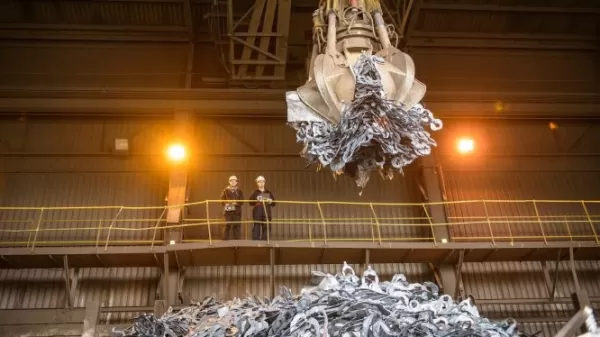
Rising gas prices have frequently made headlines since the Trump administration intensified its conflict with Iran in late February, but that's not the only commodity affected by the turmoil. Roughly 10% of the world's aluminum is produced in the Gulf region, pushing prices for the metal to levels unseen in decades.
Even before the conflict in Iran, the U.S. government had designated aluminum as a critical mineral. A significant portion of U.S. aluminum demand is fulfilled through imports, and much of what the country manufactures comes from recycled material. For recycling startups, business conditions are favorable.
"Aluminum may account for just 1% of the waste stream, but it often trades at over $1,000 per ton," Matanya Horowitz, CTO of waste sorting startup Amp, told TechCrunch. "That makes it one of the most valuable single commodities."
Aluminum is one of the most recycled materials in the U.S., yet only about 20% is recovered, according to the EPA. Waste sorting startups have been promoting AI as a way to improve that rate.
Sortera, a metals recycling startup, recently opened its second facility in Tennessee, the company exclusively told TechCrunch. The new site doubles its processing capacity to 240 million pounds, of which 90% to 100% is aluminum — a sizable portion of the 4.3 million metric tons the U.S. consumed last year.
The Indiana-based startup focuses on sorting aluminum scrap. It uses a range of sensors, including lasers, cameras, and X-ray fluorescence, to feed AI algorithms that classify each potato chip-sized piece of scrap and identify its specific aluminum grade. By sorting grades more accurately, Sortera can increase profit per pound.
Amp has taken a different approach, using an AI-powered sorting system to process both recycling and general waste streams.
Its system uses sensors, including visible light and infrared cameras, to identify everything from wrappers to foil and differentiate plastics from aluminum. As the waste stream moves through the system on conveyor belts, robotic arms and puffers pluck or blow the materials into separate bins. Amp says its system recovers specific materials, including aluminum, with over 90% accuracy.
"Half of the aluminum in a metro area — in places with successful recycling programs — ends up in the garbage, never even reaching the recycling system," Horowitz said. For the metals industry, facilities like those being built by Sortera and Amp could strengthen supplies of a critical mineral used across the economy.
"These kinds of projects represent some of the largest sources of domestically produced aluminum coming online in any given year," he said.
Related article
 QueryStory urges caution on AI-generated content
In 2009, Shapor Naghibzadeh discovered the power of compelling storytelling while working as a Google sysops engineer. During Operation Aurora, when state-sponsored hackers targeted the tech giant, he was summoned to a crisis room to clarify server a
French Startup ZML Unveils Free Tool to Accelerate AI Inference Across Multiple Chips
Nvidia’s era of unchecked market supremacy may be winding down, yet competitors and alternatives are emerging from every angle.ZML, a prominent French AI startup backed by Turing Award laureate Yann LeCun, has unveiled inference-performance software
Anthropic Unveils Opus 4.6, a Controversial Content Generator
Anthropic’s universal usage standards for Claude prohibit the model from generating sexually explicit content, including depicting or requesting sexual intercourse or sex acts, generating content related to sexual fetishes or fantasies, or engaging i
Related Special Topic Recommendations
Design & Art
 Top AI Illustration Tools: Create Editorial Scenes and Cover Art Faster
2026 Latest Top-rated AI Illustration Tools: Our curated list features the best powerfully designed tools for creating stunning editorial scenes and eye-catching cover art quickly. Each option has gone through rigorous real-world tests, offering a free vs paid comparison to help you find the perfect match for your workflow. Try these must-try solutions today to unlock your AI edge and boost your creative productivity. Explore now at XIX.AI.
 10 tools
 xix.ai
Education and Learning
Top AI Tutors for Exam Prep: Practice Math, Science, and English
2026 Latest Top-Rated Best AI Tutors for Exam Prep are here on XIX.AI! Our curated list features powerful game-changing tools that offer free vs paid comparison, real-world tests, and weekly updated rankings. They help boost your writing efficiency, simplify complex topic learning, and unlock your academic potential. Explore now to Discover your perfect exam prep tool and Start creating today to Unlock your AI edge!
10 tools
xix.ai
Finance
AI Budget Planning Tools for Personal Money Management
2026 Latest Best Top-Rated AI Budget Planning Tools for Personal Money Management are here on XIX.AI! This curated collection features powerful, game-changing solutions that help you conduct real-world tests, understand spending habits, and create personalized plans to boost productivity. Enjoy a free vs paid comparison along with detailed rankings. Must-try tools designed to simplify money management and unlock your AI edge. Explore now!
11 tools
xix.ai
Health & Wellness
AI Sleep Tracking Assistants: Improve Recovery with Better Bedtime Habits
2026 Latest Best Top-Rated AI Sleep Tracking Assistants curated for ultimate recovery. This fully updated weekly guide features powerful tools that deliver real-world tests, free vs paid comparison, and detailed rankings to help you find the must-try solution that boosts sleep quality and supports better bedtime habits. Explore now at XIX.AI to Unlock your AI edge.
10 tools
xix.ai
Data Analysis
AI SQL Copilots for Product and Revenue Analytics
2026 Latest Best Top-Rated AI SQL Copilots for Product and Revenue Analytics! XIX.AI has curated a powerful, game-changing collection of must-try tools that undergo real-world tests through weekly updated rankings. These tools help users boost productivity significantly by accelerating data analysis, streamlining complex queries, and generating accurate insights to drive smarter business decisions. Explore now to Discover your perfect tool for unlocking your AI edge!
14 tools
xix.ai
Education and Learning
Best AI Homework Helpers That Teach: Learn Concepts, Not Just Answers
2026 Latest Best Top-Rated AI Homework Helpers That Teach Core Concepts Not Just Answers Powerful Tools for Students Must-Try Curated List Weekly Updated Free vs Paid Comparison Real-World Tests Accurate Rankings to Help You Unlock Your Full Learning Potential Explore now to Discover your perfect tool for smarter studying.
10 tools
xix.ai

 Comments (0)
0/500
Rising gas prices have frequently made headlines since the Trump administration intensified its conflict with Iran in late February, but that's not the only commodity affected by the turmoil. Roughly 10% of the world's aluminum is produced in the Gulf region, pushing prices for the metal to levels unseen in decades.
Even before the conflict in Iran, the U.S. government had designated aluminum as a critical mineral. A significant portion of U.S. aluminum demand is fulfilled through imports, and much of what the country manufactures comes from recycled material. For recycling startups, business conditions are favorable.
"Aluminum may account for just 1% of the waste stream, but it often trades at over $1,000 per ton," Matanya Horowitz, CTO of waste sorting startup Amp, told TechCrunch. "That makes it one of the most valuable single commodities."
Aluminum is one of the most recycled materials in the U.S., yet only about 20% is recovered, according to the EPA. Waste sorting startups have been promoting AI as a way to improve that rate.
Sortera, a metals recycling startup, recently opened its second facility in Tennessee, the company exclusively told TechCrunch. The new site doubles its processing capacity to 240 million pounds, of which 90% to 100% is aluminum — a sizable portion of the 4.3 million metric tons the U.S. consumed last year.
The Indiana-based startup focuses on sorting aluminum scrap. It uses a range of sensors, including lasers, cameras, and X-ray fluorescence, to feed AI algorithms that classify each potato chip-sized piece of scrap and identify its specific aluminum grade. By sorting grades more accurately, Sortera can increase profit per pound.
Amp has taken a different approach, using an AI-powered sorting system to process both recycling and general waste streams.
Its system uses sensors, including visible light and infrared cameras, to identify everything from wrappers to foil and differentiate plastics from aluminum. As the waste stream moves through the system on conveyor belts, robotic arms and puffers pluck or blow the materials into separate bins. Amp says its system recovers specific materials, including aluminum, with over 90% accuracy.
"Half of the aluminum in a metro area — in places with successful recycling programs — ends up in the garbage, never even reaching the recycling system," Horowitz said. For the metals industry, facilities like those being built by Sortera and Amp could strengthen supplies of a critical mineral used across the economy.
"These kinds of projects represent some of the largest sources of domestically produced aluminum coming online in any given year," he said.








 QueryStory urges caution on AI-generated content
In 2009, Shapor Naghibzadeh discovered the power of compelling storytelling while working as a Google sysops engineer. During Operation Aurora, when state-sponsored hackers targeted the tech giant, he was summoned to a crisis room to clarify server a
 French Startup ZML Unveils Free Tool to Accelerate AI Inference Across Multiple Chips
Nvidia’s era of unchecked market supremacy may be winding down, yet competitors and alternatives are emerging from every angle.ZML, a prominent French AI startup backed by Turing Award laureate Yann LeCun, has unveiled inference-performance software
 Anthropic Unveils Opus 4.6, a Controversial Content Generator
Anthropic’s universal usage standards for Claude prohibit the model from generating sexually explicit content, including depicting or requesting sexual intercourse or sex acts, generating content related to sexual fetishes or fantasies, or engaging i

2026 Latest Top-rated AI Illustration Tools: Our curated list features the best powerfully designed tools for creating stunning editorial scenes and eye-catching cover art quickly. Each option has gone through rigorous real-world tests, offering a free vs paid comparison to help you find the perfect match for your workflow. Try these must-try solutions today to unlock your AI edge and boost your creative productivity. Explore now at XIX.AI.
10 tools
xix.ai

2026 Latest Top-Rated Best AI Tutors for Exam Prep are here on XIX.AI! Our curated list features powerful game-changing tools that offer free vs paid comparison, real-world tests, and weekly updated rankings. They help boost your writing efficiency, simplify complex topic learning, and unlock your academic potential. Explore now to Discover your perfect exam prep tool and Start creating today to Unlock your AI edge!
10 tools
xix.ai

2026 Latest Best Top-Rated AI Budget Planning Tools for Personal Money Management are here on XIX.AI! This curated collection features powerful, game-changing solutions that help you conduct real-world tests, understand spending habits, and create personalized plans to boost productivity. Enjoy a free vs paid comparison along with detailed rankings. Must-try tools designed to simplify money management and unlock your AI edge. Explore now!
11 tools
xix.ai

2026 Latest Best Top-Rated AI Sleep Tracking Assistants curated for ultimate recovery. This fully updated weekly guide features powerful tools that deliver real-world tests, free vs paid comparison, and detailed rankings to help you find the must-try solution that boosts sleep quality and supports better bedtime habits. Explore now at XIX.AI to Unlock your AI edge.
10 tools
xix.ai

2026 Latest Best Top-Rated AI SQL Copilots for Product and Revenue Analytics! XIX.AI has curated a powerful, game-changing collection of must-try tools that undergo real-world tests through weekly updated rankings. These tools help users boost productivity significantly by accelerating data analysis, streamlining complex queries, and generating accurate insights to drive smarter business decisions. Explore now to Discover your perfect tool for unlocking your AI edge!
14 tools
xix.ai

2026 Latest Best Top-Rated AI Homework Helpers That Teach Core Concepts Not Just Answers Powerful Tools for Students Must-Try Curated List Weekly Updated Free vs Paid Comparison Real-World Tests Accurate Rankings to Help You Unlock Your Full Learning Potential Explore now to Discover your perfect tool for smarter studying.
10 tools
xix.ai