


 Hogar
HogarMejoras de IA y Accesibilidad para Android, Chrome
While we celebrate Global Accessibility Awareness Day, we are excited to announce significant updates to our products on Android and Chrome, along with new resources for developers working on speech recognition tools. These advancements in AI are making our digital world more accessible and inclusive.
More AI-Powered Innovation with Android
We are taking our commitment to accessibility further by integrating Google AI and Gemini into the fabric of mobile experiences, particularly for vision and hearing.
Enhancing Details with Gemini and TalkBack
Last year, we integrated Gemini's capabilities into TalkBack, Android's screen reader, which provided AI-generated descriptions for images, even when alt text was missing. Now, we are expanding this feature. Users can now ask questions about images they receive, like a friend's new guitar. You can inquire about the make, color, or other elements within the photo. Additionally, you can get descriptions and ask questions about your entire screen. For example, while browsing for sales on a shopping app, you can ask Gemini about the material of an item or check for available discounts.
Understanding More of the Emotion Behind Captions
With Expressive Captions, your Android device now provides real-time captions across most apps, capturing not just what's said, but also how it's said. We've added a new duration feature that highlights when words are drawn out, like hearing an "amaaazing shot" in a sports broadcast or a drawn-out "nooooo" in a video message. You'll also get more labels for sounds, such as whistling or throat clearing. This update is available in English for devices running Android 15 and above in the U.S., U.K., Canada, and Australia.
Improving Speech Recognition Around the World
Since launching Project Euphonia in 2019, our aim has been to make speech recognition more accessible for those with non-standard speech patterns. We are now expanding support for developers and organizations worldwide, helping them adapt this technology to more languages and cultural contexts.
New Developer Resources
To foster a global ecosystem of accessible tools, we are offering developers access to our open-source repositories through Project Euphonia’s GitHub page. This allows them to develop personalized audio tools for research or train their models to recognize diverse speech patterns.
Support for New Projects in Africa
Earlier this year, we partnered with Google.org to support the University College London in establishing the Centre for Digital Language Inclusion (CDLI). The CDLI is focused on enhancing speech recognition technology for non-English speakers across Africa. They are creating open-source datasets in 10 African languages, developing new speech recognition models, and supporting the broader community of organizations and developers in this field.
Expanding Accessibility Options for Students
Accessibility tools play a crucial role for students with disabilities, from using facial gestures to navigate Chromebooks with Face Control to customizing their reading experience with Reading Mode. Now, when using Chromebooks with College Board's Bluebook testing app for SAT and Advanced Placement exams, students will have access to all of Google's built-in accessibility features, including ChromeVox screen reader and Dictation, along with College Board's own digital testing tools.
Making Chrome More Accessible
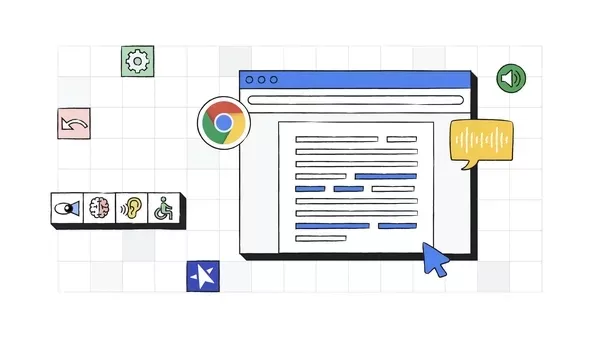
With over 2 billion daily users, we are constantly working to improve Chrome's accessibility. Features like Live Caption and image descriptions for screen reader users are part of this effort.
Accessing PDFs More Easily on Chrome
Previously, scanned PDFs were not accessible to screen readers in desktop Chrome. Now, with Optical Character Recognition (OCR), Chrome can recognize these PDFs, allowing you to highlight, copy, search for text, and use your screen reader to read them.
Reading with Ease with Page Zoom
Page Zoom on Chrome for Android now lets you increase text size without altering the webpage layout or your browsing experience, similar to how it works on Chrome desktop. You can set your zoom preferences to apply to all pages or specific ones.
To use this feature, simply tap the three-dot menu in the top right corner of Chrome and adjust your zoom settings.
Artículo relacionado
 Warner Music adquiere la startup de atribución de IA Sureel AI
Warner Music Group (WMG) confirmó el miércoles que está adquiriendo Sureel AI, una startup de atribución de inteligencia artificial. La tecnología propietaria de Sureel genera un «ADN de IA» para las pistas musicales, descomponiéndolas en sus element
Amazon presenta Alexa para Compras mientras relega a Rufus a un segundo plano
Amazon ha lanzado Alexa para Compras, fusionando su chatbot de compras Rufus con Alexa+ en la aplicación, el sitio web y los dispositivos Echo Show.El asistente responde consultas sobre productos, compara artículos, rastrea precios y admite recordat
Microsoft, Azure y la tecnología de IA combaten los riesgos de incendios forestales en California
Microsoft invierte en la detección de incendios forestales basada en la inteligencia artificial; Juan Lavista Ferres, vicepresidente corporativo y científico jefe de datos, analiza estrategias para mi
Recomendaciones de temas especiales relacionados
escribiendo
Warner Music adquiere la startup de atribución de IA Sureel AI
Warner Music Group (WMG) confirmó el miércoles que está adquiriendo Sureel AI, una startup de atribución de inteligencia artificial. La tecnología propietaria de Sureel genera un «ADN de IA» para las pistas musicales, descomponiéndolas en sus element
Amazon presenta Alexa para Compras mientras relega a Rufus a un segundo plano
Amazon ha lanzado Alexa para Compras, fusionando su chatbot de compras Rufus con Alexa+ en la aplicación, el sitio web y los dispositivos Echo Show.El asistente responde consultas sobre productos, compara artículos, rastrea precios y admite recordat
Microsoft, Azure y la tecnología de IA combaten los riesgos de incendios forestales en California
Microsoft invierte en la detección de incendios forestales basada en la inteligencia artificial; Juan Lavista Ferres, vicepresidente corporativo y científico jefe de datos, analiza estrategias para mi
Recomendaciones de temas especiales relacionados
escribiendo
 Herramientas de IA para la estructura de artículos en la redacción de textos extensos
¡Las mejores herramientas de 2026 para crear esquemas de artículos con IA, mejor valoradas para la redacción de textos largos! Esta selección incluye potentes herramientas revolucionarias que ofrecen esquemas precisos y estructurados, probados en la práctica, para aumentar significativamente la eficiencia en la redacción. XIX.AI forma parte de esta selección de élite. Consigue una comparación entre las versiones gratuitas y de pago que te ayudará a elegir la herramienta perfecta. ¡Explora ahora y aprovecha tu ventaja con la IA!
 9 herramientas
 xix.ai
chatbot
Las mejores aplicaciones de chat de roleplay con IA para practicar idiomas, prepararse para entrevistas y mejorar la fluidez diaria
xix.ai
chatbot
Las mejores aplicaciones de chat de roleplay con IA para practicar idiomas, prepararse para entrevistas y mejorar la fluidez diaria
¡Las mejores aplicaciones de chat de roleplay con IA de 2026, mejor valoradas, para practicar idiomas, prepararse para entrevistas y mejorar la fluidez diaria! XIX.AI selecciona una poderosa colección revolucionaria que ofrece comparaciones entre versiones gratuitas y de pago, pruebas del mundo real y clasificaciones actualizadas semanalmente. Estas herramientas imprescindibles te ayudan a mejorar tus habilidades de escritura, superar los desafíos de fluidez y aumentar la eficiencia comunicativa en todas las situaciones cotidianas. ¡Explora ahora para descubrir tu herramienta perfecta para el crecimiento lingüístico!
10 herramientas
xix.ai
composicion musical
Herramientas de separación de pistas con IA para la producción de remezclas, la preparación de samples y las pistas maestras de karaoke
Las mejores herramientas de separación de pistas con IA de 2026, seleccionadas para la producción de remixes, la preparación de samples y la creación de temas de karaoke. Estas potentes herramientas revolucionarias se han sometido a pruebas en condiciones reales para ofrecer un aislamiento de audio preciso, lo que aumenta significativamente la productividad. XIX.AI ofrece una guía comparativa entre versiones gratuitas y de pago, actualizada semanalmente, para ayudarte a encontrar la solución imprescindible que mejor se adapte a tus necesidades. Explórala ahora para sacar el máximo partido a la IA.
8 herramientas
xix.ai
Análisis de datos
Copilotos de AI para SQL destinados a paneles de ingresos, análisis de embudos y métricas de productos
¡Los mejores copilotos de SQL basados en IA de 2026, clasificados entre los más destacados! XIX.AI reúne una poderosa colección que evoluciona constantemente, con pruebas en el mundo real actualizadas semanalmente. Estas herramientas indispensables le permiten generar paneles de control de ingresos precisos, analizar los canales de venta y seguir de cerca las métricas de los productos de manera rápida, lo que aumenta significativamente su productividad. ¡Explórelas ahora para encontrar la herramienta perfecta para tomar decisiones basadas en datos! 238 caracteres
9 herramientas
xix.ai
composicion musical
Mejores herramientas de IA para escribir melodías en borradores de canciones
2026 Últimas Mejores Herramientas de Escritura de Melodías con IA Mejor Valoradas para Borradores de Canciones. XIX.AI ha curado una colección altamente poderosa y transformadora que ha pasado por rigurosas pruebas en el mundo real para ofrecer la mejor experiencia de escritura. Puedes encontrar comparaciones detalladas entre versiones gratuitas y de pago, clasificaciones precisas y opciones imperdibles diseñadas para ayudarte a crear borradores de canciones impresionantes sin esfuerzo y aumentar significativamente tu productividad creativa. ¡Explora ahora para descubrir tu herramienta perfecta!
8 herramientas
xix.ai
chatbot
Mejores herramientas de entrenamiento de conversación con IA para practicar entrevistas
¡Las mejores herramientas de entrenamiento de conversación con IA para prácticas de entrevistas más recientes y mejor valoradas de 2026 ya están disponibles en XIX.AI! Esta colección seleccionada incluye herramientas poderosas y transformadoras que han pasado por rigurosas pruebas en el mundo real para ofrecer retroalimentación precisa. Encontrarás una comparación entre opciones gratuitas y de pago, así como clasificaciones detalladas para ayudarte a elegir la opción imprescindible que aumente tu confianza y habilidades. ¡Explora ahora para descubrir tu herramienta perfecta para el éxito en las entrevistas!
12 herramientas
xix.ai

 comentario (9)
0/500
comentario (9)
0/500
![DonaldRoberts]()
Wow, these AI updates for Android and Chrome sound like a game-changer for accessibility! I'm curious how the speech recognition tools will evolve—could they finally keep up with my fast-talking friends? 😄
![OliverAnderson]()
Wow, these AI updates for Android and Chrome sound like a game-changer for accessibility! 🥳 Curious how the speech recognition tools will evolve—hope they’re as intuitive as they claim!
![AndrewAllen]()
C'est génial de voir des progrès en accessibilité ! Les mises à jour pour Android et Chrome vont vraiment aider plus de monde à naviguer facilement. Mais, est-ce que ces outils seront assez intuitifs pour les novices ? 😊 J’espère qu’on verra plus d’innovations comme ça !
![GaryPerez]()
Love how AI is making tech more inclusive! These Android and Chrome updates sound amazing—can't wait to see them in action. 🌟
![EricAllen]()
Super impressionnant, ces mises à jour pour l’accessibilité ! 🥳 L’IA qui rend le numérique plus inclusif, c’est génial. Mais j’espère que ça ne va pas trop compliquer les choses pour les non-techies.
![RichardAdams]()
Wow, these AI updates for Android and Chrome sound amazing! 😍 Making tech more inclusive is such a big win. Excited to see how these speech recognition tools evolve!
While we celebrate Global Accessibility Awareness Day, we are excited to announce significant updates to our products on Android and Chrome, along with new resources for developers working on speech recognition tools. These advancements in AI are making our digital world more accessible and inclusive.
More AI-Powered Innovation with Android
We are taking our commitment to accessibility further by integrating Google AI and Gemini into the fabric of mobile experiences, particularly for vision and hearing.
Enhancing Details with Gemini and TalkBack
Last year, we integrated Gemini's capabilities into TalkBack, Android's screen reader, which provided AI-generated descriptions for images, even when alt text was missing. Now, we are expanding this feature. Users can now ask questions about images they receive, like a friend's new guitar. You can inquire about the make, color, or other elements within the photo. Additionally, you can get descriptions and ask questions about your entire screen. For example, while browsing for sales on a shopping app, you can ask Gemini about the material of an item or check for available discounts.
Understanding More of the Emotion Behind Captions
With Expressive Captions, your Android device now provides real-time captions across most apps, capturing not just what's said, but also how it's said. We've added a new duration feature that highlights when words are drawn out, like hearing an "amaaazing shot" in a sports broadcast or a drawn-out "nooooo" in a video message. You'll also get more labels for sounds, such as whistling or throat clearing. This update is available in English for devices running Android 15 and above in the U.S., U.K., Canada, and Australia.
Improving Speech Recognition Around the World
Since launching Project Euphonia in 2019, our aim has been to make speech recognition more accessible for those with non-standard speech patterns. We are now expanding support for developers and organizations worldwide, helping them adapt this technology to more languages and cultural contexts.
New Developer Resources
To foster a global ecosystem of accessible tools, we are offering developers access to our open-source repositories through Project Euphonia’s GitHub page. This allows them to develop personalized audio tools for research or train their models to recognize diverse speech patterns.
Support for New Projects in Africa
Earlier this year, we partnered with Google.org to support the University College London in establishing the Centre for Digital Language Inclusion (CDLI). The CDLI is focused on enhancing speech recognition technology for non-English speakers across Africa. They are creating open-source datasets in 10 African languages, developing new speech recognition models, and supporting the broader community of organizations and developers in this field.
Expanding Accessibility Options for Students
Accessibility tools play a crucial role for students with disabilities, from using facial gestures to navigate Chromebooks with Face Control to customizing their reading experience with Reading Mode. Now, when using Chromebooks with College Board's Bluebook testing app for SAT and Advanced Placement exams, students will have access to all of Google's built-in accessibility features, including ChromeVox screen reader and Dictation, along with College Board's own digital testing tools.
Making Chrome More Accessible
With over 2 billion daily users, we are constantly working to improve Chrome's accessibility. Features like Live Caption and image descriptions for screen reader users are part of this effort.
Accessing PDFs More Easily on Chrome
Previously, scanned PDFs were not accessible to screen readers in desktop Chrome. Now, with Optical Character Recognition (OCR), Chrome can recognize these PDFs, allowing you to highlight, copy, search for text, and use your screen reader to read them.
Reading with Ease with Page Zoom
Page Zoom on Chrome for Android now lets you increase text size without altering the webpage layout or your browsing experience, similar to how it works on Chrome desktop. You can set your zoom preferences to apply to all pages or specific ones.
To use this feature, simply tap the three-dot menu in the top right corner of Chrome and adjust your zoom settings.








 Warner Music adquiere la startup de atribución de IA Sureel AI
Warner Music Group (WMG) confirmó el miércoles que está adquiriendo Sureel AI, una startup de atribución de inteligencia artificial. La tecnología propietaria de Sureel genera un «ADN de IA» para las pistas musicales, descomponiéndolas en sus element
Amazon presenta Alexa para Compras mientras relega a Rufus a un segundo plano
Amazon ha lanzado Alexa para Compras, fusionando su chatbot de compras Rufus con Alexa+ en la aplicación, el sitio web y los dispositivos Echo Show.El asistente responde consultas sobre productos, compara artículos, rastrea precios y admite recordat
Warner Music adquiere la startup de atribución de IA Sureel AI
Warner Music Group (WMG) confirmó el miércoles que está adquiriendo Sureel AI, una startup de atribución de inteligencia artificial. La tecnología propietaria de Sureel genera un «ADN de IA» para las pistas musicales, descomponiéndolas en sus element
Amazon presenta Alexa para Compras mientras relega a Rufus a un segundo plano
Amazon ha lanzado Alexa para Compras, fusionando su chatbot de compras Rufus con Alexa+ en la aplicación, el sitio web y los dispositivos Echo Show.El asistente responde consultas sobre productos, compara artículos, rastrea precios y admite recordat
 Microsoft, Azure y la tecnología de IA combaten los riesgos de incendios forestales en California
Microsoft invierte en la detección de incendios forestales basada en la inteligencia artificial; Juan Lavista Ferres, vicepresidente corporativo y científico jefe de datos, analiza estrategias para mi
Microsoft, Azure y la tecnología de IA combaten los riesgos de incendios forestales en California
Microsoft invierte en la detección de incendios forestales basada en la inteligencia artificial; Juan Lavista Ferres, vicepresidente corporativo y científico jefe de datos, analiza estrategias para mi

¡Las mejores herramientas de 2026 para crear esquemas de artículos con IA, mejor valoradas para la redacción de textos largos! Esta selección incluye potentes herramientas revolucionarias que ofrecen esquemas precisos y estructurados, probados en la práctica, para aumentar significativamente la eficiencia en la redacción. XIX.AI forma parte de esta selección de élite. Consigue una comparación entre las versiones gratuitas y de pago que te ayudará a elegir la herramienta perfecta. ¡Explora ahora y aprovecha tu ventaja con la IA!
9 herramientas
xix.ai

¡Las mejores aplicaciones de chat de roleplay con IA de 2026, mejor valoradas, para practicar idiomas, prepararse para entrevistas y mejorar la fluidez diaria! XIX.AI selecciona una poderosa colección revolucionaria que ofrece comparaciones entre versiones gratuitas y de pago, pruebas del mundo real y clasificaciones actualizadas semanalmente. Estas herramientas imprescindibles te ayudan a mejorar tus habilidades de escritura, superar los desafíos de fluidez y aumentar la eficiencia comunicativa en todas las situaciones cotidianas. ¡Explora ahora para descubrir tu herramienta perfecta para el crecimiento lingüístico!
10 herramientas
xix.ai

Las mejores herramientas de separación de pistas con IA de 2026, seleccionadas para la producción de remixes, la preparación de samples y la creación de temas de karaoke. Estas potentes herramientas revolucionarias se han sometido a pruebas en condiciones reales para ofrecer un aislamiento de audio preciso, lo que aumenta significativamente la productividad. XIX.AI ofrece una guía comparativa entre versiones gratuitas y de pago, actualizada semanalmente, para ayudarte a encontrar la solución imprescindible que mejor se adapte a tus necesidades. Explórala ahora para sacar el máximo partido a la IA.
8 herramientas
xix.ai

¡Los mejores copilotos de SQL basados en IA de 2026, clasificados entre los más destacados! XIX.AI reúne una poderosa colección que evoluciona constantemente, con pruebas en el mundo real actualizadas semanalmente. Estas herramientas indispensables le permiten generar paneles de control de ingresos precisos, analizar los canales de venta y seguir de cerca las métricas de los productos de manera rápida, lo que aumenta significativamente su productividad. ¡Explórelas ahora para encontrar la herramienta perfecta para tomar decisiones basadas en datos! 238 caracteres
9 herramientas
xix.ai

2026 Últimas Mejores Herramientas de Escritura de Melodías con IA Mejor Valoradas para Borradores de Canciones. XIX.AI ha curado una colección altamente poderosa y transformadora que ha pasado por rigurosas pruebas en el mundo real para ofrecer la mejor experiencia de escritura. Puedes encontrar comparaciones detalladas entre versiones gratuitas y de pago, clasificaciones precisas y opciones imperdibles diseñadas para ayudarte a crear borradores de canciones impresionantes sin esfuerzo y aumentar significativamente tu productividad creativa. ¡Explora ahora para descubrir tu herramienta perfecta!
8 herramientas
xix.ai
¡Las mejores herramientas de entrenamiento de conversación con IA para prácticas de entrevistas más recientes y mejor valoradas de 2026 ya están disponibles en XIX.AI! Esta colección seleccionada incluye herramientas poderosas y transformadoras que han pasado por rigurosas pruebas en el mundo real para ofrecer retroalimentación precisa. Encontrarás una comparación entre opciones gratuitas y de pago, así como clasificaciones detalladas para ayudarte a elegir la opción imprescindible que aumente tu confianza y habilidades. ¡Explora ahora para descubrir tu herramienta perfecta para el éxito en las entrevistas!
12 herramientas
xix.ai

Wow, these AI updates for Android and Chrome sound like a game-changer for accessibility! I'm curious how the speech recognition tools will evolve—could they finally keep up with my fast-talking friends? 😄
Wow, these AI updates for Android and Chrome sound like a game-changer for accessibility! 🥳 Curious how the speech recognition tools will evolve—hope they’re as intuitive as they claim!
C'est génial de voir des progrès en accessibilité ! Les mises à jour pour Android et Chrome vont vraiment aider plus de monde à naviguer facilement. Mais, est-ce que ces outils seront assez intuitifs pour les novices ? 😊 J’espère qu’on verra plus d’innovations comme ça !
Love how AI is making tech more inclusive! These Android and Chrome updates sound amazing—can't wait to see them in action. 🌟
Super impressionnant, ces mises à jour pour l’accessibilité ! 🥳 L’IA qui rend le numérique plus inclusif, c’est génial. Mais j’espère que ça ne va pas trop compliquer les choses pour les non-techies.
Wow, these AI updates for Android and Chrome sound amazing! 😍 Making tech more inclusive is such a big win. Excited to see how these speech recognition tools evolve!












