


 Home
HomeAI Accelerates Scientific Research for Greater Real-World Impact
Google has consistently harnessed AI as a catalyst for scientific progress, with today's pace of discovery reaching extraordinary new levels. This acceleration has transformed the research cycle, turning fundamental breakthroughs into practical applications faster than we've ever witnessed before.
Far from replacing human creativity, AI serves as a powerful amplifier of human potential. Our researchers employ AI to tackle foundational scientific inquiries, expanding our collective knowledge while developing innovative solutions to global challenges. Through close collaboration with academic institutions and industry partners, we're committed to democratizing access to these transformative technologies by sharing tools and resources with the broader research community.
Key Areas of Research Impact
Here are four domains where Google Research has delivered significant scientific advancements with real-world implications.
Transformative Advances in Biomedicine
We're accelerating medical breakthroughs through AI that personalizes treatment, expands research access, and unlocks new biological insights. Our AI co-scientist initiative represents a paradigm shift, combining multiple AI agents to synthesize information and generate novel research hypotheses - empowering scientists through natural language interaction.
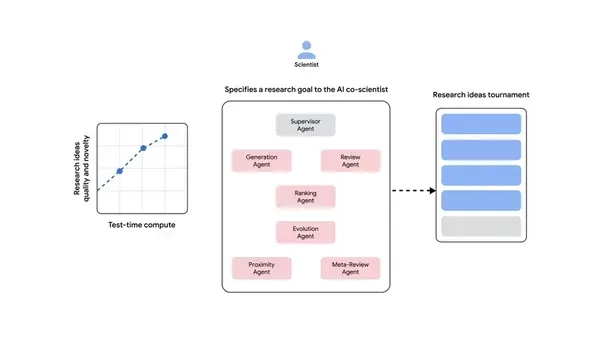
Recent innovations include our multimodal AMIE system, published in Nature, which enhances diagnostic accuracy by interpreting visual medical data alongside traditional consultation. Building on our MedPaLM foundation, we've expanded our Health AI Developer tools and introduced TxGemma - open models specifically optimized for therapeutic development, complementing our existing imaging models across radiology and dermatology.
In genomics research, we're improving disease understanding through tools like REGLE, which identifies genetic variant associations without supervision. Our open-source DeepVariant models now achieve 30% greater accuracy in analyzing diverse genetic backgrounds through collaborative pangenome reference projects.
Pioneering Neuroscience Discoveries
For over a decade, we've been at the forefront of connectomics research that deciphers the brain's complex wiring. Our latest breakthrough, LICONN (published in Nature), revolutionizes neuronal mapping by enabling comprehensive connection analysis using standard laboratory microscopes - dramatically increasing research accessibility worldwide.
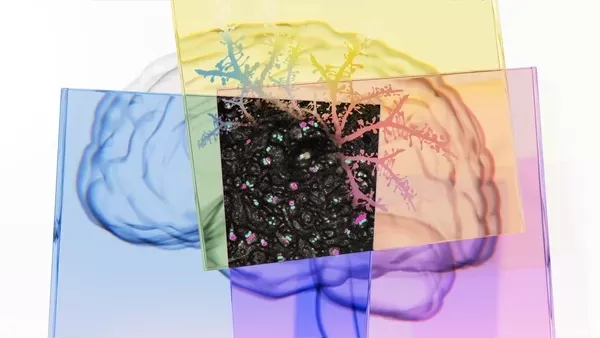
Collaborating with leading institutions, we've created ZAPBench - an unprecedented dataset tracking 70,000+ neurons across entire zebrafish brains. This open resource helps neuroscientists study the crucial relationship between neural structure and activity patterns in vertebrate organisms.
Our cross-disciplinary work with Princeton, NYU and HUJI continues to reveal fascinating parallels between deep learning architectures and human language processing, suggesting AI models may provide new frameworks for understanding cognition.
Solutions for Planetary Challenges
Our geospatial initiatives are making critical environmental data universally accessible. The FireSat satellite constellation, beginning with our recently launched first unit, will provide high-resolution wildfire monitoring at 20-minute intervals globally - helping emergency services detect fires earlier while improving scientific models of fire behavior.
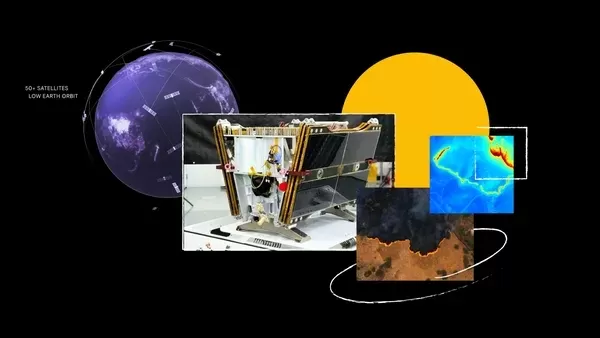
New Geospatial Reasoning technology combines our foundation models with generative AI to transform complex environmental data into actionable insights through intuitive conversation. Building on our existing flood, weather, and infrastructure mapping systems, this innovation has far-reaching applications from urban planning to climate science.
The Quantum Computing Frontier
After years of foundational work, our Willow quantum processor represents a major leap forward in error correction and performance. In collaboration with Sandia National Labs, we've demonstrated quantum algorithms that could revolutionize fusion energy research by efficiently modeling plasma behavior - a crucial step toward sustainable clean energy solutions.
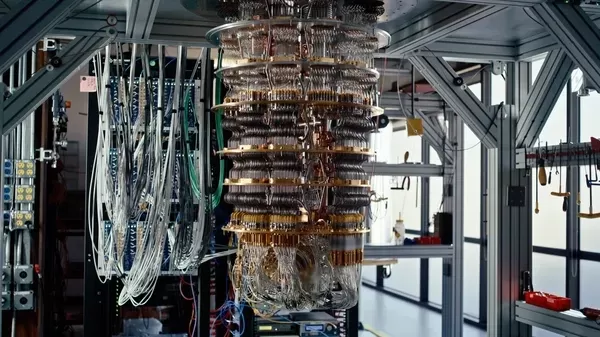
Our ongoing hybrid quantum simulation research continues to unlock new possibilities across materials science, chemistry, and fundamental physics. What were once theoretical possibilities are now entering the realm of practical application at an accelerating pace.
Across all these disciplines, we remain committed to pursuing audacious scientific questions and developing AI-powered solutions that can positively impact billions worldwide. The next era of discovery is here, and it's more collaborative and accessible than ever before.
Related article
 Google AI Overviews Gain Ground in Search Results
According to Similarweb’s 2026 Generative AI Landscape report, Google’s AI-generated summaries appeared in 43% of US searches, a significant rise from 15% recorded a year prior.While AI Overviews present generated summaries within standard search res
Sequoia-backed Empirik raises $21M to forecast outages before they strike
Before joining Sequoia Capital in 2020 as chief digital and information officer, Avon Puri spent over a decade running infrastructure at Rubrik and VMware. Three years ago, as large language models began showing their true potential, Puri, alongside
ElevenLabs brings on BlackRock, Jamie Foxx and Longoria as new investors
ElevenLabs, a leader in Voice AI, has announced new participants in its $500 million Series D funding round, initially revealed in February. The investor roster now features major institutions like BlackRock, Wellington, D.E. Shaw, and Schroders, alo
Related Special Topic Recommendations
Design & Art
Google AI Overviews Gain Ground in Search Results
According to Similarweb’s 2026 Generative AI Landscape report, Google’s AI-generated summaries appeared in 43% of US searches, a significant rise from 15% recorded a year prior.While AI Overviews present generated summaries within standard search res
Sequoia-backed Empirik raises $21M to forecast outages before they strike
Before joining Sequoia Capital in 2020 as chief digital and information officer, Avon Puri spent over a decade running infrastructure at Rubrik and VMware. Three years ago, as large language models began showing their true potential, Puri, alongside
ElevenLabs brings on BlackRock, Jamie Foxx and Longoria as new investors
ElevenLabs, a leader in Voice AI, has announced new participants in its $500 million Series D funding round, initially revealed in February. The investor roster now features major institutions like BlackRock, Wellington, D.E. Shaw, and Schroders, alo
Related Special Topic Recommendations
Design & Art
 Top AI Illustration Tools: Create Editorial Scenes and Cover Art Faster
2026 Latest Top-rated AI Illustration Tools: Our curated list features the best powerfully designed tools for creating stunning editorial scenes and eye-catching cover art quickly. Each option has gone through rigorous real-world tests, offering a free vs paid comparison to help you find the perfect match for your workflow. Try these must-try solutions today to unlock your AI edge and boost your creative productivity. Explore now at XIX.AI.
 10 tools
 xix.ai
Education and Learning
Top AI Tutors for Exam Prep: Practice Math, Science, and English
xix.ai
Education and Learning
Top AI Tutors for Exam Prep: Practice Math, Science, and English
2026 Latest Top-Rated Best AI Tutors for Exam Prep are here on XIX.AI! Our curated list features powerful game-changing tools that offer free vs paid comparison, real-world tests, and weekly updated rankings. They help boost your writing efficiency, simplify complex topic learning, and unlock your academic potential. Explore now to Discover your perfect exam prep tool and Start creating today to Unlock your AI edge!
10 tools
xix.ai
Finance
AI Budget Planning Tools for Personal Money Management
2026 Latest Best Top-Rated AI Budget Planning Tools for Personal Money Management are here on XIX.AI! This curated collection features powerful, game-changing solutions that help you conduct real-world tests, understand spending habits, and create personalized plans to boost productivity. Enjoy a free vs paid comparison along with detailed rankings. Must-try tools designed to simplify money management and unlock your AI edge. Explore now!
11 tools
xix.ai
Health & Wellness
AI Sleep Tracking Assistants: Improve Recovery with Better Bedtime Habits
2026 Latest Best Top-Rated AI Sleep Tracking Assistants curated for ultimate recovery. This fully updated weekly guide features powerful tools that deliver real-world tests, free vs paid comparison, and detailed rankings to help you find the must-try solution that boosts sleep quality and supports better bedtime habits. Explore now at XIX.AI to Unlock your AI edge.
10 tools
xix.ai
Data Analysis
AI SQL Copilots for Product and Revenue Analytics
2026 Latest Best Top-Rated AI SQL Copilots for Product and Revenue Analytics! XIX.AI has curated a powerful, game-changing collection of must-try tools that undergo real-world tests through weekly updated rankings. These tools help users boost productivity significantly by accelerating data analysis, streamlining complex queries, and generating accurate insights to drive smarter business decisions. Explore now to Discover your perfect tool for unlocking your AI edge!
14 tools
xix.ai
Education and Learning
Best AI Homework Helpers That Teach: Learn Concepts, Not Just Answers
2026 Latest Best Top-Rated AI Homework Helpers That Teach Core Concepts Not Just Answers Powerful Tools for Students Must-Try Curated List Weekly Updated Free vs Paid Comparison Real-World Tests Accurate Rankings to Help You Unlock Your Full Learning Potential Explore now to Discover your perfect tool for smarter studying.
10 tools
xix.ai

 Comments (1)
0/500
Comments (1)
0/500
![RaymondGreen]()
この記事を読んで、AIが科学のスピードを加速させる様子が本当にすごいと思いました!⚡ 特に、基礎研究がすぐに実用化につながる部分に感動。でも、これだけ早い変化についていけるのか少し不安もあります😅 例えば、倫理的な検討が追いつかない可能性はないですか?ともあれ、Googleの取り組みは非常に刺激的です!
Google has consistently harnessed AI as a catalyst for scientific progress, with today's pace of discovery reaching extraordinary new levels. This acceleration has transformed the research cycle, turning fundamental breakthroughs into practical applications faster than we've ever witnessed before.
Far from replacing human creativity, AI serves as a powerful amplifier of human potential. Our researchers employ AI to tackle foundational scientific inquiries, expanding our collective knowledge while developing innovative solutions to global challenges. Through close collaboration with academic institutions and industry partners, we're committed to democratizing access to these transformative technologies by sharing tools and resources with the broader research community.
Key Areas of Research Impact
Here are four domains where Google Research has delivered significant scientific advancements with real-world implications.
Transformative Advances in Biomedicine
We're accelerating medical breakthroughs through AI that personalizes treatment, expands research access, and unlocks new biological insights. Our AI co-scientist initiative represents a paradigm shift, combining multiple AI agents to synthesize information and generate novel research hypotheses - empowering scientists through natural language interaction.
Recent innovations include our multimodal AMIE system, published in Nature, which enhances diagnostic accuracy by interpreting visual medical data alongside traditional consultation. Building on our MedPaLM foundation, we've expanded our Health AI Developer tools and introduced TxGemma - open models specifically optimized for therapeutic development, complementing our existing imaging models across radiology and dermatology.
In genomics research, we're improving disease understanding through tools like REGLE, which identifies genetic variant associations without supervision. Our open-source DeepVariant models now achieve 30% greater accuracy in analyzing diverse genetic backgrounds through collaborative pangenome reference projects.
Pioneering Neuroscience Discoveries
For over a decade, we've been at the forefront of connectomics research that deciphers the brain's complex wiring. Our latest breakthrough, LICONN (published in Nature), revolutionizes neuronal mapping by enabling comprehensive connection analysis using standard laboratory microscopes - dramatically increasing research accessibility worldwide.
Collaborating with leading institutions, we've created ZAPBench - an unprecedented dataset tracking 70,000+ neurons across entire zebrafish brains. This open resource helps neuroscientists study the crucial relationship between neural structure and activity patterns in vertebrate organisms.
Our cross-disciplinary work with Princeton, NYU and HUJI continues to reveal fascinating parallels between deep learning architectures and human language processing, suggesting AI models may provide new frameworks for understanding cognition.
Solutions for Planetary Challenges
Our geospatial initiatives are making critical environmental data universally accessible. The FireSat satellite constellation, beginning with our recently launched first unit, will provide high-resolution wildfire monitoring at 20-minute intervals globally - helping emergency services detect fires earlier while improving scientific models of fire behavior.
New Geospatial Reasoning technology combines our foundation models with generative AI to transform complex environmental data into actionable insights through intuitive conversation. Building on our existing flood, weather, and infrastructure mapping systems, this innovation has far-reaching applications from urban planning to climate science.
The Quantum Computing Frontier
After years of foundational work, our Willow quantum processor represents a major leap forward in error correction and performance. In collaboration with Sandia National Labs, we've demonstrated quantum algorithms that could revolutionize fusion energy research by efficiently modeling plasma behavior - a crucial step toward sustainable clean energy solutions.
Our ongoing hybrid quantum simulation research continues to unlock new possibilities across materials science, chemistry, and fundamental physics. What were once theoretical possibilities are now entering the realm of practical application at an accelerating pace.
Across all these disciplines, we remain committed to pursuing audacious scientific questions and developing AI-powered solutions that can positively impact billions worldwide. The next era of discovery is here, and it's more collaborative and accessible than ever before.








 Google AI Overviews Gain Ground in Search Results
According to Similarweb’s 2026 Generative AI Landscape report, Google’s AI-generated summaries appeared in 43% of US searches, a significant rise from 15% recorded a year prior.While AI Overviews present generated summaries within standard search res
Google AI Overviews Gain Ground in Search Results
According to Similarweb’s 2026 Generative AI Landscape report, Google’s AI-generated summaries appeared in 43% of US searches, a significant rise from 15% recorded a year prior.While AI Overviews present generated summaries within standard search res
 Sequoia-backed Empirik raises $21M to forecast outages before they strike
Before joining Sequoia Capital in 2020 as chief digital and information officer, Avon Puri spent over a decade running infrastructure at Rubrik and VMware. Three years ago, as large language models began showing their true potential, Puri, alongside
Sequoia-backed Empirik raises $21M to forecast outages before they strike
Before joining Sequoia Capital in 2020 as chief digital and information officer, Avon Puri spent over a decade running infrastructure at Rubrik and VMware. Three years ago, as large language models began showing their true potential, Puri, alongside
 ElevenLabs brings on BlackRock, Jamie Foxx and Longoria as new investors
ElevenLabs, a leader in Voice AI, has announced new participants in its $500 million Series D funding round, initially revealed in February. The investor roster now features major institutions like BlackRock, Wellington, D.E. Shaw, and Schroders, alo
ElevenLabs brings on BlackRock, Jamie Foxx and Longoria as new investors
ElevenLabs, a leader in Voice AI, has announced new participants in its $500 million Series D funding round, initially revealed in February. The investor roster now features major institutions like BlackRock, Wellington, D.E. Shaw, and Schroders, alo

2026 Latest Top-rated AI Illustration Tools: Our curated list features the best powerfully designed tools for creating stunning editorial scenes and eye-catching cover art quickly. Each option has gone through rigorous real-world tests, offering a free vs paid comparison to help you find the perfect match for your workflow. Try these must-try solutions today to unlock your AI edge and boost your creative productivity. Explore now at XIX.AI.
10 tools
xix.ai

2026 Latest Top-Rated Best AI Tutors for Exam Prep are here on XIX.AI! Our curated list features powerful game-changing tools that offer free vs paid comparison, real-world tests, and weekly updated rankings. They help boost your writing efficiency, simplify complex topic learning, and unlock your academic potential. Explore now to Discover your perfect exam prep tool and Start creating today to Unlock your AI edge!
10 tools
xix.ai

2026 Latest Best Top-Rated AI Budget Planning Tools for Personal Money Management are here on XIX.AI! This curated collection features powerful, game-changing solutions that help you conduct real-world tests, understand spending habits, and create personalized plans to boost productivity. Enjoy a free vs paid comparison along with detailed rankings. Must-try tools designed to simplify money management and unlock your AI edge. Explore now!
11 tools
xix.ai

2026 Latest Best Top-Rated AI Sleep Tracking Assistants curated for ultimate recovery. This fully updated weekly guide features powerful tools that deliver real-world tests, free vs paid comparison, and detailed rankings to help you find the must-try solution that boosts sleep quality and supports better bedtime habits. Explore now at XIX.AI to Unlock your AI edge.
10 tools
xix.ai

2026 Latest Best Top-Rated AI SQL Copilots for Product and Revenue Analytics! XIX.AI has curated a powerful, game-changing collection of must-try tools that undergo real-world tests through weekly updated rankings. These tools help users boost productivity significantly by accelerating data analysis, streamlining complex queries, and generating accurate insights to drive smarter business decisions. Explore now to Discover your perfect tool for unlocking your AI edge!
14 tools
xix.ai

2026 Latest Best Top-Rated AI Homework Helpers That Teach Core Concepts Not Just Answers Powerful Tools for Students Must-Try Curated List Weekly Updated Free vs Paid Comparison Real-World Tests Accurate Rankings to Help You Unlock Your Full Learning Potential Explore now to Discover your perfect tool for smarter studying.
10 tools
xix.ai

この記事を読んで、AIが科学のスピードを加速させる様子が本当にすごいと思いました!⚡ 特に、基礎研究がすぐに実用化につながる部分に感動。でも、これだけ早い変化についていけるのか少し不安もあります😅 例えば、倫理的な検討が追いつかない可能性はないですか?ともあれ、Googleの取り組みは非常に刺激的です!












