


 Home
HomeStudy Reveals Gender Gap in AI Adoption: Women Use Generative Tools 22% Less
In a recent Instagram post, actress Reese Witherspoon encouraged more women to embrace artificial intelligence, highlighting the persistent gender divide in the tech sector. She emphasized that women remain underrepresented in AI applications and expressed her hope to foster greater female engagement with these tools. Nevertheless, the video ignited online debate, with critics pointing out her oversight of AI’s environmental footprint, data center energy consumption, and inherent algorithmic biases.

Empirical data confirms a substantial gender disparity in AI adoption. A meta-analysis released by Harvard Business School in April, drawing from 25 countries and over 143,000 participants, revealed that women are 22% less likely to use generative AI than men. Additionally, a 2024 Deloitte study indicated that AI adoption rates decline with age, with the gender gap becoming especially pronounced among individuals over 45.
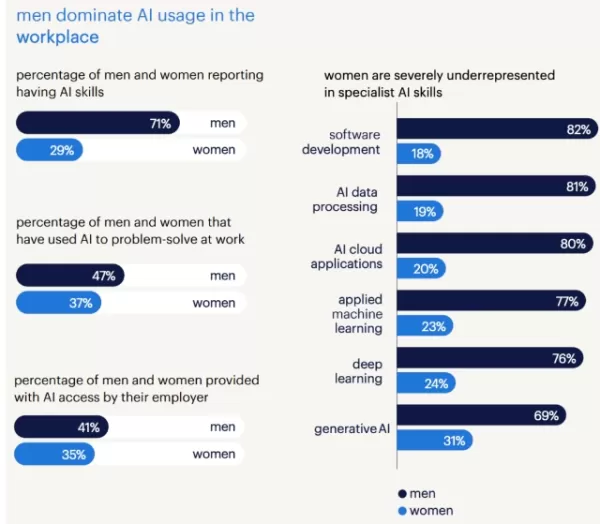
The disparity extends to the professional sphere. According to Randstad, men occupy 71% of AI technology roles, while women hold just 29%. Furthermore, 35% of men receive enterprise AI training compared to 27% of women; regarding generative AI proficiency, 69% of men possess these skills versus only 31% of women.
Experts attribute women’s lower participation in AI to risk perception, limited representation in the tech industry, and unequal time allocation. Studies suggest that women often bear greater family care responsibilities, leaving them with less time to experiment with new technologies, attend training sessions, or engage in continuous practice.
However, opportunities in the AI era extend beyond core technical roles. Fields such as AI ethics governance, healthcare and education applications, product operations, and data analysis offer diverse entry points for women. Experts recommend that companies integrate AI training into standard workflows rather than treating it as an extra burden. By implementing flexible learning structures, fostering community support, and providing practical application scenarios, organizations can better empower women to develop AI competencies.
As artificial intelligence becomes integral to daily work and life, closing the gender gap is not merely a matter of technological equity but also crucial for shaping future talent pools and industrial innovation. Expanding AI education and accessibility will be pivotal to the healthy development of the AI ecosystem.
Related article
 ByteDance shifts AI focus to enterprise as Doubao hits 200 million users, yet revenue remains under $1 million
Doubaobao, ByteDance’s AI offering, has surpassed 200 million daily active users in the first half of the year, yet generates less than 1 million yuan in daily revenue, primarily through e-commerce commissions. This narrow monetization model leaves h
UK AI Startup Emulate Launches Fundraising With Target of Up to $700 Million and Valuation of $3.7 Billion
On Wednesday, September 16, UK-based AI startup Emulate announced a new funding round targeting up to $700 million, achieving a post-money valuation of approximately $3.7 billion. The round was led by Index Ventures and Lightspeed Venture Partners. E
AI founders weigh open vs. closed models at TechCrunch Disrupt 2026
For AI startups, selecting a model is no longer just a one-time architectural choice.Open models are getting better. Frontier APIs keep improving. Models can be tailored for specific tasks, and some companies are building products that use multiple m
Related Special Topic Recommendations
Social Media
ByteDance shifts AI focus to enterprise as Doubao hits 200 million users, yet revenue remains under $1 million
Doubaobao, ByteDance’s AI offering, has surpassed 200 million daily active users in the first half of the year, yet generates less than 1 million yuan in daily revenue, primarily through e-commerce commissions. This narrow monetization model leaves h
UK AI Startup Emulate Launches Fundraising With Target of Up to $700 Million and Valuation of $3.7 Billion
On Wednesday, September 16, UK-based AI startup Emulate announced a new funding round targeting up to $700 million, achieving a post-money valuation of approximately $3.7 billion. The round was led by Index Ventures and Lightspeed Venture Partners. E
AI founders weigh open vs. closed models at TechCrunch Disrupt 2026
For AI startups, selecting a model is no longer just a one-time architectural choice.Open models are getting better. Frontier APIs keep improving. Models can be tailored for specific tasks, and some companies are building products that use multiple m
Related Special Topic Recommendations
Social Media
 AI TikTok Hook Generators for Short-Form Creators
2026 Latest Best AI TikTok Hook Generators for Short-Form Creators! XIX.AI has curated a top-rated list of powerful, game-changing tools that go through real-world tests to deliver must-try hooks every week. You’ll find easy free vs paid comparison options along with detailed rankings to help you find the perfect solution for boosting your content creation efficiency. Explore now to Unlock your AI edge!
 16 tools
 xix.ai
Productivity
Best AI Email Triage Tools for Team Productivity
xix.ai
Productivity
Best AI Email Triage Tools for Team Productivity
2026 Latest Best Top-Rated AI Email Triage Tools for Team Productivity! XIX.AI curates a powerful, game-changing collection of must-try tools that help teams quickly sort through massive email volumes, boost writing efficiency, and save countless hours each week. Our rigorous real-world tests and updated rankings ensure you find the perfect fit for your workflow. Explore now to unlock your AI edge!
10 tools
xix.ai
Music composition
Top AI Songwriting Assistants: Develop Lyrics, Chords, and Melodies
2026 Latest Top-Rated Best AI Songwriting Assistants are here on XIX.AI! This curated list features powerfully efficient tools that go through real-world tests to deliver high-quality lyrics, chords, and melodies effortlessly. Get a free vs paid comparison to find the perfect fit for your creative needs. Explore now to unlock your AI edge in music creation!
12 tools
xix.ai
automation
Top AI Agent Builders: Design Multi-Step Business Automations
2026 Latest Top-Rated Best AI Agent Builders for Creating Multi-Step Business Automations. This curated list features powerful, game-changing tools that go through rigorous real-world tests. You’ll find detailed free vs paid comparisons, comprehensive rankings, and weekly updated insights to help you choose the perfect solution that boosts your productivity significantly. Explore now at XIX.AI to unlock your AI edge!
11 tools
xix.ai
Productivity
AI Task Planning Tools for Busy Professionals
2026 Latest Best Top-rated AI Task Planning Tools for Busy Professionals! XIX.AI has curated a powerful, game-changing collection of highly efficient tools that help users streamline workflows, boost productivity, and overcome daily scheduling challenges. Each option goes through rigorous real-world tests to ensure reliability. Get a free vs paid comparison and discover the perfect tool to unlock your AI edge. Explore now!
15 tools
xix.ai
chatbot
Top AI Customer Chatbots: Answer FAQs and Qualify Leads 24/7
2026 Latest Top-rated AI Customer Chatbots featured on this curated list are the best solutions for answering customer FAQs instantly and qualifying leads around the clock. XIX.AI has conducted rigorous real-world tests to deliver a detailed free vs paid comparison along with up-to-date rankings, helping you find a powerful game-changing tool that boosts productivity significantly. Explore now to Discover your perfect AI chatbot solution!
9 tools
xix.ai

 Comments (0)
0/500
Comments (0)
0/500
In a recent Instagram post, actress Reese Witherspoon encouraged more women to embrace artificial intelligence, highlighting the persistent gender divide in the tech sector. She emphasized that women remain underrepresented in AI applications and expressed her hope to foster greater female engagement with these tools. Nevertheless, the video ignited online debate, with critics pointing out her oversight of AI’s environmental footprint, data center energy consumption, and inherent algorithmic biases.
Empirical data confirms a substantial gender disparity in AI adoption. A meta-analysis released by Harvard Business School in April, drawing from 25 countries and over 143,000 participants, revealed that women are 22% less likely to use generative AI than men. Additionally, a 2024 Deloitte study indicated that AI adoption rates decline with age, with the gender gap becoming especially pronounced among individuals over 45.
The disparity extends to the professional sphere. According to Randstad, men occupy 71% of AI technology roles, while women hold just 29%. Furthermore, 35% of men receive enterprise AI training compared to 27% of women; regarding generative AI proficiency, 69% of men possess these skills versus only 31% of women.
Experts attribute women’s lower participation in AI to risk perception, limited representation in the tech industry, and unequal time allocation. Studies suggest that women often bear greater family care responsibilities, leaving them with less time to experiment with new technologies, attend training sessions, or engage in continuous practice.
However, opportunities in the AI era extend beyond core technical roles. Fields such as AI ethics governance, healthcare and education applications, product operations, and data analysis offer diverse entry points for women. Experts recommend that companies integrate AI training into standard workflows rather than treating it as an extra burden. By implementing flexible learning structures, fostering community support, and providing practical application scenarios, organizations can better empower women to develop AI competencies.
As artificial intelligence becomes integral to daily work and life, closing the gender gap is not merely a matter of technological equity but also crucial for shaping future talent pools and industrial innovation. Expanding AI education and accessibility will be pivotal to the healthy development of the AI ecosystem.








 ByteDance shifts AI focus to enterprise as Doubao hits 200 million users, yet revenue remains under $1 million
Doubaobao, ByteDance’s AI offering, has surpassed 200 million daily active users in the first half of the year, yet generates less than 1 million yuan in daily revenue, primarily through e-commerce commissions. This narrow monetization model leaves h
ByteDance shifts AI focus to enterprise as Doubao hits 200 million users, yet revenue remains under $1 million
Doubaobao, ByteDance’s AI offering, has surpassed 200 million daily active users in the first half of the year, yet generates less than 1 million yuan in daily revenue, primarily through e-commerce commissions. This narrow monetization model leaves h
 UK AI Startup Emulate Launches Fundraising With Target of Up to $700 Million and Valuation of $3.7 Billion
On Wednesday, September 16, UK-based AI startup Emulate announced a new funding round targeting up to $700 million, achieving a post-money valuation of approximately $3.7 billion. The round was led by Index Ventures and Lightspeed Venture Partners. E
UK AI Startup Emulate Launches Fundraising With Target of Up to $700 Million and Valuation of $3.7 Billion
On Wednesday, September 16, UK-based AI startup Emulate announced a new funding round targeting up to $700 million, achieving a post-money valuation of approximately $3.7 billion. The round was led by Index Ventures and Lightspeed Venture Partners. E
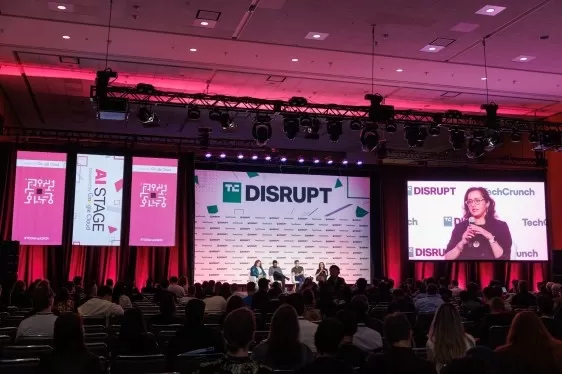 AI founders weigh open vs. closed models at TechCrunch Disrupt 2026
For AI startups, selecting a model is no longer just a one-time architectural choice.Open models are getting better. Frontier APIs keep improving. Models can be tailored for specific tasks, and some companies are building products that use multiple m
AI founders weigh open vs. closed models at TechCrunch Disrupt 2026
For AI startups, selecting a model is no longer just a one-time architectural choice.Open models are getting better. Frontier APIs keep improving. Models can be tailored for specific tasks, and some companies are building products that use multiple m
2026 Latest Best AI TikTok Hook Generators for Short-Form Creators! XIX.AI has curated a top-rated list of powerful, game-changing tools that go through real-world tests to deliver must-try hooks every week. You’ll find easy free vs paid comparison options along with detailed rankings to help you find the perfect solution for boosting your content creation efficiency. Explore now to Unlock your AI edge!
16 tools
xix.ai
2026 Latest Best Top-Rated AI Email Triage Tools for Team Productivity! XIX.AI curates a powerful, game-changing collection of must-try tools that help teams quickly sort through massive email volumes, boost writing efficiency, and save countless hours each week. Our rigorous real-world tests and updated rankings ensure you find the perfect fit for your workflow. Explore now to unlock your AI edge!
10 tools
xix.ai
2026 Latest Top-Rated Best AI Songwriting Assistants are here on XIX.AI! This curated list features powerfully efficient tools that go through real-world tests to deliver high-quality lyrics, chords, and melodies effortlessly. Get a free vs paid comparison to find the perfect fit for your creative needs. Explore now to unlock your AI edge in music creation!
12 tools
xix.ai

2026 Latest Top-Rated Best AI Agent Builders for Creating Multi-Step Business Automations. This curated list features powerful, game-changing tools that go through rigorous real-world tests. You’ll find detailed free vs paid comparisons, comprehensive rankings, and weekly updated insights to help you choose the perfect solution that boosts your productivity significantly. Explore now at XIX.AI to unlock your AI edge!
11 tools
xix.ai

2026 Latest Best Top-rated AI Task Planning Tools for Busy Professionals! XIX.AI has curated a powerful, game-changing collection of highly efficient tools that help users streamline workflows, boost productivity, and overcome daily scheduling challenges. Each option goes through rigorous real-world tests to ensure reliability. Get a free vs paid comparison and discover the perfect tool to unlock your AI edge. Explore now!
15 tools
xix.ai

2026 Latest Top-rated AI Customer Chatbots featured on this curated list are the best solutions for answering customer FAQs instantly and qualifying leads around the clock. XIX.AI has conducted rigorous real-world tests to deliver a detailed free vs paid comparison along with up-to-date rankings, helping you find a powerful game-changing tool that boosts productivity significantly. Explore now to Discover your perfect AI chatbot solution!
9 tools
xix.ai












