


 Home
Home
UK AI Startup Emulate Launches Fundraising With Target of Up to $700 Million and Valuation of $3.7 Billion

On Wednesday, September 16, UK-based AI startup Emulate announced a new funding round targeting up to $700 million, achieving a post-money valuation of approximately $3.7 billion. The round was led by Index Ventures and Lightspeed Venture Partners. Emulate was established in August 2026 by founders Jack Parker-Holder and Matthew McGill, both former Google DeepMind researchers who contributed to the development of DeepMind’s Genie world model.
Genie generates realistic videos and interactive 3D environments from short text prompts. Since its January release, the model has disrupted the gaming sector, causing billions in combined market value losses for industry giants Take-Two, Roblox, and Unity. Trained to understand and replicate physical spaces, Genie represents a new frontier in AI research, facing less intense competition than the large language models powering ChatGPT, Gemini, and Claude. Operating quietly until now, Emulate is the third UK-based spin-off from DeepMind’s London office to secure hundreds of millions in funding this year.
Startups founded by former researchers from major AI firms are increasingly known as "neo-labs." These entities have attracted hundreds of billions in funding this year, often securing high valuations before product launches by leveraging their founders' reputations. Last month, Google chief scientist Jeff Dean departed to launch Discovery Loop, an AI startup. Meanwhile, David Silver, a former DeepMind researcher, raised approximately $1 billion at a $5 billion valuation for Ineffable Intelligence. Additionally, a team of ex-DeepMind and OpenAI engineers founded Recursive Superintelligence, securing over $600 million at a $4 billion valuation.
The two primary expenses for these companies are computing infrastructure financing and recruiting top-tier researchers.
Related article
 ByteDance shifts AI focus to enterprise as Doubao hits 200 million users, yet revenue remains under $1 million
Doubaobao, ByteDance’s AI offering, has surpassed 200 million daily active users in the first half of the year, yet generates less than 1 million yuan in daily revenue, primarily through e-commerce commissions. This narrow monetization model leaves h
AI founders weigh open vs. closed models at TechCrunch Disrupt 2026
For AI startups, selecting a model is no longer just a one-time architectural choice.Open models are getting better. Frontier APIs keep improving. Models can be tailored for specific tasks, and some companies are building products that use multiple m
Moonshot AI’s Kimi K2.5, the first trillion-parameter multimodal model, retires at month’s end
Moonshot announced via Kimi’s official Weibo that its inaugural trillion-parameter multimodal model, Kimi K2.5, will be retired by the end of this month. Launched and open-sourced in January, K2.5 stands as Kimi’s most versatile model to date, featur
Related Special Topic Recommendations
Productivity
ByteDance shifts AI focus to enterprise as Doubao hits 200 million users, yet revenue remains under $1 million
Doubaobao, ByteDance’s AI offering, has surpassed 200 million daily active users in the first half of the year, yet generates less than 1 million yuan in daily revenue, primarily through e-commerce commissions. This narrow monetization model leaves h
AI founders weigh open vs. closed models at TechCrunch Disrupt 2026
For AI startups, selecting a model is no longer just a one-time architectural choice.Open models are getting better. Frontier APIs keep improving. Models can be tailored for specific tasks, and some companies are building products that use multiple m
Moonshot AI’s Kimi K2.5, the first trillion-parameter multimodal model, retires at month’s end
Moonshot announced via Kimi’s official Weibo that its inaugural trillion-parameter multimodal model, Kimi K2.5, will be retired by the end of this month. Launched and open-sourced in January, K2.5 stands as Kimi’s most versatile model to date, featur
Related Special Topic Recommendations
Productivity
 Best AI Email Triage Tools for Team Productivity
2026 Latest Best Top-Rated AI Email Triage Tools for Team Productivity! XIX.AI curates a powerful, game-changing collection of must-try tools that help teams quickly sort through massive email volumes, boost writing efficiency, and save countless hours each week. Our rigorous real-world tests and updated rankings ensure you find the perfect fit for your workflow. Explore now to unlock your AI edge!
 10 tools
 xix.ai
Music composition
Top AI Songwriting Assistants: Develop Lyrics, Chords, and Melodies
xix.ai
Music composition
Top AI Songwriting Assistants: Develop Lyrics, Chords, and Melodies
2026 Latest Top-Rated Best AI Songwriting Assistants are here on XIX.AI! This curated list features powerfully efficient tools that go through real-world tests to deliver high-quality lyrics, chords, and melodies effortlessly. Get a free vs paid comparison to find the perfect fit for your creative needs. Explore now to unlock your AI edge in music creation!
12 tools
xix.ai
automation
Top AI Agent Builders: Design Multi-Step Business Automations
2026 Latest Top-Rated Best AI Agent Builders for Creating Multi-Step Business Automations. This curated list features powerful, game-changing tools that go through rigorous real-world tests. You’ll find detailed free vs paid comparisons, comprehensive rankings, and weekly updated insights to help you choose the perfect solution that boosts your productivity significantly. Explore now at XIX.AI to unlock your AI edge!
11 tools
xix.ai
Productivity
AI Task Planning Tools for Busy Professionals
2026 Latest Best Top-rated AI Task Planning Tools for Busy Professionals! XIX.AI has curated a powerful, game-changing collection of highly efficient tools that help users streamline workflows, boost productivity, and overcome daily scheduling challenges. Each option goes through rigorous real-world tests to ensure reliability. Get a free vs paid comparison and discover the perfect tool to unlock your AI edge. Explore now!
15 tools
xix.ai
chatbot
Top AI Customer Chatbots: Answer FAQs and Qualify Leads 24/7
2026 Latest Top-rated AI Customer Chatbots featured on this curated list are the best solutions for answering customer FAQs instantly and qualifying leads around the clock. XIX.AI has conducted rigorous real-world tests to deliver a detailed free vs paid comparison along with up-to-date rankings, helping you find a powerful game-changing tool that boosts productivity significantly. Explore now to Discover your perfect AI chatbot solution!
9 tools
xix.ai
Design & Art
AI Storyboard Generators for Ad Creative Teams
2026 Latest Best AI Storyboard Generators for Ad Creative Teams! XIX.AI has curated a top-rated list of powerful, game-changing tools that help teams create stunning visual content faster through real-world tests and rigorous weekly updated rankings. Enjoy a free vs paid comparison to find the perfect fit for your workflow. Explore now to unlock your AI edge in ad creation!
8 tools
xix.ai

 Comments (0)
0/500
Comments (0)
0/500
On Wednesday, September 16, UK-based AI startup Emulate announced a new funding round targeting up to $700 million, achieving a post-money valuation of approximately $3.7 billion. The round was led by Index Ventures and Lightspeed Venture Partners. Emulate was established in August 2026 by founders Jack Parker-Holder and Matthew McGill, both former Google DeepMind researchers who contributed to the development of DeepMind’s Genie world model.
Genie generates realistic videos and interactive 3D environments from short text prompts. Since its January release, the model has disrupted the gaming sector, causing billions in combined market value losses for industry giants Take-Two, Roblox, and Unity. Trained to understand and replicate physical spaces, Genie represents a new frontier in AI research, facing less intense competition than the large language models powering ChatGPT, Gemini, and Claude. Operating quietly until now, Emulate is the third UK-based spin-off from DeepMind’s London office to secure hundreds of millions in funding this year.
Startups founded by former researchers from major AI firms are increasingly known as "neo-labs." These entities have attracted hundreds of billions in funding this year, often securing high valuations before product launches by leveraging their founders' reputations. Last month, Google chief scientist Jeff Dean departed to launch Discovery Loop, an AI startup. Meanwhile, David Silver, a former DeepMind researcher, raised approximately $1 billion at a $5 billion valuation for Ineffable Intelligence. Additionally, a team of ex-DeepMind and OpenAI engineers founded Recursive Superintelligence, securing over $600 million at a $4 billion valuation.
The two primary expenses for these companies are computing infrastructure financing and recruiting top-tier researchers.








 ByteDance shifts AI focus to enterprise as Doubao hits 200 million users, yet revenue remains under $1 million
Doubaobao, ByteDance’s AI offering, has surpassed 200 million daily active users in the first half of the year, yet generates less than 1 million yuan in daily revenue, primarily through e-commerce commissions. This narrow monetization model leaves h
ByteDance shifts AI focus to enterprise as Doubao hits 200 million users, yet revenue remains under $1 million
Doubaobao, ByteDance’s AI offering, has surpassed 200 million daily active users in the first half of the year, yet generates less than 1 million yuan in daily revenue, primarily through e-commerce commissions. This narrow monetization model leaves h
 AI founders weigh open vs. closed models at TechCrunch Disrupt 2026
For AI startups, selecting a model is no longer just a one-time architectural choice.Open models are getting better. Frontier APIs keep improving. Models can be tailored for specific tasks, and some companies are building products that use multiple m
AI founders weigh open vs. closed models at TechCrunch Disrupt 2026
For AI startups, selecting a model is no longer just a one-time architectural choice.Open models are getting better. Frontier APIs keep improving. Models can be tailored for specific tasks, and some companies are building products that use multiple m
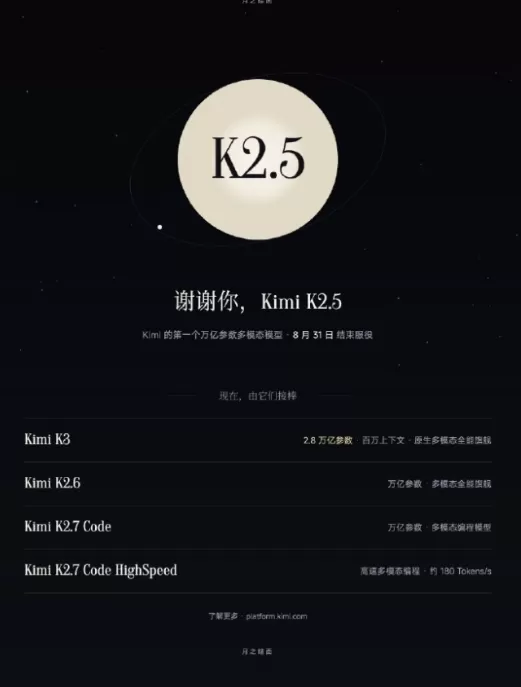 Moonshot AI’s Kimi K2.5, the first trillion-parameter multimodal model, retires at month’s end
Moonshot announced via Kimi’s official Weibo that its inaugural trillion-parameter multimodal model, Kimi K2.5, will be retired by the end of this month. Launched and open-sourced in January, K2.5 stands as Kimi’s most versatile model to date, featur
Moonshot AI’s Kimi K2.5, the first trillion-parameter multimodal model, retires at month’s end
Moonshot announced via Kimi’s official Weibo that its inaugural trillion-parameter multimodal model, Kimi K2.5, will be retired by the end of this month. Launched and open-sourced in January, K2.5 stands as Kimi’s most versatile model to date, featur

2026 Latest Best Top-Rated AI Email Triage Tools for Team Productivity! XIX.AI curates a powerful, game-changing collection of must-try tools that help teams quickly sort through massive email volumes, boost writing efficiency, and save countless hours each week. Our rigorous real-world tests and updated rankings ensure you find the perfect fit for your workflow. Explore now to unlock your AI edge!
10 tools
xix.ai

2026 Latest Top-Rated Best AI Songwriting Assistants are here on XIX.AI! This curated list features powerfully efficient tools that go through real-world tests to deliver high-quality lyrics, chords, and melodies effortlessly. Get a free vs paid comparison to find the perfect fit for your creative needs. Explore now to unlock your AI edge in music creation!
12 tools
xix.ai

2026 Latest Top-Rated Best AI Agent Builders for Creating Multi-Step Business Automations. This curated list features powerful, game-changing tools that go through rigorous real-world tests. You’ll find detailed free vs paid comparisons, comprehensive rankings, and weekly updated insights to help you choose the perfect solution that boosts your productivity significantly. Explore now at XIX.AI to unlock your AI edge!
11 tools
xix.ai

2026 Latest Best Top-rated AI Task Planning Tools for Busy Professionals! XIX.AI has curated a powerful, game-changing collection of highly efficient tools that help users streamline workflows, boost productivity, and overcome daily scheduling challenges. Each option goes through rigorous real-world tests to ensure reliability. Get a free vs paid comparison and discover the perfect tool to unlock your AI edge. Explore now!
15 tools
xix.ai

2026 Latest Top-rated AI Customer Chatbots featured on this curated list are the best solutions for answering customer FAQs instantly and qualifying leads around the clock. XIX.AI has conducted rigorous real-world tests to deliver a detailed free vs paid comparison along with up-to-date rankings, helping you find a powerful game-changing tool that boosts productivity significantly. Explore now to Discover your perfect AI chatbot solution!
9 tools
xix.ai

2026 Latest Best AI Storyboard Generators for Ad Creative Teams! XIX.AI has curated a top-rated list of powerful, game-changing tools that help teams create stunning visual content faster through real-world tests and rigorous weekly updated rankings. Enjoy a free vs paid comparison to find the perfect fit for your workflow. Explore now to unlock your AI edge in ad creation!
8 tools
xix.ai












