


 Home
HomeRunway Explores Robotics as New Revenue Stream to Fuel Growth

For the past seven years, Runway has developed visual generation tools for the creative industry. Now, the company sees a fresh opportunity for its technology in robotics.
Based in New York, Runway is recognized for its AI world models that generate video and photo content—essentially large language models that simulate versions of the real world. The company launched Gen-4, its video generation model, in March, followed by Runway Aleph, a video editing model, in July.
As Runway's world models became more advanced and realistic, the company started receiving inquiries from robotics and autonomous vehicle firms interested in the technology, according to Anastasis Germanidis, Runway’s co-founder and CTO, in an interview with TechCrunch.
"We believe this capability to simulate the world has broad applications beyond entertainment, even though entertainment remains a major and growing focus for us," Germanidis stated. "This technology makes training robotic policies that interact with the real world—whether in robotics or self-driving cars—far more scalable and cost-effective."
Germanidis noted that collaborating with robotics and autonomous vehicle companies wasn't part of Runway’s initial vision when it launched in 2018. It was only after companies from these and other industries reached out that Runway realized its models had a broader range of applications than originally anticipated.
Robotics companies are now utilizing Runway's technology for training simulations, Germanidis explained. He added that training robots and self-driving cars in real-world environments is expensive, time-consuming, and difficult to scale for most companies.
Although Runway acknowledges that its simulations won't replace real-world training entirely, Germanidis emphasized that companies can gain significant value by running simulations on Runway’s models, which can replicate highly specific scenarios.
Tech and VC heavyweights join the Disrupt 2025 agenda
Netflix, ElevenLabs, Wayve, Sequoia Capital, Elad Gil—these are just some of the top names joining the Disrupt 2025 agenda. They’re here to share insights that help startups grow and gain a competitive edge. Don’t miss the 20th anniversary of TechCrunch Disrupt—a unique opportunity to learn from leading voices in tech. Secure your ticket now and save over $600 before prices increase.
Tech and VC heavyweights join the Disrupt 2025 agenda
Netflix, ElevenLabs, Wayve, Sequoia Capital—just a few of the industry leaders joining the Disrupt 2025 agenda. They’ll share the insights that help startups grow and sharpen their competitive edge. Don’t miss the 20th anniversary of TechCrunch Disrupt—your chance to learn from the best in tech. Get your ticket today and save up to $675 before prices rise.
Unlike real-world training, using these models enables more straightforward testing of specific variables and situations without altering other aspects of the scenario, he added.
"You can take a step back and simulate the results of different actions," he explained. "For instance, if a vehicle takes one turn instead of another, or performs a certain maneuver, what will happen? Simulating these alternative outcomes from the same starting point is extremely challenging in the physical world—where keeping all environmental factors constant while testing a specific action is nearly impossible."
Runway isn't the only company exploring this field. For example, Nvidia recently introduced the latest iteration of its Cosmos world models, along with additional robot training infrastructure, earlier this month.
The company doesn't plan to create entirely separate model lines for its robotics and autonomous driving clients, Germanidis said. Instead, Runway intends to fine-tune its existing models to better serve these sectors. A dedicated robotics team is also in development.
Germanidis added that although these industries weren't part of the company's original pitch to investors, they now support this expansion. Runway has raised over $500 million from backers including Nvidia, Google, and General Atlantic, and is valued at $3 billion.
"We see the company as being built on a principle, not just focused on a market," Germanidis remarked. "That principle is the idea of simulation—creating increasingly accurate representations of the world. Once you develop such powerful models, they can be applied across diverse markets and industries. The industries we serve are already evolving, and they'll continue to transform as generative models grow even more capable."
Related article
 Khosla-backed Genesis AI Unveils Full-Stack Robotics Solution
Genesis AI, a startup that secured a $105 million seed round to develop foundational AI for robotics, has launched its inaugural model, GENE-26.5, featuring unexpectedly dexterous hands. In a demonstration video, the company highlighted various advan
How US$900m Funding Will Shape XPENG’s Robotics Vision
XPENG’s robotics division secures over US$900 million in funding, achieving a post-money valuation exceeding US$6.3 billion and accelerating the deployment of physical AI. Credit: XPENGSven De Smet, Head of Brand & Marketing at XPENG Europe, describe
Japan Launches World’s First National AI Infrastructure with NVIDIA
Japan's Ministry of Economy, Trade and Industry plans to deploy approximately 10 million AI-powered robots across 18 industries by 2040, addressing the country's growing labor shortage, according to NHK. Credit: NVIDIAThe Japanese government, along w
Related Special Topic Recommendations
Music composition
Khosla-backed Genesis AI Unveils Full-Stack Robotics Solution
Genesis AI, a startup that secured a $105 million seed round to develop foundational AI for robotics, has launched its inaugural model, GENE-26.5, featuring unexpectedly dexterous hands. In a demonstration video, the company highlighted various advan
How US$900m Funding Will Shape XPENG’s Robotics Vision
XPENG’s robotics division secures over US$900 million in funding, achieving a post-money valuation exceeding US$6.3 billion and accelerating the deployment of physical AI. Credit: XPENGSven De Smet, Head of Brand & Marketing at XPENG Europe, describe
Japan Launches World’s First National AI Infrastructure with NVIDIA
Japan's Ministry of Economy, Trade and Industry plans to deploy approximately 10 million AI-powered robots across 18 industries by 2040, addressing the country's growing labor shortage, according to NHK. Credit: NVIDIAThe Japanese government, along w
Related Special Topic Recommendations
Music composition
 AI Stem Separation Tools for Remix Production, Sampling Prep, and Karaoke Masters
2026 Latest Best Top-rated AI Stem Separation Tools Curated for Remix Production, Sampling Prep, and Karaoke Masters. These powerful game-changing tools offer real-world tests to deliver precise audio isolation, boosting productivity significantly. XIX.AI provides a weekly updated free vs paid comparison guide to help you find the must-try solution that suits your needs. Explore now to unlock your AI edge.
 8 tools
 xix.ai
Data Analysis
AI SQL Copilots for Revenue Dashboards, Funnel Analysis, and Product Metrics
xix.ai
Data Analysis
AI SQL Copilots for Revenue Dashboards, Funnel Analysis, and Product Metrics
2026 Latest Best AI SQL Copilots Ranked Top-Rated! XIX.AI curates a powerful game-changing collection for weekly updated real-world tests. These must-try tools help you generate accurate revenue dashboards, analyze sales funnels, and track product metrics swiftly, boosting productivity massively. Explore now to Discover your perfect tool for data-driven decision making! 238 characters
9 tools
xix.ai
Music composition
Best AI Melody Writing Tools for Song Drafts
2026 Latest Best Top-Rated AI Melody Writing Tools for Song Drafts! XIX.AI has curated a highly powerful game-changing collection that goes through rigorous real-world tests to deliver the best writing experience. You can find detailed free vs paid comparisons, accurate rankings, and must-try options designed to help you create stunning song drafts effortlessly and boost your creative productivity significantly. Explore now to discover your perfect tool!
8 tools
xix.ai
chatbot
Best AI Conversation Trainer Tools for Interview Practice
2026 Latest Best Top-rated AI Conversation Trainer Tools for Interview Practice are here on XIX.AI! This curated collection features powerful, game-changing tools that go through rigorous real-world tests to deliver accurate feedback. You’ll find a free vs paid comparison and detailed rankings to help you choose the must-try option that boosts your confidence and skills. Explore now to Discover your perfect tool for interview success!
12 tools
xix.ai
Design & Art
Best AI Style Transfer Tools for Creative Experiments
2026 Latest Best Top-rated AI Style Transfer Tools for Creative Experiments! XIX.AI has curated a powerful, game-changing collection of must-try tools that deliver exceptional results through real-world tests and rigorous rankings. These top solutions help creatives boost productivity significantly by accelerating content creation and unlocking endless creative possibilities. Explore now to discover your perfect tool and start creating today!
9 tools
xix.ai
Comic Creation
Best AI Dialogue Bubble Tools for Visual Storytelling
2026 Latest Best Top-Rated AI Dialogue Bubble Tools for Visual Storytelling are here on XIX.AI! This curated collection features powerful, game-changing tools that help creators boost productivity and overcome creative bottlenecks. Get a free vs paid comparison, see real-world tests, and check the latest rankings to find the must-try solutions perfect for crafting engaging visual narratives. Explore now to discover your ideal tool!
10 tools
xix.ai

 Comments (1)
0/500
Comments (1)
0/500
![RalphMitchell]()
このロボット応用の流れ、すごく興味深いな!🤖 ゲーム業界との類似点が多い気がするけど、どう思いますか?DeepMindやOpenAIみたいな他社も同じ方向に進んでるんだよね。技術の進化は早いけど、倫理的な問題もちゃんと考えないと…
For the past seven years, Runway has developed visual generation tools for the creative industry. Now, the company sees a fresh opportunity for its technology in robotics.
Based in New York, Runway is recognized for its AI world models that generate video and photo content—essentially large language models that simulate versions of the real world. The company launched Gen-4, its video generation model, in March, followed by Runway Aleph, a video editing model, in July.
As Runway's world models became more advanced and realistic, the company started receiving inquiries from robotics and autonomous vehicle firms interested in the technology, according to Anastasis Germanidis, Runway’s co-founder and CTO, in an interview with TechCrunch.
"We believe this capability to simulate the world has broad applications beyond entertainment, even though entertainment remains a major and growing focus for us," Germanidis stated. "This technology makes training robotic policies that interact with the real world—whether in robotics or self-driving cars—far more scalable and cost-effective."
Germanidis noted that collaborating with robotics and autonomous vehicle companies wasn't part of Runway’s initial vision when it launched in 2018. It was only after companies from these and other industries reached out that Runway realized its models had a broader range of applications than originally anticipated.
Robotics companies are now utilizing Runway's technology for training simulations, Germanidis explained. He added that training robots and self-driving cars in real-world environments is expensive, time-consuming, and difficult to scale for most companies.
Although Runway acknowledges that its simulations won't replace real-world training entirely, Germanidis emphasized that companies can gain significant value by running simulations on Runway’s models, which can replicate highly specific scenarios.
Tech and VC heavyweights join the Disrupt 2025 agenda
Netflix, ElevenLabs, Wayve, Sequoia Capital, Elad Gil—these are just some of the top names joining the Disrupt 2025 agenda. They’re here to share insights that help startups grow and gain a competitive edge. Don’t miss the 20th anniversary of TechCrunch Disrupt—a unique opportunity to learn from leading voices in tech. Secure your ticket now and save over $600 before prices increase.
Tech and VC heavyweights join the Disrupt 2025 agenda
Netflix, ElevenLabs, Wayve, Sequoia Capital—just a few of the industry leaders joining the Disrupt 2025 agenda. They’ll share the insights that help startups grow and sharpen their competitive edge. Don’t miss the 20th anniversary of TechCrunch Disrupt—your chance to learn from the best in tech. Get your ticket today and save up to $675 before prices rise.
Unlike real-world training, using these models enables more straightforward testing of specific variables and situations without altering other aspects of the scenario, he added.
"You can take a step back and simulate the results of different actions," he explained. "For instance, if a vehicle takes one turn instead of another, or performs a certain maneuver, what will happen? Simulating these alternative outcomes from the same starting point is extremely challenging in the physical world—where keeping all environmental factors constant while testing a specific action is nearly impossible."
Runway isn't the only company exploring this field. For example, Nvidia recently introduced the latest iteration of its Cosmos world models, along with additional robot training infrastructure, earlier this month.
The company doesn't plan to create entirely separate model lines for its robotics and autonomous driving clients, Germanidis said. Instead, Runway intends to fine-tune its existing models to better serve these sectors. A dedicated robotics team is also in development.
Germanidis added that although these industries weren't part of the company's original pitch to investors, they now support this expansion. Runway has raised over $500 million from backers including Nvidia, Google, and General Atlantic, and is valued at $3 billion.
"We see the company as being built on a principle, not just focused on a market," Germanidis remarked. "That principle is the idea of simulation—creating increasingly accurate representations of the world. Once you develop such powerful models, they can be applied across diverse markets and industries. The industries we serve are already evolving, and they'll continue to transform as generative models grow even more capable."








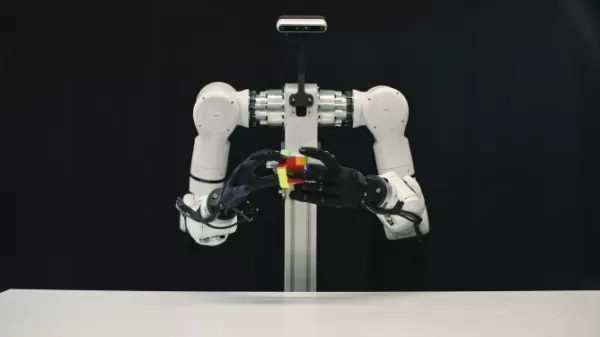 Khosla-backed Genesis AI Unveils Full-Stack Robotics Solution
Genesis AI, a startup that secured a $105 million seed round to develop foundational AI for robotics, has launched its inaugural model, GENE-26.5, featuring unexpectedly dexterous hands. In a demonstration video, the company highlighted various advan
Khosla-backed Genesis AI Unveils Full-Stack Robotics Solution
Genesis AI, a startup that secured a $105 million seed round to develop foundational AI for robotics, has launched its inaugural model, GENE-26.5, featuring unexpectedly dexterous hands. In a demonstration video, the company highlighted various advan
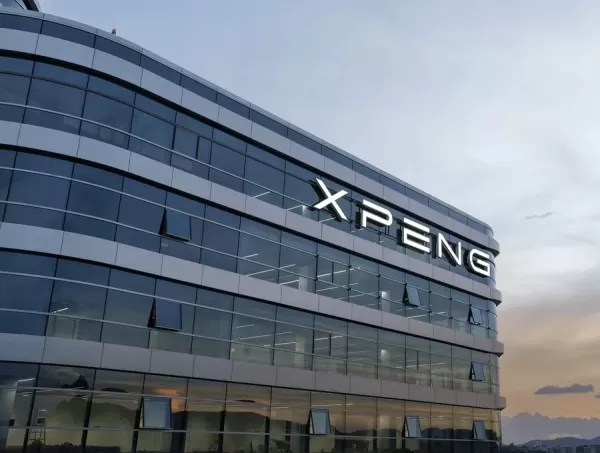 How US$900m Funding Will Shape XPENG’s Robotics Vision
XPENG’s robotics division secures over US$900 million in funding, achieving a post-money valuation exceeding US$6.3 billion and accelerating the deployment of physical AI. Credit: XPENGSven De Smet, Head of Brand & Marketing at XPENG Europe, describe
How US$900m Funding Will Shape XPENG’s Robotics Vision
XPENG’s robotics division secures over US$900 million in funding, achieving a post-money valuation exceeding US$6.3 billion and accelerating the deployment of physical AI. Credit: XPENGSven De Smet, Head of Brand & Marketing at XPENG Europe, describe
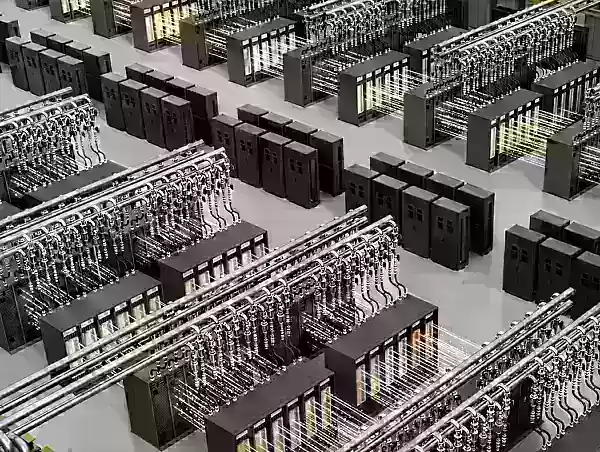 Japan Launches World’s First National AI Infrastructure with NVIDIA
Japan's Ministry of Economy, Trade and Industry plans to deploy approximately 10 million AI-powered robots across 18 industries by 2040, addressing the country's growing labor shortage, according to NHK. Credit: NVIDIAThe Japanese government, along w
Japan Launches World’s First National AI Infrastructure with NVIDIA
Japan's Ministry of Economy, Trade and Industry plans to deploy approximately 10 million AI-powered robots across 18 industries by 2040, addressing the country's growing labor shortage, according to NHK. Credit: NVIDIAThe Japanese government, along w

2026 Latest Best Top-rated AI Stem Separation Tools Curated for Remix Production, Sampling Prep, and Karaoke Masters. These powerful game-changing tools offer real-world tests to deliver precise audio isolation, boosting productivity significantly. XIX.AI provides a weekly updated free vs paid comparison guide to help you find the must-try solution that suits your needs. Explore now to unlock your AI edge.
8 tools
xix.ai

2026 Latest Best AI SQL Copilots Ranked Top-Rated! XIX.AI curates a powerful game-changing collection for weekly updated real-world tests. These must-try tools help you generate accurate revenue dashboards, analyze sales funnels, and track product metrics swiftly, boosting productivity massively. Explore now to Discover your perfect tool for data-driven decision making! 238 characters
9 tools
xix.ai

2026 Latest Best Top-Rated AI Melody Writing Tools for Song Drafts! XIX.AI has curated a highly powerful game-changing collection that goes through rigorous real-world tests to deliver the best writing experience. You can find detailed free vs paid comparisons, accurate rankings, and must-try options designed to help you create stunning song drafts effortlessly and boost your creative productivity significantly. Explore now to discover your perfect tool!
8 tools
xix.ai

2026 Latest Best Top-rated AI Conversation Trainer Tools for Interview Practice are here on XIX.AI! This curated collection features powerful, game-changing tools that go through rigorous real-world tests to deliver accurate feedback. You’ll find a free vs paid comparison and detailed rankings to help you choose the must-try option that boosts your confidence and skills. Explore now to Discover your perfect tool for interview success!
12 tools
xix.ai

2026 Latest Best Top-rated AI Style Transfer Tools for Creative Experiments! XIX.AI has curated a powerful, game-changing collection of must-try tools that deliver exceptional results through real-world tests and rigorous rankings. These top solutions help creatives boost productivity significantly by accelerating content creation and unlocking endless creative possibilities. Explore now to discover your perfect tool and start creating today!
9 tools
xix.ai

2026 Latest Best Top-Rated AI Dialogue Bubble Tools for Visual Storytelling are here on XIX.AI! This curated collection features powerful, game-changing tools that help creators boost productivity and overcome creative bottlenecks. Get a free vs paid comparison, see real-world tests, and check the latest rankings to find the must-try solutions perfect for crafting engaging visual narratives. Explore now to discover your ideal tool!
10 tools
xix.ai

このロボット応用の流れ、すごく興味深いな!🤖 ゲーム業界との類似点が多い気がするけど、どう思いますか?DeepMindやOpenAIみたいな他社も同じ方向に進んでるんだよね。技術の進化は早いけど、倫理的な問題もちゃんと考えないと…












