


 Home
HomeRunway CEO: AI Could Enable Hollywood to Produce More Films at Lower Cost
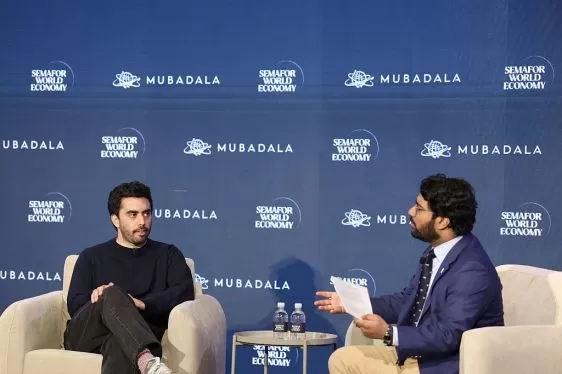
Cristóbal Valenzuela, co-founder and CEO of the AI video generation company Runway, has made comments that are unlikely to win favor with creatives skeptical of artificial intelligence. Runway is now valued at over $5 billion, but Valenzuela's recent remarks at Semafor's World Economy Summit about AI's role in Hollywood may further polarize the debate.
During the summit, Valenzuela proposed a radical shift for film studios. Instead of investing $100 million in a single movie, he suggested allocating that same budget across 50 films. This approach, he argued, would dramatically increase output and improve the odds of producing a major hit.
"Consider a studio spending a hundred million dollars on one 90-minute feature film," Valenzuela said. "Now imagine taking that hundred million and funding 50 movies instead. The visual quality and output per film could be maintained, but you generate far more content. This significantly boosts your chances of success. It becomes a question of volume."
This perspective challenges the traditional view of filmmaking as an artistic investment, where studios succeed by carefully selecting and backing the right creative vision. Valenzuela's AI-driven proposal frames the industry as a numbers game: produce enough content, and statistical probability will lead to success.
In his interview, Valenzuela acknowledged the controversy surrounding AI's entry into creative fields like film and television. However, he emphasized that "things are changing fast." He believes much of the initial skepticism stemmed from fear and a lack of understanding, whereas now, the capabilities of advanced AI tools are becoming widely recognized.
He stated that Runway is developing AI "world models" designed to help creatives accomplish "more work, better and faster." The company collaborates with numerous studios and creators, and Valenzuela claims their technology is already effectively reducing production costs.
This trend is already underway. For instance, the upcoming $70 million film "Bitcoin: Killing Satoshi" is set to be the first studio-quality AI feature film. Reports indicate AI slashed its production budget from an initial estimate of $300 million. Amazon has also adopted AI to cut costs for film and TV, as have studios in India. Sony Pictures has announced plans to utilize the technology, and even director James Cameron has endorsed AI as a means to sustain blockbuster production without resorting to layoffs.
When asked which areas of filmmaking are seeing cost reductions, Valenzuela replied, "It's everywhere. Pre-production, scripting, planning, execution, visual effects—this technology is already being deployed at a large scale."
While AI may lower barriers to producing more content, critics challenge the tech industry's assumption that scaling up creativity with AI will inherently yield more great art.
Runway, however, firmly believes in this premise. "The industry faces a creativity crisis due to the economic incentives dictating how content is made," Valenzuela said. He drew a parallel to book publishing, where he estimates around 25 million books are produced annually—far more than any individual could read.
"Naturally, I don't read 25 million books," he continued. "But the world is better off because more people have the opportunity to tell their story or share their message with the world."
(It's worth noting that Valenzuela's figure seems inflated. UNESCO data shows approximately 2.2 million new book titles are published yearly. His estimate may include self-published ebooks and online stories from platforms like Wattpad, many of which are now also created with AI and are often omitted from traditional publishing statistics.)
Regardless, the core idea is to saturate the market with content, banking on the likelihood that a fraction will become hits. This is the future Valenzuela envisions for the movie industry, powered by AI.
"We have a saying at Runway: the best movies are yet to be made," Valenzuela concluded. "That's because billions of potential storytellers haven't had access to this technology... until now."
Related article
 Google AI Overviews Gain Ground in Search Results
According to Similarweb’s 2026 Generative AI Landscape report, Google’s AI-generated summaries appeared in 43% of US searches, a significant rise from 15% recorded a year prior.While AI Overviews present generated summaries within standard search res
Sequoia-backed Empirik raises $21M to forecast outages before they strike
Before joining Sequoia Capital in 2020 as chief digital and information officer, Avon Puri spent over a decade running infrastructure at Rubrik and VMware. Three years ago, as large language models began showing their true potential, Puri, alongside
ElevenLabs brings on BlackRock, Jamie Foxx and Longoria as new investors
ElevenLabs, a leader in Voice AI, has announced new participants in its $500 million Series D funding round, initially revealed in February. The investor roster now features major institutions like BlackRock, Wellington, D.E. Shaw, and Schroders, alo
Related Special Topic Recommendations
Design & Art
Google AI Overviews Gain Ground in Search Results
According to Similarweb’s 2026 Generative AI Landscape report, Google’s AI-generated summaries appeared in 43% of US searches, a significant rise from 15% recorded a year prior.While AI Overviews present generated summaries within standard search res
Sequoia-backed Empirik raises $21M to forecast outages before they strike
Before joining Sequoia Capital in 2020 as chief digital and information officer, Avon Puri spent over a decade running infrastructure at Rubrik and VMware. Three years ago, as large language models began showing their true potential, Puri, alongside
ElevenLabs brings on BlackRock, Jamie Foxx and Longoria as new investors
ElevenLabs, a leader in Voice AI, has announced new participants in its $500 million Series D funding round, initially revealed in February. The investor roster now features major institutions like BlackRock, Wellington, D.E. Shaw, and Schroders, alo
Related Special Topic Recommendations
Design & Art
 Top AI Illustration Tools: Create Editorial Scenes and Cover Art Faster
2026 Latest Top-rated AI Illustration Tools: Our curated list features the best powerfully designed tools for creating stunning editorial scenes and eye-catching cover art quickly. Each option has gone through rigorous real-world tests, offering a free vs paid comparison to help you find the perfect match for your workflow. Try these must-try solutions today to unlock your AI edge and boost your creative productivity. Explore now at XIX.AI.
 10 tools
 xix.ai
Education and Learning
Top AI Tutors for Exam Prep: Practice Math, Science, and English
xix.ai
Education and Learning
Top AI Tutors for Exam Prep: Practice Math, Science, and English
2026 Latest Top-Rated Best AI Tutors for Exam Prep are here on XIX.AI! Our curated list features powerful game-changing tools that offer free vs paid comparison, real-world tests, and weekly updated rankings. They help boost your writing efficiency, simplify complex topic learning, and unlock your academic potential. Explore now to Discover your perfect exam prep tool and Start creating today to Unlock your AI edge!
10 tools
xix.ai
Finance
AI Budget Planning Tools for Personal Money Management
2026 Latest Best Top-Rated AI Budget Planning Tools for Personal Money Management are here on XIX.AI! This curated collection features powerful, game-changing solutions that help you conduct real-world tests, understand spending habits, and create personalized plans to boost productivity. Enjoy a free vs paid comparison along with detailed rankings. Must-try tools designed to simplify money management and unlock your AI edge. Explore now!
11 tools
xix.ai
Health & Wellness
AI Sleep Tracking Assistants: Improve Recovery with Better Bedtime Habits
2026 Latest Best Top-Rated AI Sleep Tracking Assistants curated for ultimate recovery. This fully updated weekly guide features powerful tools that deliver real-world tests, free vs paid comparison, and detailed rankings to help you find the must-try solution that boosts sleep quality and supports better bedtime habits. Explore now at XIX.AI to Unlock your AI edge.
10 tools
xix.ai
Data Analysis
AI SQL Copilots for Product and Revenue Analytics
2026 Latest Best Top-Rated AI SQL Copilots for Product and Revenue Analytics! XIX.AI has curated a powerful, game-changing collection of must-try tools that undergo real-world tests through weekly updated rankings. These tools help users boost productivity significantly by accelerating data analysis, streamlining complex queries, and generating accurate insights to drive smarter business decisions. Explore now to Discover your perfect tool for unlocking your AI edge!
14 tools
xix.ai
Education and Learning
Best AI Homework Helpers That Teach: Learn Concepts, Not Just Answers
2026 Latest Best Top-Rated AI Homework Helpers That Teach Core Concepts Not Just Answers Powerful Tools for Students Must-Try Curated List Weekly Updated Free vs Paid Comparison Real-World Tests Accurate Rankings to Help You Unlock Your Full Learning Potential Explore now to Discover your perfect tool for smarter studying.
10 tools
xix.ai

 Comments (0)
0/500
Comments (0)
0/500
Cristóbal Valenzuela, co-founder and CEO of the AI video generation company Runway, has made comments that are unlikely to win favor with creatives skeptical of artificial intelligence. Runway is now valued at over $5 billion, but Valenzuela's recent remarks at Semafor's World Economy Summit about AI's role in Hollywood may further polarize the debate.
During the summit, Valenzuela proposed a radical shift for film studios. Instead of investing $100 million in a single movie, he suggested allocating that same budget across 50 films. This approach, he argued, would dramatically increase output and improve the odds of producing a major hit.
"Consider a studio spending a hundred million dollars on one 90-minute feature film," Valenzuela said. "Now imagine taking that hundred million and funding 50 movies instead. The visual quality and output per film could be maintained, but you generate far more content. This significantly boosts your chances of success. It becomes a question of volume."
This perspective challenges the traditional view of filmmaking as an artistic investment, where studios succeed by carefully selecting and backing the right creative vision. Valenzuela's AI-driven proposal frames the industry as a numbers game: produce enough content, and statistical probability will lead to success.
In his interview, Valenzuela acknowledged the controversy surrounding AI's entry into creative fields like film and television. However, he emphasized that "things are changing fast." He believes much of the initial skepticism stemmed from fear and a lack of understanding, whereas now, the capabilities of advanced AI tools are becoming widely recognized.
He stated that Runway is developing AI "world models" designed to help creatives accomplish "more work, better and faster." The company collaborates with numerous studios and creators, and Valenzuela claims their technology is already effectively reducing production costs.
This trend is already underway. For instance, the upcoming $70 million film "Bitcoin: Killing Satoshi" is set to be the first studio-quality AI feature film. Reports indicate AI slashed its production budget from an initial estimate of $300 million. Amazon has also adopted AI to cut costs for film and TV, as have studios in India. Sony Pictures has announced plans to utilize the technology, and even director James Cameron has endorsed AI as a means to sustain blockbuster production without resorting to layoffs.
When asked which areas of filmmaking are seeing cost reductions, Valenzuela replied, "It's everywhere. Pre-production, scripting, planning, execution, visual effects—this technology is already being deployed at a large scale."
While AI may lower barriers to producing more content, critics challenge the tech industry's assumption that scaling up creativity with AI will inherently yield more great art.
Runway, however, firmly believes in this premise. "The industry faces a creativity crisis due to the economic incentives dictating how content is made," Valenzuela said. He drew a parallel to book publishing, where he estimates around 25 million books are produced annually—far more than any individual could read.
"Naturally, I don't read 25 million books," he continued. "But the world is better off because more people have the opportunity to tell their story or share their message with the world."
(It's worth noting that Valenzuela's figure seems inflated. UNESCO data shows approximately 2.2 million new book titles are published yearly. His estimate may include self-published ebooks and online stories from platforms like Wattpad, many of which are now also created with AI and are often omitted from traditional publishing statistics.)
Regardless, the core idea is to saturate the market with content, banking on the likelihood that a fraction will become hits. This is the future Valenzuela envisions for the movie industry, powered by AI.
"We have a saying at Runway: the best movies are yet to be made," Valenzuela concluded. "That's because billions of potential storytellers haven't had access to this technology... until now."








 Google AI Overviews Gain Ground in Search Results
According to Similarweb’s 2026 Generative AI Landscape report, Google’s AI-generated summaries appeared in 43% of US searches, a significant rise from 15% recorded a year prior.While AI Overviews present generated summaries within standard search res
Google AI Overviews Gain Ground in Search Results
According to Similarweb’s 2026 Generative AI Landscape report, Google’s AI-generated summaries appeared in 43% of US searches, a significant rise from 15% recorded a year prior.While AI Overviews present generated summaries within standard search res
 Sequoia-backed Empirik raises $21M to forecast outages before they strike
Before joining Sequoia Capital in 2020 as chief digital and information officer, Avon Puri spent over a decade running infrastructure at Rubrik and VMware. Three years ago, as large language models began showing their true potential, Puri, alongside
Sequoia-backed Empirik raises $21M to forecast outages before they strike
Before joining Sequoia Capital in 2020 as chief digital and information officer, Avon Puri spent over a decade running infrastructure at Rubrik and VMware. Three years ago, as large language models began showing their true potential, Puri, alongside
 ElevenLabs brings on BlackRock, Jamie Foxx and Longoria as new investors
ElevenLabs, a leader in Voice AI, has announced new participants in its $500 million Series D funding round, initially revealed in February. The investor roster now features major institutions like BlackRock, Wellington, D.E. Shaw, and Schroders, alo
ElevenLabs brings on BlackRock, Jamie Foxx and Longoria as new investors
ElevenLabs, a leader in Voice AI, has announced new participants in its $500 million Series D funding round, initially revealed in February. The investor roster now features major institutions like BlackRock, Wellington, D.E. Shaw, and Schroders, alo

2026 Latest Top-rated AI Illustration Tools: Our curated list features the best powerfully designed tools for creating stunning editorial scenes and eye-catching cover art quickly. Each option has gone through rigorous real-world tests, offering a free vs paid comparison to help you find the perfect match for your workflow. Try these must-try solutions today to unlock your AI edge and boost your creative productivity. Explore now at XIX.AI.
10 tools
xix.ai

2026 Latest Top-Rated Best AI Tutors for Exam Prep are here on XIX.AI! Our curated list features powerful game-changing tools that offer free vs paid comparison, real-world tests, and weekly updated rankings. They help boost your writing efficiency, simplify complex topic learning, and unlock your academic potential. Explore now to Discover your perfect exam prep tool and Start creating today to Unlock your AI edge!
10 tools
xix.ai

2026 Latest Best Top-Rated AI Budget Planning Tools for Personal Money Management are here on XIX.AI! This curated collection features powerful, game-changing solutions that help you conduct real-world tests, understand spending habits, and create personalized plans to boost productivity. Enjoy a free vs paid comparison along with detailed rankings. Must-try tools designed to simplify money management and unlock your AI edge. Explore now!
11 tools
xix.ai

2026 Latest Best Top-Rated AI Sleep Tracking Assistants curated for ultimate recovery. This fully updated weekly guide features powerful tools that deliver real-world tests, free vs paid comparison, and detailed rankings to help you find the must-try solution that boosts sleep quality and supports better bedtime habits. Explore now at XIX.AI to Unlock your AI edge.
10 tools
xix.ai

2026 Latest Best Top-Rated AI SQL Copilots for Product and Revenue Analytics! XIX.AI has curated a powerful, game-changing collection of must-try tools that undergo real-world tests through weekly updated rankings. These tools help users boost productivity significantly by accelerating data analysis, streamlining complex queries, and generating accurate insights to drive smarter business decisions. Explore now to Discover your perfect tool for unlocking your AI edge!
14 tools
xix.ai

2026 Latest Best Top-Rated AI Homework Helpers That Teach Core Concepts Not Just Answers Powerful Tools for Students Must-Try Curated List Weekly Updated Free vs Paid Comparison Real-World Tests Accurate Rankings to Help You Unlock Your Full Learning Potential Explore now to Discover your perfect tool for smarter studying.
10 tools
xix.ai












