


 Home
HomePope's AI encyclical addresses deeper issues beyond artificial intelligence
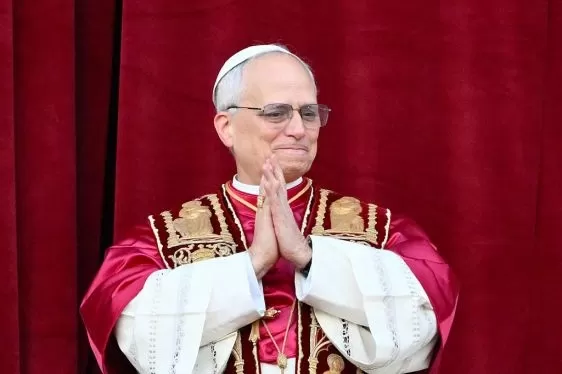
On Monday, Pope Leo XIV released his first encyclical, titled Magnifica Humanitas, on “safeguarding the human person in the time of artificial intelligence.” While AI serves as the hook, the issues Leo addresses are older and more pervasive: inequality, war, the erosion of democracy, and the concentration of power among those who may not care whether humanity as a whole remains magnificent.
In the 200-page document, presented alongside Anthropic co-founder Chris Olah, the pope argues that technology built and governed by a small elite cannot, by definition, serve the common good.
“When such power is concentrated in the hands of a few, it tends to become opaque and evade public oversight, increasing the risk of distorted forms of development that give rise to new dependencies, exclusions, manipulations and inequalities,” he writes.
“In fact, as with every major technological shift, AI tends to amplify the power of those who already possess economic resources, expertise and access to data,” the encyclical continues, highlighting concerns that elites can use their power to “shape information and consumption patterns, influence democratic processes and steer economic dynamics to their own advantage.”
The encyclical arrives a few days after President Donald Trump delayed signing an executive order on AI that would have given the government oversight over new models before their release, reportedly at the urging of venture capitalist and former White House AI czar David Sacks.
Pope Leo called for AI to be guided by “clear criteria and effective oversight” rooted in the participation of the communities it will affect. More concretely, he called for an end to the AI arms race “for ever more powerful algorithms and larger datasets” that companies and countries believe will “secure geopolitical or commercial dominance.”
“To disarm means discrediting the assumption that technical power automatically confers the right to govern,” he wrote.
Again, these dynamics predate AI. Pope Leo XIII’s 1891 encyclical Rerum Novarum addressed the same concentration of power during the Industrial Revolution, but we need not look back that far. Elon Musk’s acquisition of Twitter and his use of the platform to help elect Trump; the hundreds of millions flowing from tech elites into super PACs to block AI regulation — these are the kinds of patterns that clearly inspired Leo XIV’s work.
The pope reaches the same conclusion many have arrived at: the surreal power and capabilities of today’s AI raise the stakes enormously.
Notre Dame Law School professor Paolo Carozza, a member of the Pontifical Academy of Social Sciences and chair of the Meta Oversight Board, told TechCrunch that AI-driven misinformation and deepfakes have “corroded our capacity to recognize what’s true and what’s not true, and that really has consequences for democratic politics.” The tech industry’s practice of “harvesting and manipulating” human data, he added, poses “fundamental challenges to cognitive freedom.”
Related article
 U.S. Military Contractors Phase Out Claude Model Amid Tighter Restrictions and Conflicts
U.S. defense technology firms face supply chain disruptions due to conflicting regulatory policies, as reported by TechCrunch. While the U.S. military continues to utilize Anthropic’s Claude for operational support, overlapping bans from the Trump ad
Meta Confirms Rarely That Its Product Design Was Deeply Influenced by OpenClaw After Being Accused of Copying It
Nat Friedman, product manager at Meta’s Super Intelligent Lab (MSL), recently clarified on X that while their AI agent, Muse, was “deeply influenced by OpenClaw” in its design, it was “built from the ground up.”This statement followed a viral post by
YouTube Unveils Facial and Voiceprint Recognition Tech, Sparking Digital Double Debate in Entertainment
With generative AI barriers falling, regulating deepfakes has become an urgent industry challenge. YouTube, Google’s video platform, is now making its advanced facial and voice recognition technology available to the entertainment sector.This initiat
Related Special Topic Recommendations
Health & Wellness
U.S. Military Contractors Phase Out Claude Model Amid Tighter Restrictions and Conflicts
U.S. defense technology firms face supply chain disruptions due to conflicting regulatory policies, as reported by TechCrunch. While the U.S. military continues to utilize Anthropic’s Claude for operational support, overlapping bans from the Trump ad
Meta Confirms Rarely That Its Product Design Was Deeply Influenced by OpenClaw After Being Accused of Copying It
Nat Friedman, product manager at Meta’s Super Intelligent Lab (MSL), recently clarified on X that while their AI agent, Muse, was “deeply influenced by OpenClaw” in its design, it was “built from the ground up.”This statement followed a viral post by
YouTube Unveils Facial and Voiceprint Recognition Tech, Sparking Digital Double Debate in Entertainment
With generative AI barriers falling, regulating deepfakes has become an urgent industry challenge. YouTube, Google’s video platform, is now making its advanced facial and voice recognition technology available to the entertainment sector.This initiat
Related Special Topic Recommendations
Health & Wellness
 Best AI Meal Planning Apps: Build Smarter Nutrition Routines
2026 Latest Best Top-Rated AI meal planning apps for building smarter nutrition routines. This curated list includes powerful tools that offer real-world tests and weekly updated rankings. You can find a free vs paid comparison to help you choose the must-try solution that boosts productivity and helps you create balanced meals effortlessly. Explore now at XIX.AI to unlock your AI edge.
 12 tools
 xix.ai
SEO
Top AI SEO Auditors for Small Teams: Fix Issues Before Rankings Slip
xix.ai
SEO
Top AI SEO Auditors for Small Teams: Fix Issues Before Rankings Slip
2026 Latest Top-rated AI SEO Auditors for Small Teams are here on XIX.AI! Our curated list features powerful tools that help you fix hidden issues fast, boost your rankings, and save time. Get a free vs paid comparison along with real-world tests to choose the best option for your needs. Explore now to Discover your perfect tool and Unlock your AI edge.
11 tools
xix.ai
Text-to-speech
AI Podcast Voice Cloning Tools for Long-Form Narration
2026 Latest Best Top-Rated AI Podcast Voice Cloning Tools for Long-Form Narration are here on XIX.AI! This curated list features powerful, game-changing solutions that deliver professional-quality audio with zero effort. We conduct real-world tests and provide a free vs paid comparison along with weekly updated rankings to help you find the must-try tool that boosts your productivity significantly. Explore now to unlock your AI edge!
10 tools
xix.ai
SEO
Best AI Internal Linking Tools: Grow Content Hubs with Less Manual Work
2026 Latest Best Top-rated AI Internal Linking Tools for Content Hubs: This curated list features powerful game-changing solutions that drastically cut manual work. XIX.AI has conducted real-world tests and provided a detailed free vs paid comparison alongside weekly updated rankings to help you find the must-try tool that boosts productivity and supercharges your content strategy. Explore now to unlock your AI edge!
10 tools
xix.ai
design
AI UI Design Tools for Web and Mobile Projects
2026 Latest Best AI UI Design Tools for Web and Mobile Projects are here on XIX.AI! This curated list features top-rated, powerful tools that go through rigorous real-world tests to deliver game-changing results for boosting creativity and productivity. You’ll also find a free vs paid comparison, weekly updated rankings, and detailed insights. Must-try options help you overcome design bottlenecks and create high-quality interfaces faster. Explore now to discover your perfect tool!
8 tools
xix.ai
Prompt
Top Prompt Engineering Tools: Test, Version, and Improve Team Prompts
2026 Latest Top-rated Best Prompt Engineering Tools for Teams are featured here on XIX.AI. This curated collection includes powerful game-changing options that go through rigorous real-world tests. You’ll find a free vs paid comparison, detailed rankings, and easy tools to test, version track, and refine team prompts to boost productivity significantly. Explore now to Discover your perfect tool!
9 tools
xix.ai

 Comments (0)
0/500
Comments (0)
0/500
On Monday, Pope Leo XIV released his first encyclical, titled Magnifica Humanitas, on “safeguarding the human person in the time of artificial intelligence.” While AI serves as the hook, the issues Leo addresses are older and more pervasive: inequality, war, the erosion of democracy, and the concentration of power among those who may not care whether humanity as a whole remains magnificent.
In the 200-page document, presented alongside Anthropic co-founder Chris Olah, the pope argues that technology built and governed by a small elite cannot, by definition, serve the common good.
“When such power is concentrated in the hands of a few, it tends to become opaque and evade public oversight, increasing the risk of distorted forms of development that give rise to new dependencies, exclusions, manipulations and inequalities,” he writes.
“In fact, as with every major technological shift, AI tends to amplify the power of those who already possess economic resources, expertise and access to data,” the encyclical continues, highlighting concerns that elites can use their power to “shape information and consumption patterns, influence democratic processes and steer economic dynamics to their own advantage.”
The encyclical arrives a few days after President Donald Trump delayed signing an executive order on AI that would have given the government oversight over new models before their release, reportedly at the urging of venture capitalist and former White House AI czar David Sacks.
Pope Leo called for AI to be guided by “clear criteria and effective oversight” rooted in the participation of the communities it will affect. More concretely, he called for an end to the AI arms race “for ever more powerful algorithms and larger datasets” that companies and countries believe will “secure geopolitical or commercial dominance.”
“To disarm means discrediting the assumption that technical power automatically confers the right to govern,” he wrote.
Again, these dynamics predate AI. Pope Leo XIII’s 1891 encyclical Rerum Novarum addressed the same concentration of power during the Industrial Revolution, but we need not look back that far. Elon Musk’s acquisition of Twitter and his use of the platform to help elect Trump; the hundreds of millions flowing from tech elites into super PACs to block AI regulation — these are the kinds of patterns that clearly inspired Leo XIV’s work.
The pope reaches the same conclusion many have arrived at: the surreal power and capabilities of today’s AI raise the stakes enormously.
Notre Dame Law School professor Paolo Carozza, a member of the Pontifical Academy of Social Sciences and chair of the Meta Oversight Board, told TechCrunch that AI-driven misinformation and deepfakes have “corroded our capacity to recognize what’s true and what’s not true, and that really has consequences for democratic politics.” The tech industry’s practice of “harvesting and manipulating” human data, he added, poses “fundamental challenges to cognitive freedom.”








 U.S. Military Contractors Phase Out Claude Model Amid Tighter Restrictions and Conflicts
U.S. defense technology firms face supply chain disruptions due to conflicting regulatory policies, as reported by TechCrunch. While the U.S. military continues to utilize Anthropic’s Claude for operational support, overlapping bans from the Trump ad
U.S. Military Contractors Phase Out Claude Model Amid Tighter Restrictions and Conflicts
U.S. defense technology firms face supply chain disruptions due to conflicting regulatory policies, as reported by TechCrunch. While the U.S. military continues to utilize Anthropic’s Claude for operational support, overlapping bans from the Trump ad
 Meta Confirms Rarely That Its Product Design Was Deeply Influenced by OpenClaw After Being Accused of Copying It
Nat Friedman, product manager at Meta’s Super Intelligent Lab (MSL), recently clarified on X that while their AI agent, Muse, was “deeply influenced by OpenClaw” in its design, it was “built from the ground up.”This statement followed a viral post by
Meta Confirms Rarely That Its Product Design Was Deeply Influenced by OpenClaw After Being Accused of Copying It
Nat Friedman, product manager at Meta’s Super Intelligent Lab (MSL), recently clarified on X that while their AI agent, Muse, was “deeply influenced by OpenClaw” in its design, it was “built from the ground up.”This statement followed a viral post by
 YouTube Unveils Facial and Voiceprint Recognition Tech, Sparking Digital Double Debate in Entertainment
With generative AI barriers falling, regulating deepfakes has become an urgent industry challenge. YouTube, Google’s video platform, is now making its advanced facial and voice recognition technology available to the entertainment sector.This initiat
YouTube Unveils Facial and Voiceprint Recognition Tech, Sparking Digital Double Debate in Entertainment
With generative AI barriers falling, regulating deepfakes has become an urgent industry challenge. YouTube, Google’s video platform, is now making its advanced facial and voice recognition technology available to the entertainment sector.This initiat

2026 Latest Best Top-Rated AI meal planning apps for building smarter nutrition routines. This curated list includes powerful tools that offer real-world tests and weekly updated rankings. You can find a free vs paid comparison to help you choose the must-try solution that boosts productivity and helps you create balanced meals effortlessly. Explore now at XIX.AI to unlock your AI edge.
12 tools
xix.ai
2026 Latest Top-rated AI SEO Auditors for Small Teams are here on XIX.AI! Our curated list features powerful tools that help you fix hidden issues fast, boost your rankings, and save time. Get a free vs paid comparison along with real-world tests to choose the best option for your needs. Explore now to Discover your perfect tool and Unlock your AI edge.
11 tools
xix.ai
2026 Latest Best Top-Rated AI Podcast Voice Cloning Tools for Long-Form Narration are here on XIX.AI! This curated list features powerful, game-changing solutions that deliver professional-quality audio with zero effort. We conduct real-world tests and provide a free vs paid comparison along with weekly updated rankings to help you find the must-try tool that boosts your productivity significantly. Explore now to unlock your AI edge!
10 tools
xix.ai

2026 Latest Best Top-rated AI Internal Linking Tools for Content Hubs: This curated list features powerful game-changing solutions that drastically cut manual work. XIX.AI has conducted real-world tests and provided a detailed free vs paid comparison alongside weekly updated rankings to help you find the must-try tool that boosts productivity and supercharges your content strategy. Explore now to unlock your AI edge!
10 tools
xix.ai

2026 Latest Best AI UI Design Tools for Web and Mobile Projects are here on XIX.AI! This curated list features top-rated, powerful tools that go through rigorous real-world tests to deliver game-changing results for boosting creativity and productivity. You’ll also find a free vs paid comparison, weekly updated rankings, and detailed insights. Must-try options help you overcome design bottlenecks and create high-quality interfaces faster. Explore now to discover your perfect tool!
8 tools
xix.ai
2026 Latest Top-rated Best Prompt Engineering Tools for Teams are featured here on XIX.AI. This curated collection includes powerful game-changing options that go through rigorous real-world tests. You’ll find a free vs paid comparison, detailed rankings, and easy tools to test, version track, and refine team prompts to boost productivity significantly. Explore now to Discover your perfect tool!
9 tools
xix.ai












