


 Home
MiniMax Large Model Mispronounces Names - Xiyu Technology: Insufficient Training After Specific Tokens
MiniMax recently published a technical report detailing why its M2 series models struggled to accurately generate specific names like "Ma Jiaqi." This apparent error highlights a systemic flaw in current large language model training.
Token Offset: The Squeezed Vector Space
The root cause lies in the tokenizer, the fundamental unit of text processing. For instance, the name "Ma Jiaqi" is split into two tokens: "Ma" and "Jiaqi." While the model learned these during pre-training, issues arose during the subsequent instruction fine-tuning phase.
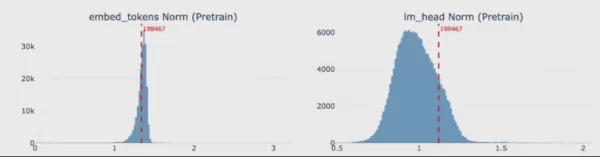
During fine-tuning, the token "Jiaqi" appeared so infrequently in the dialogue data that it received almost no training. Meanwhile, high-frequency tokens like code symbols and tool calls were heavily reinforced, effectively "squeezing" the representation space of low-frequency tokens. Consequently, these tokens drifted from their correct probability distributions, causing the model to substitute them with phonetically similar alternatives like "Jiaqi" or "Qiqi" when referencing specific celebrities.
Beyond Chinese: Chain Reaction of Japanese Mixed with Russian
MiniMax’s analysis revealed that this "token degradation" is widespread. Scanning roughly 200,000 tokens in the full vocabulary, they found that about 4.9% showed significant performance drops. Notably, Japanese tokens suffered a degradation rate of up to 29.7%, explaining why the model occasionally mixes Russian or Korean characters into Japanese conversations.
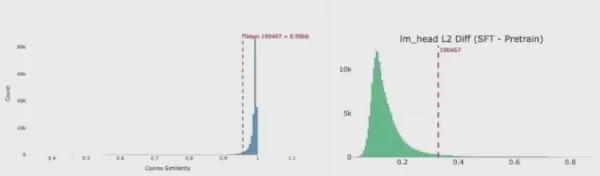
Beyond names and foreign languages, affected tokens include LaTeX markers, Wikipedia source code symbols, and even certain SEO spam keywords. This demonstrates that data sparsity has global consequences: when post-training data fails to uniformly cover diverse languages and specific vocabularies, the model’s generation logic becomes biased.
Systematic Repair: Establishing a "Minimum Guarantee" for 200,000 Tokens
To fix this structural issue, the R&D team implemented a precise repair strategy. They generated synthetic data covering the entire vocabulary and forced the model to perform "repetition" tasks, thereby establishing a "minimum guarantee" for the generation frequency of each token.
Post-repair data shows marked improvements in the stability of the model’s full vocabulary output. The rate of foreign characters mixed into Japanese responses dropped from 47% to just 1%. The team continues to explore deeper optimizations, such as integrating pre-training materials into the fine-tuning stage or directly removing redundant markers no longer used in the vocabulary.
This incident has triggered significant industry reflection: while large model tokenizers are often built on broad web corpora, downstream applications vary widely. Ensuring adequate data coverage at the token level from a fundamental statistical perspective, while maintaining semantic diversity, remains a critical challenge for improving large model reliability.
Related article
 AliVideo Unveils Wan3.0, Delivering Ultra-Long Video Generation and Multi-Dimensional Consistency
On August 24, Alibaba unveiled Wan3.0, its latest video generation large model. This release represents a major leap forward for Alibaba’s video technology, delivering significant improvements in duration, universal creation, reference handling, and
Nvidia H200 China deal survives Trump-Xi summit, but not as expected
President Trump traveled to Beijing with Jensen Huang joining the delegation at the eleventh hour, departing two days later with vague remarks about potential chip export developments. No deal materialized. Since Trump first authorized sales in Decem
How to fix Core Web Vitals for SEO ranking?
Creating visually appealing assets is crucial in game development. Pixel art, with its charming retro aesthetic, remains a popular choice. With the advent of AI tools, generating pixel art has become more accessible than ever. This guide explores how
Related Special Topic Recommendations
Design & Art
 Top AI Illustration Tools: Create Editorial Scenes and Cover Art Faster
2026 Latest Top-rated AI Illustration Tools: Our curated list features the best powerfully designed tools for creating stunning editorial scenes and eye-catching cover art quickly. Each option has gone through rigorous real-world tests, offering a free vs paid comparison to help you find the perfect match for your workflow. Try these must-try solutions today to unlock your AI edge and boost your creative productivity. Explore now at XIX.AI.
 10 tools
 xix.ai
Education and Learning
Top AI Tutors for Exam Prep: Practice Math, Science, and English
2026 Latest Top-Rated Best AI Tutors for Exam Prep are here on XIX.AI! Our curated list features powerful game-changing tools that offer free vs paid comparison, real-world tests, and weekly updated rankings. They help boost your writing efficiency, simplify complex topic learning, and unlock your academic potential. Explore now to Discover your perfect exam prep tool and Start creating today to Unlock your AI edge!
10 tools
xix.ai
Finance
AI Budget Planning Tools for Personal Money Management
2026 Latest Best Top-Rated AI Budget Planning Tools for Personal Money Management are here on XIX.AI! This curated collection features powerful, game-changing solutions that help you conduct real-world tests, understand spending habits, and create personalized plans to boost productivity. Enjoy a free vs paid comparison along with detailed rankings. Must-try tools designed to simplify money management and unlock your AI edge. Explore now!
11 tools
xix.ai
Health & Wellness
AI Sleep Tracking Assistants: Improve Recovery with Better Bedtime Habits
2026 Latest Best Top-Rated AI Sleep Tracking Assistants curated for ultimate recovery. This fully updated weekly guide features powerful tools that deliver real-world tests, free vs paid comparison, and detailed rankings to help you find the must-try solution that boosts sleep quality and supports better bedtime habits. Explore now at XIX.AI to Unlock your AI edge.
10 tools
xix.ai
Data Analysis
AI SQL Copilots for Product and Revenue Analytics
2026 Latest Best Top-Rated AI SQL Copilots for Product and Revenue Analytics! XIX.AI has curated a powerful, game-changing collection of must-try tools that undergo real-world tests through weekly updated rankings. These tools help users boost productivity significantly by accelerating data analysis, streamlining complex queries, and generating accurate insights to drive smarter business decisions. Explore now to Discover your perfect tool for unlocking your AI edge!
14 tools
xix.ai
Education and Learning
Best AI Homework Helpers That Teach: Learn Concepts, Not Just Answers
2026 Latest Best Top-Rated AI Homework Helpers That Teach Core Concepts Not Just Answers Powerful Tools for Students Must-Try Curated List Weekly Updated Free vs Paid Comparison Real-World Tests Accurate Rankings to Help You Unlock Your Full Learning Potential Explore now to Discover your perfect tool for smarter studying.
10 tools
xix.ai

 Comments (0)
0/500
MiniMax recently published a technical report detailing why its M2 series models struggled to accurately generate specific names like "Ma Jiaqi." This apparent error highlights a systemic flaw in current large language model training.
Token Offset: The Squeezed Vector Space
The root cause lies in the tokenizer, the fundamental unit of text processing. For instance, the name "Ma Jiaqi" is split into two tokens: "Ma" and "Jiaqi." While the model learned these during pre-training, issues arose during the subsequent instruction fine-tuning phase.
During fine-tuning, the token "Jiaqi" appeared so infrequently in the dialogue data that it received almost no training. Meanwhile, high-frequency tokens like code symbols and tool calls were heavily reinforced, effectively "squeezing" the representation space of low-frequency tokens. Consequently, these tokens drifted from their correct probability distributions, causing the model to substitute them with phonetically similar alternatives like "Jiaqi" or "Qiqi" when referencing specific celebrities.
Beyond Chinese: Chain Reaction of Japanese Mixed with Russian
MiniMax’s analysis revealed that this "token degradation" is widespread. Scanning roughly 200,000 tokens in the full vocabulary, they found that about 4.9% showed significant performance drops. Notably, Japanese tokens suffered a degradation rate of up to 29.7%, explaining why the model occasionally mixes Russian or Korean characters into Japanese conversations.
Beyond names and foreign languages, affected tokens include LaTeX markers, Wikipedia source code symbols, and even certain SEO spam keywords. This demonstrates that data sparsity has global consequences: when post-training data fails to uniformly cover diverse languages and specific vocabularies, the model’s generation logic becomes biased.
Systematic Repair: Establishing a "Minimum Guarantee" for 200,000 Tokens
To fix this structural issue, the R&D team implemented a precise repair strategy. They generated synthetic data covering the entire vocabulary and forced the model to perform "repetition" tasks, thereby establishing a "minimum guarantee" for the generation frequency of each token.
Post-repair data shows marked improvements in the stability of the model’s full vocabulary output. The rate of foreign characters mixed into Japanese responses dropped from 47% to just 1%. The team continues to explore deeper optimizations, such as integrating pre-training materials into the fine-tuning stage or directly removing redundant markers no longer used in the vocabulary.
This incident has triggered significant industry reflection: while large model tokenizers are often built on broad web corpora, downstream applications vary widely. Ensuring adequate data coverage at the token level from a fundamental statistical perspective, while maintaining semantic diversity, remains a critical challenge for improving large model reliability.








 AliVideo Unveils Wan3.0, Delivering Ultra-Long Video Generation and Multi-Dimensional Consistency
On August 24, Alibaba unveiled Wan3.0, its latest video generation large model. This release represents a major leap forward for Alibaba’s video technology, delivering significant improvements in duration, universal creation, reference handling, and
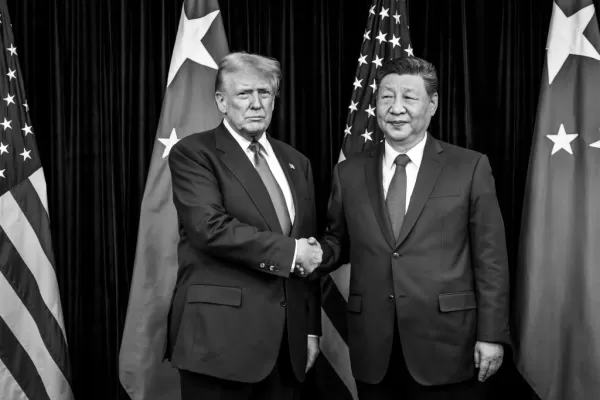 Nvidia H200 China deal survives Trump-Xi summit, but not as expected
President Trump traveled to Beijing with Jensen Huang joining the delegation at the eleventh hour, departing two days later with vague remarks about potential chip export developments. No deal materialized. Since Trump first authorized sales in Decem
 How to fix Core Web Vitals for SEO ranking?
Creating visually appealing assets is crucial in game development. Pixel art, with its charming retro aesthetic, remains a popular choice. With the advent of AI tools, generating pixel art has become more accessible than ever. This guide explores how

2026 Latest Top-rated AI Illustration Tools: Our curated list features the best powerfully designed tools for creating stunning editorial scenes and eye-catching cover art quickly. Each option has gone through rigorous real-world tests, offering a free vs paid comparison to help you find the perfect match for your workflow. Try these must-try solutions today to unlock your AI edge and boost your creative productivity. Explore now at XIX.AI.
10 tools
xix.ai

2026 Latest Top-Rated Best AI Tutors for Exam Prep are here on XIX.AI! Our curated list features powerful game-changing tools that offer free vs paid comparison, real-world tests, and weekly updated rankings. They help boost your writing efficiency, simplify complex topic learning, and unlock your academic potential. Explore now to Discover your perfect exam prep tool and Start creating today to Unlock your AI edge!
10 tools
xix.ai

2026 Latest Best Top-Rated AI Budget Planning Tools for Personal Money Management are here on XIX.AI! This curated collection features powerful, game-changing solutions that help you conduct real-world tests, understand spending habits, and create personalized plans to boost productivity. Enjoy a free vs paid comparison along with detailed rankings. Must-try tools designed to simplify money management and unlock your AI edge. Explore now!
11 tools
xix.ai

2026 Latest Best Top-Rated AI Sleep Tracking Assistants curated for ultimate recovery. This fully updated weekly guide features powerful tools that deliver real-world tests, free vs paid comparison, and detailed rankings to help you find the must-try solution that boosts sleep quality and supports better bedtime habits. Explore now at XIX.AI to Unlock your AI edge.
10 tools
xix.ai

2026 Latest Best Top-Rated AI SQL Copilots for Product and Revenue Analytics! XIX.AI has curated a powerful, game-changing collection of must-try tools that undergo real-world tests through weekly updated rankings. These tools help users boost productivity significantly by accelerating data analysis, streamlining complex queries, and generating accurate insights to drive smarter business decisions. Explore now to Discover your perfect tool for unlocking your AI edge!
14 tools
xix.ai

2026 Latest Best Top-Rated AI Homework Helpers That Teach Core Concepts Not Just Answers Powerful Tools for Students Must-Try Curated List Weekly Updated Free vs Paid Comparison Real-World Tests Accurate Rankings to Help You Unlock Your Full Learning Potential Explore now to Discover your perfect tool for smarter studying.
10 tools
xix.ai












