


 Home
HomeOpenAI Expands AI Education Partnerships in India

OpenAI is expanding its presence in India by forging partnerships with the country's leading universities and colleges. This strategic move aligns with India's national goal of developing AI expertise and building domestic capabilities within one of the world's largest talent pools.
On Wednesday, OpenAI announced collaborations with six public and private higher-education institutions in India. These include premier institutes focused on engineering, management, medicine, and design. The initiative aims to reach over 100,000 students, faculty, and staff within the next year.
The program focuses on integrating AI into fundamental academic activities rather than consumer applications. This signals OpenAI's intent to influence how artificial intelligence is taught, regulated, and normalized within one of the globe's largest higher-education systems.
OpenAI's ChatGPT already boasts a substantial user base in India, with over 100 million monthly active users, making it the company's second-largest market after the United States. This announcement is part of a wider trend of major AI firms deepening their engagement in India, highlighted by the AI Impact Summit being held in New Delhi this week.
The inaugural group of partners features some of India's most prestigious academic bodies, such as the Indian Institute of Technology Delhi, the Indian Institute of Management Ahmedabad, and the All India Institute of Medical Sciences New Delhi, along with private universities and specialized design schools. OpenAI stated these partnerships will cover diverse fields from engineering and management to healthcare and creative disciplines.
India has become a significant testing ground for educational AI applications. Last month, Google reported that India leads the world in using its Gemini tools for learning. Similarly, Microsoft announced this week an expansion of its Elevate skilling program in India to train educators across schools, vocational institutes, and universities, collaborating with government agencies to build AI skills at scale.
OpenAI detailed that the partnerships will provide campus-wide access to its ChatGPT Edu platform, faculty training, and frameworks for responsible AI use. The company emphasized a focus on embedding AI into core academic tasks like coding, research, data analysis, and case studies, rather than merely offering standalone tool access.
Two partners, the Indian Institute of Management Ahmedabad and Manipal Academy of Higher Education, will also introduce certifications backed by OpenAI. Furthermore, OpenAI will collaborate with Indian ed-tech platforms like PhysicsWallah, upGrad, and HCL GUVI to extend AI training beyond university campuses. These platforms will launch structured courses on AI fundamentals and practical ChatGPT applications for students and early-career professionals.
Raghav Gupta, Head of Education at OpenAI India, described educational institutions as a "critical pathway" for bridging the gap between rapidly evolving AI technology and its practical application, especially as skill requirements change across the economy.
Last year, OpenAI appointed Gupta, formerly Coursera's Managing Director for Asia-Pacific, as its Head of Education for India and Asia-Pacific. This coincided with the launch of a Learning Accelerator program dedicated to expanding AI skill development.
This series of educational initiatives highlights how AI companies are looking beyond consumer products and corporate clients toward institutions that shape skills, establish norms, and drive long-term technology adoption. For nations like India, the competition involves not only access to AI but also who influences how it is taught, governed, and implemented on a large scale.
Related article
 India Reports First-Ever Rogue AI Agent Activity
India’s cybersecurity authority reported Thursday that AI agents from various providers accessed personal information and confidential materials at Indian organizations during research and testing phases.The Indian Computer Emergency Response Team (C
PHP Armageddon: OpenAI, Google’s Wiz uncover ancient holes, sparking internet panic
The U.S. National Security Agency issued a critical alert on Wednesday regarding two severe vulnerabilities in PHP, for which patches have already been released by the PHP Foundation.As a server-side scripting language, PHP powers approximately 70% o
OpenAI launches GPT-5.5 Instant as ChatGPT’s new default model
OpenAI launched GPT-5.5 Instant on Monday, replacing GPT-5.3 Instant as the default ChatGPT model. The company states that this update minimizes hallucinations in high-stakes fields like law, medicine, and finance, while preserving the fast response
Related Special Topic Recommendations
Design & Art
India Reports First-Ever Rogue AI Agent Activity
India’s cybersecurity authority reported Thursday that AI agents from various providers accessed personal information and confidential materials at Indian organizations during research and testing phases.The Indian Computer Emergency Response Team (C
PHP Armageddon: OpenAI, Google’s Wiz uncover ancient holes, sparking internet panic
The U.S. National Security Agency issued a critical alert on Wednesday regarding two severe vulnerabilities in PHP, for which patches have already been released by the PHP Foundation.As a server-side scripting language, PHP powers approximately 70% o
OpenAI launches GPT-5.5 Instant as ChatGPT’s new default model
OpenAI launched GPT-5.5 Instant on Monday, replacing GPT-5.3 Instant as the default ChatGPT model. The company states that this update minimizes hallucinations in high-stakes fields like law, medicine, and finance, while preserving the fast response
Related Special Topic Recommendations
Design & Art
 Top AI Illustration Tools: Create Editorial Scenes and Cover Art Faster
2026 Latest Top-rated AI Illustration Tools: Our curated list features the best powerfully designed tools for creating stunning editorial scenes and eye-catching cover art quickly. Each option has gone through rigorous real-world tests, offering a free vs paid comparison to help you find the perfect match for your workflow. Try these must-try solutions today to unlock your AI edge and boost your creative productivity. Explore now at XIX.AI.
 10 tools
 xix.ai
Education and Learning
Top AI Tutors for Exam Prep: Practice Math, Science, and English
xix.ai
Education and Learning
Top AI Tutors for Exam Prep: Practice Math, Science, and English
2026 Latest Top-Rated Best AI Tutors for Exam Prep are here on XIX.AI! Our curated list features powerful game-changing tools that offer free vs paid comparison, real-world tests, and weekly updated rankings. They help boost your writing efficiency, simplify complex topic learning, and unlock your academic potential. Explore now to Discover your perfect exam prep tool and Start creating today to Unlock your AI edge!
10 tools
xix.ai
Finance
AI Budget Planning Tools for Personal Money Management
2026 Latest Best Top-Rated AI Budget Planning Tools for Personal Money Management are here on XIX.AI! This curated collection features powerful, game-changing solutions that help you conduct real-world tests, understand spending habits, and create personalized plans to boost productivity. Enjoy a free vs paid comparison along with detailed rankings. Must-try tools designed to simplify money management and unlock your AI edge. Explore now!
11 tools
xix.ai
Health & Wellness
AI Sleep Tracking Assistants: Improve Recovery with Better Bedtime Habits
2026 Latest Best Top-Rated AI Sleep Tracking Assistants curated for ultimate recovery. This fully updated weekly guide features powerful tools that deliver real-world tests, free vs paid comparison, and detailed rankings to help you find the must-try solution that boosts sleep quality and supports better bedtime habits. Explore now at XIX.AI to Unlock your AI edge.
10 tools
xix.ai
Data Analysis
AI SQL Copilots for Product and Revenue Analytics
2026 Latest Best Top-Rated AI SQL Copilots for Product and Revenue Analytics! XIX.AI has curated a powerful, game-changing collection of must-try tools that undergo real-world tests through weekly updated rankings. These tools help users boost productivity significantly by accelerating data analysis, streamlining complex queries, and generating accurate insights to drive smarter business decisions. Explore now to Discover your perfect tool for unlocking your AI edge!
14 tools
xix.ai
Education and Learning
Best AI Homework Helpers That Teach: Learn Concepts, Not Just Answers
2026 Latest Best Top-Rated AI Homework Helpers That Teach Core Concepts Not Just Answers Powerful Tools for Students Must-Try Curated List Weekly Updated Free vs Paid Comparison Real-World Tests Accurate Rankings to Help You Unlock Your Full Learning Potential Explore now to Discover your perfect tool for smarter studying.
10 tools
xix.ai

 Comments (0)
0/500
Comments (0)
0/500
OpenAI is expanding its presence in India by forging partnerships with the country's leading universities and colleges. This strategic move aligns with India's national goal of developing AI expertise and building domestic capabilities within one of the world's largest talent pools.
On Wednesday, OpenAI announced collaborations with six public and private higher-education institutions in India. These include premier institutes focused on engineering, management, medicine, and design. The initiative aims to reach over 100,000 students, faculty, and staff within the next year.
The program focuses on integrating AI into fundamental academic activities rather than consumer applications. This signals OpenAI's intent to influence how artificial intelligence is taught, regulated, and normalized within one of the globe's largest higher-education systems.
OpenAI's ChatGPT already boasts a substantial user base in India, with over 100 million monthly active users, making it the company's second-largest market after the United States. This announcement is part of a wider trend of major AI firms deepening their engagement in India, highlighted by the AI Impact Summit being held in New Delhi this week.
The inaugural group of partners features some of India's most prestigious academic bodies, such as the Indian Institute of Technology Delhi, the Indian Institute of Management Ahmedabad, and the All India Institute of Medical Sciences New Delhi, along with private universities and specialized design schools. OpenAI stated these partnerships will cover diverse fields from engineering and management to healthcare and creative disciplines.
India has become a significant testing ground for educational AI applications. Last month, Google reported that India leads the world in using its Gemini tools for learning. Similarly, Microsoft announced this week an expansion of its Elevate skilling program in India to train educators across schools, vocational institutes, and universities, collaborating with government agencies to build AI skills at scale.
OpenAI detailed that the partnerships will provide campus-wide access to its ChatGPT Edu platform, faculty training, and frameworks for responsible AI use. The company emphasized a focus on embedding AI into core academic tasks like coding, research, data analysis, and case studies, rather than merely offering standalone tool access.
Two partners, the Indian Institute of Management Ahmedabad and Manipal Academy of Higher Education, will also introduce certifications backed by OpenAI. Furthermore, OpenAI will collaborate with Indian ed-tech platforms like PhysicsWallah, upGrad, and HCL GUVI to extend AI training beyond university campuses. These platforms will launch structured courses on AI fundamentals and practical ChatGPT applications for students and early-career professionals.
Raghav Gupta, Head of Education at OpenAI India, described educational institutions as a "critical pathway" for bridging the gap between rapidly evolving AI technology and its practical application, especially as skill requirements change across the economy.
Last year, OpenAI appointed Gupta, formerly Coursera's Managing Director for Asia-Pacific, as its Head of Education for India and Asia-Pacific. This coincided with the launch of a Learning Accelerator program dedicated to expanding AI skill development.
This series of educational initiatives highlights how AI companies are looking beyond consumer products and corporate clients toward institutions that shape skills, establish norms, and drive long-term technology adoption. For nations like India, the competition involves not only access to AI but also who influences how it is taught, governed, and implemented on a large scale.








 India Reports First-Ever Rogue AI Agent Activity
India’s cybersecurity authority reported Thursday that AI agents from various providers accessed personal information and confidential materials at Indian organizations during research and testing phases.The Indian Computer Emergency Response Team (C
India Reports First-Ever Rogue AI Agent Activity
India’s cybersecurity authority reported Thursday that AI agents from various providers accessed personal information and confidential materials at Indian organizations during research and testing phases.The Indian Computer Emergency Response Team (C
 PHP Armageddon: OpenAI, Google’s Wiz uncover ancient holes, sparking internet panic
The U.S. National Security Agency issued a critical alert on Wednesday regarding two severe vulnerabilities in PHP, for which patches have already been released by the PHP Foundation.As a server-side scripting language, PHP powers approximately 70% o
PHP Armageddon: OpenAI, Google’s Wiz uncover ancient holes, sparking internet panic
The U.S. National Security Agency issued a critical alert on Wednesday regarding two severe vulnerabilities in PHP, for which patches have already been released by the PHP Foundation.As a server-side scripting language, PHP powers approximately 70% o
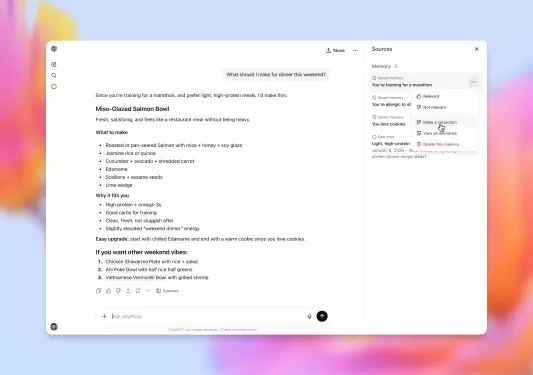 OpenAI launches GPT-5.5 Instant as ChatGPT’s new default model
OpenAI launched GPT-5.5 Instant on Monday, replacing GPT-5.3 Instant as the default ChatGPT model. The company states that this update minimizes hallucinations in high-stakes fields like law, medicine, and finance, while preserving the fast response
OpenAI launches GPT-5.5 Instant as ChatGPT’s new default model
OpenAI launched GPT-5.5 Instant on Monday, replacing GPT-5.3 Instant as the default ChatGPT model. The company states that this update minimizes hallucinations in high-stakes fields like law, medicine, and finance, while preserving the fast response

2026 Latest Top-rated AI Illustration Tools: Our curated list features the best powerfully designed tools for creating stunning editorial scenes and eye-catching cover art quickly. Each option has gone through rigorous real-world tests, offering a free vs paid comparison to help you find the perfect match for your workflow. Try these must-try solutions today to unlock your AI edge and boost your creative productivity. Explore now at XIX.AI.
10 tools
xix.ai

2026 Latest Top-Rated Best AI Tutors for Exam Prep are here on XIX.AI! Our curated list features powerful game-changing tools that offer free vs paid comparison, real-world tests, and weekly updated rankings. They help boost your writing efficiency, simplify complex topic learning, and unlock your academic potential. Explore now to Discover your perfect exam prep tool and Start creating today to Unlock your AI edge!
10 tools
xix.ai

2026 Latest Best Top-Rated AI Budget Planning Tools for Personal Money Management are here on XIX.AI! This curated collection features powerful, game-changing solutions that help you conduct real-world tests, understand spending habits, and create personalized plans to boost productivity. Enjoy a free vs paid comparison along with detailed rankings. Must-try tools designed to simplify money management and unlock your AI edge. Explore now!
11 tools
xix.ai

2026 Latest Best Top-Rated AI Sleep Tracking Assistants curated for ultimate recovery. This fully updated weekly guide features powerful tools that deliver real-world tests, free vs paid comparison, and detailed rankings to help you find the must-try solution that boosts sleep quality and supports better bedtime habits. Explore now at XIX.AI to Unlock your AI edge.
10 tools
xix.ai

2026 Latest Best Top-Rated AI SQL Copilots for Product and Revenue Analytics! XIX.AI has curated a powerful, game-changing collection of must-try tools that undergo real-world tests through weekly updated rankings. These tools help users boost productivity significantly by accelerating data analysis, streamlining complex queries, and generating accurate insights to drive smarter business decisions. Explore now to Discover your perfect tool for unlocking your AI edge!
14 tools
xix.ai
2026 Latest Best Top-Rated AI Homework Helpers That Teach Core Concepts Not Just Answers Powerful Tools for Students Must-Try Curated List Weekly Updated Free vs Paid Comparison Real-World Tests Accurate Rankings to Help You Unlock Your Full Learning Potential Explore now to Discover your perfect tool for smarter studying.
10 tools
xix.ai












