


 Home
HomeMingshi AI Opensource StaffDeck Enterprise Digital Employee Platform
A Chinese AI startup has positioned its enterprise-grade AI solution in a distinct niche, steering clear of the chatbot saturation. On July 16, Mingshi Intelligence open-sourced StaffDeck, a platform designed to build and manage digital employees, with the source code available at github.com/OpenBMB/StaffDeck.
Going beyond superficial enterprise chatbots, StaffDeck targets the digital workforce. It converts organizational expertise, standard operating procedures (SOPs), and decision rules into digital employees capable of continuous operation, self-improvement, and knowledge retention. Mingshi Intelligence argues that the future of enterprise AI lies not in enhanced conversational interfaces, but in productivity tools that accumulate experience and enforce organizational protocols.
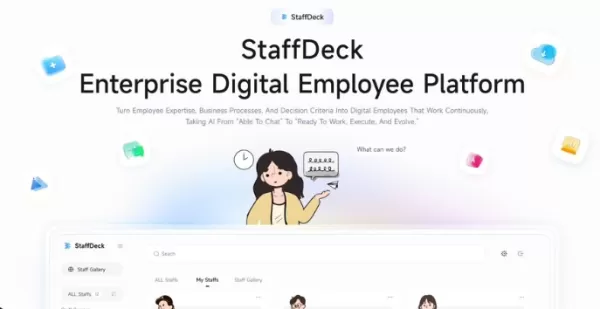
StaffDeck is backed by a cross-sector collaboration involving Mingshi Intelligence, Northeastern University, the Mingshi-OpenBMB Data Intelligence Joint Laboratory, Tsinghua University’s Natural Language Processing Lab (THUNLP), OpenBMB, and AI9Stars. By combining academic research with enterprise application expertise, this open platform is specifically tailored for enterprise AI deployment rather than serving as a single company’s internal tool.
Technically, StaffDeck distinguishes itself through persistent knowledge retention. Unlike traditional chatbots that lose context after a session, making tacit knowledge accumulation difficult, StaffDeck digitizes the judgment of veteran employees, written protocols, and informal logic. This allows the system to execute and iterate on these rules over time, ensuring that organizational knowledge persists despite employee turnover.
OpenBMB announced this open-source release on social media, providing a full GitHub repository link. For teams seeking enterprise AI implementation without simply wrapping another chatbot, StaffDeck offers a transparent technical foundation for inspection and further development. While competitors focus on chatbot responsiveness, Mingshi Intelligence prioritizes the accumulation of organizational capability.
Project address: https://github.com/OpenBMB/StaffDeck
Related article
 How to check Google ranking for free?
A QR Code you cannot track is a guess. You print it, you hope, and you never learn whether it worked. Tracking turns that guess into data: how many people scanned, where they were, what device they used, and when. This guide explains what you can mea
Microsoft Unveils MAI Series Models to Diversify AI Strategy Beyond Single Giant
Satya Nadella, Microsoft’s CEO, highlighted during the recent quarterly earnings call that the company is accelerating enterprise adoption of multi-model architectures while boosting investments in proprietary AI models, agents, and secure solutions
GPT-5.6 IQ Breaks 130 Genius Line, Smarter Than 99% of Humans, Practical Work Ability Also Extraordinary
Tracking AI’s latest offline IQ assessment reveals that multiple iterations of OpenAI’s GPT-5.6 achieved a score of 136, marking the first instance of a large language model exceeding the 130 IQ benchmark. In standard human distribution, an IQ of 130
Related Special Topic Recommendations
Video creation
How to check Google ranking for free?
A QR Code you cannot track is a guess. You print it, you hope, and you never learn whether it worked. Tracking turns that guess into data: how many people scanned, where they were, what device they used, and when. This guide explains what you can mea
Microsoft Unveils MAI Series Models to Diversify AI Strategy Beyond Single Giant
Satya Nadella, Microsoft’s CEO, highlighted during the recent quarterly earnings call that the company is accelerating enterprise adoption of multi-model architectures while boosting investments in proprietary AI models, agents, and secure solutions
GPT-5.6 IQ Breaks 130 Genius Line, Smarter Than 99% of Humans, Practical Work Ability Also Extraordinary
Tracking AI’s latest offline IQ assessment reveals that multiple iterations of OpenAI’s GPT-5.6 achieved a score of 136, marking the first instance of a large language model exceeding the 130 IQ benchmark. In standard human distribution, an IQ of 130
Related Special Topic Recommendations
Video creation
 Best AI Video Generation Tools for Short Content
2026 Latest Best Top-rated AI Video Generation Tools for Short Content are here on XIX.AI’s curated collection. These powerful game-changing tools have undergone rigorous real-world tests, featuring a comprehensive free vs paid comparison and detailed rankings to help you find the perfect option. Whether you need to create high-quality short videos fast or boost your productivity across various tasks, these must-try solutions deliver outstanding results. Explore now to discover your ideal tool and unlock your AI edge.
 9 tools
 xix.ai
Design & Art
Best AI Art Generators: Explore Moodboards, Styles, and Visual Directions
xix.ai
Design & Art
Best AI Art Generators: Explore Moodboards, Styles, and Visual Directions
2026 Latest Best AI Art Generators ranking showcases top-rated tools for creating stunning moodboards, exploring diverse styles, and defining visual directions. XIX.AI offers a curated list of powerful, game-changing options that have passed rigorous real-world tests. Get a free vs paid comparison to help you find the perfect fit for boosting your creative workflow. Explore now to Unlock your AI edge in art creation.
10 tools
xix.ai
Marketing
AI Email Personalization Platforms for Shopify Flows, Retention, and Win-Backs
2026 Latest Best AI Email Personalization Platforms for Shopify Flows that boost retention and win-backs. This top-rated curated list features powerful game-changing tools经过real-world tests, offering free vs paid comparison insights. XIX.AI is part of our trusted selection. Discover your perfect tool to unlock your AI edge today. Explore now!
9 tools
xix.ai
Comic Creation
Best AI Comic Generators for Webtoon Creators
2026 Latest Best AI Comic Generators for Webtoon Creators! XIX.AI has curated a top-rated list of powerful, game-changing tools that help creators boost productivity significantly. You’ll find detailed weekly updated rankings, free vs paid comparison, and real-world tests to help you choose the perfect fit. Must-try options are available to overcome creation bottlenecks and deliver high-quality content faster. Explore now to Discover your perfect tool for smarter comic making!
9 tools
xix.ai
Design & Art
AI Illustration Tools for Digital Artists
2026 Latest Best Top-rated AI Illustration Tools for Digital Artists! XIX.AI has curated a powerful, game-changing collection of top tools designed to help artists unlock their full creative potential. These best options feature weekly updated rankings, real-world tests, and free vs paid comparison details to help you find the perfect fit for boosting your workflow efficiency. Must-try choices across all skill levels are here—Explore now to Discover your perfect tool!
17 tools
xix.ai
Comic Creation
Best AI Manga Layout Tools for Webtoon Creators
2026 Latest Best Top-Rated AI Manga Layout Tools for Webtoon Creators! XIX.AI has curated a powerful, game-changing collection of must-try tools that go through rigorous real-world tests. You’ll find detailed weekly updated rankings, free vs paid comparison info, and insights on how these tools can boost your workflow, help you create high-quality content faster, and unlock your full creative potential. Explore now to discover your perfect tool!
9 tools
xix.ai

 Comments (0)
0/500
Comments (0)
0/500
A Chinese AI startup has positioned its enterprise-grade AI solution in a distinct niche, steering clear of the chatbot saturation. On July 16, Mingshi Intelligence open-sourced StaffDeck, a platform designed to build and manage digital employees, with the source code available at github.com/OpenBMB/StaffDeck.
Going beyond superficial enterprise chatbots, StaffDeck targets the digital workforce. It converts organizational expertise, standard operating procedures (SOPs), and decision rules into digital employees capable of continuous operation, self-improvement, and knowledge retention. Mingshi Intelligence argues that the future of enterprise AI lies not in enhanced conversational interfaces, but in productivity tools that accumulate experience and enforce organizational protocols.
StaffDeck is backed by a cross-sector collaboration involving Mingshi Intelligence, Northeastern University, the Mingshi-OpenBMB Data Intelligence Joint Laboratory, Tsinghua University’s Natural Language Processing Lab (THUNLP), OpenBMB, and AI9Stars. By combining academic research with enterprise application expertise, this open platform is specifically tailored for enterprise AI deployment rather than serving as a single company’s internal tool.
Technically, StaffDeck distinguishes itself through persistent knowledge retention. Unlike traditional chatbots that lose context after a session, making tacit knowledge accumulation difficult, StaffDeck digitizes the judgment of veteran employees, written protocols, and informal logic. This allows the system to execute and iterate on these rules over time, ensuring that organizational knowledge persists despite employee turnover.
OpenBMB announced this open-source release on social media, providing a full GitHub repository link. For teams seeking enterprise AI implementation without simply wrapping another chatbot, StaffDeck offers a transparent technical foundation for inspection and further development. While competitors focus on chatbot responsiveness, Mingshi Intelligence prioritizes the accumulation of organizational capability.
Project address: https://github.com/OpenBMB/StaffDeck








 How to check Google ranking for free?
A QR Code you cannot track is a guess. You print it, you hope, and you never learn whether it worked. Tracking turns that guess into data: how many people scanned, where they were, what device they used, and when. This guide explains what you can mea
How to check Google ranking for free?
A QR Code you cannot track is a guess. You print it, you hope, and you never learn whether it worked. Tracking turns that guess into data: how many people scanned, where they were, what device they used, and when. This guide explains what you can mea
 Microsoft Unveils MAI Series Models to Diversify AI Strategy Beyond Single Giant
Satya Nadella, Microsoft’s CEO, highlighted during the recent quarterly earnings call that the company is accelerating enterprise adoption of multi-model architectures while boosting investments in proprietary AI models, agents, and secure solutions
Microsoft Unveils MAI Series Models to Diversify AI Strategy Beyond Single Giant
Satya Nadella, Microsoft’s CEO, highlighted during the recent quarterly earnings call that the company is accelerating enterprise adoption of multi-model architectures while boosting investments in proprietary AI models, agents, and secure solutions
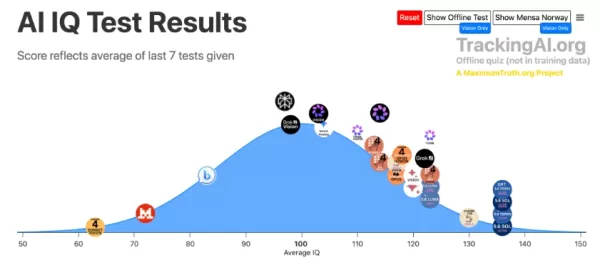 GPT-5.6 IQ Breaks 130 Genius Line, Smarter Than 99% of Humans, Practical Work Ability Also Extraordinary
Tracking AI’s latest offline IQ assessment reveals that multiple iterations of OpenAI’s GPT-5.6 achieved a score of 136, marking the first instance of a large language model exceeding the 130 IQ benchmark. In standard human distribution, an IQ of 130
GPT-5.6 IQ Breaks 130 Genius Line, Smarter Than 99% of Humans, Practical Work Ability Also Extraordinary
Tracking AI’s latest offline IQ assessment reveals that multiple iterations of OpenAI’s GPT-5.6 achieved a score of 136, marking the first instance of a large language model exceeding the 130 IQ benchmark. In standard human distribution, an IQ of 130

2026 Latest Best Top-rated AI Video Generation Tools for Short Content are here on XIX.AI’s curated collection. These powerful game-changing tools have undergone rigorous real-world tests, featuring a comprehensive free vs paid comparison and detailed rankings to help you find the perfect option. Whether you need to create high-quality short videos fast or boost your productivity across various tasks, these must-try solutions deliver outstanding results. Explore now to discover your ideal tool and unlock your AI edge.
9 tools
xix.ai
2026 Latest Best AI Art Generators ranking showcases top-rated tools for creating stunning moodboards, exploring diverse styles, and defining visual directions. XIX.AI offers a curated list of powerful, game-changing options that have passed rigorous real-world tests. Get a free vs paid comparison to help you find the perfect fit for boosting your creative workflow. Explore now to Unlock your AI edge in art creation.
10 tools
xix.ai

2026 Latest Best AI Email Personalization Platforms for Shopify Flows that boost retention and win-backs. This top-rated curated list features powerful game-changing tools经过real-world tests, offering free vs paid comparison insights. XIX.AI is part of our trusted selection. Discover your perfect tool to unlock your AI edge today. Explore now!
9 tools
xix.ai

2026 Latest Best AI Comic Generators for Webtoon Creators! XIX.AI has curated a top-rated list of powerful, game-changing tools that help creators boost productivity significantly. You’ll find detailed weekly updated rankings, free vs paid comparison, and real-world tests to help you choose the perfect fit. Must-try options are available to overcome creation bottlenecks and deliver high-quality content faster. Explore now to Discover your perfect tool for smarter comic making!
9 tools
xix.ai
2026 Latest Best Top-rated AI Illustration Tools for Digital Artists! XIX.AI has curated a powerful, game-changing collection of top tools designed to help artists unlock their full creative potential. These best options feature weekly updated rankings, real-world tests, and free vs paid comparison details to help you find the perfect fit for boosting your workflow efficiency. Must-try choices across all skill levels are here—Explore now to Discover your perfect tool!
17 tools
xix.ai

2026 Latest Best Top-Rated AI Manga Layout Tools for Webtoon Creators! XIX.AI has curated a powerful, game-changing collection of must-try tools that go through rigorous real-world tests. You’ll find detailed weekly updated rankings, free vs paid comparison info, and insights on how these tools can boost your workflow, help you create high-quality content faster, and unlock your full creative potential. Explore now to discover your perfect tool!
9 tools
xix.ai












