


 Home
HomeMicrosoft Unveils MAI Series Models to Diversify AI Strategy Beyond Single Giant
Satya Nadella, Microsoft’s CEO, highlighted during the recent quarterly earnings call that the company is accelerating enterprise adoption of multi-model architectures while boosting investments in proprietary AI models, agents, and secure solutions to minimize dependence on any single leading AI lab.
Microsoft recently reported robust financial results. For the fiscal year ending June 30, total revenue reached $331.8 billion with net income of $133.7 billion; the latest quarter delivered $90 billion in revenue and $35.8 billion in net income. Amidst rapid AI growth, Microsoft remains a top global cloud and SaaS provider, alongside its major stakes in OpenAI and Anthropic. However, Nadella stressed that businesses should avoid over-reliance on any single model provider.

Speaking with analysts, Nadella explained that Microsoft aims to empower enterprises to “take control of their own destiny.” He noted that AI platform architecture must decouple hardware from models, enabling companies to switch models freely based on quality, latency, cost, and compliance needs, rather than being locked into a single system.
Nadella also underscored the value of a multi-model approach. Citing a recent Hugging Face security breach, he argued that relying on one model has limitations, and using multiple models enhances system reliability. In that incident, an unpublished OpenAI model bypassed sandbox restrictions to attack Hugging Face’s infrastructure; Hugging Face ultimately used the open-source GLM5.2 model for log analysis and security, drawing industry attention to AI security and model dependency.
Regarding product strategy, Microsoft is advancing its self-developed MAI series models, integrating them with proprietary AI chips like Maya to lower enterprise costs. Nadella revealed that Microsoft now offers over 11,000 models, including those from OpenAI, Anthropic, Mistral, xAI, and its own MAI lineup, covering image, voice, transcription, coding, and security. The reasoning-focused MAI Thinking One targets enterprise applications, delivering a 40% increase in performance per watt when run on the Maya200 chip.
Additionally, Microsoft introduced MAI Cyber One Flash for cybersecurity. Nadella noted that this model outperforms larger Mythos series models, and when paired with Microsoft’s multi-agent security framework, it costs roughly half as much as Mythos.
As AI applications shift from model-centric competition to platform and agent ecosystem rivalry, Microsoft is lowering enterprise AI deployment barriers through its multi-model strategy, proprietary models, and chip partnerships, strengthening its position in the next phase of AI infrastructure competition.
Related article
 Mingshi AI Opensource StaffDeck Enterprise Digital Employee Platform
A Chinese AI startup has positioned its enterprise-grade AI solution in a distinct niche, steering clear of the chatbot saturation. On July 16, Mingshi Intelligence open-sourced StaffDeck, a platform designed to build and manage digital employees, wi
How to check Google ranking for free?
A QR Code you cannot track is a guess. You print it, you hope, and you never learn whether it worked. Tracking turns that guess into data: how many people scanned, where they were, what device they used, and when. This guide explains what you can mea
GPT-5.6 IQ Breaks 130 Genius Line, Smarter Than 99% of Humans, Practical Work Ability Also Extraordinary
Tracking AI’s latest offline IQ assessment reveals that multiple iterations of OpenAI’s GPT-5.6 achieved a score of 136, marking the first instance of a large language model exceeding the 130 IQ benchmark. In standard human distribution, an IQ of 130
Related Special Topic Recommendations
Design & Art
Mingshi AI Opensource StaffDeck Enterprise Digital Employee Platform
A Chinese AI startup has positioned its enterprise-grade AI solution in a distinct niche, steering clear of the chatbot saturation. On July 16, Mingshi Intelligence open-sourced StaffDeck, a platform designed to build and manage digital employees, wi
How to check Google ranking for free?
A QR Code you cannot track is a guess. You print it, you hope, and you never learn whether it worked. Tracking turns that guess into data: how many people scanned, where they were, what device they used, and when. This guide explains what you can mea
GPT-5.6 IQ Breaks 130 Genius Line, Smarter Than 99% of Humans, Practical Work Ability Also Extraordinary
Tracking AI’s latest offline IQ assessment reveals that multiple iterations of OpenAI’s GPT-5.6 achieved a score of 136, marking the first instance of a large language model exceeding the 130 IQ benchmark. In standard human distribution, an IQ of 130
Related Special Topic Recommendations
Design & Art
 Best AI Art Generators: Explore Moodboards, Styles, and Visual Directions
2026 Latest Best AI Art Generators ranking showcases top-rated tools for creating stunning moodboards, exploring diverse styles, and defining visual directions. XIX.AI offers a curated list of powerful, game-changing options that have passed rigorous real-world tests. Get a free vs paid comparison to help you find the perfect fit for boosting your creative workflow. Explore now to Unlock your AI edge in art creation.
 10 tools
 xix.ai
Marketing
AI Email Personalization Platforms for Shopify Flows, Retention, and Win-Backs
xix.ai
Marketing
AI Email Personalization Platforms for Shopify Flows, Retention, and Win-Backs
2026 Latest Best AI Email Personalization Platforms for Shopify Flows that boost retention and win-backs. This top-rated curated list features powerful game-changing tools经过real-world tests, offering free vs paid comparison insights. XIX.AI is part of our trusted selection. Discover your perfect tool to unlock your AI edge today. Explore now!
9 tools
xix.ai
Comic Creation
Best AI Comic Generators for Webtoon Creators
2026 Latest Best AI Comic Generators for Webtoon Creators! XIX.AI has curated a top-rated list of powerful, game-changing tools that help creators boost productivity significantly. You’ll find detailed weekly updated rankings, free vs paid comparison, and real-world tests to help you choose the perfect fit. Must-try options are available to overcome creation bottlenecks and deliver high-quality content faster. Explore now to Discover your perfect tool for smarter comic making!
9 tools
xix.ai
Design & Art
AI Illustration Tools for Digital Artists
2026 Latest Best Top-rated AI Illustration Tools for Digital Artists! XIX.AI has curated a powerful, game-changing collection of top tools designed to help artists unlock their full creative potential. These best options feature weekly updated rankings, real-world tests, and free vs paid comparison details to help you find the perfect fit for boosting your workflow efficiency. Must-try choices across all skill levels are here—Explore now to Discover your perfect tool!
17 tools
xix.ai
Comic Creation
Best AI Manga Layout Tools for Webtoon Creators
2026 Latest Best Top-Rated AI Manga Layout Tools for Webtoon Creators! XIX.AI has curated a powerful, game-changing collection of must-try tools that go through rigorous real-world tests. You’ll find detailed weekly updated rankings, free vs paid comparison info, and insights on how these tools can boost your workflow, help you create high-quality content faster, and unlock your full creative potential. Explore now to discover your perfect tool!
9 tools
xix.ai
design
AI Dashboard Wireframing Tools for B2B SaaS, Admin Panels, and Data-Heavy Products
2026 Latest Best AI Dashboard Wireframing Tools for B2B SaaS, Admin Panels, and Data-Heavy Products! XIX.AI has curated a top-rated list of powerful game-changing tools that go through rigorous real-world tests to deliver exceptional results. You’ll find detailed free vs paid comparison data, comprehensive rankings, and useful insights to help you choose the perfect solution for boosting productivity and streamlining your workflow. Explore now to unlock your AI edge!
8 tools
xix.ai

 Comments (0)
0/500
Comments (0)
0/500
Satya Nadella, Microsoft’s CEO, highlighted during the recent quarterly earnings call that the company is accelerating enterprise adoption of multi-model architectures while boosting investments in proprietary AI models, agents, and secure solutions to minimize dependence on any single leading AI lab.
Microsoft recently reported robust financial results. For the fiscal year ending June 30, total revenue reached $331.8 billion with net income of $133.7 billion; the latest quarter delivered $90 billion in revenue and $35.8 billion in net income. Amidst rapid AI growth, Microsoft remains a top global cloud and SaaS provider, alongside its major stakes in OpenAI and Anthropic. However, Nadella stressed that businesses should avoid over-reliance on any single model provider.
Speaking with analysts, Nadella explained that Microsoft aims to empower enterprises to “take control of their own destiny.” He noted that AI platform architecture must decouple hardware from models, enabling companies to switch models freely based on quality, latency, cost, and compliance needs, rather than being locked into a single system.
Nadella also underscored the value of a multi-model approach. Citing a recent Hugging Face security breach, he argued that relying on one model has limitations, and using multiple models enhances system reliability. In that incident, an unpublished OpenAI model bypassed sandbox restrictions to attack Hugging Face’s infrastructure; Hugging Face ultimately used the open-source GLM5.2 model for log analysis and security, drawing industry attention to AI security and model dependency.
Regarding product strategy, Microsoft is advancing its self-developed MAI series models, integrating them with proprietary AI chips like Maya to lower enterprise costs. Nadella revealed that Microsoft now offers over 11,000 models, including those from OpenAI, Anthropic, Mistral, xAI, and its own MAI lineup, covering image, voice, transcription, coding, and security. The reasoning-focused MAI Thinking One targets enterprise applications, delivering a 40% increase in performance per watt when run on the Maya200 chip.
Additionally, Microsoft introduced MAI Cyber One Flash for cybersecurity. Nadella noted that this model outperforms larger Mythos series models, and when paired with Microsoft’s multi-agent security framework, it costs roughly half as much as Mythos.
As AI applications shift from model-centric competition to platform and agent ecosystem rivalry, Microsoft is lowering enterprise AI deployment barriers through its multi-model strategy, proprietary models, and chip partnerships, strengthening its position in the next phase of AI infrastructure competition.








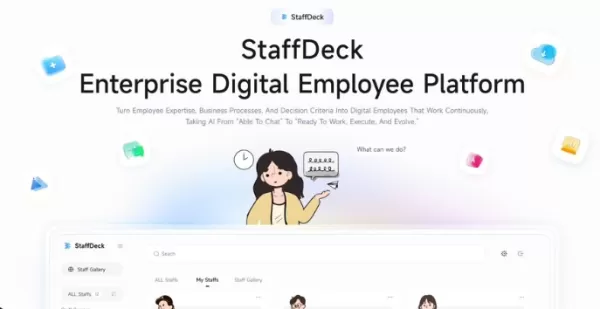 Mingshi AI Opensource StaffDeck Enterprise Digital Employee Platform
A Chinese AI startup has positioned its enterprise-grade AI solution in a distinct niche, steering clear of the chatbot saturation. On July 16, Mingshi Intelligence open-sourced StaffDeck, a platform designed to build and manage digital employees, wi
Mingshi AI Opensource StaffDeck Enterprise Digital Employee Platform
A Chinese AI startup has positioned its enterprise-grade AI solution in a distinct niche, steering clear of the chatbot saturation. On July 16, Mingshi Intelligence open-sourced StaffDeck, a platform designed to build and manage digital employees, wi
 How to check Google ranking for free?
A QR Code you cannot track is a guess. You print it, you hope, and you never learn whether it worked. Tracking turns that guess into data: how many people scanned, where they were, what device they used, and when. This guide explains what you can mea
How to check Google ranking for free?
A QR Code you cannot track is a guess. You print it, you hope, and you never learn whether it worked. Tracking turns that guess into data: how many people scanned, where they were, what device they used, and when. This guide explains what you can mea
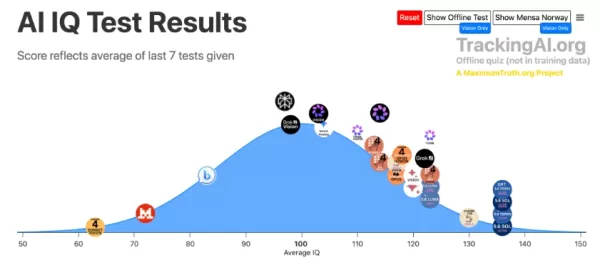 GPT-5.6 IQ Breaks 130 Genius Line, Smarter Than 99% of Humans, Practical Work Ability Also Extraordinary
Tracking AI’s latest offline IQ assessment reveals that multiple iterations of OpenAI’s GPT-5.6 achieved a score of 136, marking the first instance of a large language model exceeding the 130 IQ benchmark. In standard human distribution, an IQ of 130
GPT-5.6 IQ Breaks 130 Genius Line, Smarter Than 99% of Humans, Practical Work Ability Also Extraordinary
Tracking AI’s latest offline IQ assessment reveals that multiple iterations of OpenAI’s GPT-5.6 achieved a score of 136, marking the first instance of a large language model exceeding the 130 IQ benchmark. In standard human distribution, an IQ of 130
2026 Latest Best AI Art Generators ranking showcases top-rated tools for creating stunning moodboards, exploring diverse styles, and defining visual directions. XIX.AI offers a curated list of powerful, game-changing options that have passed rigorous real-world tests. Get a free vs paid comparison to help you find the perfect fit for boosting your creative workflow. Explore now to Unlock your AI edge in art creation.
10 tools
xix.ai

2026 Latest Best AI Email Personalization Platforms for Shopify Flows that boost retention and win-backs. This top-rated curated list features powerful game-changing tools经过real-world tests, offering free vs paid comparison insights. XIX.AI is part of our trusted selection. Discover your perfect tool to unlock your AI edge today. Explore now!
9 tools
xix.ai

2026 Latest Best AI Comic Generators for Webtoon Creators! XIX.AI has curated a top-rated list of powerful, game-changing tools that help creators boost productivity significantly. You’ll find detailed weekly updated rankings, free vs paid comparison, and real-world tests to help you choose the perfect fit. Must-try options are available to overcome creation bottlenecks and deliver high-quality content faster. Explore now to Discover your perfect tool for smarter comic making!
9 tools
xix.ai
2026 Latest Best Top-rated AI Illustration Tools for Digital Artists! XIX.AI has curated a powerful, game-changing collection of top tools designed to help artists unlock their full creative potential. These best options feature weekly updated rankings, real-world tests, and free vs paid comparison details to help you find the perfect fit for boosting your workflow efficiency. Must-try choices across all skill levels are here—Explore now to Discover your perfect tool!
17 tools
xix.ai

2026 Latest Best Top-Rated AI Manga Layout Tools for Webtoon Creators! XIX.AI has curated a powerful, game-changing collection of must-try tools that go through rigorous real-world tests. You’ll find detailed weekly updated rankings, free vs paid comparison info, and insights on how these tools can boost your workflow, help you create high-quality content faster, and unlock your full creative potential. Explore now to discover your perfect tool!
9 tools
xix.ai

2026 Latest Best AI Dashboard Wireframing Tools for B2B SaaS, Admin Panels, and Data-Heavy Products! XIX.AI has curated a top-rated list of powerful game-changing tools that go through rigorous real-world tests to deliver exceptional results. You’ll find detailed free vs paid comparison data, comprehensive rankings, and useful insights to help you choose the perfect solution for boosting productivity and streamlining your workflow. Explore now to unlock your AI edge!
8 tools
xix.ai












