


 Home
HomeMicrosoft and Mistral Ink Multi-Billion-Dollar European AI Partnership
# europe
# us
# South Korea
# ai infrastructure
# data centre
# AI sovereignty
# European AI
# AI startup
![]()
At the core of this collaboration lies a multi-billion-dollar pact designed to bolster artificial intelligence infrastructure across Europe. Credit: Microsoft
Microsoft and Mistral, a leading French artificial intelligence firm, have unveiled a multi-billion-dollar partnership aimed at fortifying Europe’s AI landscape.
Microsoft and Mistral, a French developer of advanced large language models, have announced a new agreement to expand AI infrastructure within Europe.
This deal marks a significant expansion of the companies' existing collaboration, which will also see Mistral’s AI models integrated into Microsoft’s product ecosystem.
The partnership aims to assist the French company in establishing data centers across Europe and is expected to help both firms expand their customer base within the region.
While the US and China currently dominate the AI race, with Europe trailing behind, Microsoft appears to be seriously backing a European-led competitor in this sector, despite its role as the cloud partner for American firm OpenAI.
Additionally, reports indicate that the French AI startup is currently in discussions with South Korean tech giant Samsung.

The multi-billion-dollar AI deal
A key component of the agreement involves integrating Mistral’s AI models into Microsoft’s product suite. Mistral Medium 3.5 and OCR 4 are now available in Microsoft Foundry, while Mistral Medium 3.5 is accessible via Microsoft Copilot Studio.
“Our mission has always been to put frontier AI in the hands of every organization while keeping them in control of their technology,” states Arthur Mensch, Co-Founder and CEO of Mistral.
Arthur Mensch, Co-Founder and CEO of Mistral AI (Credit: Getty Images)
“With Microsoft as our partner, our models reach enterprises and public institutions at a global scale, delivered through a platform trusted for the most demanding, regulated workloads and available everywhere our customers operate.”
Mistral’s OCR 4 supports structured document-processing pipelines and agentic workflows, making it suitable for various automation applications.
Mistral Medium 3.5 introduces an open-weight model that allows developers and enterprises to build, customize, and deploy AI applications with full control and sovereign deployment options.
This agreement builds upon the companies’ existing partnership, which was initially announced in 2024.

European data centres
At the heart of this collaboration is a multi-billion-dollar agreement focused on expanding AI infrastructure across Europe.
Earlier this year, Mistral announced an investment of US$1.43 billion in new data centers in Sweden. Last year, Microsoft revealed plans to increase its European data center capacity by 40% over the next two years.
Microsoft states that this agreement strengthens Europe’s AI infrastructure while helping to meet the growing demand for cloud and AI services. To support this infrastructure expansion, Mistral is adding GPU capacity to boost compute power, leveraging thousands of NVIDIA Vera Rubin GPUs.
Ian Buck, Vice President of Hyperscale and High-Performance Computing at NVIDIA, comments: “Agentic AI is driving unprecedented demand for high-performance, energy-efficient AI infrastructure.
Ian Buck, VP and General Manager of Hyperscale and HPC at Nvidia. Credit: Nvidia
“By deploying NVIDIA Vera Rubin systems at scale, Mistral and Microsoft will provide customers with the computing foundation they need to build and run the next generation of AI across Europe and beyond.”
European sovereign AI
Mistral is positioned as a European-centric sovereign AI solution, helping firms reduce their reliance on American AI technologies.
Brad Smith, Vice Chair and President of Microsoft, states: “Europe should have access to the world’s most capable AI without compromising control over their data, operations, or digital future.
Microsoft’s Vice Chair and President, Brad Smith (Credit: Microsoft)
“By bringing Mistral’s frontier European models into our sovereign cloud portfolio and enabling them across public cloud, cloud-connected, and fully disconnected environments, we are honoring the European Digital Commitments we made and giving customers a trusted foundation for AI they can operate on their own terms.”
The EU remains heavily dependent on the US for AI services. In June, The Guardian reported that the EU Commission aims to ensure no foreign government or company has access to a “kill switch” that could turn off or disrupt vital tech services across the continent, as part of efforts to reduce dependencies on the US and China.
McKinsey recently argued that the primary barriers to AI adoption in Europe are concerns regarding trust, security, and national dependency.
In an article titled Accelerating Europe’s AI adoption: The role of sovereign AI, the consulting firm suggested that sovereign AI capabilities could offer greater flexibility in terms of national, economic, operational, and technical independence.
Samsung’s reported talks with Mistral
The Financial Times reported that Samsung is in discussions to invest ‘hundreds of millions of euros’ in Mistral. The report suggests Samsung could invest up to €1 billion (US$1.14 billion) in the French AI group, which is positioning itself as a leading alternative to US tech firms.
Ashish Patel, a Managing Director in Houlihan Lokey’s Capital Solutions Group, provided comments to AI Magazine regarding this development: “Increasing pressure from European governments is driving the agenda around European sovereignty, including efforts to reduce dependency on critical technologies that have historically been supplied by the US and China.
Ashish Patel, a Managing Director in Houlihan Lokey’s Capital Solutions Group. Credit: Ashish Patel/LinkedIn
“Companies such as Mistral and Lovable have been vocal about the importance of sovereign European technologies, and this shift in market sentiment is increasingly being reflected in capital allocation decisions.”
The FT noted that the massive South Korean company is discussing an investment in Mistral as part of a broader fundraising round that could value the group at approximately €20 billion (US$22.8 billion), citing sources familiar with the matter.
Related article
 Amazon Taps AI and Clean Energy to Power Data Centre Expansion
Amazon leverages AI, nuclear power, and electric vehicles to scale infrastructure while reducing carbon intensity. Credit: AmazonAmazon’s 2025 Sustainability Report details how the tech giant integrates AI and nuclear investments to expand global inf
How Stanford Researchers Engineered a Synthetic Virus Using Artificial Intelligence
AI leaders have highlighted potential risks associated with biologically capable AI models. Credit: CDC/UnsplashUS researchers utilized AI to engineer the first synthetic virus targeting E.coli, while Anthropic CEO Dario Amodei raises concerns about
OpenAI GPT-6 Halves Token Costs Across Benchmarks as Sol and Luna Join
According to Artificial Analysis, GPT-6 Sol (max) ranks as the top model for intelligence, priced at $48. Image credit: Getty ImagesAfter OpenAI released GPT-6 Sol and Luna, Matt Weaver, Head of Solutions Engineering, explained to AI Magazine how the
Related Special Topic Recommendations
Finance
Amazon Taps AI and Clean Energy to Power Data Centre Expansion
Amazon leverages AI, nuclear power, and electric vehicles to scale infrastructure while reducing carbon intensity. Credit: AmazonAmazon’s 2025 Sustainability Report details how the tech giant integrates AI and nuclear investments to expand global inf
How Stanford Researchers Engineered a Synthetic Virus Using Artificial Intelligence
AI leaders have highlighted potential risks associated with biologically capable AI models. Credit: CDC/UnsplashUS researchers utilized AI to engineer the first synthetic virus targeting E.coli, while Anthropic CEO Dario Amodei raises concerns about
OpenAI GPT-6 Halves Token Costs Across Benchmarks as Sol and Luna Join
According to Artificial Analysis, GPT-6 Sol (max) ranks as the top model for intelligence, priced at $48. Image credit: Getty ImagesAfter OpenAI released GPT-6 Sol and Luna, Matt Weaver, Head of Solutions Engineering, explained to AI Magazine how the
Related Special Topic Recommendations
Finance
 Excel AI Budget Forecasting Tools for Cash Flow Planning and Expense Control
2026 Latest Best Excel AI tools for cash flow planning and expense control are here on XIX.AI’s top-rated curated list. These powerful game-changing solutions help you boost productivity significantly through real-world tests and rigorous rankings. Get a free vs paid comparison to find the perfect fit for your needs. Explore now to unlock your AI edge in financial management.
 9 tools
 xix.ai
Prompt
AI Prompt Management Tools for Teams
xix.ai
Prompt
AI Prompt Management Tools for Teams
2026 Latest Best Top-Rated AI Prompt Management Tools for Teams are curated by XIX.AI here. This weekly updated guide features powerful game-changing solutions that boost team productivity significantly through real-world tests and detailed rankings. Get a free vs paid comparison to help you choose the perfect tool. Explore now to Unlock your AI edge.
9 tools
xix.ai
Music composition
AI Lyric Idea Tools for Music Composition
2026 Latest Best Top-rated AI Lyric Idea Tools for Music Composition are here on XIX.AI! This curated collection features powerful game-changing options that go through real-world tests to deliver high-quality lyric concepts fast, helping users boost creativity and streamline their music creation process. Get a free vs paid comparison overview too. Explore now to Discover your perfect tool!
16 tools
xix.ai
Comic Creation
AI Character Sheet Tools for Comic Worldbuilding
2026 Latest Best Top-Rated AI Character Sheet Tools for Comic Worldbuilding are here on XIX.AI! This curated list features powerful, game-changing options that have undergone rigorous real-world tests. You’ll find a free vs paid comparison along with weekly updated rankings to help you discover the must-try tools that boost your creativity and streamline worldbuilding tasks. Explore now to Unlock your AI edge!
13 tools
xix.ai
automation
n8n AI Automation Tools for Internal Ops, Data Sync, and Multi-Step Agent Flows
2026 Latest Best n8n AI Automation Tools for Internal Ops, Data Sync, and Multi-Step Agent Flows are here! XIX.AI has curated a top-rated list of powerful game-changing tools that boost productivity across all work tasks. Each entry goes through rigorous real-world tests to ensure reliability, with detailed free vs paid comparison and weekly updated rankings. Must-try options help you unlock your AI edge and streamline workflows effortlessly. Explore now to discover your perfect tool!
11 tools
xix.ai
Prompt
Best Prompt Management Tools for Multi Model Teams
2026 Latest Best Top-Rated Prompt Management Tools for Multi Model Teams! XIX.AI has curated a powerful, game-changing collection of must-try tools that offer free vs paid comparison, real-world tests, and detailed rankings. These top-rated solutions help boost productivity significantly by streamlining workflows, eliminating repetition, and unlocking creativity across all team projects. Explore now to Discover your perfect tool and Start creating today!
9 tools
xix.ai

 Comments (0)
0/500
Comments (0)
0/500
At the core of this collaboration lies a multi-billion-dollar pact designed to bolster artificial intelligence infrastructure across Europe. Credit: Microsoft
Microsoft and Mistral, a leading French artificial intelligence firm, have unveiled a multi-billion-dollar partnership aimed at fortifying Europe’s AI landscape.
Microsoft and Mistral, a French developer of advanced large language models, have announced a new agreement to expand AI infrastructure within Europe.
This deal marks a significant expansion of the companies' existing collaboration, which will also see Mistral’s AI models integrated into Microsoft’s product ecosystem.
The partnership aims to assist the French company in establishing data centers across Europe and is expected to help both firms expand their customer base within the region.
While the US and China currently dominate the AI race, with Europe trailing behind, Microsoft appears to be seriously backing a European-led competitor in this sector, despite its role as the cloud partner for American firm OpenAI.
Additionally, reports indicate that the French AI startup is currently in discussions with South Korean tech giant Samsung.
The multi-billion-dollar AI deal
A key component of the agreement involves integrating Mistral’s AI models into Microsoft’s product suite. Mistral Medium 3.5 and OCR 4 are now available in Microsoft Foundry, while Mistral Medium 3.5 is accessible via Microsoft Copilot Studio.
“Our mission has always been to put frontier AI in the hands of every organization while keeping them in control of their technology,” states Arthur Mensch, Co-Founder and CEO of Mistral.
Arthur Mensch, Co-Founder and CEO of Mistral AI (Credit: Getty Images)
“With Microsoft as our partner, our models reach enterprises and public institutions at a global scale, delivered through a platform trusted for the most demanding, regulated workloads and available everywhere our customers operate.”
Mistral’s OCR 4 supports structured document-processing pipelines and agentic workflows, making it suitable for various automation applications.
Mistral Medium 3.5 introduces an open-weight model that allows developers and enterprises to build, customize, and deploy AI applications with full control and sovereign deployment options.
This agreement builds upon the companies’ existing partnership, which was initially announced in 2024.
European data centres
At the heart of this collaboration is a multi-billion-dollar agreement focused on expanding AI infrastructure across Europe.
Earlier this year, Mistral announced an investment of US$1.43 billion in new data centers in Sweden. Last year, Microsoft revealed plans to increase its European data center capacity by 40% over the next two years.
Microsoft states that this agreement strengthens Europe’s AI infrastructure while helping to meet the growing demand for cloud and AI services. To support this infrastructure expansion, Mistral is adding GPU capacity to boost compute power, leveraging thousands of NVIDIA Vera Rubin GPUs.
Ian Buck, Vice President of Hyperscale and High-Performance Computing at NVIDIA, comments: “Agentic AI is driving unprecedented demand for high-performance, energy-efficient AI infrastructure.
Ian Buck, VP and General Manager of Hyperscale and HPC at Nvidia. Credit: Nvidia
“By deploying NVIDIA Vera Rubin systems at scale, Mistral and Microsoft will provide customers with the computing foundation they need to build and run the next generation of AI across Europe and beyond.”
European sovereign AI
Mistral is positioned as a European-centric sovereign AI solution, helping firms reduce their reliance on American AI technologies.
Brad Smith, Vice Chair and President of Microsoft, states: “Europe should have access to the world’s most capable AI without compromising control over their data, operations, or digital future.
Microsoft’s Vice Chair and President, Brad Smith (Credit: Microsoft)
“By bringing Mistral’s frontier European models into our sovereign cloud portfolio and enabling them across public cloud, cloud-connected, and fully disconnected environments, we are honoring the European Digital Commitments we made and giving customers a trusted foundation for AI they can operate on their own terms.”
The EU remains heavily dependent on the US for AI services. In June, The Guardian reported that the EU Commission aims to ensure no foreign government or company has access to a “kill switch” that could turn off or disrupt vital tech services across the continent, as part of efforts to reduce dependencies on the US and China.
McKinsey recently argued that the primary barriers to AI adoption in Europe are concerns regarding trust, security, and national dependency.
In an article titled Accelerating Europe’s AI adoption: The role of sovereign AI, the consulting firm suggested that sovereign AI capabilities could offer greater flexibility in terms of national, economic, operational, and technical independence.
Samsung’s reported talks with Mistral
The Financial Times reported that Samsung is in discussions to invest ‘hundreds of millions of euros’ in Mistral. The report suggests Samsung could invest up to €1 billion (US$1.14 billion) in the French AI group, which is positioning itself as a leading alternative to US tech firms.
Ashish Patel, a Managing Director in Houlihan Lokey’s Capital Solutions Group, provided comments to AI Magazine regarding this development: “Increasing pressure from European governments is driving the agenda around European sovereignty, including efforts to reduce dependency on critical technologies that have historically been supplied by the US and China.
Ashish Patel, a Managing Director in Houlihan Lokey’s Capital Solutions Group. Credit: Ashish Patel/LinkedIn
“Companies such as Mistral and Lovable have been vocal about the importance of sovereign European technologies, and this shift in market sentiment is increasingly being reflected in capital allocation decisions.”
The FT noted that the massive South Korean company is discussing an investment in Mistral as part of a broader fundraising round that could value the group at approximately €20 billion (US$22.8 billion), citing sources familiar with the matter.








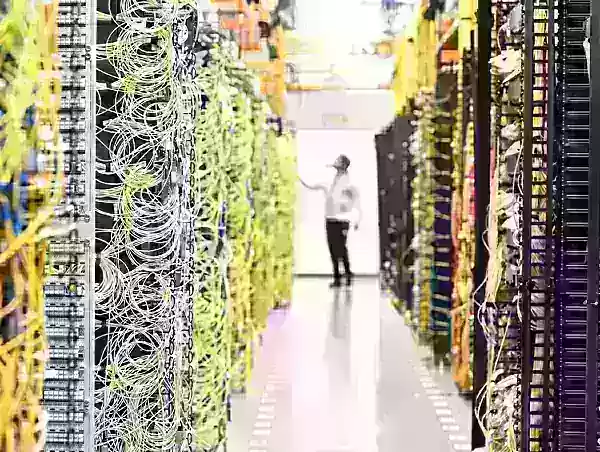 Amazon Taps AI and Clean Energy to Power Data Centre Expansion
Amazon leverages AI, nuclear power, and electric vehicles to scale infrastructure while reducing carbon intensity. Credit: AmazonAmazon’s 2025 Sustainability Report details how the tech giant integrates AI and nuclear investments to expand global inf
Amazon Taps AI and Clean Energy to Power Data Centre Expansion
Amazon leverages AI, nuclear power, and electric vehicles to scale infrastructure while reducing carbon intensity. Credit: AmazonAmazon’s 2025 Sustainability Report details how the tech giant integrates AI and nuclear investments to expand global inf
 How Stanford Researchers Engineered a Synthetic Virus Using Artificial Intelligence
AI leaders have highlighted potential risks associated with biologically capable AI models. Credit: CDC/UnsplashUS researchers utilized AI to engineer the first synthetic virus targeting E.coli, while Anthropic CEO Dario Amodei raises concerns about
How Stanford Researchers Engineered a Synthetic Virus Using Artificial Intelligence
AI leaders have highlighted potential risks associated with biologically capable AI models. Credit: CDC/UnsplashUS researchers utilized AI to engineer the first synthetic virus targeting E.coli, while Anthropic CEO Dario Amodei raises concerns about
 OpenAI GPT-6 Halves Token Costs Across Benchmarks as Sol and Luna Join
According to Artificial Analysis, GPT-6 Sol (max) ranks as the top model for intelligence, priced at $48. Image credit: Getty ImagesAfter OpenAI released GPT-6 Sol and Luna, Matt Weaver, Head of Solutions Engineering, explained to AI Magazine how the
OpenAI GPT-6 Halves Token Costs Across Benchmarks as Sol and Luna Join
According to Artificial Analysis, GPT-6 Sol (max) ranks as the top model for intelligence, priced at $48. Image credit: Getty ImagesAfter OpenAI released GPT-6 Sol and Luna, Matt Weaver, Head of Solutions Engineering, explained to AI Magazine how the

2026 Latest Best Excel AI tools for cash flow planning and expense control are here on XIX.AI’s top-rated curated list. These powerful game-changing solutions help you boost productivity significantly through real-world tests and rigorous rankings. Get a free vs paid comparison to find the perfect fit for your needs. Explore now to unlock your AI edge in financial management.
9 tools
xix.ai
2026 Latest Best Top-Rated AI Prompt Management Tools for Teams are curated by XIX.AI here. This weekly updated guide features powerful game-changing solutions that boost team productivity significantly through real-world tests and detailed rankings. Get a free vs paid comparison to help you choose the perfect tool. Explore now to Unlock your AI edge.
9 tools
xix.ai

2026 Latest Best Top-rated AI Lyric Idea Tools for Music Composition are here on XIX.AI! This curated collection features powerful game-changing options that go through real-world tests to deliver high-quality lyric concepts fast, helping users boost creativity and streamline their music creation process. Get a free vs paid comparison overview too. Explore now to Discover your perfect tool!
16 tools
xix.ai

2026 Latest Best Top-Rated AI Character Sheet Tools for Comic Worldbuilding are here on XIX.AI! This curated list features powerful, game-changing options that have undergone rigorous real-world tests. You’ll find a free vs paid comparison along with weekly updated rankings to help you discover the must-try tools that boost your creativity and streamline worldbuilding tasks. Explore now to Unlock your AI edge!
13 tools
xix.ai

2026 Latest Best n8n AI Automation Tools for Internal Ops, Data Sync, and Multi-Step Agent Flows are here! XIX.AI has curated a top-rated list of powerful game-changing tools that boost productivity across all work tasks. Each entry goes through rigorous real-world tests to ensure reliability, with detailed free vs paid comparison and weekly updated rankings. Must-try options help you unlock your AI edge and streamline workflows effortlessly. Explore now to discover your perfect tool!
11 tools
xix.ai

2026 Latest Best Top-Rated Prompt Management Tools for Multi Model Teams! XIX.AI has curated a powerful, game-changing collection of must-try tools that offer free vs paid comparison, real-world tests, and detailed rankings. These top-rated solutions help boost productivity significantly by streamlining workflows, eliminating repetition, and unlocking creativity across all team projects. Explore now to Discover your perfect tool and Start creating today!
9 tools
xix.ai












