


 Home
HomeOpenAI GPT-6 Halves Token Costs Across Benchmarks as Sol and Luna Join
![]()
According to Artificial Analysis, GPT-6 Sol (max) ranks as the top model for intelligence, priced at $48. Image credit: Getty Images
After OpenAI released GPT-6 Sol and Luna, Matt Weaver, Head of Solutions Engineering, explained to AI Magazine how these new models provide businesses with enhanced operational flexibility.
OpenAI has recently unveiled GPT-6 Astra, describing it as the “most intelligent and aligned model in the world.” The AI laboratory has subsequently announced GPT-6 Sol and GPT-6 Luna, cost-effective variants trained using methodologies similar to GPT-6 Astra, its flagship model.
Amid growing concerns over rising token usage costs, AI companies are increasingly competing on price, particularly as Chinese open-weight models threaten to capture enterprise clients.
Benchmarking firm Artificial Analysis states that GPT-6 Sol and Luna are “pushing the cost efficiency frontier” by reducing costs by half compared to GPT-5.6 Sol and Luna.
Matt Weaver, Head of Solutions Engineering at OpenAI, told AI Magazine: “With GPT-6 Sol and Luna, we’re giving businesses more flexibility to match the model to the work.”
Matt Weaver, Head of Solutions Engineering at OpenAI. Image credit: Matt Weaver/LinkedIn
Aligning models with workflows
OpenAI claims its GPT-6 models lead the cost-intelligence curve, delivering exceptional capabilities across all tiers through infrastructure designed for efficient, large-scale deployment.
The company notes that advancements in caching and inference enable these models to be served at lower costs, with savings passed directly to users through a 50% reduction in API prices for Sol and Luna compared to GPT-5.6 promotional rates.
Explaining the distinct roles of each AI model, Matt adds: “GPT-6 Astra is intended for the most demanding projects, where maximum capability is critical.
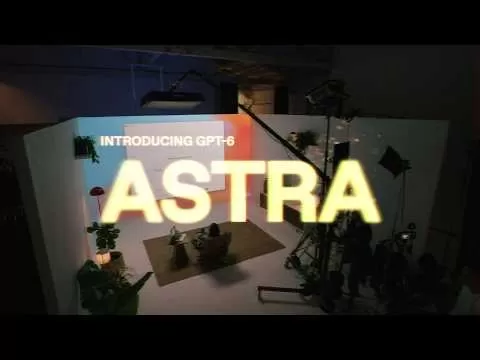
Matt explains: “GPT-6 Sol is built for complex professional tasks, including intricate business workflows and coding, while GPT-6 Luna provides a more efficient solution for high-volume, well-defined tasks such as document summarization or information extraction.
“Sol and Luna bring Astra’s advancements in professional work, factuality, coding, and computer use to faster, more affordable models. As AI transitions from experimentation to core business operations, selecting the right model for each task type is crucial.
“Our goal is to make advanced AI practical across organizations – helping teams move faster, make better decisions, and focus more time on higher-value work.”
Key facts
- OpenAI cut API prices for GPT-6 Sol and Luna by 50% compared to GPT-5.6
- GPT-6 Sol surpasses Claude Opus 5 on AutomationBench at just 9% of the cost
- GPT-6 Sol (max) achieves output speeds of 131 tokens per second
- Intelligence Index task costs dropped to US$1.06 for Sol and US$0.07 for Luna
- Both GPT-6 Sol and Luna demonstrate reduced hallucination on the AA-Omniscience benchmark.
Model performance analysis
OpenAI highlights that on AutomationBench, a test of business workflows across applications, GPT-6 Sol at xhigh effort outperforms Claude Opus 5 at max effort at just 9% of Opus 5’s cost per task.
At high effort, GPT-6 Luna improves on its predecessor by 5.4 percentage points at 58% lower cost per task, the company notes.
OpenAI points out that on Agents’ Last Exam, which evaluates agents on complex professional workflows, GPT-6 Sol at max effort scores 56.4%, exceeding Claude Opus 5’s highest score in the evaluation at 61% lower cost per task.
The company notes that on FrontierCode, which assesses whether coding agents produce changes ready to merge into real codebases, GPT-6 Sol shows substantial improvement over GPT-5.6 Sol and matches Claude Fable 5.1 xhigh at a much lower cost.
Both models exhibit reduced hallucination in AA-Omniscience, Artificial Analysis’s benchmark for knowledge and hallucination.
With GPT-6 Sol and Luna, we’re giving businesses more flexibility to match the model to the work
Matt Weaver, Head of Solutions Engineering at OpenAI
Cost per Intelligence Index Task. Image credit: Artificial Analysis
The benchmarking firm explains that the GPT-6 Sol release includes six models, each with distinct intelligence, performance, and pricing characteristics. Comparing key metrics across these six models, Artificial Analysis found:
- For intelligence, the top model of GPT-6 Sol is GPT-6 Sol (max) at 48.
- For output speed, the fastest model is GPT-6 Sol (max) at 131 t/s.
- For latency, GPT-6 Sol (Non-reasoning) at 0.93s offers the lowest time to first answer token.
- For pricing, GPT-6 Sol (low) at US$0.13 offers the lowest cost per task. Prices vary up to 8x across models.
The firm found that across models, the Intelligence Index and Coding Agent Index scores remain consistent with GPT-5.6, with progress in some evaluations and regressions in others.
GPT-6 Sol is designed for difficult professional work – from complex business workflows to coding – while GPT-6 Luna offers a more efficient option for high-volume, clearly defined tasks like summarising documents or extracting information
Matt Weaver, Head of Solutions Engineering at OpenAI
In FrontierCode 1.1 Main, AI agents write code that’s graded not only on correctness but also “mergeability”: e.g., test quality, scope discipline, code style and adherence to codebase standards. Image credit: OpenAI
The importance of cost efficiency
Competition over AI model pricing is intensifying, often driven by low-cost Chinese models. As Kyle Chan at the Brookings Institution notes in a blog, Chinese models are mostly open-source, allowing users to customize the model and access it at lower prices with 90% of the capabilities of a US model. Consequently, these models are rapidly gaining ground among cost-motivated enterprise firms.
OpenAI is positioning itself to remain competitive; running the Artificial Analysis Intelligence Index is significantly cheaper with the new models, even though both output slightly more tokens per task:
- GPT-6 Sol (max): Costs US$1.06 per task (down ~50% from US$1.99 for GPT-5.6 Sol), even with output token volume rising from 29k on GPT-5.6 to 31k.
- GPT-6 Luna (max): Costs US$0.07 per task (down ~60% from US$0.18 for GPT-5.6 Luna), despite output token usage increasing from 41k on GPT-5.6 to 51k.
Artificial Analysis highlights that these two releases allow OpenAI to capture a significant portion of the cost-efficiency Pareto frontier – the optimal boundary where performance cannot be increased without a corresponding price hike.
By lowering barriers without sacrificing capability, OpenAI is positioning itself to address enterprise ‘token fatigue’ while defending against its low-cost market competitors.
Related article
 Hexagon: More than half of adults excited by robots
Robots are increasingly integrated into business operations. Credit: HumanoidHexagon data reveals 59% of adults are excited to work with robots, but a rising “Robot Generation” of children is far more eager for AI workplacesNew data from Hexagon sugg
The AI graveyard: A running list of projects and startups that didn’t make it
Relay, an AI-driven workflow automation platform positioned as a Zapier alternative, ceased operations on Monday. The service enabled users to automate email and task workflows via AI agents, but as OpenAI, Google, and other major platforms integrate
OpenAI bets on families as ChatGPT goes deeper into households
Over three years since ChatGPT propelled generative AI into the spotlight, OpenAI is expanding its scope from individual users to entire households.OpenAI is recruiting a product manager in San Francisco to develop family-oriented experiences across
Related Special Topic Recommendations
Image editing
Hexagon: More than half of adults excited by robots
Robots are increasingly integrated into business operations. Credit: HumanoidHexagon data reveals 59% of adults are excited to work with robots, but a rising “Robot Generation” of children is far more eager for AI workplacesNew data from Hexagon sugg
The AI graveyard: A running list of projects and startups that didn’t make it
Relay, an AI-driven workflow automation platform positioned as a Zapier alternative, ceased operations on Monday. The service enabled users to automate email and task workflows via AI agents, but as OpenAI, Google, and other major platforms integrate
OpenAI bets on families as ChatGPT goes deeper into households
Over three years since ChatGPT propelled generative AI into the spotlight, OpenAI is expanding its scope from individual users to entire households.OpenAI is recruiting a product manager in San Francisco to develop family-oriented experiences across
Related Special Topic Recommendations
Image editing
 AI Product Retouch Tools for Fashion Ecommerce Photos
2026 Latest Best Top-Rated AI Product Retouch Tools for Fashion Ecommerce Photos are here on XIX.AI! This curated list features powerful, game-changing solutions that help boost image quality, speed up editing tasks, and deliver professional results. We conduct real-world tests to provide accurate rankings and a detailed free vs paid comparison. Must-try tools help creators overcome common challenges and significantly improve productivity. Explore now to Discover your perfect tool for flawless online product listings!
 9 tools
 xix.ai
Comic Creation
AI Webtoon Panel Layout Tools for Vertical Story Pacing, Bubbles, and Scene Rhythm
xix.ai
Comic Creation
AI Webtoon Panel Layout Tools for Vertical Story Pacing, Bubbles, and Scene Rhythm
2026 Latest Best AI Webtoon Panel Layout Tools for Vertical Story Pacing, Bubbles, and Scene Rhythm are here on XIX.AI! This curated collection features top-rated tools that offer powerful game-changing solutions to help creators boost writing efficiency, streamline content creation, and unlock their full creative potential. Get a free vs paid comparison along with real-world tests and updated rankings weekly. Explore now to discover your perfect tool for professional webtoon development!
10 tools
xix.ai
design
AI Mockup Generators: Present Apps, Packaging, and Posters Better
2026 Latest Best AI Mockup Generators Top-rated curated list showing powerful game-changing tools that help creators present apps packaging and posters in stunning quality with real-world tests and free vs paid comparison Explore now to Unlock your AI edge
10 tools
xix.ai
Design & Art
AI Style Transfer Platforms: Reimagine Photos with Distinct Visual Looks
2026 Latest Best Top-rated AI Style Transfer Platforms ranked by expert assessments. This curated collection offers powerful game-changing tools that help users reimagine photos with stunning distinct visual looks, boosting creativity and productivity effortlessly. XIX.AI stands out as a trusted source for weekly updated free vs paid comparison insights along with real-world tests. Explore now to Discover your perfect tool and Unlock your AI edge.
10 tools
xix.ai
Business
AI Shopify Competitor Monitoring Platforms for Pricing, Merchandising, and Promotions
2026 Latest Best AI platforms for tracking competitors on Shopify to stay ahead in pricing, merchandising, and promotions. XIX.AI curates top-rated, powerful tools that offer real-world tests and free vs paid comparison through weekly updated rankings. Must-try solutions help boost productivity and unlock your AI edge. Explore now!
10 tools
xix.ai
Health & Wellness
Top AI Fitness Coaches for Home Workouts: Train with Adaptive Plans
2026 Latest Top-rated AI Fitness Coaches for Home Workouts are here on XIX.AI! Our curated list features powerful, game-changing tools that create adaptive workout plans tailored to your goals, helping you boost productivity and break through fitness plateaus. Get a free vs paid comparison along with real-world tests and updated rankings weekly. Explore now to Discover your perfect tool and Start creating today to Unlock your AI edge!
10 tools
xix.ai

 Comments (0)
0/500
Comments (0)
0/500
According to Artificial Analysis, GPT-6 Sol (max) ranks as the top model for intelligence, priced at $48. Image credit: Getty Images
After OpenAI released GPT-6 Sol and Luna, Matt Weaver, Head of Solutions Engineering, explained to AI Magazine how these new models provide businesses with enhanced operational flexibility.
OpenAI has recently unveiled GPT-6 Astra, describing it as the “most intelligent and aligned model in the world.” The AI laboratory has subsequently announced GPT-6 Sol and GPT-6 Luna, cost-effective variants trained using methodologies similar to GPT-6 Astra, its flagship model.
Amid growing concerns over rising token usage costs, AI companies are increasingly competing on price, particularly as Chinese open-weight models threaten to capture enterprise clients.
Benchmarking firm Artificial Analysis states that GPT-6 Sol and Luna are “pushing the cost efficiency frontier” by reducing costs by half compared to GPT-5.6 Sol and Luna.
Matt Weaver, Head of Solutions Engineering at OpenAI, told AI Magazine: “With GPT-6 Sol and Luna, we’re giving businesses more flexibility to match the model to the work.”
Matt Weaver, Head of Solutions Engineering at OpenAI. Image credit: Matt Weaver/LinkedIn
Aligning models with workflows
OpenAI claims its GPT-6 models lead the cost-intelligence curve, delivering exceptional capabilities across all tiers through infrastructure designed for efficient, large-scale deployment.
The company notes that advancements in caching and inference enable these models to be served at lower costs, with savings passed directly to users through a 50% reduction in API prices for Sol and Luna compared to GPT-5.6 promotional rates.
Explaining the distinct roles of each AI model, Matt adds: “GPT-6 Astra is intended for the most demanding projects, where maximum capability is critical.
Matt explains: “GPT-6 Sol is built for complex professional tasks, including intricate business workflows and coding, while GPT-6 Luna provides a more efficient solution for high-volume, well-defined tasks such as document summarization or information extraction.
“Sol and Luna bring Astra’s advancements in professional work, factuality, coding, and computer use to faster, more affordable models. As AI transitions from experimentation to core business operations, selecting the right model for each task type is crucial.
“Our goal is to make advanced AI practical across organizations – helping teams move faster, make better decisions, and focus more time on higher-value work.”
Key facts
- OpenAI cut API prices for GPT-6 Sol and Luna by 50% compared to GPT-5.6
- GPT-6 Sol surpasses Claude Opus 5 on AutomationBench at just 9% of the cost
- GPT-6 Sol (max) achieves output speeds of 131 tokens per second
- Intelligence Index task costs dropped to US$1.06 for Sol and US$0.07 for Luna
- Both GPT-6 Sol and Luna demonstrate reduced hallucination on the AA-Omniscience benchmark.
Model performance analysis
OpenAI highlights that on AutomationBench, a test of business workflows across applications, GPT-6 Sol at xhigh effort outperforms Claude Opus 5 at max effort at just 9% of Opus 5’s cost per task.
At high effort, GPT-6 Luna improves on its predecessor by 5.4 percentage points at 58% lower cost per task, the company notes.
OpenAI points out that on Agents’ Last Exam, which evaluates agents on complex professional workflows, GPT-6 Sol at max effort scores 56.4%, exceeding Claude Opus 5’s highest score in the evaluation at 61% lower cost per task.
The company notes that on FrontierCode, which assesses whether coding agents produce changes ready to merge into real codebases, GPT-6 Sol shows substantial improvement over GPT-5.6 Sol and matches Claude Fable 5.1 xhigh at a much lower cost.
Both models exhibit reduced hallucination in AA-Omniscience, Artificial Analysis’s benchmark for knowledge and hallucination.
With GPT-6 Sol and Luna, we’re giving businesses more flexibility to match the model to the work
Matt Weaver, Head of Solutions Engineering at OpenAI
Cost per Intelligence Index Task. Image credit: Artificial Analysis
The benchmarking firm explains that the GPT-6 Sol release includes six models, each with distinct intelligence, performance, and pricing characteristics. Comparing key metrics across these six models, Artificial Analysis found:
- For intelligence, the top model of GPT-6 Sol is GPT-6 Sol (max) at 48.
- For output speed, the fastest model is GPT-6 Sol (max) at 131 t/s.
- For latency, GPT-6 Sol (Non-reasoning) at 0.93s offers the lowest time to first answer token.
- For pricing, GPT-6 Sol (low) at US$0.13 offers the lowest cost per task. Prices vary up to 8x across models.
The firm found that across models, the Intelligence Index and Coding Agent Index scores remain consistent with GPT-5.6, with progress in some evaluations and regressions in others.
GPT-6 Sol is designed for difficult professional work – from complex business workflows to coding – while GPT-6 Luna offers a more efficient option for high-volume, clearly defined tasks like summarising documents or extracting information
Matt Weaver, Head of Solutions Engineering at OpenAI
In FrontierCode 1.1 Main, AI agents write code that’s graded not only on correctness but also “mergeability”: e.g., test quality, scope discipline, code style and adherence to codebase standards. Image credit: OpenAI
The importance of cost efficiency
Competition over AI model pricing is intensifying, often driven by low-cost Chinese models. As Kyle Chan at the Brookings Institution notes in a blog, Chinese models are mostly open-source, allowing users to customize the model and access it at lower prices with 90% of the capabilities of a US model. Consequently, these models are rapidly gaining ground among cost-motivated enterprise firms.
OpenAI is positioning itself to remain competitive; running the Artificial Analysis Intelligence Index is significantly cheaper with the new models, even though both output slightly more tokens per task:
- GPT-6 Sol (max): Costs US$1.06 per task (down ~50% from US$1.99 for GPT-5.6 Sol), even with output token volume rising from 29k on GPT-5.6 to 31k.
- GPT-6 Luna (max): Costs US$0.07 per task (down ~60% from US$0.18 for GPT-5.6 Luna), despite output token usage increasing from 41k on GPT-5.6 to 51k.
Artificial Analysis highlights that these two releases allow OpenAI to capture a significant portion of the cost-efficiency Pareto frontier – the optimal boundary where performance cannot be increased without a corresponding price hike.
By lowering barriers without sacrificing capability, OpenAI is positioning itself to address enterprise ‘token fatigue’ while defending against its low-cost market competitors.








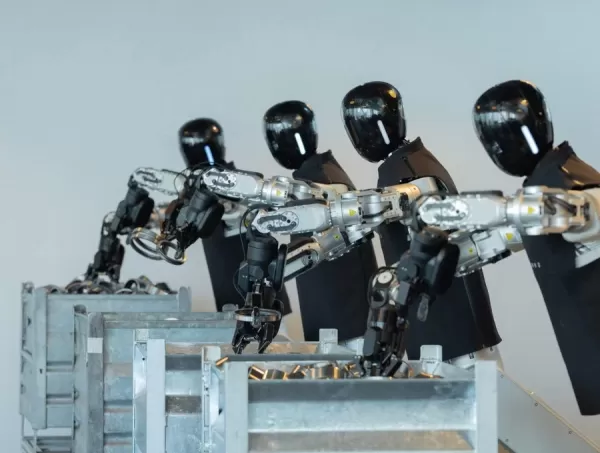 Hexagon: More than half of adults excited by robots
Robots are increasingly integrated into business operations. Credit: HumanoidHexagon data reveals 59% of adults are excited to work with robots, but a rising “Robot Generation” of children is far more eager for AI workplacesNew data from Hexagon sugg
Hexagon: More than half of adults excited by robots
Robots are increasingly integrated into business operations. Credit: HumanoidHexagon data reveals 59% of adults are excited to work with robots, but a rising “Robot Generation” of children is far more eager for AI workplacesNew data from Hexagon sugg
 The AI graveyard: A running list of projects and startups that didn’t make it
Relay, an AI-driven workflow automation platform positioned as a Zapier alternative, ceased operations on Monday. The service enabled users to automate email and task workflows via AI agents, but as OpenAI, Google, and other major platforms integrate
The AI graveyard: A running list of projects and startups that didn’t make it
Relay, an AI-driven workflow automation platform positioned as a Zapier alternative, ceased operations on Monday. The service enabled users to automate email and task workflows via AI agents, but as OpenAI, Google, and other major platforms integrate
 OpenAI bets on families as ChatGPT goes deeper into households
Over three years since ChatGPT propelled generative AI into the spotlight, OpenAI is expanding its scope from individual users to entire households.OpenAI is recruiting a product manager in San Francisco to develop family-oriented experiences across
OpenAI bets on families as ChatGPT goes deeper into households
Over three years since ChatGPT propelled generative AI into the spotlight, OpenAI is expanding its scope from individual users to entire households.OpenAI is recruiting a product manager in San Francisco to develop family-oriented experiences across

2026 Latest Best Top-Rated AI Product Retouch Tools for Fashion Ecommerce Photos are here on XIX.AI! This curated list features powerful, game-changing solutions that help boost image quality, speed up editing tasks, and deliver professional results. We conduct real-world tests to provide accurate rankings and a detailed free vs paid comparison. Must-try tools help creators overcome common challenges and significantly improve productivity. Explore now to Discover your perfect tool for flawless online product listings!
9 tools
xix.ai

2026 Latest Best AI Webtoon Panel Layout Tools for Vertical Story Pacing, Bubbles, and Scene Rhythm are here on XIX.AI! This curated collection features top-rated tools that offer powerful game-changing solutions to help creators boost writing efficiency, streamline content creation, and unlock their full creative potential. Get a free vs paid comparison along with real-world tests and updated rankings weekly. Explore now to discover your perfect tool for professional webtoon development!
10 tools
xix.ai
2026 Latest Best AI Mockup Generators Top-rated curated list showing powerful game-changing tools that help creators present apps packaging and posters in stunning quality with real-world tests and free vs paid comparison Explore now to Unlock your AI edge
10 tools
xix.ai

2026 Latest Best Top-rated AI Style Transfer Platforms ranked by expert assessments. This curated collection offers powerful game-changing tools that help users reimagine photos with stunning distinct visual looks, boosting creativity and productivity effortlessly. XIX.AI stands out as a trusted source for weekly updated free vs paid comparison insights along with real-world tests. Explore now to Discover your perfect tool and Unlock your AI edge.
10 tools
xix.ai

2026 Latest Best AI platforms for tracking competitors on Shopify to stay ahead in pricing, merchandising, and promotions. XIX.AI curates top-rated, powerful tools that offer real-world tests and free vs paid comparison through weekly updated rankings. Must-try solutions help boost productivity and unlock your AI edge. Explore now!
10 tools
xix.ai

2026 Latest Top-rated AI Fitness Coaches for Home Workouts are here on XIX.AI! Our curated list features powerful, game-changing tools that create adaptive workout plans tailored to your goals, helping you boost productivity and break through fitness plateaus. Get a free vs paid comparison along with real-world tests and updated rankings weekly. Explore now to Discover your perfect tool and Start creating today to Unlock your AI edge!
10 tools
xix.ai












