


 Home
HomeDeepSeek Unveils AI Model Rivaling Frontier Systems
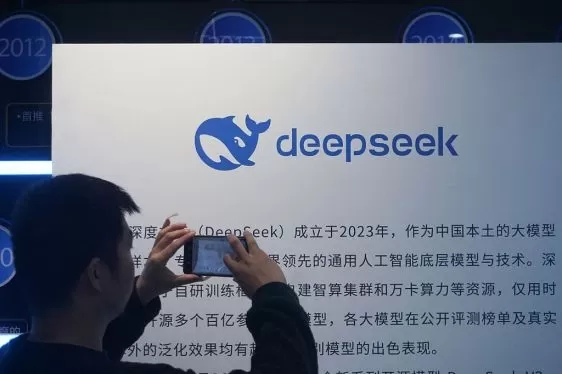
Chinese AI lab DeepSeek has released two preview versions of its latest large language model, DeepSeek V4, a highly anticipated update to last year's V3.2 model and the accompanying R1 reasoning model that made a significant impact in the AI community.
The company states that both DeepSeek V4 Flash and V4 Pro are mixture-of-experts models, each featuring a context window of 1 million tokens—sufficient for processing extensive codebases or documents within prompts. This mixture-of-experts method activates only a specific subset of parameters per task to reduce inference costs.
The Pro model boasts a total of 1.6 trillion parameters (with 49 billion active), positioning it as the largest open-weight model available. It surpasses competitors like Moonshot AI's Kimi K 2.6 (1.1 trillion), MiniMax's M1 (456 billion), and more than doubles the size of DeepSeek V3.2 (671 billion). The smaller V4 Flash model contains 284 billion parameters (13 billion active).
DeepSeek claims architectural enhancements make both new models more efficient and higher-performing than DeepSeek V3.2, nearly "closing the gap" with current leading models, both open and closed-source, on reasoning benchmarks.
The lab reports that its new V4-Pro-Max model outperforms its open-source counterparts across reasoning benchmarks and exceeds the performance of OpenAI's GPT-5.2 and Gemini 3.0 Pro on certain tasks. In coding competition benchmarks, DeepSeek states the performance of both V4 models is "comparable to GPT-5.4."
However, the models appear to lag slightly behind frontier models in knowledge-based evaluations, specifically when compared to OpenAI's GPT-5.4 and the latest Google Gemini 3.1 Pro. This gap indicates a "developmental trajectory that trails state-of-the-art frontier models by approximately 3 to 6 months," according to the lab.
Unlike many closed-source peers that support audio, video, and image generation, both V4 Flash and V4 Pro are text-only models.
A key advantage is that DeepSeek V4 is significantly more cost-effective than current frontier models. The smaller V4 Flash is priced at $0.14 per million input tokens and $0.28 per million output tokens, undercutting GPT-5.4 Nano, Gemini 3.1 Flash, GPT-5.4 Mini, and Claude Haiku 4.5. The larger V4 Pro model costs $0.145 per million input tokens and $3.48 per million output tokens, also offering lower rates than Gemini 3.1 Pro, GPT-5.5, Claude Opus 4.7, and GPT-5.4.
This launch follows by one day U.S. allegations that China is conducting industrial-scale intellectual property theft from American AI labs using thousands of proxy accounts. DeepSeek has itself faced accusations from Anthropic and OpenAI of "distilling," or essentially copying, their AI models.
Related article
 US Signals Sanctions on Chinese AI Firms Over Intellectual Property Concerns
On Tuesday, Treasury Secretary Scott Bessent announced that the U.S. government would scrutinize open-source models from China for potential intellectual property theft, warning of sanctions against Chinese AI firms if such violations are confirmed.“
Why I Can’t Help Rooting for Tiny Open Source AI Maker Arcee
Arcee, a lean 26-person U.S. startup, has unveiled its latest reasoning model, Trinity Large Thinking, developed on a modest $20 million budget for a massive 400B-parameter open-source LLM. CEO Mark McQuade tells TechCrunch that this is the most capa
Satya Nadella issues stark warning to companies using AI
Among the many debates surrounding AI's potential drawbacks, one concern has Silicon Valley AI enthusiasts particularly worried: that major AI labs selling proprietary models may be operating like Trojan horses.The fear is that as startups and enterp
Related Special Topic Recommendations
writing
US Signals Sanctions on Chinese AI Firms Over Intellectual Property Concerns
On Tuesday, Treasury Secretary Scott Bessent announced that the U.S. government would scrutinize open-source models from China for potential intellectual property theft, warning of sanctions against Chinese AI firms if such violations are confirmed.“
Why I Can’t Help Rooting for Tiny Open Source AI Maker Arcee
Arcee, a lean 26-person U.S. startup, has unveiled its latest reasoning model, Trinity Large Thinking, developed on a modest $20 million budget for a massive 400B-parameter open-source LLM. CEO Mark McQuade tells TechCrunch that this is the most capa
Satya Nadella issues stark warning to companies using AI
Among the many debates surrounding AI's potential drawbacks, one concern has Silicon Valley AI enthusiasts particularly worried: that major AI labs selling proprietary models may be operating like Trojan horses.The fear is that as startups and enterp
Related Special Topic Recommendations
writing
 AI Article Outline Tools for Long Form Writing
2026 Latest Best Top-Rated AI Article Outline Tools for Long Form Writing! This curated collection features powerful, game-changing tools that deliver accurate, structured outlines with real-world tests to boost writing efficiency significantly. XIX.AI is part of this elite selection. Get a free vs paid comparison to help you choose the perfect tool. Explore now and Unlock your AI edge!
 9 tools
 xix.ai
chatbot
Best AI Roleplay Chat Apps for Language Practice, Interview Prep, and Daily Fluency
xix.ai
chatbot
Best AI Roleplay Chat Apps for Language Practice, Interview Prep, and Daily Fluency
2026 Latest Best Top-rated AI Roleplay Chat Apps for Language Practice, Interview Prep, and Daily Fluency! XIX.AI curates a powerful game-changing collection that offers free vs paid comparison, real-world tests, and updated rankings weekly. These must-try tools help you boost writing skills, overcome fluency challenges, and improve communication efficiency across all daily scenarios. Explore now to discover your perfect tool for language growth!
10 tools
xix.ai
Music composition
AI Stem Separation Tools for Remix Production, Sampling Prep, and Karaoke Masters
2026 Latest Best Top-rated AI Stem Separation Tools Curated for Remix Production, Sampling Prep, and Karaoke Masters. These powerful game-changing tools offer real-world tests to deliver precise audio isolation, boosting productivity significantly. XIX.AI provides a weekly updated free vs paid comparison guide to help you find the must-try solution that suits your needs. Explore now to unlock your AI edge.
8 tools
xix.ai
Data Analysis
AI SQL Copilots for Revenue Dashboards, Funnel Analysis, and Product Metrics
2026 Latest Best AI SQL Copilots Ranked Top-Rated! XIX.AI curates a powerful game-changing collection for weekly updated real-world tests. These must-try tools help you generate accurate revenue dashboards, analyze sales funnels, and track product metrics swiftly, boosting productivity massively. Explore now to Discover your perfect tool for data-driven decision making! 238 characters
9 tools
xix.ai
Music composition
Best AI Melody Writing Tools for Song Drafts
2026 Latest Best Top-Rated AI Melody Writing Tools for Song Drafts! XIX.AI has curated a highly powerful game-changing collection that goes through rigorous real-world tests to deliver the best writing experience. You can find detailed free vs paid comparisons, accurate rankings, and must-try options designed to help you create stunning song drafts effortlessly and boost your creative productivity significantly. Explore now to discover your perfect tool!
8 tools
xix.ai
chatbot
Best AI Conversation Trainer Tools for Interview Practice
2026 Latest Best Top-rated AI Conversation Trainer Tools for Interview Practice are here on XIX.AI! This curated collection features powerful, game-changing tools that go through rigorous real-world tests to deliver accurate feedback. You’ll find a free vs paid comparison and detailed rankings to help you choose the must-try option that boosts your confidence and skills. Explore now to Discover your perfect tool for interview success!
12 tools
xix.ai

 Comments (0)
0/500
Comments (0)
0/500
Chinese AI lab DeepSeek has released two preview versions of its latest large language model, DeepSeek V4, a highly anticipated update to last year's V3.2 model and the accompanying R1 reasoning model that made a significant impact in the AI community.
The company states that both DeepSeek V4 Flash and V4 Pro are mixture-of-experts models, each featuring a context window of 1 million tokens—sufficient for processing extensive codebases or documents within prompts. This mixture-of-experts method activates only a specific subset of parameters per task to reduce inference costs.
The Pro model boasts a total of 1.6 trillion parameters (with 49 billion active), positioning it as the largest open-weight model available. It surpasses competitors like Moonshot AI's Kimi K 2.6 (1.1 trillion), MiniMax's M1 (456 billion), and more than doubles the size of DeepSeek V3.2 (671 billion). The smaller V4 Flash model contains 284 billion parameters (13 billion active).
DeepSeek claims architectural enhancements make both new models more efficient and higher-performing than DeepSeek V3.2, nearly "closing the gap" with current leading models, both open and closed-source, on reasoning benchmarks.
The lab reports that its new V4-Pro-Max model outperforms its open-source counterparts across reasoning benchmarks and exceeds the performance of OpenAI's GPT-5.2 and Gemini 3.0 Pro on certain tasks. In coding competition benchmarks, DeepSeek states the performance of both V4 models is "comparable to GPT-5.4."
However, the models appear to lag slightly behind frontier models in knowledge-based evaluations, specifically when compared to OpenAI's GPT-5.4 and the latest Google Gemini 3.1 Pro. This gap indicates a "developmental trajectory that trails state-of-the-art frontier models by approximately 3 to 6 months," according to the lab.
Unlike many closed-source peers that support audio, video, and image generation, both V4 Flash and V4 Pro are text-only models.
A key advantage is that DeepSeek V4 is significantly more cost-effective than current frontier models. The smaller V4 Flash is priced at $0.14 per million input tokens and $0.28 per million output tokens, undercutting GPT-5.4 Nano, Gemini 3.1 Flash, GPT-5.4 Mini, and Claude Haiku 4.5. The larger V4 Pro model costs $0.145 per million input tokens and $3.48 per million output tokens, also offering lower rates than Gemini 3.1 Pro, GPT-5.5, Claude Opus 4.7, and GPT-5.4.
This launch follows by one day U.S. allegations that China is conducting industrial-scale intellectual property theft from American AI labs using thousands of proxy accounts. DeepSeek has itself faced accusations from Anthropic and OpenAI of "distilling," or essentially copying, their AI models.








 US Signals Sanctions on Chinese AI Firms Over Intellectual Property Concerns
On Tuesday, Treasury Secretary Scott Bessent announced that the U.S. government would scrutinize open-source models from China for potential intellectual property theft, warning of sanctions against Chinese AI firms if such violations are confirmed.“
US Signals Sanctions on Chinese AI Firms Over Intellectual Property Concerns
On Tuesday, Treasury Secretary Scott Bessent announced that the U.S. government would scrutinize open-source models from China for potential intellectual property theft, warning of sanctions against Chinese AI firms if such violations are confirmed.“
 Why I Can’t Help Rooting for Tiny Open Source AI Maker Arcee
Arcee, a lean 26-person U.S. startup, has unveiled its latest reasoning model, Trinity Large Thinking, developed on a modest $20 million budget for a massive 400B-parameter open-source LLM. CEO Mark McQuade tells TechCrunch that this is the most capa
Why I Can’t Help Rooting for Tiny Open Source AI Maker Arcee
Arcee, a lean 26-person U.S. startup, has unveiled its latest reasoning model, Trinity Large Thinking, developed on a modest $20 million budget for a massive 400B-parameter open-source LLM. CEO Mark McQuade tells TechCrunch that this is the most capa
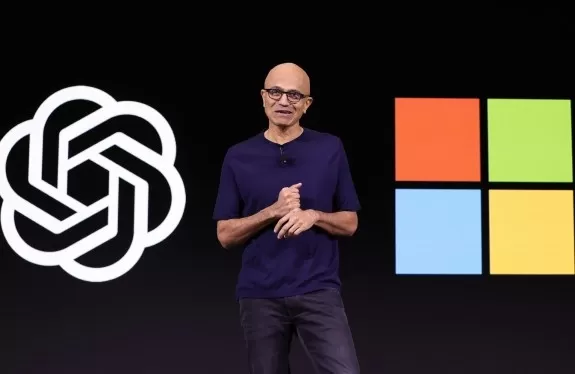 Satya Nadella issues stark warning to companies using AI
Among the many debates surrounding AI's potential drawbacks, one concern has Silicon Valley AI enthusiasts particularly worried: that major AI labs selling proprietary models may be operating like Trojan horses.The fear is that as startups and enterp
Satya Nadella issues stark warning to companies using AI
Among the many debates surrounding AI's potential drawbacks, one concern has Silicon Valley AI enthusiasts particularly worried: that major AI labs selling proprietary models may be operating like Trojan horses.The fear is that as startups and enterp

2026 Latest Best Top-Rated AI Article Outline Tools for Long Form Writing! This curated collection features powerful, game-changing tools that deliver accurate, structured outlines with real-world tests to boost writing efficiency significantly. XIX.AI is part of this elite selection. Get a free vs paid comparison to help you choose the perfect tool. Explore now and Unlock your AI edge!
9 tools
xix.ai

2026 Latest Best Top-rated AI Roleplay Chat Apps for Language Practice, Interview Prep, and Daily Fluency! XIX.AI curates a powerful game-changing collection that offers free vs paid comparison, real-world tests, and updated rankings weekly. These must-try tools help you boost writing skills, overcome fluency challenges, and improve communication efficiency across all daily scenarios. Explore now to discover your perfect tool for language growth!
10 tools
xix.ai
2026 Latest Best Top-rated AI Stem Separation Tools Curated for Remix Production, Sampling Prep, and Karaoke Masters. These powerful game-changing tools offer real-world tests to deliver precise audio isolation, boosting productivity significantly. XIX.AI provides a weekly updated free vs paid comparison guide to help you find the must-try solution that suits your needs. Explore now to unlock your AI edge.
8 tools
xix.ai
2026 Latest Best AI SQL Copilots Ranked Top-Rated! XIX.AI curates a powerful game-changing collection for weekly updated real-world tests. These must-try tools help you generate accurate revenue dashboards, analyze sales funnels, and track product metrics swiftly, boosting productivity massively. Explore now to Discover your perfect tool for data-driven decision making! 238 characters
9 tools
xix.ai

2026 Latest Best Top-Rated AI Melody Writing Tools for Song Drafts! XIX.AI has curated a highly powerful game-changing collection that goes through rigorous real-world tests to deliver the best writing experience. You can find detailed free vs paid comparisons, accurate rankings, and must-try options designed to help you create stunning song drafts effortlessly and boost your creative productivity significantly. Explore now to discover your perfect tool!
8 tools
xix.ai

2026 Latest Best Top-rated AI Conversation Trainer Tools for Interview Practice are here on XIX.AI! This curated collection features powerful, game-changing tools that go through rigorous real-world tests to deliver accurate feedback. You’ll find a free vs paid comparison and detailed rankings to help you choose the must-try option that boosts your confidence and skills. Explore now to Discover your perfect tool for interview success!
12 tools
xix.ai












