


 Home
Home
DeepMind CEO Demis Hassabis Announces Future Integration of Google's Gemini and Veo AI Models

In a recent episode of the podcast Possible, co-hosted by LinkedIn co-founder Reid Hoffman, Google DeepMind CEO Demis Hassabis shared some exciting news about Google's plans. He revealed that Google is looking to merge its Gemini AI models with the Veo video-generating models. This fusion aims to enhance Gemini's grasp of the physical world, making it more adept at understanding real-life dynamics.
Hassabis emphasized that from the get-go, Gemini was designed to be multimodal. "We've always built Gemini, our foundation model, to be multimodal from the beginning," he explained. The motivation behind this approach? A vision for a universal digital assistant that can truly assist in everyday life. "An assistant that … actually helps you in the real world," Hassabis elaborated.
The AI industry is steadily progressing toward what you might call "omni" models—those capable of handling and synthesizing various types of media. Google's latest Gemini iterations, for instance, can produce not just text but also audio and images. Meanwhile, OpenAI's ChatGPT default model can whip up images on the spot, including delightful Studio Ghibli-style art. Amazon isn't far behind, with plans to roll out an "any-to-any" model later this year.
These omni models demand a hefty amount of training data—think images, videos, audio, and text. Hassabis hinted that Veo's video data primarily comes from YouTube, a treasure trove owned by Google. "Basically, by watching YouTube videos — a lot of YouTube videos — [Veo 2] can figure out, you know, the physics of the world," he noted.
Google had previously mentioned to TechCrunch that its models "may be" trained on "some" YouTube content, aligning with agreements made with YouTube creators. It's worth noting that last year, Google expanded its terms of service, partly to access more data for training its AI models.
Related article
 Gemini offers free personalized AI image generation to U.S. users
On Monday, Google revealed that the Gemini app is extending its personalized image generation capabilities, powered by Nano Banana, to a wider audience. As of today, all eligible users in the United States can use this feature at no cost, removing th
New Gemini functionalities set to be integrated into Google TV soon
On Wednesday, Google revealed a series of new AI-driven features set to arrive on Google TV, including a dedicated section for short-form videos that will place YouTube Shorts directly on the home screen.At the heart of these updates are enhanced cap
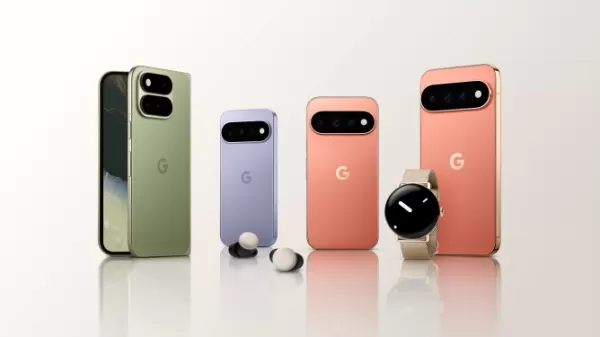
New Products Unveiled at Made by Google ’26: Pixel 11, Pixel Watch 5, Pixel Tag, and Enhanced Gemini Capabilities
During its Made by Google 2026 event held on Wednesday, Google unveiled a range of new products, including the Pixel 11 series, the Pixel Watch 5, and a tracking device designed to compete with Apple’s AirTag. The company also highlighted several new
Related Special Topic Recommendations
Video creation
Gemini offers free personalized AI image generation to U.S. users
On Monday, Google revealed that the Gemini app is extending its personalized image generation capabilities, powered by Nano Banana, to a wider audience. As of today, all eligible users in the United States can use this feature at no cost, removing th
New Gemini functionalities set to be integrated into Google TV soon
On Wednesday, Google revealed a series of new AI-driven features set to arrive on Google TV, including a dedicated section for short-form videos that will place YouTube Shorts directly on the home screen.At the heart of these updates are enhanced cap
New Products Unveiled at Made by Google ’26: Pixel 11, Pixel Watch 5, Pixel Tag, and Enhanced Gemini Capabilities
During its Made by Google 2026 event held on Wednesday, Google unveiled a range of new products, including the Pixel 11 series, the Pixel Watch 5, and a tracking device designed to compete with Apple’s AirTag. The company also highlighted several new
Related Special Topic Recommendations
Video creation
 AI Short-Form Video Hook Generators for Reels, Shorts, and Product Launch Campaigns
2026 Latest Best AI Short-Form Video Hook Generators for Reels Shorts and Product Launch Campaigns! XIX.AI curates top-rated powerful game-changing tools that deliver must-try results through real-world tests. This weekly updated page offers free vs paid comparison rankings to help you find the perfect solution for boosting content creativity and productivity. Explore now to Unlock your AI edge!
 11 tools
 xix.ai
writing
AI Article Outline Tools for Long Form Writing
xix.ai
writing
AI Article Outline Tools for Long Form Writing
2026 Latest Best Top-Rated AI Article Outline Tools for Long Form Writing! This curated collection features powerful, game-changing tools that deliver accurate, structured outlines with real-world tests to boost writing efficiency significantly. XIX.AI is part of this elite selection. Get a free vs paid comparison to help you choose the perfect tool. Explore now and Unlock your AI edge!
9 tools
xix.ai
chatbot
Best AI Roleplay Chat Apps for Language Practice, Interview Prep, and Daily Fluency
2026 Latest Best Top-rated AI Roleplay Chat Apps for Language Practice, Interview Prep, and Daily Fluency! XIX.AI curates a powerful game-changing collection that offers free vs paid comparison, real-world tests, and updated rankings weekly. These must-try tools help you boost writing skills, overcome fluency challenges, and improve communication efficiency across all daily scenarios. Explore now to discover your perfect tool for language growth!
10 tools
xix.ai
Music composition
AI Stem Separation Tools for Remix Production, Sampling Prep, and Karaoke Masters
2026 Latest Best Top-rated AI Stem Separation Tools Curated for Remix Production, Sampling Prep, and Karaoke Masters. These powerful game-changing tools offer real-world tests to deliver precise audio isolation, boosting productivity significantly. XIX.AI provides a weekly updated free vs paid comparison guide to help you find the must-try solution that suits your needs. Explore now to unlock your AI edge.
8 tools
xix.ai
Data Analysis
AI SQL Copilots for Revenue Dashboards, Funnel Analysis, and Product Metrics
2026 Latest Best AI SQL Copilots Ranked Top-Rated! XIX.AI curates a powerful game-changing collection for weekly updated real-world tests. These must-try tools help you generate accurate revenue dashboards, analyze sales funnels, and track product metrics swiftly, boosting productivity massively. Explore now to Discover your perfect tool for data-driven decision making! 238 characters
9 tools
xix.ai
Music composition
Best AI Melody Writing Tools for Song Drafts
2026 Latest Best Top-Rated AI Melody Writing Tools for Song Drafts! XIX.AI has curated a highly powerful game-changing collection that goes through rigorous real-world tests to deliver the best writing experience. You can find detailed free vs paid comparisons, accurate rankings, and must-try options designed to help you create stunning song drafts effortlessly and boost your creative productivity significantly. Explore now to discover your perfect tool!
8 tools
xix.ai

 Comments (2)
0/500
Comments (2)
0/500
![EdwardJackson]()
The integration of Gemini and Veo sounds promising! Could this be the key to generating truly coherent multimodal content, or are we just stitching together different black boxes? The computational cost for such combined models might be enormous though. A fascinating glimpse into the future roadmap of Google's AI.
![RalphSanchez]()
Wow, merging Gemini with Veo sounds like a game-changer! Can't wait to see how this powers up video creation. But, like, is Google trying to dominate every AI corner now? 😅
In a recent episode of the podcast Possible, co-hosted by LinkedIn co-founder Reid Hoffman, Google DeepMind CEO Demis Hassabis shared some exciting news about Google's plans. He revealed that Google is looking to merge its Gemini AI models with the Veo video-generating models. This fusion aims to enhance Gemini's grasp of the physical world, making it more adept at understanding real-life dynamics.
Hassabis emphasized that from the get-go, Gemini was designed to be multimodal. "We've always built Gemini, our foundation model, to be multimodal from the beginning," he explained. The motivation behind this approach? A vision for a universal digital assistant that can truly assist in everyday life. "An assistant that … actually helps you in the real world," Hassabis elaborated.
The AI industry is steadily progressing toward what you might call "omni" models—those capable of handling and synthesizing various types of media. Google's latest Gemini iterations, for instance, can produce not just text but also audio and images. Meanwhile, OpenAI's ChatGPT default model can whip up images on the spot, including delightful Studio Ghibli-style art. Amazon isn't far behind, with plans to roll out an "any-to-any" model later this year.
These omni models demand a hefty amount of training data—think images, videos, audio, and text. Hassabis hinted that Veo's video data primarily comes from YouTube, a treasure trove owned by Google. "Basically, by watching YouTube videos — a lot of YouTube videos — [Veo 2] can figure out, you know, the physics of the world," he noted.
Google had previously mentioned to TechCrunch that its models "may be" trained on "some" YouTube content, aligning with agreements made with YouTube creators. It's worth noting that last year, Google expanded its terms of service, partly to access more data for training its AI models.








 Gemini offers free personalized AI image generation to U.S. users
On Monday, Google revealed that the Gemini app is extending its personalized image generation capabilities, powered by Nano Banana, to a wider audience. As of today, all eligible users in the United States can use this feature at no cost, removing th
Gemini offers free personalized AI image generation to U.S. users
On Monday, Google revealed that the Gemini app is extending its personalized image generation capabilities, powered by Nano Banana, to a wider audience. As of today, all eligible users in the United States can use this feature at no cost, removing th
 New Gemini functionalities set to be integrated into Google TV soon
On Wednesday, Google revealed a series of new AI-driven features set to arrive on Google TV, including a dedicated section for short-form videos that will place YouTube Shorts directly on the home screen.At the heart of these updates are enhanced cap
New Gemini functionalities set to be integrated into Google TV soon
On Wednesday, Google revealed a series of new AI-driven features set to arrive on Google TV, including a dedicated section for short-form videos that will place YouTube Shorts directly on the home screen.At the heart of these updates are enhanced cap
 New Products Unveiled at Made by Google ’26: Pixel 11, Pixel Watch 5, Pixel Tag, and Enhanced Gemini Capabilities
During its Made by Google 2026 event held on Wednesday, Google unveiled a range of new products, including the Pixel 11 series, the Pixel Watch 5, and a tracking device designed to compete with Apple’s AirTag. The company also highlighted several new
New Products Unveiled at Made by Google ’26: Pixel 11, Pixel Watch 5, Pixel Tag, and Enhanced Gemini Capabilities
During its Made by Google 2026 event held on Wednesday, Google unveiled a range of new products, including the Pixel 11 series, the Pixel Watch 5, and a tracking device designed to compete with Apple’s AirTag. The company also highlighted several new

2026 Latest Best AI Short-Form Video Hook Generators for Reels Shorts and Product Launch Campaigns! XIX.AI curates top-rated powerful game-changing tools that deliver must-try results through real-world tests. This weekly updated page offers free vs paid comparison rankings to help you find the perfect solution for boosting content creativity and productivity. Explore now to Unlock your AI edge!
11 tools
xix.ai

2026 Latest Best Top-Rated AI Article Outline Tools for Long Form Writing! This curated collection features powerful, game-changing tools that deliver accurate, structured outlines with real-world tests to boost writing efficiency significantly. XIX.AI is part of this elite selection. Get a free vs paid comparison to help you choose the perfect tool. Explore now and Unlock your AI edge!
9 tools
xix.ai

2026 Latest Best Top-rated AI Roleplay Chat Apps for Language Practice, Interview Prep, and Daily Fluency! XIX.AI curates a powerful game-changing collection that offers free vs paid comparison, real-world tests, and updated rankings weekly. These must-try tools help you boost writing skills, overcome fluency challenges, and improve communication efficiency across all daily scenarios. Explore now to discover your perfect tool for language growth!
10 tools
xix.ai
2026 Latest Best Top-rated AI Stem Separation Tools Curated for Remix Production, Sampling Prep, and Karaoke Masters. These powerful game-changing tools offer real-world tests to deliver precise audio isolation, boosting productivity significantly. XIX.AI provides a weekly updated free vs paid comparison guide to help you find the must-try solution that suits your needs. Explore now to unlock your AI edge.
8 tools
xix.ai

2026 Latest Best AI SQL Copilots Ranked Top-Rated! XIX.AI curates a powerful game-changing collection for weekly updated real-world tests. These must-try tools help you generate accurate revenue dashboards, analyze sales funnels, and track product metrics swiftly, boosting productivity massively. Explore now to Discover your perfect tool for data-driven decision making! 238 characters
9 tools
xix.ai

2026 Latest Best Top-Rated AI Melody Writing Tools for Song Drafts! XIX.AI has curated a highly powerful game-changing collection that goes through rigorous real-world tests to deliver the best writing experience. You can find detailed free vs paid comparisons, accurate rankings, and must-try options designed to help you create stunning song drafts effortlessly and boost your creative productivity significantly. Explore now to discover your perfect tool!
8 tools
xix.ai

The integration of Gemini and Veo sounds promising! Could this be the key to generating truly coherent multimodal content, or are we just stitching together different black boxes? The computational cost for such combined models might be enormous though. A fascinating glimpse into the future roadmap of Google's AI.
Wow, merging Gemini with Veo sounds like a game-changer! Can't wait to see how this powers up video creation. But, like, is Google trying to dominate every AI corner now? 😅












