


 Home
HomeDatabricks Co-Founder Claims AGI Arrival After Winning ACM Award

Databricks co-founder and CTO Matei Zaharia nearly overlooked the email informing him he had been awarded the 2026 ACM Prize in Computing. "It was certainly a surprise," he shared with TechCrunch.
In 2009, the technology Zaharia developed during his PhD at UC Berkeley under the guidance of renowned professor Ion Stoica was integrated into Databricks.
Zaharia had devised a method to significantly accelerate the processing of slow, cumbersome big data projects and released it as an open-source platform called Spark. Big data was the dominant trend of that era, much like AI is today, and Spark revolutionized the tech industry. The 28-year-old Zaharia quickly became a celebrated figure in technology.
Since then, he has led engineering at Databricks, transforming it into a cloud storage powerhouse and now a foundational data platform for AI and intelligent agents. Throughout this journey, the company has raised over $20 billion—achieving a valuation of $134 billion—and generated $5.4 billion in revenue, epitomizing the Silicon Valley success story.
On Wednesday, the Association for Computing Machinery formally presented him with the award in recognition of his collective contributions. The honor includes a $250,000 cash prize, which Zaharia plans to donate to a charity yet to be determined.
Zaharia, who also serves as an associate professor at UC Berkeley alongside his CTO role, is focused on the future rather than the past. Like many in Silicon Valley, he envisions a world increasingly shaped by AI.
"AGI is already here. It just doesn't manifest in a way we readily recognize," he told TechCrunch. "The key insight is that we should stop evaluating AI models by human benchmarks."
For instance, a human can only become a lawyer by passing the bar exam after years of intensive study and knowledge integration. An AI, however, can absorb vast amounts of information almost instantaneously. Its ability to answer factual questions correctly does not equate to possessing general, human-like understanding.
This tendency to anthropomorphize AI can lead to significant risks. He cites the example of the popular AI agent OpenClaw.
"On one level, it's incredible. It can automate so many tasks efficiently," he noted. However, it also represents "a major security vulnerability" because it is designed to function as a trusted assistant, potentially handling sensitive data like passwords. This creates exposure to hacking or unauthorized financial transactions if the agent accesses logged-in accounts.
"It's important to remember it's not a miniature human," he emphasized.
As both an academic and an engineer, Zaharia is particularly enthusiastic about AI's potential to automate research processes, from biological experimentation to data synthesis.
Just as low-code and no-code platforms democratized software development, he believes AI-driven research tools—capable of accurate, hallucination-free analysis—will eventually become ubiquitous.
"Not everyone needs to build software applications, but nearly everyone needs to interpret information effectively," he explained. Ultimately, we will harness AI's strengths more effectively: diagnosing mechanical issues like car noises, analyzing signals beyond text and images (such as radio or microwave data), or, as he observes his students doing, simulating molecular interactions and predicting their outcomes.
"The area that excites me most is what I'd describe as AI-enhanced search, specifically for research and engineering applications," he concluded.
Related article
 From SaaS reckoning to agent security gap: AI’s future at TechCrunch Disrupt 2026
AI has not only transformed how startups build products—it has fundamentally disrupted how they sell, protect their data and customers, and scale faster than ever before. Returning to TechCrunch Disrupt 2026, the AI Stage, presented by Google for Sta
Databricks Acquires Two Startups to Bolster New AI Security Product
Databricks, flush with cash from its $5 billion raise that closed last month (not to mention billions in revenue), is on an acquisition spree.The company, best known for its cloud data analytics platform, announced Tuesday the launch of a new securit
Databricks co-founder at TechCrunch Disrupt 2026: what kills enterprise AI deals
Enterprise organizations aren't rejecting AI — they're rejecting operational instability.This shift is one many founders still misunderstand — and it's becoming a defining reality that separates enterprise AI companies that scale from those that stal
Related Special Topic Recommendations
Design & Art
From SaaS reckoning to agent security gap: AI’s future at TechCrunch Disrupt 2026
AI has not only transformed how startups build products—it has fundamentally disrupted how they sell, protect their data and customers, and scale faster than ever before. Returning to TechCrunch Disrupt 2026, the AI Stage, presented by Google for Sta
Databricks Acquires Two Startups to Bolster New AI Security Product
Databricks, flush with cash from its $5 billion raise that closed last month (not to mention billions in revenue), is on an acquisition spree.The company, best known for its cloud data analytics platform, announced Tuesday the launch of a new securit
Databricks co-founder at TechCrunch Disrupt 2026: what kills enterprise AI deals
Enterprise organizations aren't rejecting AI — they're rejecting operational instability.This shift is one many founders still misunderstand — and it's becoming a defining reality that separates enterprise AI companies that scale from those that stal
Related Special Topic Recommendations
Design & Art
 Top AI Illustration Tools: Create Editorial Scenes and Cover Art Faster
2026 Latest Top-rated AI Illustration Tools: Our curated list features the best powerfully designed tools for creating stunning editorial scenes and eye-catching cover art quickly. Each option has gone through rigorous real-world tests, offering a free vs paid comparison to help you find the perfect match for your workflow. Try these must-try solutions today to unlock your AI edge and boost your creative productivity. Explore now at XIX.AI.
 10 tools
 xix.ai
Education and Learning
Top AI Tutors for Exam Prep: Practice Math, Science, and English
xix.ai
Education and Learning
Top AI Tutors for Exam Prep: Practice Math, Science, and English
2026 Latest Top-Rated Best AI Tutors for Exam Prep are here on XIX.AI! Our curated list features powerful game-changing tools that offer free vs paid comparison, real-world tests, and weekly updated rankings. They help boost your writing efficiency, simplify complex topic learning, and unlock your academic potential. Explore now to Discover your perfect exam prep tool and Start creating today to Unlock your AI edge!
10 tools
xix.ai
Finance
AI Budget Planning Tools for Personal Money Management
2026 Latest Best Top-Rated AI Budget Planning Tools for Personal Money Management are here on XIX.AI! This curated collection features powerful, game-changing solutions that help you conduct real-world tests, understand spending habits, and create personalized plans to boost productivity. Enjoy a free vs paid comparison along with detailed rankings. Must-try tools designed to simplify money management and unlock your AI edge. Explore now!
11 tools
xix.ai
Health & Wellness
AI Sleep Tracking Assistants: Improve Recovery with Better Bedtime Habits
2026 Latest Best Top-Rated AI Sleep Tracking Assistants curated for ultimate recovery. This fully updated weekly guide features powerful tools that deliver real-world tests, free vs paid comparison, and detailed rankings to help you find the must-try solution that boosts sleep quality and supports better bedtime habits. Explore now at XIX.AI to Unlock your AI edge.
10 tools
xix.ai
Data Analysis
AI SQL Copilots for Product and Revenue Analytics
2026 Latest Best Top-Rated AI SQL Copilots for Product and Revenue Analytics! XIX.AI has curated a powerful, game-changing collection of must-try tools that undergo real-world tests through weekly updated rankings. These tools help users boost productivity significantly by accelerating data analysis, streamlining complex queries, and generating accurate insights to drive smarter business decisions. Explore now to Discover your perfect tool for unlocking your AI edge!
14 tools
xix.ai
Education and Learning
Best AI Homework Helpers That Teach: Learn Concepts, Not Just Answers
2026 Latest Best Top-Rated AI Homework Helpers That Teach Core Concepts Not Just Answers Powerful Tools for Students Must-Try Curated List Weekly Updated Free vs Paid Comparison Real-World Tests Accurate Rankings to Help You Unlock Your Full Learning Potential Explore now to Discover your perfect tool for smarter studying.
10 tools
xix.ai

 Comments (0)
0/500
Comments (0)
0/500
Databricks co-founder and CTO Matei Zaharia nearly overlooked the email informing him he had been awarded the 2026 ACM Prize in Computing. "It was certainly a surprise," he shared with TechCrunch.
In 2009, the technology Zaharia developed during his PhD at UC Berkeley under the guidance of renowned professor Ion Stoica was integrated into Databricks.
Zaharia had devised a method to significantly accelerate the processing of slow, cumbersome big data projects and released it as an open-source platform called Spark. Big data was the dominant trend of that era, much like AI is today, and Spark revolutionized the tech industry. The 28-year-old Zaharia quickly became a celebrated figure in technology.
Since then, he has led engineering at Databricks, transforming it into a cloud storage powerhouse and now a foundational data platform for AI and intelligent agents. Throughout this journey, the company has raised over $20 billion—achieving a valuation of $134 billion—and generated $5.4 billion in revenue, epitomizing the Silicon Valley success story.
On Wednesday, the Association for Computing Machinery formally presented him with the award in recognition of his collective contributions. The honor includes a $250,000 cash prize, which Zaharia plans to donate to a charity yet to be determined.
Zaharia, who also serves as an associate professor at UC Berkeley alongside his CTO role, is focused on the future rather than the past. Like many in Silicon Valley, he envisions a world increasingly shaped by AI.
"AGI is already here. It just doesn't manifest in a way we readily recognize," he told TechCrunch. "The key insight is that we should stop evaluating AI models by human benchmarks."
For instance, a human can only become a lawyer by passing the bar exam after years of intensive study and knowledge integration. An AI, however, can absorb vast amounts of information almost instantaneously. Its ability to answer factual questions correctly does not equate to possessing general, human-like understanding.
This tendency to anthropomorphize AI can lead to significant risks. He cites the example of the popular AI agent OpenClaw.
"On one level, it's incredible. It can automate so many tasks efficiently," he noted. However, it also represents "a major security vulnerability" because it is designed to function as a trusted assistant, potentially handling sensitive data like passwords. This creates exposure to hacking or unauthorized financial transactions if the agent accesses logged-in accounts.
"It's important to remember it's not a miniature human," he emphasized.
As both an academic and an engineer, Zaharia is particularly enthusiastic about AI's potential to automate research processes, from biological experimentation to data synthesis.
Just as low-code and no-code platforms democratized software development, he believes AI-driven research tools—capable of accurate, hallucination-free analysis—will eventually become ubiquitous.
"Not everyone needs to build software applications, but nearly everyone needs to interpret information effectively," he explained. Ultimately, we will harness AI's strengths more effectively: diagnosing mechanical issues like car noises, analyzing signals beyond text and images (such as radio or microwave data), or, as he observes his students doing, simulating molecular interactions and predicting their outcomes.
"The area that excites me most is what I'd describe as AI-enhanced search, specifically for research and engineering applications," he concluded.








 From SaaS reckoning to agent security gap: AI’s future at TechCrunch Disrupt 2026
AI has not only transformed how startups build products—it has fundamentally disrupted how they sell, protect their data and customers, and scale faster than ever before. Returning to TechCrunch Disrupt 2026, the AI Stage, presented by Google for Sta
From SaaS reckoning to agent security gap: AI’s future at TechCrunch Disrupt 2026
AI has not only transformed how startups build products—it has fundamentally disrupted how they sell, protect their data and customers, and scale faster than ever before. Returning to TechCrunch Disrupt 2026, the AI Stage, presented by Google for Sta
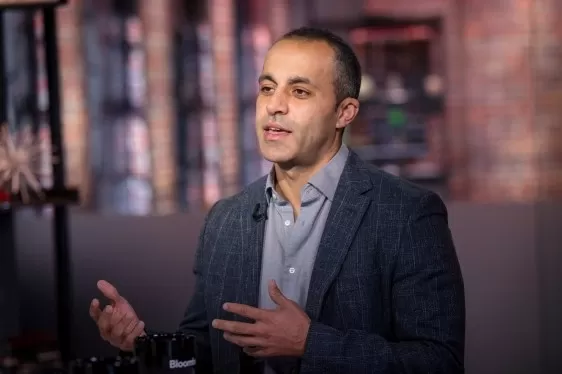 Databricks Acquires Two Startups to Bolster New AI Security Product
Databricks, flush with cash from its $5 billion raise that closed last month (not to mention billions in revenue), is on an acquisition spree.The company, best known for its cloud data analytics platform, announced Tuesday the launch of a new securit
Databricks Acquires Two Startups to Bolster New AI Security Product
Databricks, flush with cash from its $5 billion raise that closed last month (not to mention billions in revenue), is on an acquisition spree.The company, best known for its cloud data analytics platform, announced Tuesday the launch of a new securit
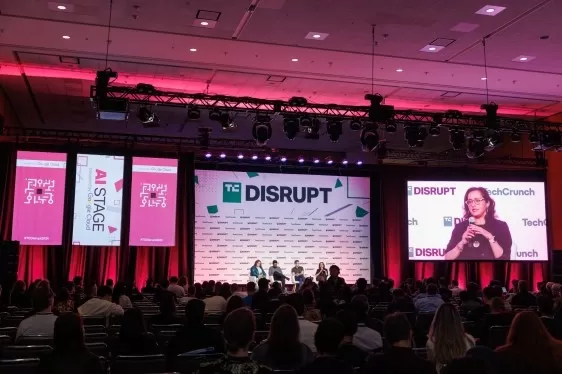 Databricks co-founder at TechCrunch Disrupt 2026: what kills enterprise AI deals
Enterprise organizations aren't rejecting AI — they're rejecting operational instability.This shift is one many founders still misunderstand — and it's becoming a defining reality that separates enterprise AI companies that scale from those that stal
Databricks co-founder at TechCrunch Disrupt 2026: what kills enterprise AI deals
Enterprise organizations aren't rejecting AI — they're rejecting operational instability.This shift is one many founders still misunderstand — and it's becoming a defining reality that separates enterprise AI companies that scale from those that stal

2026 Latest Top-rated AI Illustration Tools: Our curated list features the best powerfully designed tools for creating stunning editorial scenes and eye-catching cover art quickly. Each option has gone through rigorous real-world tests, offering a free vs paid comparison to help you find the perfect match for your workflow. Try these must-try solutions today to unlock your AI edge and boost your creative productivity. Explore now at XIX.AI.
10 tools
xix.ai

2026 Latest Top-Rated Best AI Tutors for Exam Prep are here on XIX.AI! Our curated list features powerful game-changing tools that offer free vs paid comparison, real-world tests, and weekly updated rankings. They help boost your writing efficiency, simplify complex topic learning, and unlock your academic potential. Explore now to Discover your perfect exam prep tool and Start creating today to Unlock your AI edge!
10 tools
xix.ai

2026 Latest Best Top-Rated AI Budget Planning Tools for Personal Money Management are here on XIX.AI! This curated collection features powerful, game-changing solutions that help you conduct real-world tests, understand spending habits, and create personalized plans to boost productivity. Enjoy a free vs paid comparison along with detailed rankings. Must-try tools designed to simplify money management and unlock your AI edge. Explore now!
11 tools
xix.ai

2026 Latest Best Top-Rated AI Sleep Tracking Assistants curated for ultimate recovery. This fully updated weekly guide features powerful tools that deliver real-world tests, free vs paid comparison, and detailed rankings to help you find the must-try solution that boosts sleep quality and supports better bedtime habits. Explore now at XIX.AI to Unlock your AI edge.
10 tools
xix.ai

2026 Latest Best Top-Rated AI SQL Copilots for Product and Revenue Analytics! XIX.AI has curated a powerful, game-changing collection of must-try tools that undergo real-world tests through weekly updated rankings. These tools help users boost productivity significantly by accelerating data analysis, streamlining complex queries, and generating accurate insights to drive smarter business decisions. Explore now to Discover your perfect tool for unlocking your AI edge!
14 tools
xix.ai

2026 Latest Best Top-Rated AI Homework Helpers That Teach Core Concepts Not Just Answers Powerful Tools for Students Must-Try Curated List Weekly Updated Free vs Paid Comparison Real-World Tests Accurate Rankings to Help You Unlock Your Full Learning Potential Explore now to Discover your perfect tool for smarter studying.
10 tools
xix.ai












