


 Home
HomeDatabricks co-founder at TechCrunch Disrupt 2026: what kills enterprise AI deals
Enterprise organizations aren't rejecting AI — they're rejecting operational instability.
This shift is one many founders still misunderstand — and it's becoming a defining reality that separates enterprise AI companies that scale from those that stall after early momentum.
For the past few years, AI startups have benefited from a market driven by experimentation. A strong demo, an impressive model, and a powerful vision were often enough to spark enterprise interest, pilot programs, and investor enthusiasm.
But enterprise AI is entering a new phase — one where companies are no longer asking if AI is exciting, but whether it's safe to deploy at scale.
At TechCrunch Disrupt 2026, happening October 13–15 at Moscone West in San Francisco, Arsalan Tavakoli-Shiraji, co-founder and SVP of field engineering at Databricks, will unpack this shift during his AI Stage session, “The Enterprise Isn’t Broken. Your Assumptions About It Are.”
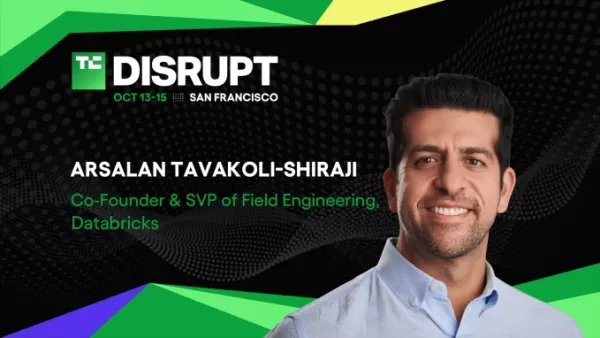
Image Credits:TechCrunch
Disrupt will gather 10,000+ founders, investors, and operators to explore the technologies and operational pressures reshaping how companies are built and scaled. Over three days, the event will feature 250+ sessions across six stages, led by tech leaders who are shaping the industry today.
Explore the sessions on the Disrupt AI Stage. Ticket savings of up to $410 end May 29 at 11:59 p.m. PT. Register here.
The pilot was never the difficult part
The enterprise AI market is filled with successful pilots that never turned into actual deployments. Not because the technology failed, but because the organization couldn't absorb the operational consequences of adoption.
The reality founders must face is that AI startup deals rarely fail because the model underperformed. They fail because the enterprise lost confidence in what the deployment would entail.
That's the gap Tavakoli-Shiraji’s session aims to explore. Most enterprises aren't just evaluating whether an AI product works; they're evaluating:
Implementation risk.Governance complexity.Workflow disruption.Infrastructure strain.Compliance exposure.Organizational trust.An AI product may perform exceptionally well in a controlled environment yet still fail commercially if its deployment creates instability within the business.
This distinction is important for founders because many AI startups are still optimizing for the wrong outcome. They are building for initial excitement rather than long-term operational adoption. And enterprises are becoming far more disciplined in recognizing the difference.
Register for Disrupt to hear how enterprise AI leaders evaluate what truly survives beyond the pilot phase. Lock in your ticket savings of up to $410 when you register by May 29 at 11:59 p.m. PT.
Enterprise AI is becoming an operational trust challenge
The AI startups gaining traction inside large organizations increasingly share one common trait: they reduce uncertainty.
They integrate more cleanly into existing systems, create less workflow friction, and are easier to govern, explain internally, and trust over time.
That may sound less exciting than breakthrough demos or model benchmarks, but it's quickly becoming the difference between AI startups that generate attention and those that generate durable revenue.
The market is maturing. Enterprise buyers are now asking different questions:
What happens after deployment? How much operational change is required? How does this affect governance? Can teams realistically adopt this at scale? What happens when the model fails?Those concerns are no longer secondary. In many organizations, they have become core to the buying decision itself. For AI founders selling into the enterprise, this session breaks down what actually drives adoption after the pilot phase ends. Check out the session details and get your $410 ticket savings to learn what to prioritize to gain traction with enterprise AI deals.
Why Tavakoli-Shiraji sees the market differently
Tavakoli-Shiraji brings an unusually relevant perspective to this conversation because his background spans both enterprise strategy and deeply technical systems architecture.
Before joining Databricks, he was an associate principal at McKinsey & Company, advising enterprises, technology vendors, and public-sector organizations on cloud computing, next-generation IT, and enterprise transformation strategy. He also earned a PhD in computer science from UC Berkeley, focused on networking and distributed systems.
That perspective is valuable for startups because enterprise AI success increasingly depends on more than just strong engineering. Founders now need to understand how technical systems interact with organizational behavior, infrastructure realities, procurement processes, governance concerns, and operational risk.
The startups that succeed in enterprise AI over the next several years may not necessarily be the ones with the most advanced models. They may be the ones that best understand how enterprises actually absorb change.
That is the kind of operational pressure that Tavakoli-Shiraji and other speakers on the AI Stage at Disrupt will explore. Presented by Google Cloud, the stage examines how AI agents and generative AI are reshaping SaaS, enterprise adoption, software economics, security, and operational infrastructure — including Tavakoli-Shiraji’s session on why enterprise AI success increasingly depends on operational trust rather than simply technical performance.
Across the stage, founders will learn how and why the focus is shifting away from AI novelty and toward the real-world challenges of deploying, governing, and scaling AI systems within real organizations.
Two days left to save on enterprise AI insights
Explore the Disrupt agenda and learn how founders, investors, and enterprise operators are managing the next phase of AI adoption. Register by May 29 at 11:59 p.m. PT to save up to $410 on your passes.
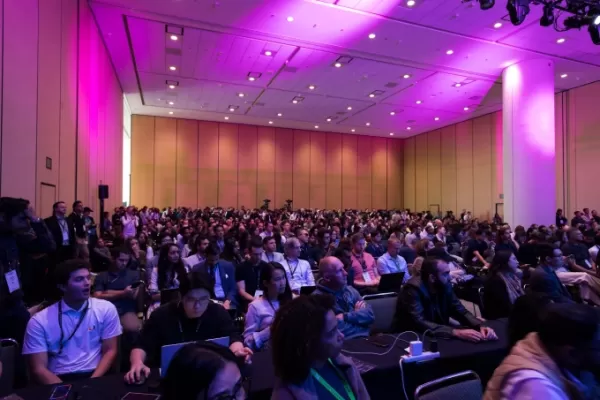
Image Credits:Slava Blazer Photography / Flickr (opens in a new window)
Related article
 Last Day to Submit Applications to Speak at TechCrunch Disrupt 2026
TechCrunch Disrupt 2026 will return from October 13 to 15 at Moscone West in San Francisco, and applications are now open for just a few more hours.We are inviting founders, investors, industry professionals, and technology specialists to apply for t
Applications for Startup Battlefield 200 Close in Just Three Days
Founders, you have just three days left to submit your application for Startup Battlefield 200.The deadline for applying to Startup Battlefield 200 is June 8 at 11:59 p.m. PT. There’s no time to delay — secure your spot to compete on the Disrupt Stag
From SaaS reckoning to agent security gap: AI’s future at TechCrunch Disrupt 2026
AI has not only transformed how startups build products—it has fundamentally disrupted how they sell, protect their data and customers, and scale faster than ever before. Returning to TechCrunch Disrupt 2026, the AI Stage, presented by Google for Sta
Related Special Topic Recommendations
Video creation
Last Day to Submit Applications to Speak at TechCrunch Disrupt 2026
TechCrunch Disrupt 2026 will return from October 13 to 15 at Moscone West in San Francisco, and applications are now open for just a few more hours.We are inviting founders, investors, industry professionals, and technology specialists to apply for t
Applications for Startup Battlefield 200 Close in Just Three Days
Founders, you have just three days left to submit your application for Startup Battlefield 200.The deadline for applying to Startup Battlefield 200 is June 8 at 11:59 p.m. PT. There’s no time to delay — secure your spot to compete on the Disrupt Stag
From SaaS reckoning to agent security gap: AI’s future at TechCrunch Disrupt 2026
AI has not only transformed how startups build products—it has fundamentally disrupted how they sell, protect their data and customers, and scale faster than ever before. Returning to TechCrunch Disrupt 2026, the AI Stage, presented by Google for Sta
Related Special Topic Recommendations
Video creation
 AI Short-Form Video Hook Generators for Reels, Shorts, and Product Launch Campaigns
2026 Latest Best AI Short-Form Video Hook Generators for Reels Shorts and Product Launch Campaigns! XIX.AI curates top-rated powerful game-changing tools that deliver must-try results through real-world tests. This weekly updated page offers free vs paid comparison rankings to help you find the perfect solution for boosting content creativity and productivity. Explore now to Unlock your AI edge!
 11 tools
 xix.ai
writing
AI Article Outline Tools for Long Form Writing
xix.ai
writing
AI Article Outline Tools for Long Form Writing
2026 Latest Best Top-Rated AI Article Outline Tools for Long Form Writing! This curated collection features powerful, game-changing tools that deliver accurate, structured outlines with real-world tests to boost writing efficiency significantly. XIX.AI is part of this elite selection. Get a free vs paid comparison to help you choose the perfect tool. Explore now and Unlock your AI edge!
9 tools
xix.ai
chatbot
Best AI Roleplay Chat Apps for Language Practice, Interview Prep, and Daily Fluency
2026 Latest Best Top-rated AI Roleplay Chat Apps for Language Practice, Interview Prep, and Daily Fluency! XIX.AI curates a powerful game-changing collection that offers free vs paid comparison, real-world tests, and updated rankings weekly. These must-try tools help you boost writing skills, overcome fluency challenges, and improve communication efficiency across all daily scenarios. Explore now to discover your perfect tool for language growth!
10 tools
xix.ai
Music composition
AI Stem Separation Tools for Remix Production, Sampling Prep, and Karaoke Masters
2026 Latest Best Top-rated AI Stem Separation Tools Curated for Remix Production, Sampling Prep, and Karaoke Masters. These powerful game-changing tools offer real-world tests to deliver precise audio isolation, boosting productivity significantly. XIX.AI provides a weekly updated free vs paid comparison guide to help you find the must-try solution that suits your needs. Explore now to unlock your AI edge.
8 tools
xix.ai
Data Analysis
AI SQL Copilots for Revenue Dashboards, Funnel Analysis, and Product Metrics
2026 Latest Best AI SQL Copilots Ranked Top-Rated! XIX.AI curates a powerful game-changing collection for weekly updated real-world tests. These must-try tools help you generate accurate revenue dashboards, analyze sales funnels, and track product metrics swiftly, boosting productivity massively. Explore now to Discover your perfect tool for data-driven decision making! 238 characters
9 tools
xix.ai
Music composition
Best AI Melody Writing Tools for Song Drafts
2026 Latest Best Top-Rated AI Melody Writing Tools for Song Drafts! XIX.AI has curated a highly powerful game-changing collection that goes through rigorous real-world tests to deliver the best writing experience. You can find detailed free vs paid comparisons, accurate rankings, and must-try options designed to help you create stunning song drafts effortlessly and boost your creative productivity significantly. Explore now to discover your perfect tool!
8 tools
xix.ai

 Comments (0)
0/500
Comments (0)
0/500
Enterprise organizations aren't rejecting AI — they're rejecting operational instability.
This shift is one many founders still misunderstand — and it's becoming a defining reality that separates enterprise AI companies that scale from those that stall after early momentum.
For the past few years, AI startups have benefited from a market driven by experimentation. A strong demo, an impressive model, and a powerful vision were often enough to spark enterprise interest, pilot programs, and investor enthusiasm.
But enterprise AI is entering a new phase — one where companies are no longer asking if AI is exciting, but whether it's safe to deploy at scale.
At TechCrunch Disrupt 2026, happening October 13–15 at Moscone West in San Francisco, Arsalan Tavakoli-Shiraji, co-founder and SVP of field engineering at Databricks, will unpack this shift during his AI Stage session, “The Enterprise Isn’t Broken. Your Assumptions About It Are.”
Image Credits:TechCrunch
Disrupt will gather 10,000+ founders, investors, and operators to explore the technologies and operational pressures reshaping how companies are built and scaled. Over three days, the event will feature 250+ sessions across six stages, led by tech leaders who are shaping the industry today.
Explore the sessions on the Disrupt AI Stage. Ticket savings of up to $410 end May 29 at 11:59 p.m. PT. Register here.
The pilot was never the difficult part
The enterprise AI market is filled with successful pilots that never turned into actual deployments. Not because the technology failed, but because the organization couldn't absorb the operational consequences of adoption.
The reality founders must face is that AI startup deals rarely fail because the model underperformed. They fail because the enterprise lost confidence in what the deployment would entail.
That's the gap Tavakoli-Shiraji’s session aims to explore. Most enterprises aren't just evaluating whether an AI product works; they're evaluating:
Implementation risk.Governance complexity.Workflow disruption.Infrastructure strain.Compliance exposure.Organizational trust.An AI product may perform exceptionally well in a controlled environment yet still fail commercially if its deployment creates instability within the business.
This distinction is important for founders because many AI startups are still optimizing for the wrong outcome. They are building for initial excitement rather than long-term operational adoption. And enterprises are becoming far more disciplined in recognizing the difference.
Register for Disrupt to hear how enterprise AI leaders evaluate what truly survives beyond the pilot phase. Lock in your ticket savings of up to $410 when you register by May 29 at 11:59 p.m. PT.
Enterprise AI is becoming an operational trust challenge
The AI startups gaining traction inside large organizations increasingly share one common trait: they reduce uncertainty.
They integrate more cleanly into existing systems, create less workflow friction, and are easier to govern, explain internally, and trust over time.
That may sound less exciting than breakthrough demos or model benchmarks, but it's quickly becoming the difference between AI startups that generate attention and those that generate durable revenue.
The market is maturing. Enterprise buyers are now asking different questions:
What happens after deployment? How much operational change is required? How does this affect governance? Can teams realistically adopt this at scale? What happens when the model fails?Those concerns are no longer secondary. In many organizations, they have become core to the buying decision itself. For AI founders selling into the enterprise, this session breaks down what actually drives adoption after the pilot phase ends. Check out the session details and get your $410 ticket savings to learn what to prioritize to gain traction with enterprise AI deals.
Why Tavakoli-Shiraji sees the market differently
Tavakoli-Shiraji brings an unusually relevant perspective to this conversation because his background spans both enterprise strategy and deeply technical systems architecture.
Before joining Databricks, he was an associate principal at McKinsey & Company, advising enterprises, technology vendors, and public-sector organizations on cloud computing, next-generation IT, and enterprise transformation strategy. He also earned a PhD in computer science from UC Berkeley, focused on networking and distributed systems.
That perspective is valuable for startups because enterprise AI success increasingly depends on more than just strong engineering. Founders now need to understand how technical systems interact with organizational behavior, infrastructure realities, procurement processes, governance concerns, and operational risk.
The startups that succeed in enterprise AI over the next several years may not necessarily be the ones with the most advanced models. They may be the ones that best understand how enterprises actually absorb change.
That is the kind of operational pressure that Tavakoli-Shiraji and other speakers on the AI Stage at Disrupt will explore. Presented by Google Cloud, the stage examines how AI agents and generative AI are reshaping SaaS, enterprise adoption, software economics, security, and operational infrastructure — including Tavakoli-Shiraji’s session on why enterprise AI success increasingly depends on operational trust rather than simply technical performance.
Across the stage, founders will learn how and why the focus is shifting away from AI novelty and toward the real-world challenges of deploying, governing, and scaling AI systems within real organizations.
Two days left to save on enterprise AI insights
Explore the Disrupt agenda and learn how founders, investors, and enterprise operators are managing the next phase of AI adoption. Register by May 29 at 11:59 p.m. PT to save up to $410 on your passes.
Image Credits:Slava Blazer Photography / Flickr (opens in a new window)








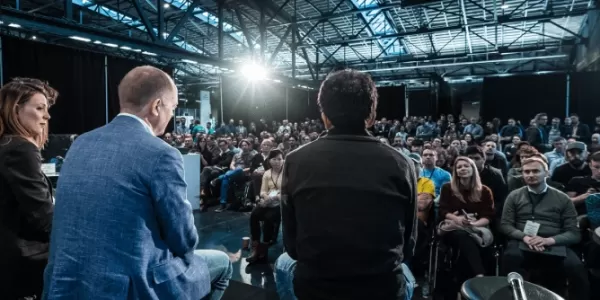 Last Day to Submit Applications to Speak at TechCrunch Disrupt 2026
TechCrunch Disrupt 2026 will return from October 13 to 15 at Moscone West in San Francisco, and applications are now open for just a few more hours.We are inviting founders, investors, industry professionals, and technology specialists to apply for t
Last Day to Submit Applications to Speak at TechCrunch Disrupt 2026
TechCrunch Disrupt 2026 will return from October 13 to 15 at Moscone West in San Francisco, and applications are now open for just a few more hours.We are inviting founders, investors, industry professionals, and technology specialists to apply for t
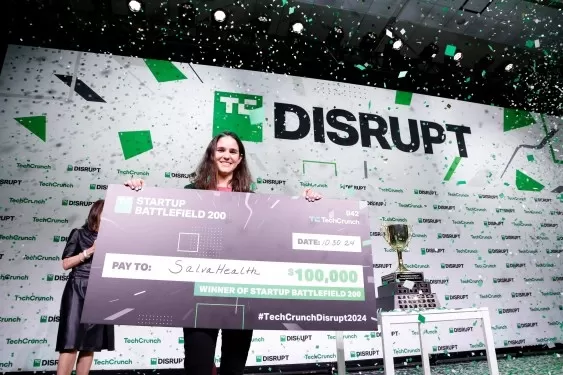 Applications for Startup Battlefield 200 Close in Just Three Days
Founders, you have just three days left to submit your application for Startup Battlefield 200.The deadline for applying to Startup Battlefield 200 is June 8 at 11:59 p.m. PT. There’s no time to delay — secure your spot to compete on the Disrupt Stag
Applications for Startup Battlefield 200 Close in Just Three Days
Founders, you have just three days left to submit your application for Startup Battlefield 200.The deadline for applying to Startup Battlefield 200 is June 8 at 11:59 p.m. PT. There’s no time to delay — secure your spot to compete on the Disrupt Stag
 From SaaS reckoning to agent security gap: AI’s future at TechCrunch Disrupt 2026
AI has not only transformed how startups build products—it has fundamentally disrupted how they sell, protect their data and customers, and scale faster than ever before. Returning to TechCrunch Disrupt 2026, the AI Stage, presented by Google for Sta
From SaaS reckoning to agent security gap: AI’s future at TechCrunch Disrupt 2026
AI has not only transformed how startups build products—it has fundamentally disrupted how they sell, protect their data and customers, and scale faster than ever before. Returning to TechCrunch Disrupt 2026, the AI Stage, presented by Google for Sta

2026 Latest Best AI Short-Form Video Hook Generators for Reels Shorts and Product Launch Campaigns! XIX.AI curates top-rated powerful game-changing tools that deliver must-try results through real-world tests. This weekly updated page offers free vs paid comparison rankings to help you find the perfect solution for boosting content creativity and productivity. Explore now to Unlock your AI edge!
11 tools
xix.ai

2026 Latest Best Top-Rated AI Article Outline Tools for Long Form Writing! This curated collection features powerful, game-changing tools that deliver accurate, structured outlines with real-world tests to boost writing efficiency significantly. XIX.AI is part of this elite selection. Get a free vs paid comparison to help you choose the perfect tool. Explore now and Unlock your AI edge!
9 tools
xix.ai

2026 Latest Best Top-rated AI Roleplay Chat Apps for Language Practice, Interview Prep, and Daily Fluency! XIX.AI curates a powerful game-changing collection that offers free vs paid comparison, real-world tests, and updated rankings weekly. These must-try tools help you boost writing skills, overcome fluency challenges, and improve communication efficiency across all daily scenarios. Explore now to discover your perfect tool for language growth!
10 tools
xix.ai

2026 Latest Best Top-rated AI Stem Separation Tools Curated for Remix Production, Sampling Prep, and Karaoke Masters. These powerful game-changing tools offer real-world tests to deliver precise audio isolation, boosting productivity significantly. XIX.AI provides a weekly updated free vs paid comparison guide to help you find the must-try solution that suits your needs. Explore now to unlock your AI edge.
8 tools
xix.ai

2026 Latest Best AI SQL Copilots Ranked Top-Rated! XIX.AI curates a powerful game-changing collection for weekly updated real-world tests. These must-try tools help you generate accurate revenue dashboards, analyze sales funnels, and track product metrics swiftly, boosting productivity massively. Explore now to Discover your perfect tool for data-driven decision making! 238 characters
9 tools
xix.ai

2026 Latest Best Top-Rated AI Melody Writing Tools for Song Drafts! XIX.AI has curated a highly powerful game-changing collection that goes through rigorous real-world tests to deliver the best writing experience. You can find detailed free vs paid comparisons, accurate rankings, and must-try options designed to help you create stunning song drafts effortlessly and boost your creative productivity significantly. Explore now to discover your perfect tool!
8 tools
xix.ai












