


 Home
HomeAWS Chief Defends Dual Investments in Anthropic and OpenAI

AWS CEO Matt Garman stated that Amazon's recent $50 billion investment in OpenAI, following its longstanding partnership and $8 billion investment in Anthropic, represents the kind of conflict of interest the cloud giant is accustomed to managing.
Garman, who joined Amazon as a business school intern in 2005—before AWS launched in 2006—shared this perspective with attendees at the HumanX conference in San Francisco this week.
When questioned about the inherent tension in working closely with two fiercely competitive AI model companies, he dismissed it as a non-issue. He explained that AWS frequently competes with its own partners, giving it extensive direct experience in navigating such rivalries.
In its early days, AWS recognized it couldn't develop every cloud solution internally, so it actively collaborated with external partners.
"We also understood we would eventually compete with some of those partners, given how interconnected technology ecosystems are," Garman recalled. "For a long time, we've been strengthening our ability to go to market alongside partners," he continued. "At the same time, we may offer first-party products that compete with theirs. That's acceptable, and we've assured them we won't create an unfair competitive advantage for ourselves."
Today, it's commonplace for Amazon to compete with companies that sell on its cloud platform. Even Oracle, one of AWS's major rivals, offers its database and other services on AWS. However, this was a revolutionary concept in 2006, when tech partners typically avoided competing with the very allies that helped them grow.
Still, Amazon is far from the first to set aside investor loyalty and conflict-of-interest concerns in the fiercely competitive, capital-intensive AI landscape. When Anthropic announced its latest $30 billion funding round in February, it included at least a dozen investors who were also backing OpenAI—among them Microsoft, OpenAI's primary cloud partner.
For AWS, making a massive investment in OpenAI to secure its models for customers (and as a tech development partner) was nearly a strategic necessity. Both models were already accessible on Microsoft Azure, AWS's chief competitor.
The cloud giants are also positioning themselves as essential hubs by offering AI model-routing services. These allow customers to automatically switch between different models for various tasks, optimizing performance and controlling costs. As Garman outlined, one model might excel at planning, another at reasoning, while a more affordable model could handle simpler tasks like code completion. "I believe that's the direction the industry is heading," Garman said.
This is also how Amazon—and Microsoft, for that matter—will integrate their own proprietary models into customer workflows, revisiting that familiar dynamic of competing with partners.
In today's landscape, all seems fair in love and artificial intelligence.
Related article
 Anthropic launches Opus 4.8 featuring new dynamic workflow tool
Anthropic unveiled Opus 4.8 on Thursday, marking the latest iteration of its premier public model. Priced identically to its predecessor, this update is now accessible across all platforms.Releasing just 41 days after Opus 4.7, Anthropic has accelera
OpenAI launches safer ChatGPT for teens years after they started using it
Following a series of lawsuits regarding the absence of safety protocols in AI chatbots—which contributed to teen suicides and other mental health crises—OpenAI unveiled ChatGPT for Teens on Monday. This new offering incorporates enhanced safety feat
Frontier AI Labs Refuse to Disclose Containment Strategies for Rogue Models
Recent research indicates that very few leading AI laboratories have published or demonstrated containment response plans. A containment plan defines the procedures for when an AI system attempts to subvert human control, specifying which access righ
Related Special Topic Recommendations
writing
Anthropic launches Opus 4.8 featuring new dynamic workflow tool
Anthropic unveiled Opus 4.8 on Thursday, marking the latest iteration of its premier public model. Priced identically to its predecessor, this update is now accessible across all platforms.Releasing just 41 days after Opus 4.7, Anthropic has accelera
OpenAI launches safer ChatGPT for teens years after they started using it
Following a series of lawsuits regarding the absence of safety protocols in AI chatbots—which contributed to teen suicides and other mental health crises—OpenAI unveiled ChatGPT for Teens on Monday. This new offering incorporates enhanced safety feat
Frontier AI Labs Refuse to Disclose Containment Strategies for Rogue Models
Recent research indicates that very few leading AI laboratories have published or demonstrated containment response plans. A containment plan defines the procedures for when an AI system attempts to subvert human control, specifying which access righ
Related Special Topic Recommendations
writing
 AI Article Outline Tools for Long Form Writing
2026 Latest Best Top-Rated AI Article Outline Tools for Long Form Writing! This curated collection features powerful, game-changing tools that deliver accurate, structured outlines with real-world tests to boost writing efficiency significantly. XIX.AI is part of this elite selection. Get a free vs paid comparison to help you choose the perfect tool. Explore now and Unlock your AI edge!
 9 tools
 xix.ai
chatbot
Best AI Roleplay Chat Apps for Language Practice, Interview Prep, and Daily Fluency
xix.ai
chatbot
Best AI Roleplay Chat Apps for Language Practice, Interview Prep, and Daily Fluency
2026 Latest Best Top-rated AI Roleplay Chat Apps for Language Practice, Interview Prep, and Daily Fluency! XIX.AI curates a powerful game-changing collection that offers free vs paid comparison, real-world tests, and updated rankings weekly. These must-try tools help you boost writing skills, overcome fluency challenges, and improve communication efficiency across all daily scenarios. Explore now to discover your perfect tool for language growth!
10 tools
xix.ai
Music composition
AI Stem Separation Tools for Remix Production, Sampling Prep, and Karaoke Masters
2026 Latest Best Top-rated AI Stem Separation Tools Curated for Remix Production, Sampling Prep, and Karaoke Masters. These powerful game-changing tools offer real-world tests to deliver precise audio isolation, boosting productivity significantly. XIX.AI provides a weekly updated free vs paid comparison guide to help you find the must-try solution that suits your needs. Explore now to unlock your AI edge.
8 tools
xix.ai
Data Analysis
AI SQL Copilots for Revenue Dashboards, Funnel Analysis, and Product Metrics
2026 Latest Best AI SQL Copilots Ranked Top-Rated! XIX.AI curates a powerful game-changing collection for weekly updated real-world tests. These must-try tools help you generate accurate revenue dashboards, analyze sales funnels, and track product metrics swiftly, boosting productivity massively. Explore now to Discover your perfect tool for data-driven decision making! 238 characters
9 tools
xix.ai
Music composition
Best AI Melody Writing Tools for Song Drafts
2026 Latest Best Top-Rated AI Melody Writing Tools for Song Drafts! XIX.AI has curated a highly powerful game-changing collection that goes through rigorous real-world tests to deliver the best writing experience. You can find detailed free vs paid comparisons, accurate rankings, and must-try options designed to help you create stunning song drafts effortlessly and boost your creative productivity significantly. Explore now to discover your perfect tool!
8 tools
xix.ai
chatbot
Best AI Conversation Trainer Tools for Interview Practice
2026 Latest Best Top-rated AI Conversation Trainer Tools for Interview Practice are here on XIX.AI! This curated collection features powerful, game-changing tools that go through rigorous real-world tests to deliver accurate feedback. You’ll find a free vs paid comparison and detailed rankings to help you choose the must-try option that boosts your confidence and skills. Explore now to Discover your perfect tool for interview success!
12 tools
xix.ai

 Comments (1)
0/500
Comments (1)
0/500
![AlbertWilson]()
Interesting how they're playing both sides 😅... seems like a classic hedge against AI risk, but also raises questions about antitrust. Wonder how long before regulators take a closer look?
AWS CEO Matt Garman stated that Amazon's recent $50 billion investment in OpenAI, following its longstanding partnership and $8 billion investment in Anthropic, represents the kind of conflict of interest the cloud giant is accustomed to managing.
Garman, who joined Amazon as a business school intern in 2005—before AWS launched in 2006—shared this perspective with attendees at the HumanX conference in San Francisco this week.
When questioned about the inherent tension in working closely with two fiercely competitive AI model companies, he dismissed it as a non-issue. He explained that AWS frequently competes with its own partners, giving it extensive direct experience in navigating such rivalries.
In its early days, AWS recognized it couldn't develop every cloud solution internally, so it actively collaborated with external partners.
"We also understood we would eventually compete with some of those partners, given how interconnected technology ecosystems are," Garman recalled. "For a long time, we've been strengthening our ability to go to market alongside partners," he continued. "At the same time, we may offer first-party products that compete with theirs. That's acceptable, and we've assured them we won't create an unfair competitive advantage for ourselves."
Today, it's commonplace for Amazon to compete with companies that sell on its cloud platform. Even Oracle, one of AWS's major rivals, offers its database and other services on AWS. However, this was a revolutionary concept in 2006, when tech partners typically avoided competing with the very allies that helped them grow.
Still, Amazon is far from the first to set aside investor loyalty and conflict-of-interest concerns in the fiercely competitive, capital-intensive AI landscape. When Anthropic announced its latest $30 billion funding round in February, it included at least a dozen investors who were also backing OpenAI—among them Microsoft, OpenAI's primary cloud partner.
For AWS, making a massive investment in OpenAI to secure its models for customers (and as a tech development partner) was nearly a strategic necessity. Both models were already accessible on Microsoft Azure, AWS's chief competitor.
The cloud giants are also positioning themselves as essential hubs by offering AI model-routing services. These allow customers to automatically switch between different models for various tasks, optimizing performance and controlling costs. As Garman outlined, one model might excel at planning, another at reasoning, while a more affordable model could handle simpler tasks like code completion. "I believe that's the direction the industry is heading," Garman said.
This is also how Amazon—and Microsoft, for that matter—will integrate their own proprietary models into customer workflows, revisiting that familiar dynamic of competing with partners.
In today's landscape, all seems fair in love and artificial intelligence.








 Anthropic launches Opus 4.8 featuring new dynamic workflow tool
Anthropic unveiled Opus 4.8 on Thursday, marking the latest iteration of its premier public model. Priced identically to its predecessor, this update is now accessible across all platforms.Releasing just 41 days after Opus 4.7, Anthropic has accelera
Anthropic launches Opus 4.8 featuring new dynamic workflow tool
Anthropic unveiled Opus 4.8 on Thursday, marking the latest iteration of its premier public model. Priced identically to its predecessor, this update is now accessible across all platforms.Releasing just 41 days after Opus 4.7, Anthropic has accelera
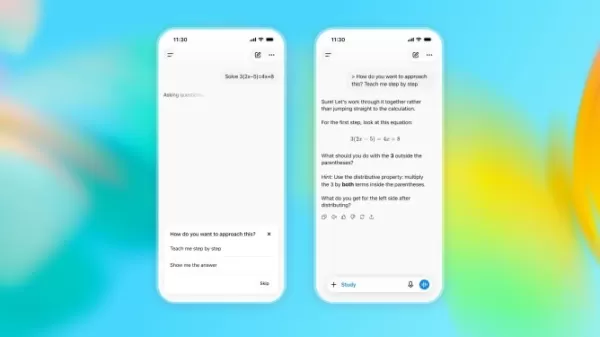 OpenAI launches safer ChatGPT for teens years after they started using it
Following a series of lawsuits regarding the absence of safety protocols in AI chatbots—which contributed to teen suicides and other mental health crises—OpenAI unveiled ChatGPT for Teens on Monday. This new offering incorporates enhanced safety feat
OpenAI launches safer ChatGPT for teens years after they started using it
Following a series of lawsuits regarding the absence of safety protocols in AI chatbots—which contributed to teen suicides and other mental health crises—OpenAI unveiled ChatGPT for Teens on Monday. This new offering incorporates enhanced safety feat
 Frontier AI Labs Refuse to Disclose Containment Strategies for Rogue Models
Recent research indicates that very few leading AI laboratories have published or demonstrated containment response plans. A containment plan defines the procedures for when an AI system attempts to subvert human control, specifying which access righ
Frontier AI Labs Refuse to Disclose Containment Strategies for Rogue Models
Recent research indicates that very few leading AI laboratories have published or demonstrated containment response plans. A containment plan defines the procedures for when an AI system attempts to subvert human control, specifying which access righ

2026 Latest Best Top-Rated AI Article Outline Tools for Long Form Writing! This curated collection features powerful, game-changing tools that deliver accurate, structured outlines with real-world tests to boost writing efficiency significantly. XIX.AI is part of this elite selection. Get a free vs paid comparison to help you choose the perfect tool. Explore now and Unlock your AI edge!
9 tools
xix.ai

2026 Latest Best Top-rated AI Roleplay Chat Apps for Language Practice, Interview Prep, and Daily Fluency! XIX.AI curates a powerful game-changing collection that offers free vs paid comparison, real-world tests, and updated rankings weekly. These must-try tools help you boost writing skills, overcome fluency challenges, and improve communication efficiency across all daily scenarios. Explore now to discover your perfect tool for language growth!
10 tools
xix.ai
2026 Latest Best Top-rated AI Stem Separation Tools Curated for Remix Production, Sampling Prep, and Karaoke Masters. These powerful game-changing tools offer real-world tests to deliver precise audio isolation, boosting productivity significantly. XIX.AI provides a weekly updated free vs paid comparison guide to help you find the must-try solution that suits your needs. Explore now to unlock your AI edge.
8 tools
xix.ai

2026 Latest Best AI SQL Copilots Ranked Top-Rated! XIX.AI curates a powerful game-changing collection for weekly updated real-world tests. These must-try tools help you generate accurate revenue dashboards, analyze sales funnels, and track product metrics swiftly, boosting productivity massively. Explore now to Discover your perfect tool for data-driven decision making! 238 characters
9 tools
xix.ai

2026 Latest Best Top-Rated AI Melody Writing Tools for Song Drafts! XIX.AI has curated a highly powerful game-changing collection that goes through rigorous real-world tests to deliver the best writing experience. You can find detailed free vs paid comparisons, accurate rankings, and must-try options designed to help you create stunning song drafts effortlessly and boost your creative productivity significantly. Explore now to discover your perfect tool!
8 tools
xix.ai
2026 Latest Best Top-rated AI Conversation Trainer Tools for Interview Practice are here on XIX.AI! This curated collection features powerful, game-changing tools that go through rigorous real-world tests to deliver accurate feedback. You’ll find a free vs paid comparison and detailed rankings to help you choose the must-try option that boosts your confidence and skills. Explore now to Discover your perfect tool for interview success!
12 tools
xix.ai

Interesting how they're playing both sides 😅... seems like a classic hedge against AI risk, but also raises questions about antitrust. Wonder how long before regulators take a closer look?












