


 Home
HomeApple’s Trade Secrets Lawsuit Against OpenAI: The Wildest Allegations
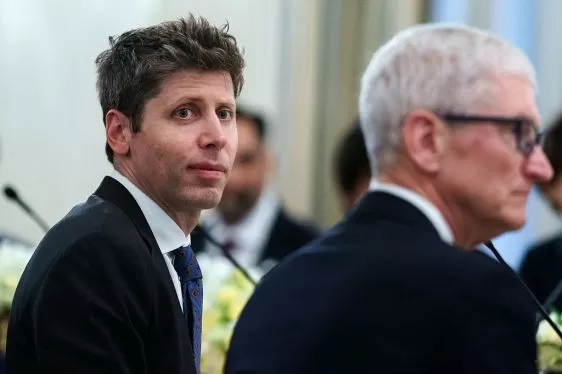
Apple’s trade secret lawsuit against OpenAI contains numerous extraordinary allegations, depicting a coordinated effort to extract confidential information from current and former Apple employees. Most striking is the casual tone of the alleged misconduct, including a message stating, “LOL, I found out I can access the [network storage], so funny.”
The 41-page complaint, filed on Friday, includes unusually detailed allegations. Here are the most notable points:
“Normalized and exemplified by leadership.” By describing OpenAI this way, Apple clarifies that the lawsuit targets not just rogue employees, but a culture of misconduct led from the top.“Rotten to its core.” Apple uses a fruit analogy to criticize OpenAI’s behavior. Rumors suggest OpenAI is developing a hardware device to challenge the iPhone, potentially a smartphone of its own. However, Apple emphasizes that OpenAI’s product allegedly relies on misappropriated trade secrets. “OpenAI’s nascent hardware business now rests on the shakiest of foundations, rotten to its core by its illegal reliance on misappropriated trade secrets,” the complaint states.“This is the tip of the iceberg.” Beyond documenting allegations against former employees, Apple suggests the misconduct outlined is only a fraction of what will be uncovered during discovery. This process involves obtaining corporate documents and communications, including texts and emails, potentially revealing more instances of such behavior. “Discovery will expose that the misappropriation has been occurring on a scale many times greater than the several instances described below,” Apple’s complaint states.“LOL, I found out I can access the [network storage], so funny.” Apple states that Chang Liu, a former senior systems electrical engineer at Apple who joined OpenAI, sent this message to Yu-Ting “Alyssa” Peng, an alleged conduit between Apple and OpenAI. Peng later joined OpenAI but is not a defendant. She allegedly replied, “I’m ready.” Apple claims Liu accessed Apple’s systems by exploiting an authentication bug from Peng’s Apple-issued work computer.“I still have another computer.” Liu allegedly texted this shortly after leaving Apple, referring to another Apple computer he planned to use for accessing confidential information. Apple discovered the message on Peng’s work laptop.“Didn’t even know we could take those from the office.” A striking allegation is that OpenAI’s chief hardware officer, Tang Yew Tan, who spent 24 years at Apple (most recently as VP of product design for iPhone and Apple Watch), directed job candidates to bring “actual parts” from Apple to interviews for “show and tell sessions.” One candidate was surprised, not realizing Apple parts could be removed from the office. Apple also claims employees were instructed to bring “CAD/design artifacts” and “prototypes” to interviews.Avoiding the “dreaded walkout.” Apple alleges OpenAI coached departing employees on evading security procedures to avoid detection of alleged trade secret theft. The complaint claims OpenAI circulated an internal document marked “Need to know” to new hires, detailing how to avoid the “dreaded walkout.” This procedure immediately removes employees upon resignation, preventing them from working the typical two weeks and accessing confidential information.“Let OpenAI know ‘asap’” if asked to sign anything when quitting Apple. The complaint alleges that if departing employees were asked to sign documents during exit interviews, they should notify OpenAI immediately and were advised not to sign.“Over four hundred former Apple employees now working at OpenAI.” The complaint highlights the extent to which Apple employees have left for OpenAI. Apple uses this figure to illustrate the potential scale of the problem, noting that “it is not surprising that certain OpenAI personnel have knowledge of Apple’s confidential and proprietary information, which they are obligated to keep confidential. But OpenAI has resorted to exploiting this confidential information…”“io…access, exploited and used Apple’s secret, proprietary industrial design techniques, processes, and know-how related to metal-finishing.” Founded by former Apple employees, including Jony Ive, io was acquired by OpenAI last year in a $6.5 billion deal. It is now a defendant, as Apple alleges the firm used industrial design techniques by misleading a partner into believing it had Apple’s permission for a “confidential metal-finishing technique.” Apple also claims OpenAI approached a supplier using confidential information about design and components related to power and batteries, using “internal terminology” to ask questions “only Apple-insiders would know to ask.”“Apple is left with no choice.” While typical legal phrasing, this suggests Apple may have attempted to resolve the issue outside court. The tech giant states it contacted OpenAI in February with concerns, but received no response. So far, OpenAI has only commented publicly via a statement on X on Friday: “We have no interest in other companies’ trade secrets. We remain focused on building innovative technology that empowers people everywhere.”
Related article
 Anthropic now has more business customers than OpenAI, according to Ramp data
Anthropic has surpassed OpenAI in verified business customers for the first time, according to this month’s AI Index from fintech firm Ramp.Data from Ramp’s client expenses reveals that 34.4% of participating businesses pay for Anthropic services, ou
OpenAI faces probe by state attorneys general
A group of state attorneys general has reportedly launched an inquiry into OpenAI.According to The Wall Street Journal, the company received a subpoena from New York’s attorney general on Friday. The request covers documents regarding various issues,
OpenAI reportedly exploring smartphone with AI agents replacing traditional apps
Speculation regarding OpenAI’s hardware strategy has intensified, with recent reports pointing toward the development of a dedicated smartphone. Industry analyst Ming-Chi Kuo indicates that the AI firm is collaborating with chipmakers MediaTek and Qu
Related Special Topic Recommendations
Design & Art
Anthropic now has more business customers than OpenAI, according to Ramp data
Anthropic has surpassed OpenAI in verified business customers for the first time, according to this month’s AI Index from fintech firm Ramp.Data from Ramp’s client expenses reveals that 34.4% of participating businesses pay for Anthropic services, ou
OpenAI faces probe by state attorneys general
A group of state attorneys general has reportedly launched an inquiry into OpenAI.According to The Wall Street Journal, the company received a subpoena from New York’s attorney general on Friday. The request covers documents regarding various issues,
OpenAI reportedly exploring smartphone with AI agents replacing traditional apps
Speculation regarding OpenAI’s hardware strategy has intensified, with recent reports pointing toward the development of a dedicated smartphone. Industry analyst Ming-Chi Kuo indicates that the AI firm is collaborating with chipmakers MediaTek and Qu
Related Special Topic Recommendations
Design & Art
 Top AI Illustration Tools: Create Editorial Scenes and Cover Art Faster
2026 Latest Top-rated AI Illustration Tools: Our curated list features the best powerfully designed tools for creating stunning editorial scenes and eye-catching cover art quickly. Each option has gone through rigorous real-world tests, offering a free vs paid comparison to help you find the perfect match for your workflow. Try these must-try solutions today to unlock your AI edge and boost your creative productivity. Explore now at XIX.AI.
 10 tools
 xix.ai
Education and Learning
Top AI Tutors for Exam Prep: Practice Math, Science, and English
xix.ai
Education and Learning
Top AI Tutors for Exam Prep: Practice Math, Science, and English
2026 Latest Top-Rated Best AI Tutors for Exam Prep are here on XIX.AI! Our curated list features powerful game-changing tools that offer free vs paid comparison, real-world tests, and weekly updated rankings. They help boost your writing efficiency, simplify complex topic learning, and unlock your academic potential. Explore now to Discover your perfect exam prep tool and Start creating today to Unlock your AI edge!
10 tools
xix.ai
Finance
AI Budget Planning Tools for Personal Money Management
2026 Latest Best Top-Rated AI Budget Planning Tools for Personal Money Management are here on XIX.AI! This curated collection features powerful, game-changing solutions that help you conduct real-world tests, understand spending habits, and create personalized plans to boost productivity. Enjoy a free vs paid comparison along with detailed rankings. Must-try tools designed to simplify money management and unlock your AI edge. Explore now!
11 tools
xix.ai
Health & Wellness
AI Sleep Tracking Assistants: Improve Recovery with Better Bedtime Habits
2026 Latest Best Top-Rated AI Sleep Tracking Assistants curated for ultimate recovery. This fully updated weekly guide features powerful tools that deliver real-world tests, free vs paid comparison, and detailed rankings to help you find the must-try solution that boosts sleep quality and supports better bedtime habits. Explore now at XIX.AI to Unlock your AI edge.
10 tools
xix.ai
Data Analysis
AI SQL Copilots for Product and Revenue Analytics
2026 Latest Best Top-Rated AI SQL Copilots for Product and Revenue Analytics! XIX.AI has curated a powerful, game-changing collection of must-try tools that undergo real-world tests through weekly updated rankings. These tools help users boost productivity significantly by accelerating data analysis, streamlining complex queries, and generating accurate insights to drive smarter business decisions. Explore now to Discover your perfect tool for unlocking your AI edge!
14 tools
xix.ai
Education and Learning
Best AI Homework Helpers That Teach: Learn Concepts, Not Just Answers
2026 Latest Best Top-Rated AI Homework Helpers That Teach Core Concepts Not Just Answers Powerful Tools for Students Must-Try Curated List Weekly Updated Free vs Paid Comparison Real-World Tests Accurate Rankings to Help You Unlock Your Full Learning Potential Explore now to Discover your perfect tool for smarter studying.
10 tools
xix.ai

 Comments (0)
0/500
Comments (0)
0/500
Apple’s trade secret lawsuit against OpenAI contains numerous extraordinary allegations, depicting a coordinated effort to extract confidential information from current and former Apple employees. Most striking is the casual tone of the alleged misconduct, including a message stating, “LOL, I found out I can access the [network storage], so funny.”
The 41-page complaint, filed on Friday, includes unusually detailed allegations. Here are the most notable points:
“Normalized and exemplified by leadership.” By describing OpenAI this way, Apple clarifies that the lawsuit targets not just rogue employees, but a culture of misconduct led from the top.“Rotten to its core.” Apple uses a fruit analogy to criticize OpenAI’s behavior. Rumors suggest OpenAI is developing a hardware device to challenge the iPhone, potentially a smartphone of its own. However, Apple emphasizes that OpenAI’s product allegedly relies on misappropriated trade secrets. “OpenAI’s nascent hardware business now rests on the shakiest of foundations, rotten to its core by its illegal reliance on misappropriated trade secrets,” the complaint states.“This is the tip of the iceberg.” Beyond documenting allegations against former employees, Apple suggests the misconduct outlined is only a fraction of what will be uncovered during discovery. This process involves obtaining corporate documents and communications, including texts and emails, potentially revealing more instances of such behavior. “Discovery will expose that the misappropriation has been occurring on a scale many times greater than the several instances described below,” Apple’s complaint states.“LOL, I found out I can access the [network storage], so funny.” Apple states that Chang Liu, a former senior systems electrical engineer at Apple who joined OpenAI, sent this message to Yu-Ting “Alyssa” Peng, an alleged conduit between Apple and OpenAI. Peng later joined OpenAI but is not a defendant. She allegedly replied, “I’m ready.” Apple claims Liu accessed Apple’s systems by exploiting an authentication bug from Peng’s Apple-issued work computer.“I still have another computer.” Liu allegedly texted this shortly after leaving Apple, referring to another Apple computer he planned to use for accessing confidential information. Apple discovered the message on Peng’s work laptop.“Didn’t even know we could take those from the office.” A striking allegation is that OpenAI’s chief hardware officer, Tang Yew Tan, who spent 24 years at Apple (most recently as VP of product design for iPhone and Apple Watch), directed job candidates to bring “actual parts” from Apple to interviews for “show and tell sessions.” One candidate was surprised, not realizing Apple parts could be removed from the office. Apple also claims employees were instructed to bring “CAD/design artifacts” and “prototypes” to interviews.Avoiding the “dreaded walkout.” Apple alleges OpenAI coached departing employees on evading security procedures to avoid detection of alleged trade secret theft. The complaint claims OpenAI circulated an internal document marked “Need to know” to new hires, detailing how to avoid the “dreaded walkout.” This procedure immediately removes employees upon resignation, preventing them from working the typical two weeks and accessing confidential information.“Let OpenAI know ‘asap’” if asked to sign anything when quitting Apple. The complaint alleges that if departing employees were asked to sign documents during exit interviews, they should notify OpenAI immediately and were advised not to sign.“Over four hundred former Apple employees now working at OpenAI.” The complaint highlights the extent to which Apple employees have left for OpenAI. Apple uses this figure to illustrate the potential scale of the problem, noting that “it is not surprising that certain OpenAI personnel have knowledge of Apple’s confidential and proprietary information, which they are obligated to keep confidential. But OpenAI has resorted to exploiting this confidential information…”“io…access, exploited and used Apple’s secret, proprietary industrial design techniques, processes, and know-how related to metal-finishing.” Founded by former Apple employees, including Jony Ive, io was acquired by OpenAI last year in a $6.5 billion deal. It is now a defendant, as Apple alleges the firm used industrial design techniques by misleading a partner into believing it had Apple’s permission for a “confidential metal-finishing technique.” Apple also claims OpenAI approached a supplier using confidential information about design and components related to power and batteries, using “internal terminology” to ask questions “only Apple-insiders would know to ask.”“Apple is left with no choice.” While typical legal phrasing, this suggests Apple may have attempted to resolve the issue outside court. The tech giant states it contacted OpenAI in February with concerns, but received no response.So far, OpenAI has only commented publicly via a statement on X on Friday: “We have no interest in other companies’ trade secrets. We remain focused on building innovative technology that empowers people everywhere.”








 Anthropic now has more business customers than OpenAI, according to Ramp data
Anthropic has surpassed OpenAI in verified business customers for the first time, according to this month’s AI Index from fintech firm Ramp.Data from Ramp’s client expenses reveals that 34.4% of participating businesses pay for Anthropic services, ou
Anthropic now has more business customers than OpenAI, according to Ramp data
Anthropic has surpassed OpenAI in verified business customers for the first time, according to this month’s AI Index from fintech firm Ramp.Data from Ramp’s client expenses reveals that 34.4% of participating businesses pay for Anthropic services, ou
 OpenAI faces probe by state attorneys general
A group of state attorneys general has reportedly launched an inquiry into OpenAI.According to The Wall Street Journal, the company received a subpoena from New York’s attorney general on Friday. The request covers documents regarding various issues,
OpenAI faces probe by state attorneys general
A group of state attorneys general has reportedly launched an inquiry into OpenAI.According to The Wall Street Journal, the company received a subpoena from New York’s attorney general on Friday. The request covers documents regarding various issues,
 OpenAI reportedly exploring smartphone with AI agents replacing traditional apps
Speculation regarding OpenAI’s hardware strategy has intensified, with recent reports pointing toward the development of a dedicated smartphone. Industry analyst Ming-Chi Kuo indicates that the AI firm is collaborating with chipmakers MediaTek and Qu
OpenAI reportedly exploring smartphone with AI agents replacing traditional apps
Speculation regarding OpenAI’s hardware strategy has intensified, with recent reports pointing toward the development of a dedicated smartphone. Industry analyst Ming-Chi Kuo indicates that the AI firm is collaborating with chipmakers MediaTek and Qu

2026 Latest Top-rated AI Illustration Tools: Our curated list features the best powerfully designed tools for creating stunning editorial scenes and eye-catching cover art quickly. Each option has gone through rigorous real-world tests, offering a free vs paid comparison to help you find the perfect match for your workflow. Try these must-try solutions today to unlock your AI edge and boost your creative productivity. Explore now at XIX.AI.
10 tools
xix.ai

2026 Latest Top-Rated Best AI Tutors for Exam Prep are here on XIX.AI! Our curated list features powerful game-changing tools that offer free vs paid comparison, real-world tests, and weekly updated rankings. They help boost your writing efficiency, simplify complex topic learning, and unlock your academic potential. Explore now to Discover your perfect exam prep tool and Start creating today to Unlock your AI edge!
10 tools
xix.ai

2026 Latest Best Top-Rated AI Budget Planning Tools for Personal Money Management are here on XIX.AI! This curated collection features powerful, game-changing solutions that help you conduct real-world tests, understand spending habits, and create personalized plans to boost productivity. Enjoy a free vs paid comparison along with detailed rankings. Must-try tools designed to simplify money management and unlock your AI edge. Explore now!
11 tools
xix.ai

2026 Latest Best Top-Rated AI Sleep Tracking Assistants curated for ultimate recovery. This fully updated weekly guide features powerful tools that deliver real-world tests, free vs paid comparison, and detailed rankings to help you find the must-try solution that boosts sleep quality and supports better bedtime habits. Explore now at XIX.AI to Unlock your AI edge.
10 tools
xix.ai

2026 Latest Best Top-Rated AI SQL Copilots for Product and Revenue Analytics! XIX.AI has curated a powerful, game-changing collection of must-try tools that undergo real-world tests through weekly updated rankings. These tools help users boost productivity significantly by accelerating data analysis, streamlining complex queries, and generating accurate insights to drive smarter business decisions. Explore now to Discover your perfect tool for unlocking your AI edge!
14 tools
xix.ai

2026 Latest Best Top-Rated AI Homework Helpers That Teach Core Concepts Not Just Answers Powerful Tools for Students Must-Try Curated List Weekly Updated Free vs Paid Comparison Real-World Tests Accurate Rankings to Help You Unlock Your Full Learning Potential Explore now to Discover your perfect tool for smarter studying.
10 tools
xix.ai












