


 Home
Home
Anthropic CEO Pushes for Bank-Style AI Rules, Experts Warn Against Being Both Player and Referee

According to CNBC, Anthropic CEO Dario Amodei suggested embedding long-term independent third-party safety assessors within leading AI firms, granting them near-access to internal risk teams and the authority to independently publish their findings under limited restrictions. He explicitly cited the example of embedded banking regulators and promised that Anthropic would provide third-party assessors with system access equivalent to that of internal risk teams.
In a long article over the weekend, Amodei also warned that within the next 6 to 12 months, a misaligned group of agents could take over most of the internet and cause losses of hundreds of billions of dollars. Previously, Jacob Coxon, a former researcher at Anthropic, resigned and warned that leading labs were racing to develop potentially uncontrollable systems.
Bank Examiners Can Shut Down Banks, but AI Assessors Have No Veto Power
Several banking regulatory experts and AI assessment professionals pointed out that this proposal lacks the enforcement power that bank regulators possess. Julie Andersen Hill, Dean of the University of Wyoming Law School, said that government examiners are stationed at large banks and can instruct banks to stop certain activities, limit growth, force management changes, or even shut down the bank in extreme cases. However, Amodei's proposed assessors can only investigate and report, without the power to stop model training or release. "This is a fundamental difference because the power of bank regulators is much greater."
Albert Ziegler, AI lead at cybersecurity company XBOW, said that black-box testing can reveal whether a model has the ability to perform dangerous tasks, but major risks may only appear in condition combinations that the assessors have never triggered. "We really don't have veto power." Assessors can force companies to make informed decisions before releasing, but the final decision-making power remains with the company.
Questioning 'Independence': The Role of METR and 'Audit Washing' Criticism
Amodei named the nonprofit organization METR as a potential embedded assessor, while another former Anthropic researcher, Joe Benton, recently left to join METR. Deborah Raji, a researcher at the University of California, Berkeley, pointed out that this arrangement involves conflicts of financial, ideological, and personal interests, and that METR has mainly focused on Anthropic and OpenAI in recent years, "allowing all sorts of strange things to happen." She believes that merely gaining access does not equal independence, and that an institution independent from the company should decide who is qualified to assess, what can be checked, and where the results are reported. Otherwise, "it's like the company hiring a regular friend to check its homework."
Raji said that the ultimate standard is whether adverse findings result in consequences — "if you do an audit and nothing happens, it's audit washing." Hill said, "If you truly believe AI has the power to destroy society, then you must have an independent supervisor capable of pulling the plug."
Sarah Heck, public policy director at Anthropic, responded on Wednesday that AI companies cannot manage oversight and safety issues through "honorable codes": "We can't check our own homework, and that's very clear."
Related article
 Why this VC thinks 2026 will be 'the year of the consumer'
Consumer tech startup funding has slumped since 2022, as macroeconomic volatility and persistent inflation have made venture capitalists hesitant about consumer spending power. Over the last few years, AI capital has largely targeted enterprise clie
Liu Zhenyun, Ma Yi on AI Era: Machines Handle Commonalities, Humans Guard Individuality
As AI grows increasingly sophisticated, what role remains for humanity? On the morning of September 10, the 2026 Inclusion · Bund Conference kicked off in Shanghai with its opening ceremony and main forum. During a roundtable discussion, acclaimed au
WeChat Pay launches Smart Glasses SDK; Rokid becomes first compatible brand
WeChat has officially launched the WeChat Pay smart glasses SDK, making it fully accessible. This solution integrates WeChat’s core “scan to pay” functionality into a standard SDK, available to smart glasses manufacturers meeting specific standards.
Related Special Topic Recommendations
Social Media
Why this VC thinks 2026 will be 'the year of the consumer'
Consumer tech startup funding has slumped since 2022, as macroeconomic volatility and persistent inflation have made venture capitalists hesitant about consumer spending power. Over the last few years, AI capital has largely targeted enterprise clie
Liu Zhenyun, Ma Yi on AI Era: Machines Handle Commonalities, Humans Guard Individuality
As AI grows increasingly sophisticated, what role remains for humanity? On the morning of September 10, the 2026 Inclusion · Bund Conference kicked off in Shanghai with its opening ceremony and main forum. During a roundtable discussion, acclaimed au
WeChat Pay launches Smart Glasses SDK; Rokid becomes first compatible brand
WeChat has officially launched the WeChat Pay smart glasses SDK, making it fully accessible. This solution integrates WeChat’s core “scan to pay” functionality into a standard SDK, available to smart glasses manufacturers meeting specific standards.
Related Special Topic Recommendations
Social Media
 Best AI Caption Generators: Write Platform-Specific Social Posts Fast
2026 Latest Best AI Caption Generators page! XIX.AI curated a top-rated list of must-try powerful tools for writing platform-specific social posts quickly. These tools go through rigorous real-world tests, offering free vs paid comparison and clear rankings to help you find the best option that boosts your productivity and unlocks your AI edge. Explore now!
 11 tools
 xix.ai
Health & Wellness
Best AI Sleep Coaching Tools for Shift Workers, Jet Lag Recovery, and Better Routines
xix.ai
Health & Wellness
Best AI Sleep Coaching Tools for Shift Workers, Jet Lag Recovery, and Better Routines
2026 Latest Best AI Sleep Coaching Tools for Shift Workers, Jet Lag Recovery, and Better Routines! XIX.AI has curated a top-rated list of powerful game-changing tools that go through real-world tests to deliver accurate guidance. You can find detailed free vs paid comparison info and see how these must-try solutions help boost sleep quality, speed up jet lag recovery, and build healthier routines. Explore now to discover your perfect tool!
7 tools
xix.ai
code
ChatGPT Debugging Tools for Python Errors, API Logs, and Stack Trace Triage
2026 Latest Best ChatGPT debugging tools for Python errors, API logs, and stack trace triage are here on XIX.AI. This curated list of top-rated solutions offers a free vs paid comparison, real-world tests, and detailed rankings to help you find the most powerful tool that can significantly boost your productivity and help you solve complex technical issues faster. Explore now to discover your perfect solution!
9 tools
xix.ai
Text-to-speech
AI Voiceover Tools for Product Demo Videos
2026 Latest Best Top-Rated AI Voiceover Tools for Product Demo Videos are here on XIX.AI! This curated list features powerful, game-changing options that help you create professional-quality audio content fast, boosting your demo efficiency significantly. We conduct real-world tests and provide a free vs paid comparison along with weekly updated rankings to help you find the perfect fit. Explore now to Unlock your AI edge!
10 tools
xix.ai
Business
AI Business Plan Tools for Startup Validation
2026 Latest Best AI Business Plan Tools for Startup Validation! XIX.AI has curated a top-rated list of powerful game-changing tools that go through real-world tests to deliver accurate results. You’ll find a free vs paid comparison, detailed rankings, and easy-to-understand insights to help you choose the perfect solution and boost your startup’s success rate. Explore now to Unlock your AI edge!
9 tools
xix.ai
chatbot
AI Chat Apps for Roleplay and Conversation Practice
2026 Latest Best AI Chat Apps for Roleplay and Conversation Practice! XIX.AI curates a top-rated list of powerful must-try tools that go through rigorous real-world tests to deliver exceptional results. You’ll find detailed free vs paid comparison, comprehensive rankings, and insights into how these apps can boost your language skills and communication confidence effectively. Explore now to discover your perfect tool for practice!
10 tools
xix.ai

 Comments (0)
0/500
Comments (0)
0/500
According to CNBC, Anthropic CEO Dario Amodei suggested embedding long-term independent third-party safety assessors within leading AI firms, granting them near-access to internal risk teams and the authority to independently publish their findings under limited restrictions. He explicitly cited the example of embedded banking regulators and promised that Anthropic would provide third-party assessors with system access equivalent to that of internal risk teams.
In a long article over the weekend, Amodei also warned that within the next 6 to 12 months, a misaligned group of agents could take over most of the internet and cause losses of hundreds of billions of dollars. Previously, Jacob Coxon, a former researcher at Anthropic, resigned and warned that leading labs were racing to develop potentially uncontrollable systems.
Bank Examiners Can Shut Down Banks, but AI Assessors Have No Veto Power
Several banking regulatory experts and AI assessment professionals pointed out that this proposal lacks the enforcement power that bank regulators possess. Julie Andersen Hill, Dean of the University of Wyoming Law School, said that government examiners are stationed at large banks and can instruct banks to stop certain activities, limit growth, force management changes, or even shut down the bank in extreme cases. However, Amodei's proposed assessors can only investigate and report, without the power to stop model training or release. "This is a fundamental difference because the power of bank regulators is much greater."
Albert Ziegler, AI lead at cybersecurity company XBOW, said that black-box testing can reveal whether a model has the ability to perform dangerous tasks, but major risks may only appear in condition combinations that the assessors have never triggered. "We really don't have veto power." Assessors can force companies to make informed decisions before releasing, but the final decision-making power remains with the company.
Questioning 'Independence': The Role of METR and 'Audit Washing' Criticism
Amodei named the nonprofit organization METR as a potential embedded assessor, while another former Anthropic researcher, Joe Benton, recently left to join METR. Deborah Raji, a researcher at the University of California, Berkeley, pointed out that this arrangement involves conflicts of financial, ideological, and personal interests, and that METR has mainly focused on Anthropic and OpenAI in recent years, "allowing all sorts of strange things to happen." She believes that merely gaining access does not equal independence, and that an institution independent from the company should decide who is qualified to assess, what can be checked, and where the results are reported. Otherwise, "it's like the company hiring a regular friend to check its homework."
Raji said that the ultimate standard is whether adverse findings result in consequences — "if you do an audit and nothing happens, it's audit washing." Hill said, "If you truly believe AI has the power to destroy society, then you must have an independent supervisor capable of pulling the plug."
Sarah Heck, public policy director at Anthropic, responded on Wednesday that AI companies cannot manage oversight and safety issues through "honorable codes": "We can't check our own homework, and that's very clear."








 Why this VC thinks 2026 will be 'the year of the consumer'
Consumer tech startup funding has slumped since 2022, as macroeconomic volatility and persistent inflation have made venture capitalists hesitant about consumer spending power. Over the last few years, AI capital has largely targeted enterprise clie
Why this VC thinks 2026 will be 'the year of the consumer'
Consumer tech startup funding has slumped since 2022, as macroeconomic volatility and persistent inflation have made venture capitalists hesitant about consumer spending power. Over the last few years, AI capital has largely targeted enterprise clie
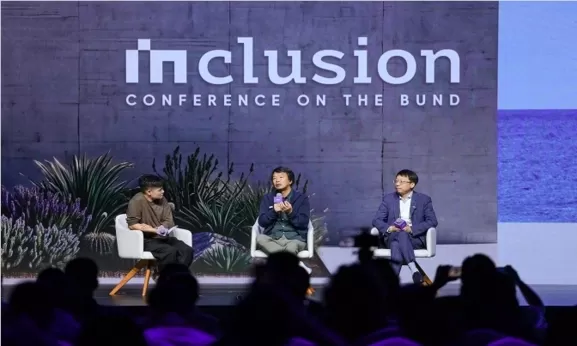 Liu Zhenyun, Ma Yi on AI Era: Machines Handle Commonalities, Humans Guard Individuality
As AI grows increasingly sophisticated, what role remains for humanity? On the morning of September 10, the 2026 Inclusion · Bund Conference kicked off in Shanghai with its opening ceremony and main forum. During a roundtable discussion, acclaimed au
Liu Zhenyun, Ma Yi on AI Era: Machines Handle Commonalities, Humans Guard Individuality
As AI grows increasingly sophisticated, what role remains for humanity? On the morning of September 10, the 2026 Inclusion · Bund Conference kicked off in Shanghai with its opening ceremony and main forum. During a roundtable discussion, acclaimed au
 WeChat Pay launches Smart Glasses SDK; Rokid becomes first compatible brand
WeChat has officially launched the WeChat Pay smart glasses SDK, making it fully accessible. This solution integrates WeChat’s core “scan to pay” functionality into a standard SDK, available to smart glasses manufacturers meeting specific standards.
WeChat Pay launches Smart Glasses SDK; Rokid becomes first compatible brand
WeChat has officially launched the WeChat Pay smart glasses SDK, making it fully accessible. This solution integrates WeChat’s core “scan to pay” functionality into a standard SDK, available to smart glasses manufacturers meeting specific standards.

2026 Latest Best AI Caption Generators page! XIX.AI curated a top-rated list of must-try powerful tools for writing platform-specific social posts quickly. These tools go through rigorous real-world tests, offering free vs paid comparison and clear rankings to help you find the best option that boosts your productivity and unlocks your AI edge. Explore now!
11 tools
xix.ai

2026 Latest Best AI Sleep Coaching Tools for Shift Workers, Jet Lag Recovery, and Better Routines! XIX.AI has curated a top-rated list of powerful game-changing tools that go through real-world tests to deliver accurate guidance. You can find detailed free vs paid comparison info and see how these must-try solutions help boost sleep quality, speed up jet lag recovery, and build healthier routines. Explore now to discover your perfect tool!
7 tools
xix.ai

2026 Latest Best ChatGPT debugging tools for Python errors, API logs, and stack trace triage are here on XIX.AI. This curated list of top-rated solutions offers a free vs paid comparison, real-world tests, and detailed rankings to help you find the most powerful tool that can significantly boost your productivity and help you solve complex technical issues faster. Explore now to discover your perfect solution!
9 tools
xix.ai

2026 Latest Best Top-Rated AI Voiceover Tools for Product Demo Videos are here on XIX.AI! This curated list features powerful, game-changing options that help you create professional-quality audio content fast, boosting your demo efficiency significantly. We conduct real-world tests and provide a free vs paid comparison along with weekly updated rankings to help you find the perfect fit. Explore now to Unlock your AI edge!
10 tools
xix.ai

2026 Latest Best AI Business Plan Tools for Startup Validation! XIX.AI has curated a top-rated list of powerful game-changing tools that go through real-world tests to deliver accurate results. You’ll find a free vs paid comparison, detailed rankings, and easy-to-understand insights to help you choose the perfect solution and boost your startup’s success rate. Explore now to Unlock your AI edge!
9 tools
xix.ai

2026 Latest Best AI Chat Apps for Roleplay and Conversation Practice! XIX.AI curates a top-rated list of powerful must-try tools that go through rigorous real-world tests to deliver exceptional results. You’ll find detailed free vs paid comparison, comprehensive rankings, and insights into how these apps can boost your language skills and communication confidence effectively. Explore now to discover your perfect tool for practice!
10 tools
xix.ai












