


 Home
HomeAI Models Make Breakthrough in Solving Advanced Math

Over the weekend, software engineer, former quantitative researcher, and startup founder Neel Somani was evaluating the mathematical capabilities of OpenAI's new model when he stumbled upon a surprising result. After inputting a problem into ChatGPT and allowing it to process for 15 minutes, he returned to find a complete solution. He reviewed the proof and verified it using a tool called Harmonic—and everything was correct.
"I wanted to set a baseline for understanding when large language models can effectively solve open mathematical problems versus where they still face challenges," Somani explained. The unexpected finding was that the latest model had pushed the boundary of what's possible.
ChatGPT's chain of reasoning was particularly striking, seamlessly applying mathematical principles like Legendre's formula, Bertrand's postulate, and the Star of David theorem. The model eventually referenced a 2013 Math Overflow post where Harvard mathematician Noam Elkies had provided an elegant solution to a related problem. However, ChatGPT's final proof differed from Elkies' work in key aspects, offering a more comprehensive solution to a problem variant originally posed by the legendary mathematician Paul Erdős. Erdős's extensive collection of unsolved problems has become a testing ground for AI capabilities.
For those skeptical of machine intelligence, this outcome is remarkable—and it's not an isolated case. AI tools have become pervasive in mathematics, ranging from formalization-focused LLMs like Harmonic's Aristotle to literature-review systems like OpenAI's deep research. Since the release of GPT-5.2—which Somani notes is "anecdotally more skilled at mathematical reasoning than previous versions"—the number of solved problems has grown significantly, raising new questions about the ability of large language models to expand the frontiers of human knowledge.
Somani was examining the Erdős problems, a set of over 1,000 conjectures by the Hungarian mathematician that are cataloged online. These problems, which vary widely in topic and difficulty, have become a prime target for AI-driven mathematical exploration. The first autonomous solutions emerged in November from a Gemini-powered model called AlphaEvolve, but more recently, Somani and others have observed that GPT-5.2 demonstrates exceptional proficiency with advanced mathematics.
Since Christmas, 15 problems have been updated from "open" to "solved" on the Erdős problem website—with 11 of those solutions explicitly crediting the involvement of AI models.
The esteemed mathematician Terence Tao offers a more detailed perspective on this progress on his GitHub page, noting eight distinct problems where AI models made substantial autonomous contributions, along with six other cases where progress was achieved by identifying and building upon prior research. While fully autonomous AI mathematical reasoning remains a distant goal, it is evident that large models are beginning to play a significant role.
Join the Disrupt 2026 Waitlist
Add yourself to the Disrupt 2026 waitlist to secure early access when Early Bird tickets are released. Past Disrupt events have featured leaders from Google Cloud, Netflix, Microsoft, Box, Phia, a16z, ElevenLabs, Wayve, Hugging Face, Elad Gil, and Vinod Khosla across our stages—part of over 250 industry experts leading more than 200 sessions designed to accelerate your growth and sharpen your competitive edge. Additionally, connect with hundreds of startups driving innovation across every industry.
Join the Disrupt 2026 Waitlist
Add yourself to the Disrupt 2026 waitlist to secure early access when Early Bird tickets are released. Past Disrupt events have featured leaders from Google Cloud, Netflix, Microsoft, Box, Phia, a16z, ElevenLabs, Wayve, Hugging Face, Elad Gil, and Vinod Khosla across our stages—part of over 250 industry experts leading more than 200 sessions designed to accelerate your growth and sharpen your competitive edge. Additionally, connect with hundreds of startups driving innovation across every industry.
On Mastodon, Tao suggested that the scalable nature of AI systems makes them "particularly well-suited for tackling the 'long tail' of lesser-known Erdős problems, many of which actually have straightforward solutions."
"Consequently, many of these more accessible Erdős problems are now more likely to be solved through purely AI-based methods than by human or hybrid approaches," Tao added.
Another contributing factor is a recent shift toward formalization—a detailed process that makes mathematical reasoning easier to verify and extend. While formalization doesn't inherently require AI or computers, a new generation of automated tools has significantly streamlined the workflow. The open-source "proof assistant" Lean, developed at Microsoft Research in 2013, has gained widespread adoption in the field for formalizing proofs. AI tools like Harmonic's Aristotle now promise to automate much of this formalization work.
For Harmonic founder Tudor Achim, the sudden increase in solved Erdős problems is less significant than the fact that leading mathematicians are beginning to take these tools seriously. "I'm more interested in the fact that mathematics and computer science professors are using [AI tools]," Achim stated. "These individuals have reputations to uphold, so when they confirm they use Aristotle or ChatGPT, that's meaningful validation."
Related article
 Ilya Sutskever Testifies: Ultraman Built OpenAI Network on Lies
Recent court filings reveal that Ilya Sutskever, OpenAI’s former Chief Scientist, testified as a central figure in Elon Musk’s lawsuit against the company. His statements confirmed that the 2023 leadership upheaval was not an impulsive move, but rath
Gemini faces branding challenges, as does the wider AI industry
Google’s Wednesday announcement regarding new Gemini Live voice features makes a valid point: “You shouldn’t have to guess whether a task requires Spark, a Daily Brief, or a quick inbox search.” While Google presents this as a commitment to handling
Claude Adds Multilingual Voice Support, Bringing Real Phone Calls Closer
The voice interaction experience of artificial intelligence is about to undergo a major update. According to the latest news from tech media Android Authority, Anthropic is preparing a significant upgrade for its AI assistant Claude, focusing on brea
Related Special Topic Recommendations
Design & Art
Ilya Sutskever Testifies: Ultraman Built OpenAI Network on Lies
Recent court filings reveal that Ilya Sutskever, OpenAI’s former Chief Scientist, testified as a central figure in Elon Musk’s lawsuit against the company. His statements confirmed that the 2023 leadership upheaval was not an impulsive move, but rath
Gemini faces branding challenges, as does the wider AI industry
Google’s Wednesday announcement regarding new Gemini Live voice features makes a valid point: “You shouldn’t have to guess whether a task requires Spark, a Daily Brief, or a quick inbox search.” While Google presents this as a commitment to handling
Claude Adds Multilingual Voice Support, Bringing Real Phone Calls Closer
The voice interaction experience of artificial intelligence is about to undergo a major update. According to the latest news from tech media Android Authority, Anthropic is preparing a significant upgrade for its AI assistant Claude, focusing on brea
Related Special Topic Recommendations
Design & Art
 Top AI Illustration Tools: Create Editorial Scenes and Cover Art Faster
2026 Latest Top-rated AI Illustration Tools: Our curated list features the best powerfully designed tools for creating stunning editorial scenes and eye-catching cover art quickly. Each option has gone through rigorous real-world tests, offering a free vs paid comparison to help you find the perfect match for your workflow. Try these must-try solutions today to unlock your AI edge and boost your creative productivity. Explore now at XIX.AI.
 10 tools
 xix.ai
Education and Learning
Top AI Tutors for Exam Prep: Practice Math, Science, and English
xix.ai
Education and Learning
Top AI Tutors for Exam Prep: Practice Math, Science, and English
2026 Latest Top-Rated Best AI Tutors for Exam Prep are here on XIX.AI! Our curated list features powerful game-changing tools that offer free vs paid comparison, real-world tests, and weekly updated rankings. They help boost your writing efficiency, simplify complex topic learning, and unlock your academic potential. Explore now to Discover your perfect exam prep tool and Start creating today to Unlock your AI edge!
10 tools
xix.ai
Finance
AI Budget Planning Tools for Personal Money Management
2026 Latest Best Top-Rated AI Budget Planning Tools for Personal Money Management are here on XIX.AI! This curated collection features powerful, game-changing solutions that help you conduct real-world tests, understand spending habits, and create personalized plans to boost productivity. Enjoy a free vs paid comparison along with detailed rankings. Must-try tools designed to simplify money management and unlock your AI edge. Explore now!
11 tools
xix.ai
Health & Wellness
AI Sleep Tracking Assistants: Improve Recovery with Better Bedtime Habits
2026 Latest Best Top-Rated AI Sleep Tracking Assistants curated for ultimate recovery. This fully updated weekly guide features powerful tools that deliver real-world tests, free vs paid comparison, and detailed rankings to help you find the must-try solution that boosts sleep quality and supports better bedtime habits. Explore now at XIX.AI to Unlock your AI edge.
10 tools
xix.ai
Data Analysis
AI SQL Copilots for Product and Revenue Analytics
2026 Latest Best Top-Rated AI SQL Copilots for Product and Revenue Analytics! XIX.AI has curated a powerful, game-changing collection of must-try tools that undergo real-world tests through weekly updated rankings. These tools help users boost productivity significantly by accelerating data analysis, streamlining complex queries, and generating accurate insights to drive smarter business decisions. Explore now to Discover your perfect tool for unlocking your AI edge!
14 tools
xix.ai
Education and Learning
Best AI Homework Helpers That Teach: Learn Concepts, Not Just Answers
2026 Latest Best Top-Rated AI Homework Helpers That Teach Core Concepts Not Just Answers Powerful Tools for Students Must-Try Curated List Weekly Updated Free vs Paid Comparison Real-World Tests Accurate Rankings to Help You Unlock Your Full Learning Potential Explore now to Discover your perfect tool for smarter studying.
10 tools
xix.ai

 Comments (0)
0/500
Comments (0)
0/500
Over the weekend, software engineer, former quantitative researcher, and startup founder Neel Somani was evaluating the mathematical capabilities of OpenAI's new model when he stumbled upon a surprising result. After inputting a problem into ChatGPT and allowing it to process for 15 minutes, he returned to find a complete solution. He reviewed the proof and verified it using a tool called Harmonic—and everything was correct.
"I wanted to set a baseline for understanding when large language models can effectively solve open mathematical problems versus where they still face challenges," Somani explained. The unexpected finding was that the latest model had pushed the boundary of what's possible.
ChatGPT's chain of reasoning was particularly striking, seamlessly applying mathematical principles like Legendre's formula, Bertrand's postulate, and the Star of David theorem. The model eventually referenced a 2013 Math Overflow post where Harvard mathematician Noam Elkies had provided an elegant solution to a related problem. However, ChatGPT's final proof differed from Elkies' work in key aspects, offering a more comprehensive solution to a problem variant originally posed by the legendary mathematician Paul Erdős. Erdős's extensive collection of unsolved problems has become a testing ground for AI capabilities.
For those skeptical of machine intelligence, this outcome is remarkable—and it's not an isolated case. AI tools have become pervasive in mathematics, ranging from formalization-focused LLMs like Harmonic's Aristotle to literature-review systems like OpenAI's deep research. Since the release of GPT-5.2—which Somani notes is "anecdotally more skilled at mathematical reasoning than previous versions"—the number of solved problems has grown significantly, raising new questions about the ability of large language models to expand the frontiers of human knowledge.
Somani was examining the Erdős problems, a set of over 1,000 conjectures by the Hungarian mathematician that are cataloged online. These problems, which vary widely in topic and difficulty, have become a prime target for AI-driven mathematical exploration. The first autonomous solutions emerged in November from a Gemini-powered model called AlphaEvolve, but more recently, Somani and others have observed that GPT-5.2 demonstrates exceptional proficiency with advanced mathematics.
Since Christmas, 15 problems have been updated from "open" to "solved" on the Erdős problem website—with 11 of those solutions explicitly crediting the involvement of AI models.
The esteemed mathematician Terence Tao offers a more detailed perspective on this progress on his GitHub page, noting eight distinct problems where AI models made substantial autonomous contributions, along with six other cases where progress was achieved by identifying and building upon prior research. While fully autonomous AI mathematical reasoning remains a distant goal, it is evident that large models are beginning to play a significant role.
Join the Disrupt 2026 Waitlist
Add yourself to the Disrupt 2026 waitlist to secure early access when Early Bird tickets are released. Past Disrupt events have featured leaders from Google Cloud, Netflix, Microsoft, Box, Phia, a16z, ElevenLabs, Wayve, Hugging Face, Elad Gil, and Vinod Khosla across our stages—part of over 250 industry experts leading more than 200 sessions designed to accelerate your growth and sharpen your competitive edge. Additionally, connect with hundreds of startups driving innovation across every industry.
Join the Disrupt 2026 Waitlist
Add yourself to the Disrupt 2026 waitlist to secure early access when Early Bird tickets are released. Past Disrupt events have featured leaders from Google Cloud, Netflix, Microsoft, Box, Phia, a16z, ElevenLabs, Wayve, Hugging Face, Elad Gil, and Vinod Khosla across our stages—part of over 250 industry experts leading more than 200 sessions designed to accelerate your growth and sharpen your competitive edge. Additionally, connect with hundreds of startups driving innovation across every industry.
On Mastodon, Tao suggested that the scalable nature of AI systems makes them "particularly well-suited for tackling the 'long tail' of lesser-known Erdős problems, many of which actually have straightforward solutions."
"Consequently, many of these more accessible Erdős problems are now more likely to be solved through purely AI-based methods than by human or hybrid approaches," Tao added.
Another contributing factor is a recent shift toward formalization—a detailed process that makes mathematical reasoning easier to verify and extend. While formalization doesn't inherently require AI or computers, a new generation of automated tools has significantly streamlined the workflow. The open-source "proof assistant" Lean, developed at Microsoft Research in 2013, has gained widespread adoption in the field for formalizing proofs. AI tools like Harmonic's Aristotle now promise to automate much of this formalization work.
For Harmonic founder Tudor Achim, the sudden increase in solved Erdős problems is less significant than the fact that leading mathematicians are beginning to take these tools seriously. "I'm more interested in the fact that mathematics and computer science professors are using [AI tools]," Achim stated. "These individuals have reputations to uphold, so when they confirm they use Aristotle or ChatGPT, that's meaningful validation."








 Ilya Sutskever Testifies: Ultraman Built OpenAI Network on Lies
Recent court filings reveal that Ilya Sutskever, OpenAI’s former Chief Scientist, testified as a central figure in Elon Musk’s lawsuit against the company. His statements confirmed that the 2023 leadership upheaval was not an impulsive move, but rath
Ilya Sutskever Testifies: Ultraman Built OpenAI Network on Lies
Recent court filings reveal that Ilya Sutskever, OpenAI’s former Chief Scientist, testified as a central figure in Elon Musk’s lawsuit against the company. His statements confirmed that the 2023 leadership upheaval was not an impulsive move, but rath
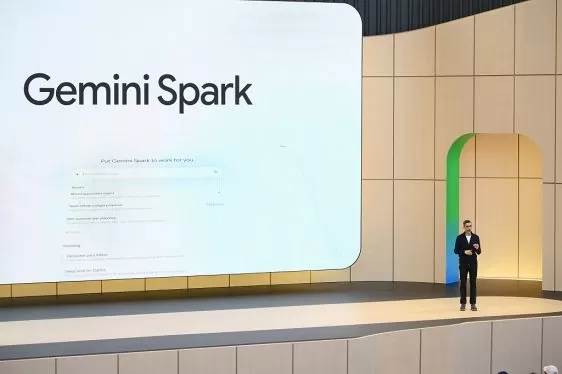 Gemini faces branding challenges, as does the wider AI industry
Google’s Wednesday announcement regarding new Gemini Live voice features makes a valid point: “You shouldn’t have to guess whether a task requires Spark, a Daily Brief, or a quick inbox search.” While Google presents this as a commitment to handling
Gemini faces branding challenges, as does the wider AI industry
Google’s Wednesday announcement regarding new Gemini Live voice features makes a valid point: “You shouldn’t have to guess whether a task requires Spark, a Daily Brief, or a quick inbox search.” While Google presents this as a commitment to handling
 Claude Adds Multilingual Voice Support, Bringing Real Phone Calls Closer
The voice interaction experience of artificial intelligence is about to undergo a major update. According to the latest news from tech media Android Authority, Anthropic is preparing a significant upgrade for its AI assistant Claude, focusing on brea
Claude Adds Multilingual Voice Support, Bringing Real Phone Calls Closer
The voice interaction experience of artificial intelligence is about to undergo a major update. According to the latest news from tech media Android Authority, Anthropic is preparing a significant upgrade for its AI assistant Claude, focusing on brea

2026 Latest Top-rated AI Illustration Tools: Our curated list features the best powerfully designed tools for creating stunning editorial scenes and eye-catching cover art quickly. Each option has gone through rigorous real-world tests, offering a free vs paid comparison to help you find the perfect match for your workflow. Try these must-try solutions today to unlock your AI edge and boost your creative productivity. Explore now at XIX.AI.
10 tools
xix.ai

2026 Latest Top-Rated Best AI Tutors for Exam Prep are here on XIX.AI! Our curated list features powerful game-changing tools that offer free vs paid comparison, real-world tests, and weekly updated rankings. They help boost your writing efficiency, simplify complex topic learning, and unlock your academic potential. Explore now to Discover your perfect exam prep tool and Start creating today to Unlock your AI edge!
10 tools
xix.ai

2026 Latest Best Top-Rated AI Budget Planning Tools for Personal Money Management are here on XIX.AI! This curated collection features powerful, game-changing solutions that help you conduct real-world tests, understand spending habits, and create personalized plans to boost productivity. Enjoy a free vs paid comparison along with detailed rankings. Must-try tools designed to simplify money management and unlock your AI edge. Explore now!
11 tools
xix.ai

2026 Latest Best Top-Rated AI Sleep Tracking Assistants curated for ultimate recovery. This fully updated weekly guide features powerful tools that deliver real-world tests, free vs paid comparison, and detailed rankings to help you find the must-try solution that boosts sleep quality and supports better bedtime habits. Explore now at XIX.AI to Unlock your AI edge.
10 tools
xix.ai

2026 Latest Best Top-Rated AI SQL Copilots for Product and Revenue Analytics! XIX.AI has curated a powerful, game-changing collection of must-try tools that undergo real-world tests through weekly updated rankings. These tools help users boost productivity significantly by accelerating data analysis, streamlining complex queries, and generating accurate insights to drive smarter business decisions. Explore now to Discover your perfect tool for unlocking your AI edge!
14 tools
xix.ai

2026 Latest Best Top-Rated AI Homework Helpers That Teach Core Concepts Not Just Answers Powerful Tools for Students Must-Try Curated List Weekly Updated Free vs Paid Comparison Real-World Tests Accurate Rankings to Help You Unlock Your Full Learning Potential Explore now to Discover your perfect tool for smarter studying.
10 tools
xix.ai












