


 Home
Home
AI Glasses Supply Chain Pursues Light and Chips as Horizon Technology Invests Heavily Ahead of iPhone Era
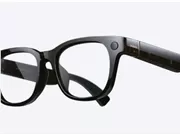
By the second quarter of 2026, the AI glasses market is heating up rapidly, with the industry shifting from the early "hundred-glasses race" toward a more refined and specialized phase. Google announced its first AI glasses launching this fall, and multiple manufacturers are releasing new products in quick succession, positioning AI glasses as the next computing gateway after smartphones. Under this trend, optical display components and main control chips in the upstream supply chain have become key areas of value.
1. Market Momentum: From Concept to a Scalable Turning Point
IDC's latest forecast shows that China's smart glasses market shipments will reach 4.508 million units in 2026, officially entering a new phase of scalable growth.
Market Trends: Since the second quarter, companies such as Rongchuang Innovation and Alibaba Qianwen have launched new products intensively. At I/O 2026, Google announced that AI glasses equipped with Gemini will be released in the autumn.
Competitive Landscape: The industry has moved beyond simple parameter comparisons to compete on overall user experience. Wear comfort, practical AI functions, and ecosystem development are now the key factors shaping the market landscape.
2. Supply Chain Decoded: Optics and Chips Build a Technological Moat
The hardware value of AI glasses lies mainly in optical display components (roughly 50% of the cost) and main control chips (roughly 20%–30% of the cost).
Chasing Light: To handle outdoor bright light scenarios and achieve lightweight designs, MicroLED display technology has become a top priority for leading companies. Combined with optical solutions like resin waveguides, mainstream product weight is dropping from 70–90 grams to under 50 grams, improving all-day wearability.
Chasing Chips: As the central hub for AI computing, the main control chip must balance low power consumption with high performance.
3. Capital Trends: A-share Companies Like Hengxuan Technology Accelerate Their Positioning
In the chip sector, A-share listed company Hengxuan Technology is continuously investing to secure its position in core areas.
Optimizing Fund-raising Projects: Recently, Hengxuan Technology adjusted its fundraising usage structure, increasing the planned investment amount for the "Smart Glasses SoC Chip" project from 150 million yuan to 200 million yuan. This adjustment aims to fully leverage the company's competitive advantages in the smart glasses field and accelerate R&D progress.
Technical Layout: Hengxuan Technology has released several low-power AI audio SoC chips and is focused on developing a proprietary 6nm process smart glasses SoC. Its BES2800 series products have been adopted by multiple smart glasses projects.
4. Future Outlook
Although the industry generally believes that the "iPhone moment" for AI glasses has not yet arrived (expected around 2027–2028), ongoing technological advancements along the supply chain are boosting edge computing power, driving AI glasses to rapidly evolve from geek toys into daily essentials. In the future, AI capabilities will become a standard feature, deeply integrated into the hardware ecosystem, breaking niche positioning through practical functions like automatic focusing, and fully opening the next generation of interaction revolution.
Related article
 Stripe to Acquire OpenRouter as AI Model Routing Gains Momentum
Stripe has agreed to acquire OpenRouter, an AI model-routing platform that gives developers access to hundreds of models through a single interface. The deal adds model selection and routing to Stripe’s existing work around AI usage and token-based b
Former OpenAI Researcher Barrett Zoph Returns to Google to Support Gemini Development
Barret Zoph, who previously abruptly left and joined OpenAI due to a disagreement with Thinking Machines Lab CEO Miriam Mularati, has once again changed employers. Alphabet's Google announced that Zoph will return as Vice President of Research, bring
How Recursive Intelligence Raised $335M at $4B Valuation in 4 Months
The co-founders of startup Ricursive Intelligence seemed destined to be co-founders.Anna Goldie, CEO, and Azalia Mirhoseini, CTO, are so well-known in the AI community that they were among those AI engineers who “got those weird emails from Zuckerber
Related Special Topic Recommendations
Design & Art
Stripe to Acquire OpenRouter as AI Model Routing Gains Momentum
Stripe has agreed to acquire OpenRouter, an AI model-routing platform that gives developers access to hundreds of models through a single interface. The deal adds model selection and routing to Stripe’s existing work around AI usage and token-based b
Former OpenAI Researcher Barrett Zoph Returns to Google to Support Gemini Development
Barret Zoph, who previously abruptly left and joined OpenAI due to a disagreement with Thinking Machines Lab CEO Miriam Mularati, has once again changed employers. Alphabet's Google announced that Zoph will return as Vice President of Research, bring
How Recursive Intelligence Raised $335M at $4B Valuation in 4 Months
The co-founders of startup Ricursive Intelligence seemed destined to be co-founders.Anna Goldie, CEO, and Azalia Mirhoseini, CTO, are so well-known in the AI community that they were among those AI engineers who “got those weird emails from Zuckerber
Related Special Topic Recommendations
Design & Art
 Top AI Illustration Tools: Create Editorial Scenes and Cover Art Faster
2026 Latest Top-rated AI Illustration Tools: Our curated list features the best powerfully designed tools for creating stunning editorial scenes and eye-catching cover art quickly. Each option has gone through rigorous real-world tests, offering a free vs paid comparison to help you find the perfect match for your workflow. Try these must-try solutions today to unlock your AI edge and boost your creative productivity. Explore now at XIX.AI.
 10 tools
 xix.ai
Education and Learning
Top AI Tutors for Exam Prep: Practice Math, Science, and English
xix.ai
Education and Learning
Top AI Tutors for Exam Prep: Practice Math, Science, and English
2026 Latest Top-Rated Best AI Tutors for Exam Prep are here on XIX.AI! Our curated list features powerful game-changing tools that offer free vs paid comparison, real-world tests, and weekly updated rankings. They help boost your writing efficiency, simplify complex topic learning, and unlock your academic potential. Explore now to Discover your perfect exam prep tool and Start creating today to Unlock your AI edge!
10 tools
xix.ai
Finance
AI Budget Planning Tools for Personal Money Management
2026 Latest Best Top-Rated AI Budget Planning Tools for Personal Money Management are here on XIX.AI! This curated collection features powerful, game-changing solutions that help you conduct real-world tests, understand spending habits, and create personalized plans to boost productivity. Enjoy a free vs paid comparison along with detailed rankings. Must-try tools designed to simplify money management and unlock your AI edge. Explore now!
11 tools
xix.ai
Health & Wellness
AI Sleep Tracking Assistants: Improve Recovery with Better Bedtime Habits
2026 Latest Best Top-Rated AI Sleep Tracking Assistants curated for ultimate recovery. This fully updated weekly guide features powerful tools that deliver real-world tests, free vs paid comparison, and detailed rankings to help you find the must-try solution that boosts sleep quality and supports better bedtime habits. Explore now at XIX.AI to Unlock your AI edge.
10 tools
xix.ai
Data Analysis
AI SQL Copilots for Product and Revenue Analytics
2026 Latest Best Top-Rated AI SQL Copilots for Product and Revenue Analytics! XIX.AI has curated a powerful, game-changing collection of must-try tools that undergo real-world tests through weekly updated rankings. These tools help users boost productivity significantly by accelerating data analysis, streamlining complex queries, and generating accurate insights to drive smarter business decisions. Explore now to Discover your perfect tool for unlocking your AI edge!
14 tools
xix.ai
Education and Learning
Best AI Homework Helpers That Teach: Learn Concepts, Not Just Answers
2026 Latest Best Top-Rated AI Homework Helpers That Teach Core Concepts Not Just Answers Powerful Tools for Students Must-Try Curated List Weekly Updated Free vs Paid Comparison Real-World Tests Accurate Rankings to Help You Unlock Your Full Learning Potential Explore now to Discover your perfect tool for smarter studying.
10 tools
xix.ai

 Comments (1)
0/500
Comments (1)
0/500
![DouglasScott]()
So Google is finally jumping into AI glasses this fall? Horizon Technology going all-in on supply chain light and chips... but will they actually make them comfortable to wear all day? 🤔 The 'hundred-glasses race' sounds like a messy battle, hope someone figures out battery life before 2026!
By the second quarter of 2026, the AI glasses market is heating up rapidly, with the industry shifting from the early "hundred-glasses race" toward a more refined and specialized phase. Google announced its first AI glasses launching this fall, and multiple manufacturers are releasing new products in quick succession, positioning AI glasses as the next computing gateway after smartphones. Under this trend, optical display components and main control chips in the upstream supply chain have become key areas of value.
1. Market Momentum: From Concept to a Scalable Turning Point
IDC's latest forecast shows that China's smart glasses market shipments will reach 4.508 million units in 2026, officially entering a new phase of scalable growth.
Market Trends: Since the second quarter, companies such as Rongchuang Innovation and Alibaba Qianwen have launched new products intensively. At I/O 2026, Google announced that AI glasses equipped with Gemini will be released in the autumn.
Competitive Landscape: The industry has moved beyond simple parameter comparisons to compete on overall user experience. Wear comfort, practical AI functions, and ecosystem development are now the key factors shaping the market landscape.
2. Supply Chain Decoded: Optics and Chips Build a Technological Moat
The hardware value of AI glasses lies mainly in optical display components (roughly 50% of the cost) and main control chips (roughly 20%–30% of the cost).
Chasing Light: To handle outdoor bright light scenarios and achieve lightweight designs, MicroLED display technology has become a top priority for leading companies. Combined with optical solutions like resin waveguides, mainstream product weight is dropping from 70–90 grams to under 50 grams, improving all-day wearability.
Chasing Chips: As the central hub for AI computing, the main control chip must balance low power consumption with high performance.
3. Capital Trends: A-share Companies Like Hengxuan Technology Accelerate Their Positioning
In the chip sector, A-share listed company Hengxuan Technology is continuously investing to secure its position in core areas.
Optimizing Fund-raising Projects: Recently, Hengxuan Technology adjusted its fundraising usage structure, increasing the planned investment amount for the "Smart Glasses SoC Chip" project from 150 million yuan to 200 million yuan. This adjustment aims to fully leverage the company's competitive advantages in the smart glasses field and accelerate R&D progress.
Technical Layout: Hengxuan Technology has released several low-power AI audio SoC chips and is focused on developing a proprietary 6nm process smart glasses SoC. Its BES2800 series products have been adopted by multiple smart glasses projects.
4. Future Outlook
Although the industry generally believes that the "iPhone moment" for AI glasses has not yet arrived (expected around 2027–2028), ongoing technological advancements along the supply chain are boosting edge computing power, driving AI glasses to rapidly evolve from geek toys into daily essentials. In the future, AI capabilities will become a standard feature, deeply integrated into the hardware ecosystem, breaking niche positioning through practical functions like automatic focusing, and fully opening the next generation of interaction revolution.








 Stripe to Acquire OpenRouter as AI Model Routing Gains Momentum
Stripe has agreed to acquire OpenRouter, an AI model-routing platform that gives developers access to hundreds of models through a single interface. The deal adds model selection and routing to Stripe’s existing work around AI usage and token-based b
Stripe to Acquire OpenRouter as AI Model Routing Gains Momentum
Stripe has agreed to acquire OpenRouter, an AI model-routing platform that gives developers access to hundreds of models through a single interface. The deal adds model selection and routing to Stripe’s existing work around AI usage and token-based b
 Former OpenAI Researcher Barrett Zoph Returns to Google to Support Gemini Development
Barret Zoph, who previously abruptly left and joined OpenAI due to a disagreement with Thinking Machines Lab CEO Miriam Mularati, has once again changed employers. Alphabet's Google announced that Zoph will return as Vice President of Research, bring
Former OpenAI Researcher Barrett Zoph Returns to Google to Support Gemini Development
Barret Zoph, who previously abruptly left and joined OpenAI due to a disagreement with Thinking Machines Lab CEO Miriam Mularati, has once again changed employers. Alphabet's Google announced that Zoph will return as Vice President of Research, bring
 How Recursive Intelligence Raised $335M at $4B Valuation in 4 Months
The co-founders of startup Ricursive Intelligence seemed destined to be co-founders.Anna Goldie, CEO, and Azalia Mirhoseini, CTO, are so well-known in the AI community that they were among those AI engineers who “got those weird emails from Zuckerber
How Recursive Intelligence Raised $335M at $4B Valuation in 4 Months
The co-founders of startup Ricursive Intelligence seemed destined to be co-founders.Anna Goldie, CEO, and Azalia Mirhoseini, CTO, are so well-known in the AI community that they were among those AI engineers who “got those weird emails from Zuckerber

2026 Latest Top-rated AI Illustration Tools: Our curated list features the best powerfully designed tools for creating stunning editorial scenes and eye-catching cover art quickly. Each option has gone through rigorous real-world tests, offering a free vs paid comparison to help you find the perfect match for your workflow. Try these must-try solutions today to unlock your AI edge and boost your creative productivity. Explore now at XIX.AI.
10 tools
xix.ai

2026 Latest Top-Rated Best AI Tutors for Exam Prep are here on XIX.AI! Our curated list features powerful game-changing tools that offer free vs paid comparison, real-world tests, and weekly updated rankings. They help boost your writing efficiency, simplify complex topic learning, and unlock your academic potential. Explore now to Discover your perfect exam prep tool and Start creating today to Unlock your AI edge!
10 tools
xix.ai

2026 Latest Best Top-Rated AI Budget Planning Tools for Personal Money Management are here on XIX.AI! This curated collection features powerful, game-changing solutions that help you conduct real-world tests, understand spending habits, and create personalized plans to boost productivity. Enjoy a free vs paid comparison along with detailed rankings. Must-try tools designed to simplify money management and unlock your AI edge. Explore now!
11 tools
xix.ai

2026 Latest Best Top-Rated AI Sleep Tracking Assistants curated for ultimate recovery. This fully updated weekly guide features powerful tools that deliver real-world tests, free vs paid comparison, and detailed rankings to help you find the must-try solution that boosts sleep quality and supports better bedtime habits. Explore now at XIX.AI to Unlock your AI edge.
10 tools
xix.ai

2026 Latest Best Top-Rated AI SQL Copilots for Product and Revenue Analytics! XIX.AI has curated a powerful, game-changing collection of must-try tools that undergo real-world tests through weekly updated rankings. These tools help users boost productivity significantly by accelerating data analysis, streamlining complex queries, and generating accurate insights to drive smarter business decisions. Explore now to Discover your perfect tool for unlocking your AI edge!
14 tools
xix.ai

2026 Latest Best Top-Rated AI Homework Helpers That Teach Core Concepts Not Just Answers Powerful Tools for Students Must-Try Curated List Weekly Updated Free vs Paid Comparison Real-World Tests Accurate Rankings to Help You Unlock Your Full Learning Potential Explore now to Discover your perfect tool for smarter studying.
10 tools
xix.ai

So Google is finally jumping into AI glasses this fall? Horizon Technology going all-in on supply chain light and chips... but will they actually make them comfortable to wear all day? 🤔 The 'hundred-glasses race' sounds like a messy battle, hope someone figures out battery life before 2026!












