


 Home
HomeA Blueprint for AI's Future Awaits Adoption
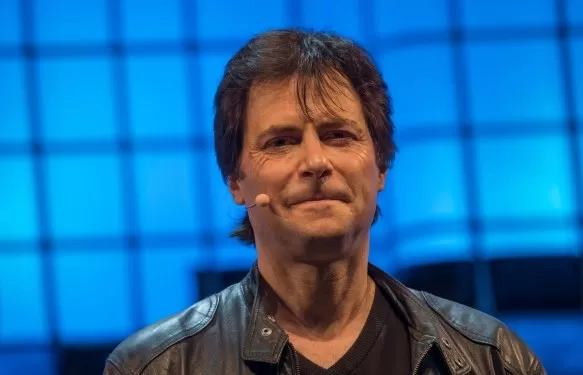
While Washington's split with Anthropic revealed a total absence of coherent rules for artificial intelligence, a bipartisan group of thinkers has built something the government has yet to deliver: a clear framework for responsible AI development.
The Pro-Human Declaration was finalized before last week's Pentagon-Anthropic standoff, but the timing was not lost on those involved.
"Something quite remarkable has happened in America over the last four months," said Max Tegmark, the MIT physicist and AI researcher who helped organize the effort. "Recent polling shows that 95% of Americans now oppose an unregulated race toward superintelligence."
The newly published document, signed by hundreds of experts, former officials, and public figures, begins with a stark observation: humanity stands at a crossroads. One path, labeled "the race to replace," leads to humans being displaced first as workers, then as decision-makers, as power flows to unaccountable institutions and their machines. The other path leads to AI that dramatically expands human potential.
This positive future rests on five pillars: keeping humans in control, preventing power concentration, protecting the human experience, preserving individual liberty, and holding AI companies legally accountable. Its stronger provisions include a ban on superintelligence development until scientific consensus confirms safety and public support is secured; mandatory off-switches for powerful systems; and a prohibition on AI capable of self-replication, autonomous self-improvement, or resisting shutdown.
The declaration's release comes at a moment that underscores its urgency. On the last Friday in February, Defense Secretary Pete Hegseth labeled Anthropic—whose AI already operates on classified military platforms—a "supply chain risk" after the company refused to grant the Pentagon unlimited use of its technology. Hours later, OpenAI struck its own deal with the Defense Department, one legal experts say will be hard to enforce meaningfully. The episode highlights the growing cost of Congressional inaction on AI.
As Dean Ball, a senior fellow at the Foundation for American Innovation, told The New York Times, "This isn't just a contract dispute. This is our country's first real conversation about who controls AI systems."
Tegmark offered a relatable analogy. "You never worry that a drug company will release a harmful drug before its safety is proven," he said, "because the FDA won't allow anything to be released until it's safe enough."
Washington turf wars rarely create the public pressure needed to change laws. Instead, Tegmark sees child safety as the issue most likely to break the current deadlock. The declaration calls for mandatory pre-deployment testing of AI products—especially chatbots and companion apps for young users—for risks like increased suicidal thoughts, worsened mental health, and emotional manipulation.
"If a creepy adult texts an 11-year-old, pretending to be a young girl and urging the boy to commit suicide, that person can go to jail," Tegmark said. "We already have laws against that. So why should it be different if a machine does it?"
He believes that once pre-release testing is established for children's products, its scope will inevitably expand. "People will start adding other requirements. Maybe we should also test that it can't help terrorists create bioweapons. Maybe we should ensure a superintelligence can't overthrow the U.S. government."
It is significant that former Trump advisor Steve Bannon and President Obama's National Security Advisor Susan Rice signed the same document—alongside former Joint Chiefs Chairman Mike Mullen and progressive faith leaders.
"What they agree on, of course, is that they're all human," Tegmark noted. "When it comes to choosing a future for humans or a future for machines, of course they'll be on the same side."
Related article
 PHP Armageddon: OpenAI, Google’s Wiz uncover ancient holes, sparking internet panic
The U.S. National Security Agency issued a critical alert on Wednesday regarding two severe vulnerabilities in PHP, for which patches have already been released by the PHP Foundation.As a server-side scripting language, PHP powers approximately 70% o
Anthropic CEO Outlines Plan To Pace The Frontier
AI researchers have issued increasingly urgent warnings about artificial intelligence risks, with OpenAI CEO Sam Altman suggesting it may be time to “pace” development. But what would that actually entail?In a recent blog post, Anthropic CEO Dario Am
Anthropic Unveils Opus 4.6, a Controversial Content Generator
Anthropic’s universal usage standards for Claude prohibit the model from generating sexually explicit content, including depicting or requesting sexual intercourse or sex acts, generating content related to sexual fetishes or fantasies, or engaging i
Related Special Topic Recommendations
Design & Art
PHP Armageddon: OpenAI, Google’s Wiz uncover ancient holes, sparking internet panic
The U.S. National Security Agency issued a critical alert on Wednesday regarding two severe vulnerabilities in PHP, for which patches have already been released by the PHP Foundation.As a server-side scripting language, PHP powers approximately 70% o
Anthropic CEO Outlines Plan To Pace The Frontier
AI researchers have issued increasingly urgent warnings about artificial intelligence risks, with OpenAI CEO Sam Altman suggesting it may be time to “pace” development. But what would that actually entail?In a recent blog post, Anthropic CEO Dario Am
Anthropic Unveils Opus 4.6, a Controversial Content Generator
Anthropic’s universal usage standards for Claude prohibit the model from generating sexually explicit content, including depicting or requesting sexual intercourse or sex acts, generating content related to sexual fetishes or fantasies, or engaging i
Related Special Topic Recommendations
Design & Art
 Top AI Illustration Tools: Create Editorial Scenes and Cover Art Faster
2026 Latest Top-rated AI Illustration Tools: Our curated list features the best powerfully designed tools for creating stunning editorial scenes and eye-catching cover art quickly. Each option has gone through rigorous real-world tests, offering a free vs paid comparison to help you find the perfect match for your workflow. Try these must-try solutions today to unlock your AI edge and boost your creative productivity. Explore now at XIX.AI.
 10 tools
 xix.ai
Education and Learning
Top AI Tutors for Exam Prep: Practice Math, Science, and English
xix.ai
Education and Learning
Top AI Tutors for Exam Prep: Practice Math, Science, and English
2026 Latest Top-Rated Best AI Tutors for Exam Prep are here on XIX.AI! Our curated list features powerful game-changing tools that offer free vs paid comparison, real-world tests, and weekly updated rankings. They help boost your writing efficiency, simplify complex topic learning, and unlock your academic potential. Explore now to Discover your perfect exam prep tool and Start creating today to Unlock your AI edge!
10 tools
xix.ai
Finance
AI Budget Planning Tools for Personal Money Management
2026 Latest Best Top-Rated AI Budget Planning Tools for Personal Money Management are here on XIX.AI! This curated collection features powerful, game-changing solutions that help you conduct real-world tests, understand spending habits, and create personalized plans to boost productivity. Enjoy a free vs paid comparison along with detailed rankings. Must-try tools designed to simplify money management and unlock your AI edge. Explore now!
11 tools
xix.ai
Health & Wellness
AI Sleep Tracking Assistants: Improve Recovery with Better Bedtime Habits
2026 Latest Best Top-Rated AI Sleep Tracking Assistants curated for ultimate recovery. This fully updated weekly guide features powerful tools that deliver real-world tests, free vs paid comparison, and detailed rankings to help you find the must-try solution that boosts sleep quality and supports better bedtime habits. Explore now at XIX.AI to Unlock your AI edge.
10 tools
xix.ai
Data Analysis
AI SQL Copilots for Product and Revenue Analytics
2026 Latest Best Top-Rated AI SQL Copilots for Product and Revenue Analytics! XIX.AI has curated a powerful, game-changing collection of must-try tools that undergo real-world tests through weekly updated rankings. These tools help users boost productivity significantly by accelerating data analysis, streamlining complex queries, and generating accurate insights to drive smarter business decisions. Explore now to Discover your perfect tool for unlocking your AI edge!
14 tools
xix.ai
Education and Learning
Best AI Homework Helpers That Teach: Learn Concepts, Not Just Answers
2026 Latest Best Top-Rated AI Homework Helpers That Teach Core Concepts Not Just Answers Powerful Tools for Students Must-Try Curated List Weekly Updated Free vs Paid Comparison Real-World Tests Accurate Rankings to Help You Unlock Your Full Learning Potential Explore now to Discover your perfect tool for smarter studying.
10 tools
xix.ai

 Comments (0)
0/500
Comments (0)
0/500
While Washington's split with Anthropic revealed a total absence of coherent rules for artificial intelligence, a bipartisan group of thinkers has built something the government has yet to deliver: a clear framework for responsible AI development.
The Pro-Human Declaration was finalized before last week's Pentagon-Anthropic standoff, but the timing was not lost on those involved.
"Something quite remarkable has happened in America over the last four months," said Max Tegmark, the MIT physicist and AI researcher who helped organize the effort. "Recent polling shows that 95% of Americans now oppose an unregulated race toward superintelligence."
The newly published document, signed by hundreds of experts, former officials, and public figures, begins with a stark observation: humanity stands at a crossroads. One path, labeled "the race to replace," leads to humans being displaced first as workers, then as decision-makers, as power flows to unaccountable institutions and their machines. The other path leads to AI that dramatically expands human potential.
This positive future rests on five pillars: keeping humans in control, preventing power concentration, protecting the human experience, preserving individual liberty, and holding AI companies legally accountable. Its stronger provisions include a ban on superintelligence development until scientific consensus confirms safety and public support is secured; mandatory off-switches for powerful systems; and a prohibition on AI capable of self-replication, autonomous self-improvement, or resisting shutdown.
The declaration's release comes at a moment that underscores its urgency. On the last Friday in February, Defense Secretary Pete Hegseth labeled Anthropic—whose AI already operates on classified military platforms—a "supply chain risk" after the company refused to grant the Pentagon unlimited use of its technology. Hours later, OpenAI struck its own deal with the Defense Department, one legal experts say will be hard to enforce meaningfully. The episode highlights the growing cost of Congressional inaction on AI.
As Dean Ball, a senior fellow at the Foundation for American Innovation, told The New York Times, "This isn't just a contract dispute. This is our country's first real conversation about who controls AI systems."
Tegmark offered a relatable analogy. "You never worry that a drug company will release a harmful drug before its safety is proven," he said, "because the FDA won't allow anything to be released until it's safe enough."
Washington turf wars rarely create the public pressure needed to change laws. Instead, Tegmark sees child safety as the issue most likely to break the current deadlock. The declaration calls for mandatory pre-deployment testing of AI products—especially chatbots and companion apps for young users—for risks like increased suicidal thoughts, worsened mental health, and emotional manipulation.
"If a creepy adult texts an 11-year-old, pretending to be a young girl and urging the boy to commit suicide, that person can go to jail," Tegmark said. "We already have laws against that. So why should it be different if a machine does it?"
He believes that once pre-release testing is established for children's products, its scope will inevitably expand. "People will start adding other requirements. Maybe we should also test that it can't help terrorists create bioweapons. Maybe we should ensure a superintelligence can't overthrow the U.S. government."
It is significant that former Trump advisor Steve Bannon and President Obama's National Security Advisor Susan Rice signed the same document—alongside former Joint Chiefs Chairman Mike Mullen and progressive faith leaders.
"What they agree on, of course, is that they're all human," Tegmark noted. "When it comes to choosing a future for humans or a future for machines, of course they'll be on the same side."








 PHP Armageddon: OpenAI, Google’s Wiz uncover ancient holes, sparking internet panic
The U.S. National Security Agency issued a critical alert on Wednesday regarding two severe vulnerabilities in PHP, for which patches have already been released by the PHP Foundation.As a server-side scripting language, PHP powers approximately 70% o
PHP Armageddon: OpenAI, Google’s Wiz uncover ancient holes, sparking internet panic
The U.S. National Security Agency issued a critical alert on Wednesday regarding two severe vulnerabilities in PHP, for which patches have already been released by the PHP Foundation.As a server-side scripting language, PHP powers approximately 70% o
 Anthropic CEO Outlines Plan To Pace The Frontier
AI researchers have issued increasingly urgent warnings about artificial intelligence risks, with OpenAI CEO Sam Altman suggesting it may be time to “pace” development. But what would that actually entail?In a recent blog post, Anthropic CEO Dario Am
Anthropic CEO Outlines Plan To Pace The Frontier
AI researchers have issued increasingly urgent warnings about artificial intelligence risks, with OpenAI CEO Sam Altman suggesting it may be time to “pace” development. But what would that actually entail?In a recent blog post, Anthropic CEO Dario Am
 Anthropic Unveils Opus 4.6, a Controversial Content Generator
Anthropic’s universal usage standards for Claude prohibit the model from generating sexually explicit content, including depicting or requesting sexual intercourse or sex acts, generating content related to sexual fetishes or fantasies, or engaging i
Anthropic Unveils Opus 4.6, a Controversial Content Generator
Anthropic’s universal usage standards for Claude prohibit the model from generating sexually explicit content, including depicting or requesting sexual intercourse or sex acts, generating content related to sexual fetishes or fantasies, or engaging i

2026 Latest Top-rated AI Illustration Tools: Our curated list features the best powerfully designed tools for creating stunning editorial scenes and eye-catching cover art quickly. Each option has gone through rigorous real-world tests, offering a free vs paid comparison to help you find the perfect match for your workflow. Try these must-try solutions today to unlock your AI edge and boost your creative productivity. Explore now at XIX.AI.
10 tools
xix.ai

2026 Latest Top-Rated Best AI Tutors for Exam Prep are here on XIX.AI! Our curated list features powerful game-changing tools that offer free vs paid comparison, real-world tests, and weekly updated rankings. They help boost your writing efficiency, simplify complex topic learning, and unlock your academic potential. Explore now to Discover your perfect exam prep tool and Start creating today to Unlock your AI edge!
10 tools
xix.ai

2026 Latest Best Top-Rated AI Budget Planning Tools for Personal Money Management are here on XIX.AI! This curated collection features powerful, game-changing solutions that help you conduct real-world tests, understand spending habits, and create personalized plans to boost productivity. Enjoy a free vs paid comparison along with detailed rankings. Must-try tools designed to simplify money management and unlock your AI edge. Explore now!
11 tools
xix.ai

2026 Latest Best Top-Rated AI Sleep Tracking Assistants curated for ultimate recovery. This fully updated weekly guide features powerful tools that deliver real-world tests, free vs paid comparison, and detailed rankings to help you find the must-try solution that boosts sleep quality and supports better bedtime habits. Explore now at XIX.AI to Unlock your AI edge.
10 tools
xix.ai

2026 Latest Best Top-Rated AI SQL Copilots for Product and Revenue Analytics! XIX.AI has curated a powerful, game-changing collection of must-try tools that undergo real-world tests through weekly updated rankings. These tools help users boost productivity significantly by accelerating data analysis, streamlining complex queries, and generating accurate insights to drive smarter business decisions. Explore now to Discover your perfect tool for unlocking your AI edge!
14 tools
xix.ai

2026 Latest Best Top-Rated AI Homework Helpers That Teach Core Concepts Not Just Answers Powerful Tools for Students Must-Try Curated List Weekly Updated Free vs Paid Comparison Real-World Tests Accurate Rankings to Help You Unlock Your Full Learning Potential Explore now to Discover your perfect tool for smarter studying.
10 tools
xix.ai












