Discover quality AI tools
Bring together the world’s leading artificial intelligence tools to help improve work efficiency

Articles published by NicholasCarter
Korean AI semiconductor startup FuriosaAI unveiled its third-generation AI inference accelerator developed with Broadcom. The chip features two 2nm computing dies, an independent I/O die, and 12 HBM4(E) memory stacks totaling 576GB. Utilizing SUE full interconnection topology and supporting PCIe Gen7, the new accelerator boasts 32 PFLOPS of computing power, a 12-fold increase in memory capacity, and 48TB/s bandwidth, representing a 32x performance leap over its second-generation predecessor.
Korean AI semiconductor startup FuriosaAI unveiled its third-generation AI inference accelerator developed with Broadcom. The chip features two 2nm computing dies, an independent I/O die, and 12 HBM4(E) memory stacks totaling 576GB. Utilizing SUE full interconnection topology and supporting PCIe Gen7, the new accelerator boasts 32 PFLOPS of computing power, a 12-fold increase in memory capacity, and 48TB/s bandwidth, representing a 32x performance leap over its second-generation predecessor.

Apple tightens Siri's web access in iOS 27 Beta 2, blocking the assistant from summarizing, reading, or extracting external URLs to protect content ecosystems and reduce AI scraping. Users can still generate page summaries via Apple Intelligence within Safari after actively opening a webpage, balancing convenience and copyright protection.
Apple tightens Siri's web access in iOS 27 Beta 2, blocking the assistant from summarizing, reading, or extracting external URLs to protect content ecosystems and reduce AI scraping. Users can still generate page summaries via Apple Intelligence within Safari after actively opening a webpage, balancing convenience and copyright protection.

US corporate AI adoption continues to grow. Top 1% AI advanced users spend $7,500 per employee monthly on AI, still below the $16,000 average software engineer salary, but rapid spending growth is reshaping computing versus labor cost dynamics. NVIDIA execs note computing costs now exceed wages. Polarized market: top 1% spend $7,500, top 10% only $611, median $11.38, indicating huge penetration potential. Leading firms adopt hybrid multi-model strategies to optimize cost-effectiveness.
US corporate AI adoption continues to grow. Top 1% AI advanced users spend $7,500 per employee monthly on AI, still below the $16,000 average software engineer salary, but rapid spending growth is reshaping computing versus labor cost dynamics. NVIDIA execs note computing costs now exceed wages. Polarized market: top 1% spend $7,500, top 10% only $611, median $11.38, indicating huge penetration potential. Leading firms adopt hybrid multi-model strategies to optimize cost-effectiveness.

Shandong-based company Sunway achieved a milestone in Chinese computing power by launching the nation's first operational 30,000-card AI computing cluster, scaleX, at the National Supercomputing Internet Zhengzhou node. The system, scaled up from a 10,000-card cluster in under two months, features an open architecture compatible with mainstream software ecosystems and over 400 large models. It is already supporting major internet companies and scientific research, including a world-leading materials research model and significant protein study advancements. The system is designed for flexible future expansion to 100,000 or even one million cards.
Shandong-based company Sunway achieved a milestone in Chinese computing power by launching the nation's first operational 30,000-card AI computing cluster, scaleX, at the National Supercomputing Internet Zhengzhou node. The system, scaled up from a 10,000-card cluster in under two months, features an open architecture compatible with mainstream software ecosystems and over 400 large models. It is already supporting major internet companies and scientific research, including a world-leading materials research model and significant protein study advancements. The system is designed for flexible future expansion to 100,000 or even one million cards.
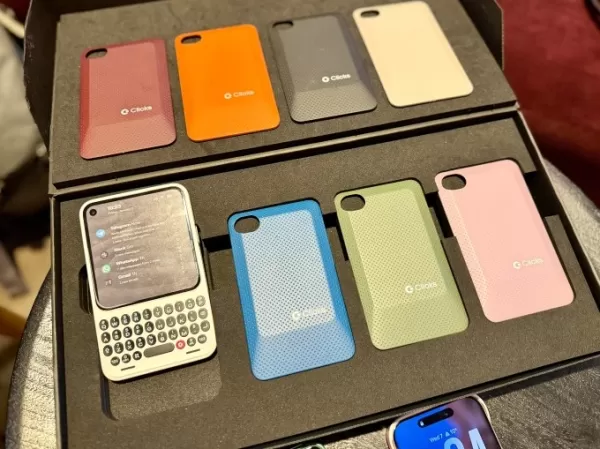
CES 2026 highlights AI dominance with Nvidia unveiling Rubin architecture and autonomous vehicle AI models AMD showcased new AI processors and partnerships Ford debuted an AI assistant while Caterpillar and Nvidia teamed on automated construction equipment Other notable reveals include Boston Dynamics Google Atlas robots Amazons Alexa expansion Razers AI projects and Legos first CES appearance with Smart Bricks
CES 2026 highlights AI dominance with Nvidia unveiling Rubin architecture and autonomous vehicle AI models AMD showcased new AI processors and partnerships Ford debuted an AI assistant while Caterpillar and Nvidia teamed on automated construction equipment Other notable reveals include Boston Dynamics Google Atlas robots Amazons Alexa expansion Razers AI projects and Legos first CES appearance with Smart Bricks
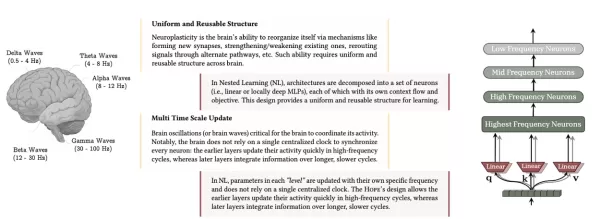
Researchers introduce Nested Learning a new ML paradigm treating models as nested optimization problems to solve catastrophic forgetting The approach unifies model architecture and training algorithms enabling continual learning Proof of concept architecture Hope demonstrates superior language modeling and long context memory management outperforming existing models
Researchers introduce Nested Learning a new ML paradigm treating models as nested optimization problems to solve catastrophic forgetting The approach unifies model architecture and training algorithms enabling continual learning Proof of concept architecture Hope demonstrates superior language modeling and long context memory management outperforming existing models
Final week to secure discounted TechCrunch Disrupt 2025 passes before prices rise Sept 26. Save up to $668 for the Oct 27-29 event featuring top tech leaders from Google Cloud Meta Sequoia Capital a16z and more with 250+ sessions and networking opportunities.
Final week to secure discounted TechCrunch Disrupt 2025 passes before prices rise Sept 26. Save up to $668 for the Oct 27-29 event featuring top tech leaders from Google Cloud Meta Sequoia Capital a16z and more with 250+ sessions and networking opportunities.

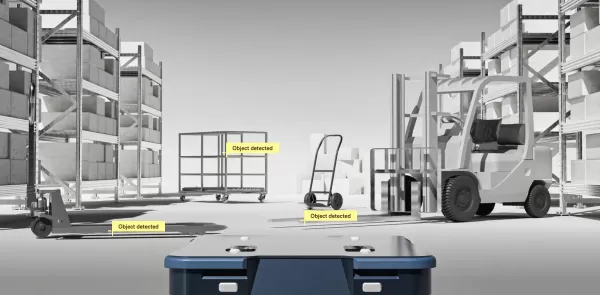
Norwegian startup Sonair develops ADAR sensors using ultrasound for robots to enhance safety and depth perception, offering a cost-effective alternative to LIDAR. The $6M-funded solution is gaining traction in robotics and industrial safety, addressing growing concerns as robots integrate into human spaces.
Norwegian startup Sonair develops ADAR sensors using ultrasound for robots to enhance safety and depth perception, offering a cost-effective alternative to LIDAR. The $6M-funded solution is gaining traction in robotics and industrial safety, addressing growing concerns as robots integrate into human spaces.