


 Home
Home
Zigong and Tsinghua University unveil ZCube networking architecture, boosting large model inference throughput by 15% while cutting network costs by a third
Large model inference is reshaping AI infrastructure, and innovations in network architecture are now key to unlocking hardware potential. In September 2025, Zhipu, Yuchen Network, and Tsinghua University presented their research on the ZCube network architecture at ACM SIGCOMM 2025, a leading conference in networking.
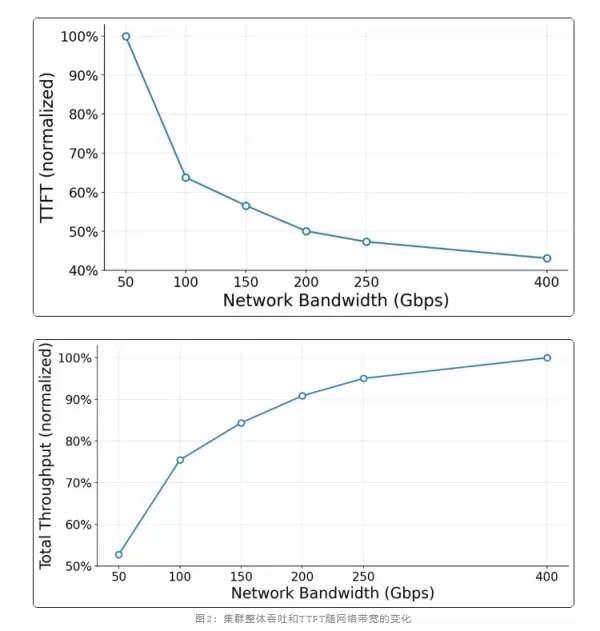
On May 21, 2026, Zhipu announced the successful deployment of the ZCube architecture in the GLM-5.1 coding production environment, resulting in substantial performance gains. Benchmark tests, conducted with unchanged GPU hardware, software stack, and applications, showed that ZCube reduced capital expenditure on switches and optical modules by 33%, increased average GPU inference throughput by 15%, and cut first token latency (TTFT P99) by 40.6%. This system-level breakthrough strikes a balance between high economic efficiency and high performance.
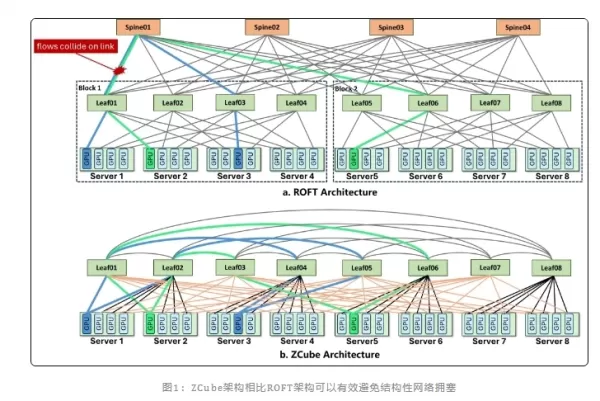
Currently, with long-context inference and Prefill-Decode (PD) separation deployment becoming industry standards, the cross-node transmission of KV Cache exhibits significant asymmetry. Traditional ROFT (Rail-Optimized Fat-Tree) architectures, which rely on multi-layer switch stacking, are constrained by static topology, making them prone to local hotspots and PFC backpressure. This creates a structural bottleneck where total bandwidth is sufficient but local congestion is frequent.
To address this pain point, the ZCube architecture moves away from the hierarchical stacking of traditional Clos designs. It eliminates Spine layer switches and instead uses two groups of fully flat switches in a bipartite graph interconnection, combined with a dual-port NIC's single/multi-track hybrid access mechanism. Through its unique routing strategy, ZCube guarantees a dedicated optimal path for any GPU pair, achieving perfect traffic load balancing at the structural level and supporting ultra-large-scale expansion to tens of thousands or even hundreds of thousands of GPUs.
During the production environment transformation, the Yuchen Network team successfully tackled the challenges of cabling and route strategy reconstruction using automated control and verification tools, ensuring a fast and stable cluster upgrade. The current thousand-card cluster has been running stably for over two weeks. The successful deployment of ZCube marks a shift in intelligent computing infrastructure from general interconnection to system collaboration driven by model traffic. In the future, the deep integration of network topology, communication libraries, and scheduling strategies will become the core driver for further improving token production efficiency and reducing overall MaaS costs.
Related article
 Swedish AI Startup Lovable Eyes $13.2 Billion Valuation After Major Funding Round
As AI-driven coding tools gain traction, Swedish startup Lovable has secured a major funding round. The company aims to raise $3 billion, potentially boosting its valuation to $13.2 billion—double the $6.6 billion recorded last December. Menlo Ventur
Google Tests Remy AI Agent for Gemini as Focus Shifts to User Control
According to Business Insider, Google is testing Remy, a new AI personal agent for Gemini. This tool aims to execute tasks on behalf of users, streamlining both professional workflows and daily routines.Currently, Remy is undergoing testing in an int
How to fix Core Web Vitals for better SEO rankings
Streamline Report Card Comments with AI ToolsIntroductionAI Tools for Generating Report Card CommentsMagic SchoolAlmanac AIChat GPTUsing Magic School to Generate Report Card CommentsLogging into Magic SchoolSelecting the Report Card Comments ToolCust
Related Special Topic Recommendations
writing
Swedish AI Startup Lovable Eyes $13.2 Billion Valuation After Major Funding Round
As AI-driven coding tools gain traction, Swedish startup Lovable has secured a major funding round. The company aims to raise $3 billion, potentially boosting its valuation to $13.2 billion—double the $6.6 billion recorded last December. Menlo Ventur
Google Tests Remy AI Agent for Gemini as Focus Shifts to User Control
According to Business Insider, Google is testing Remy, a new AI personal agent for Gemini. This tool aims to execute tasks on behalf of users, streamlining both professional workflows and daily routines.Currently, Remy is undergoing testing in an int
How to fix Core Web Vitals for better SEO rankings
Streamline Report Card Comments with AI ToolsIntroductionAI Tools for Generating Report Card CommentsMagic SchoolAlmanac AIChat GPTUsing Magic School to Generate Report Card CommentsLogging into Magic SchoolSelecting the Report Card Comments ToolCust
Related Special Topic Recommendations
writing
 Best AI Outline Generators for Long-Form SEO Articles
2026 Latest Best Top-Rated AI Outline Generators for Long-Form SEO Articles, meticulously curated by XIX.AI. These powerful tools offer game-changing assistance in creating high-quality content quickly, boosting writing efficiency significantly. Get a free vs paid comparison along with real-world tests and detailed rankings to help you find the must-try option that suits your needs. Explore now to unlock your AI edge.
 8 tools
 xix.ai
Education and Learning
AI Study Tools for Homework and Exam Prep
xix.ai
Education and Learning
AI Study Tools for Homework and Exam Prep
2026 Latest Best AI Study Tools for Homework and Exam Prep! XIX.AI curates a top-rated list of powerful, game-changing tools that help students boost productivity, streamline homework completion, and ace exams through real-world tests. Get a free vs paid comparison, detailed rankings, and must-try options to unlock your AI edge. Explore now!
10 tools
xix.ai
Music composition
AI Vocal Demo Tools for Songwriters, Hooks, Toplines, and Multilingual Draft Sessions
2026 Latest Best AI Vocal Demo Tools for Songwriters, Hook Creators, and Multi-Language Content Teams! XIX.AI has curated a top-rated list of powerful game-changing tools that go through rigorous real-world tests. You’ll find detailed free vs paid comparison data, comprehensive rankings, and must-try options to help you boost writing efficiency and unlock your creative potential. Explore now to discover your perfect tool for all your content needs!
9 tools
xix.ai
Business
Best AI Competitive Research Tools for Small Businesses
2026 Latest Best Top-rated AI Competitive Research Tools for Small Businesses! XIX.AI has curated a highly powerful game-changing collection, updated weekly with rigorous real-world tests and detailed rankings. You can find a comprehensive free vs paid comparison to help you identify the must-try tools that boost your productivity and give you a competitive edge. Explore now to discover your perfect tool!
9 tools
xix.ai
Image editing
Photoshop AI Retouch Tools for Ecommerce Apparel, Skin Cleanup, and Color Consistency
2026 Latest Best Photoshop AI retouch tools for ecommerce apparel, skin cleanup, and color consistency! This top-rated curated list features powerful game-changing solutions that help you boost writing efficiency, streamline content creation, and achieve perfect visual results effortlessly. Each tool has undergone real-world tests through weekly updated rankings, complete with free vs paid comparison details. Backed by XIX.AI, it’s the must-try guide for anyone aiming to unlock your AI edge. Explore now!
10 tools
xix.ai
Prompt
Best AI Prompt Libraries for ChatGPT Workflows
2026 Latest Best Top-Rated AI Prompt Libraries for optimizing all types of ChatGPT workflows. XIX.AI has curated a powerful, game-changing collection that goes through rigorous real-world tests to ensure top performance. You can find detailed free vs paid comparisons and expert rankings to help you choose the must-try tools that boost your productivity and unlock your AI edge. Explore now!
11 tools
xix.ai

 Comments (0)
0/500
Comments (0)
0/500
Large model inference is reshaping AI infrastructure, and innovations in network architecture are now key to unlocking hardware potential. In September 2025, Zhipu, Yuchen Network, and Tsinghua University presented their research on the ZCube network architecture at ACM SIGCOMM 2025, a leading conference in networking.
On May 21, 2026, Zhipu announced the successful deployment of the ZCube architecture in the GLM-5.1 coding production environment, resulting in substantial performance gains. Benchmark tests, conducted with unchanged GPU hardware, software stack, and applications, showed that ZCube reduced capital expenditure on switches and optical modules by 33%, increased average GPU inference throughput by 15%, and cut first token latency (TTFT P99) by 40.6%. This system-level breakthrough strikes a balance between high economic efficiency and high performance.
Currently, with long-context inference and Prefill-Decode (PD) separation deployment becoming industry standards, the cross-node transmission of KV Cache exhibits significant asymmetry. Traditional ROFT (Rail-Optimized Fat-Tree) architectures, which rely on multi-layer switch stacking, are constrained by static topology, making them prone to local hotspots and PFC backpressure. This creates a structural bottleneck where total bandwidth is sufficient but local congestion is frequent.
To address this pain point, the ZCube architecture moves away from the hierarchical stacking of traditional Clos designs. It eliminates Spine layer switches and instead uses two groups of fully flat switches in a bipartite graph interconnection, combined with a dual-port NIC's single/multi-track hybrid access mechanism. Through its unique routing strategy, ZCube guarantees a dedicated optimal path for any GPU pair, achieving perfect traffic load balancing at the structural level and supporting ultra-large-scale expansion to tens of thousands or even hundreds of thousands of GPUs.
During the production environment transformation, the Yuchen Network team successfully tackled the challenges of cabling and route strategy reconstruction using automated control and verification tools, ensuring a fast and stable cluster upgrade. The current thousand-card cluster has been running stably for over two weeks. The successful deployment of ZCube marks a shift in intelligent computing infrastructure from general interconnection to system collaboration driven by model traffic. In the future, the deep integration of network topology, communication libraries, and scheduling strategies will become the core driver for further improving token production efficiency and reducing overall MaaS costs.








 Swedish AI Startup Lovable Eyes $13.2 Billion Valuation After Major Funding Round
As AI-driven coding tools gain traction, Swedish startup Lovable has secured a major funding round. The company aims to raise $3 billion, potentially boosting its valuation to $13.2 billion—double the $6.6 billion recorded last December. Menlo Ventur
Google Tests Remy AI Agent for Gemini as Focus Shifts to User Control
According to Business Insider, Google is testing Remy, a new AI personal agent for Gemini. This tool aims to execute tasks on behalf of users, streamlining both professional workflows and daily routines.Currently, Remy is undergoing testing in an int
Swedish AI Startup Lovable Eyes $13.2 Billion Valuation After Major Funding Round
As AI-driven coding tools gain traction, Swedish startup Lovable has secured a major funding round. The company aims to raise $3 billion, potentially boosting its valuation to $13.2 billion—double the $6.6 billion recorded last December. Menlo Ventur
Google Tests Remy AI Agent for Gemini as Focus Shifts to User Control
According to Business Insider, Google is testing Remy, a new AI personal agent for Gemini. This tool aims to execute tasks on behalf of users, streamlining both professional workflows and daily routines.Currently, Remy is undergoing testing in an int
 How to fix Core Web Vitals for better SEO rankings
Streamline Report Card Comments with AI ToolsIntroductionAI Tools for Generating Report Card CommentsMagic SchoolAlmanac AIChat GPTUsing Magic School to Generate Report Card CommentsLogging into Magic SchoolSelecting the Report Card Comments ToolCust
How to fix Core Web Vitals for better SEO rankings
Streamline Report Card Comments with AI ToolsIntroductionAI Tools for Generating Report Card CommentsMagic SchoolAlmanac AIChat GPTUsing Magic School to Generate Report Card CommentsLogging into Magic SchoolSelecting the Report Card Comments ToolCust

2026 Latest Best Top-Rated AI Outline Generators for Long-Form SEO Articles, meticulously curated by XIX.AI. These powerful tools offer game-changing assistance in creating high-quality content quickly, boosting writing efficiency significantly. Get a free vs paid comparison along with real-world tests and detailed rankings to help you find the must-try option that suits your needs. Explore now to unlock your AI edge.
8 tools
xix.ai

2026 Latest Best AI Study Tools for Homework and Exam Prep! XIX.AI curates a top-rated list of powerful, game-changing tools that help students boost productivity, streamline homework completion, and ace exams through real-world tests. Get a free vs paid comparison, detailed rankings, and must-try options to unlock your AI edge. Explore now!
10 tools
xix.ai

2026 Latest Best AI Vocal Demo Tools for Songwriters, Hook Creators, and Multi-Language Content Teams! XIX.AI has curated a top-rated list of powerful game-changing tools that go through rigorous real-world tests. You’ll find detailed free vs paid comparison data, comprehensive rankings, and must-try options to help you boost writing efficiency and unlock your creative potential. Explore now to discover your perfect tool for all your content needs!
9 tools
xix.ai

2026 Latest Best Top-rated AI Competitive Research Tools for Small Businesses! XIX.AI has curated a highly powerful game-changing collection, updated weekly with rigorous real-world tests and detailed rankings. You can find a comprehensive free vs paid comparison to help you identify the must-try tools that boost your productivity and give you a competitive edge. Explore now to discover your perfect tool!
9 tools
xix.ai

2026 Latest Best Photoshop AI retouch tools for ecommerce apparel, skin cleanup, and color consistency! This top-rated curated list features powerful game-changing solutions that help you boost writing efficiency, streamline content creation, and achieve perfect visual results effortlessly. Each tool has undergone real-world tests through weekly updated rankings, complete with free vs paid comparison details. Backed by XIX.AI, it’s the must-try guide for anyone aiming to unlock your AI edge. Explore now!
10 tools
xix.ai
2026 Latest Best Top-Rated AI Prompt Libraries for optimizing all types of ChatGPT workflows. XIX.AI has curated a powerful, game-changing collection that goes through rigorous real-world tests to ensure top performance. You can find detailed free vs paid comparisons and expert rankings to help you choose the must-try tools that boost your productivity and unlock your AI edge. Explore now!
11 tools
xix.ai












