


 Home
Home
U.S. Proposes $1B Over 10 Years to Amend Privacy Act, Ban AI Firms from Selling Health Data
U.S. Senator Elizabeth Warren and Representative Mary Gay Scanlon have formally introduced the revised Health and Location Data Protection Act, which now explicitly includes generative AI systems under its scope. The bill aims to prohibit AI companies and data brokers from selling sensitive medical and personal health information that users enter into chatbots.

This legislative initiative directly targets privacy risks stemming from the growing competition among tech giants in medical applications. Earlier this year, Elon Musk publicly encouraged users to upload detailed MRI scans and other medical records to xAI's Grok to test its diagnostic abilities. Shortly after, OpenAI launched a secure environment designed for handling medical records, and Anthropic followed with a HIPAA-compliant version of Claude. Without a unified federal digital privacy framework, user data protection continues to rely largely on each company's own privacy policies.
To close this gap, the new bill directs the Federal Trade Commission to issue binding regulations within 180 days, allocates one billion dollars in enforcement funding over the next decade, and grants state attorneys general as well as individual citizens the right to sue violators directly. This move signals a regulatory shift toward imposing strict boundaries on the data used to train large AI models. As tech companies increasingly treat biometric data as fuel for their models, the legislation seeks to reclaim control over personal privacy—a step with lasting implications for how the generative AI industry manages commercial data and complies with emerging rules.
Related article
 Moonshot Ventures May Launch Hong Kong IPO to Fund Large Model Push
Bloomberg reports that leading Chinese AI firm Moonshot AI is exploring a Hong Kong IPO.Beijing-based Moonshot AI, creator of the popular Kimi chatbot, aims to leverage strong market interest in artificial intelligence to boost its position. The comp
Marvis Unveils Custom Model Function, Integrating Kimi and Zhipu GLM
On September 1st, Marvis, Tencent’s operating system-level AI assistant, officially rolled out its "Custom Model" feature. This update allows users to seamlessly integrate third-party models that adhere to industry-standard interface protocols into M
DeepSeek Unveils First Open-Source Multimodal Model Engineered for AI Agents
DeepSeek has released DeepSeek-V4-Flash-Vision-Exp on Hugging Face, marking the debut of the first experimental multimodal model in the V4 series under the MIT License. With 305B parameters and built on the V4-Flash-0731 foundation, this model integr
Related Special Topic Recommendations
Productivity
Moonshot Ventures May Launch Hong Kong IPO to Fund Large Model Push
Bloomberg reports that leading Chinese AI firm Moonshot AI is exploring a Hong Kong IPO.Beijing-based Moonshot AI, creator of the popular Kimi chatbot, aims to leverage strong market interest in artificial intelligence to boost its position. The comp
Marvis Unveils Custom Model Function, Integrating Kimi and Zhipu GLM
On September 1st, Marvis, Tencent’s operating system-level AI assistant, officially rolled out its "Custom Model" feature. This update allows users to seamlessly integrate third-party models that adhere to industry-standard interface protocols into M
DeepSeek Unveils First Open-Source Multimodal Model Engineered for AI Agents
DeepSeek has released DeepSeek-V4-Flash-Vision-Exp on Hugging Face, marking the debut of the first experimental multimodal model in the V4 series under the MIT License. With 305B parameters and built on the V4-Flash-0731 foundation, this model integr
Related Special Topic Recommendations
Productivity
 Best AI Focus Assistants: Reduce Context Switching and Stay on Track
2026 Latest Best Top-rated AI Focus Assistants Curated to Slash Context Switching and Keep You Productive All Day. These powerful tools undergo rigorous real-world tests, featuring a free vs paid comparison along with weekly updated rankings. Discover your perfect tool to boost writing efficiency, unlock creative ideas, and stay focused without distraction. Explore now at XIX.AI to Unlock your AI edge.
 9 tools
 xix.ai
writing
Best AI Editing Tools for Clear Business Writing
xix.ai
writing
Best AI Editing Tools for Clear Business Writing
2026 Latest Best Top-rated AI Editing Tools for Clear Business Writing are here on XIX.AI! This curated list features powerful, game-changing solutions that help you boost writing efficiency significantly through real-world tests and rigorous rankings. You’ll find a free vs paid comparison to help you choose the perfect fit. Explore now and Unlock your AI edge!
10 tools
xix.ai
Animation Creation
Best AI Motion Cleanup Tools for Mocap Retargeting in Shorts, Ads, and Game Trailers
2026 Latest Best Top-rated AI Motion Cleanup Tools for Mocap Retargeting in Shorts, Ads, and Game Trailers! XIX.AI has curated a powerful game-changing collection featuring weekly updated rankings, free vs paid comparison, and real-world tests to help you find the must-try solution that boosts productivity and unlocks your creative edge. Explore now to discover your perfect tool for flawless motion edits.
9 tools
xix.ai
Comic Creation
Best AI Manga Background Generators for Serialized Stories
2026 Latest Best Top-rated AI Manga Background Generators for Serialized Stories! This curated list features powerful game-changing tools that help creators craft stunning visual content fast, boosting productivity significantly. Every option has undergone real-world tests to ensure top quality. Check out the free vs paid comparison and rankings to find your perfect fit. Explore now at XIX.AI to unlock your AI edge in manga creation.
9 tools
xix.ai
chatbot
Best AI Chat Companions: Hold Natural Talks with Long-Term Memory
2026 Latest Best AI Chat Companions Ranking features top-rated, powerful tools known for their ability to hold natural conversations and retain long-term memory. This curated list includes must-try options across free and paid tiers, backed by real-world tests and weekly updated rankings. XIX.AI stands out as a trusted choice in this elite collection. Explore now to discover your perfect AI chat companion and unlock your productivity edge today.
11 tools
xix.ai
Animation Creation
Best AI Animation Generators: Turn Ideas into Motion Clips Fast
2026 Latest Best Top-Rated AI Animation Generators! XIX.AI curates a powerful game-changing collection of must-try tools for turning creative ideas into high-quality motion clips swiftly. Each option has undergone rigorous real-world tests, featuring detailed free vs paid comparison and updated weekly rankings to help you find the perfect fit for boosting your animation productivity. Explore now to unlock your AI edge!
11 tools
xix.ai

 Comments (0)
0/500
Comments (0)
0/500
U.S. Senator Elizabeth Warren and Representative Mary Gay Scanlon have formally introduced the revised Health and Location Data Protection Act, which now explicitly includes generative AI systems under its scope. The bill aims to prohibit AI companies and data brokers from selling sensitive medical and personal health information that users enter into chatbots.
This legislative initiative directly targets privacy risks stemming from the growing competition among tech giants in medical applications. Earlier this year, Elon Musk publicly encouraged users to upload detailed MRI scans and other medical records to xAI's Grok to test its diagnostic abilities. Shortly after, OpenAI launched a secure environment designed for handling medical records, and Anthropic followed with a HIPAA-compliant version of Claude. Without a unified federal digital privacy framework, user data protection continues to rely largely on each company's own privacy policies.
To close this gap, the new bill directs the Federal Trade Commission to issue binding regulations within 180 days, allocates one billion dollars in enforcement funding over the next decade, and grants state attorneys general as well as individual citizens the right to sue violators directly. This move signals a regulatory shift toward imposing strict boundaries on the data used to train large AI models. As tech companies increasingly treat biometric data as fuel for their models, the legislation seeks to reclaim control over personal privacy—a step with lasting implications for how the generative AI industry manages commercial data and complies with emerging rules.








 Moonshot Ventures May Launch Hong Kong IPO to Fund Large Model Push
Bloomberg reports that leading Chinese AI firm Moonshot AI is exploring a Hong Kong IPO.Beijing-based Moonshot AI, creator of the popular Kimi chatbot, aims to leverage strong market interest in artificial intelligence to boost its position. The comp
Moonshot Ventures May Launch Hong Kong IPO to Fund Large Model Push
Bloomberg reports that leading Chinese AI firm Moonshot AI is exploring a Hong Kong IPO.Beijing-based Moonshot AI, creator of the popular Kimi chatbot, aims to leverage strong market interest in artificial intelligence to boost its position. The comp
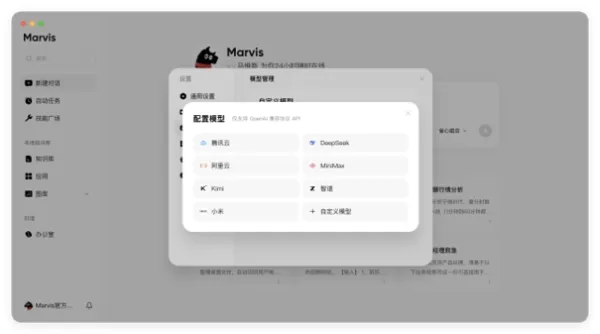 Marvis Unveils Custom Model Function, Integrating Kimi and Zhipu GLM
On September 1st, Marvis, Tencent’s operating system-level AI assistant, officially rolled out its "Custom Model" feature. This update allows users to seamlessly integrate third-party models that adhere to industry-standard interface protocols into M
Marvis Unveils Custom Model Function, Integrating Kimi and Zhipu GLM
On September 1st, Marvis, Tencent’s operating system-level AI assistant, officially rolled out its "Custom Model" feature. This update allows users to seamlessly integrate third-party models that adhere to industry-standard interface protocols into M
 DeepSeek Unveils First Open-Source Multimodal Model Engineered for AI Agents
DeepSeek has released DeepSeek-V4-Flash-Vision-Exp on Hugging Face, marking the debut of the first experimental multimodal model in the V4 series under the MIT License. With 305B parameters and built on the V4-Flash-0731 foundation, this model integr
DeepSeek Unveils First Open-Source Multimodal Model Engineered for AI Agents
DeepSeek has released DeepSeek-V4-Flash-Vision-Exp on Hugging Face, marking the debut of the first experimental multimodal model in the V4 series under the MIT License. With 305B parameters and built on the V4-Flash-0731 foundation, this model integr

2026 Latest Best Top-rated AI Focus Assistants Curated to Slash Context Switching and Keep You Productive All Day. These powerful tools undergo rigorous real-world tests, featuring a free vs paid comparison along with weekly updated rankings. Discover your perfect tool to boost writing efficiency, unlock creative ideas, and stay focused without distraction. Explore now at XIX.AI to Unlock your AI edge.
9 tools
xix.ai

2026 Latest Best Top-rated AI Editing Tools for Clear Business Writing are here on XIX.AI! This curated list features powerful, game-changing solutions that help you boost writing efficiency significantly through real-world tests and rigorous rankings. You’ll find a free vs paid comparison to help you choose the perfect fit. Explore now and Unlock your AI edge!
10 tools
xix.ai

2026 Latest Best Top-rated AI Motion Cleanup Tools for Mocap Retargeting in Shorts, Ads, and Game Trailers! XIX.AI has curated a powerful game-changing collection featuring weekly updated rankings, free vs paid comparison, and real-world tests to help you find the must-try solution that boosts productivity and unlocks your creative edge. Explore now to discover your perfect tool for flawless motion edits.
9 tools
xix.ai

2026 Latest Best Top-rated AI Manga Background Generators for Serialized Stories! This curated list features powerful game-changing tools that help creators craft stunning visual content fast, boosting productivity significantly. Every option has undergone real-world tests to ensure top quality. Check out the free vs paid comparison and rankings to find your perfect fit. Explore now at XIX.AI to unlock your AI edge in manga creation.
9 tools
xix.ai

2026 Latest Best AI Chat Companions Ranking features top-rated, powerful tools known for their ability to hold natural conversations and retain long-term memory. This curated list includes must-try options across free and paid tiers, backed by real-world tests and weekly updated rankings. XIX.AI stands out as a trusted choice in this elite collection. Explore now to discover your perfect AI chat companion and unlock your productivity edge today.
11 tools
xix.ai

2026 Latest Best Top-Rated AI Animation Generators! XIX.AI curates a powerful game-changing collection of must-try tools for turning creative ideas into high-quality motion clips swiftly. Each option has undergone rigorous real-world tests, featuring detailed free vs paid comparison and updated weekly rankings to help you find the perfect fit for boosting your animation productivity. Explore now to unlock your AI edge!
11 tools
xix.ai












