


 Home
HomeThe sameness problem behind those unappetizing AI-generated menus
At first, you might question your sanity. You step into a café and scan a menu filled with bagel sandwiches, yet every image appears unnervingly perfect—flawlessly symmetrical and overly smooth—triggering an instinctive sense that something is off. You aren’t imagining things; your intuition is correct. Generative AI visuals have infiltrated the restaurant industry, driven by models trained on a narrow, “pleasing” aesthetic that feels inherently wrong, even if you can’t immediately explain why.
Sometimes, these images are blatantly fake, such as a burrito with cheese so bubbly and melted it resembles avant-garde art rather than food. More often, they appear mundane, revealing their artificiality only when you pause to examine them closely.
“It’s like an alien attempting to create a pizza without grasping its fundamental principles,” Reality Defender CTO Alex Lisle told TechCrunch. (Reality Defender is part of a growing sector of startups offering AI detection and content verification tools—a market that exists largely due to issues like this.)
Throw a rock in NYC and you’ll hit a mildly off putting AI food advertisement. pic.twitter.com/lLXVkFIFoG
— Maggie (@maggiemoda) August 28, 2026
Lisle explains that the architecture of these models helps clarify why illustrations converge on a specific aesthetic—one where every ice cream scoop is perfectly spherical and shrimp appear genetically modified to eat their own tails, creating what he calls “Lovecraftian food horrors.”
Large language models (LLMs) and diffusion models—the AI systems powering chatbots like ChatGPT and image generators like Midjourney—are trained on massive datasets. These models identify patterns within the data to predict user intent when prompted with requests like, “Create a menu for a burger restaurant.”
“Much of this looks like a Chili’s menu from 2015, and there’s a reason for that,” Lisle noted. “That was the corpus of work from which [the models] derived their style.”
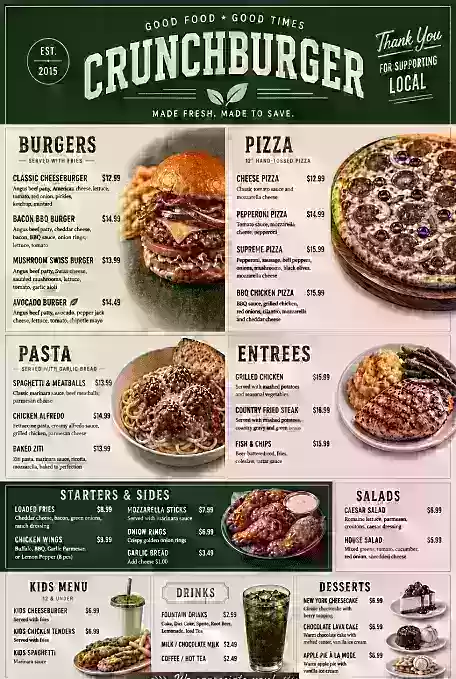
Image Credits:ChatGPT Image 2.0
New training data is crucial for AI developers—Amazon, for instance, has been known to source rare books to scan for training data, only to discard them afterward. It is inevitable that some AI-generated content will infiltrate these vast datasets. However, when AI models train excessively on their own outputs, they risk model collapse.
“Model collapse is akin to mad cow disease… when you feed a model’s outputs back into itself, the inbreeding eventually becomes unsustainable, causing the system to fail,” Lisle explained. “What we observe here is convergence, which is not necessarily model collapse.”
Convergence is less extreme, degrading output quality without rendering the AI entirely useless.
If you ask an AI to generate a fast-food menu, it will likely reference designs from Wendy’s, Burger King, or McDonald’s. Since these existing menus share a similar style, the AI’s outputs will mimic that aesthetic, reinforcing it further if the generated menu is subsequently added to training data.
However, food advertisements always look better than reality, much like a Big Mac in a McDonald’s commercial where each layer is meticulously arranged by a prop designer for maximum appeal. This effect can be amplified in AI-generated content.
“The optimization of datasets prioritizes ‘pleasingness’ or avoiding offense, which leads to homogenization,” Lee Rainie, Director of the Imagining the Digital Future Center at Elon University, told TechCrunch. “AI is known to smooth out the edges in both images and language.”
On a smaller scale, this smoothing occurs when users generate a menu with an AI image generator and apply repeated edits. On X, a user named Labtec demonstrated what happens when a ChatGPT-generated menu is edited 100 times, showing how the food gradually loses its realistic appearance. (We replicated the experiment and observed similar results.)
“The final result actually makes me uncomfortable,” Labtec wrote.
I made a restaurant menu in ChatGPT then edited it 100 times to see how those hideous slop menus end up the way they are. The end result actually makes me uncomfortable pic.twitter.com/sDIUKlabdp
— Labtec (@labtec901) August 19, 2026
Restaurants may be falling victim to this issue by repeatedly refining their AI-generated menus, tweaking minor details like prices or item names. With each edit, the food images become slightly rounder and smoother.
“People have an almost inexplicable sense when viewing AI-generated content compared to real imagery,” Rainie said. “There is a sensibility that people sometimes struggle to articulate, but they recognize it when they see it. I believe this is why the backlash against restaurants using AI menus has been so pronounced.”
There is scientific backing for our aversion to these AI menus. Researchers at the University of Duisburg-Essen in Germany found that AI-generated food images trigger an “uncanny valley” effect, where near-realistic food images evoke more disgust and unease than obviously fake ones. This discomfort is intensified by the current cultural context surrounding AI.
If consumers react negatively to these images, restaurants should reconsider their use of AI-generated menus. However, the implications of perfectly browned hamburger buns extend beyond dining.
“Seeing and hearing has always been believing, to the point where even our legal systems rely on the idea that the gold standard of evidence is taped confessions and video recordings,” Lisle stated. “That is no longer the case. The world has fundamentally shifted, for better or worse.”
Related article
 Hello Robot Readies Home Robots for Silicon Valley
Martinez, California, sits on the far northeastern edge of the San Francisco Bay Area, a world away from Silicon Valley’s tech hub. Here lives Hello Robot, a startup deliberately distancing itself from the grandiose claims of its southern rivals, ope
Former Infosys Chief’s AI Startup Secures Another $53M
Hang Ten Systems, an AI startup established by former Infosys CEO Vishal Sikka just four months ago, has secured an additional $53 million in seed funding. This latest investment round was finalized merely five weeks after the initial $32 million see
Crypto exchange OKX aims to empower AI agents to hire and pay each other
As AI agents start serving individuals and collaborating with each other, they require mechanisms to locate tasks, compensate for services, and establish credibility. Crypto exchange OKX anticipates this future is arriving sooner than anticipated, in
Related Special Topic Recommendations
Academic Research
Hello Robot Readies Home Robots for Silicon Valley
Martinez, California, sits on the far northeastern edge of the San Francisco Bay Area, a world away from Silicon Valley’s tech hub. Here lives Hello Robot, a startup deliberately distancing itself from the grandiose claims of its southern rivals, ope
Former Infosys Chief’s AI Startup Secures Another $53M
Hang Ten Systems, an AI startup established by former Infosys CEO Vishal Sikka just four months ago, has secured an additional $53 million in seed funding. This latest investment round was finalized merely five weeks after the initial $32 million see
Crypto exchange OKX aims to empower AI agents to hire and pay each other
As AI agents start serving individuals and collaborating with each other, they require mechanisms to locate tasks, compensate for services, and establish credibility. Crypto exchange OKX anticipates this future is arriving sooner than anticipated, in
Related Special Topic Recommendations
Academic Research
 Top AI Paper Reading Tools: Extract Methods, Results, and Limits Faster
2026 Latest Top-Rated Best AI Paper Reading Tools for Researchers! This curated list offers powerful game-changing solutions to quickly extract key methods, results, and limitations from complex academic papers. XIX.AI provides weekly updated free vs paid comparison data along with real-world tests across diverse research fields. Discover your perfect tool to boost productivity and unlock your AI edge today. Explore now!
 8 tools
 xix.ai
Music composition
Best AI Vocal Demo Tools for Track Prototypes
xix.ai
Music composition
Best AI Vocal Demo Tools for Track Prototypes
2026 Latest Best Top-rated AI Vocal Demo Tools for Track Prototypes are here on XIX.AI! This curated list features powerful, game-changing tools that go through real-world tests to ensure top performance. You’ll find a free vs paid comparison, detailed rankings, and must-try options perfect for boosting creative efficiency and helping you unlock your AI edge. Explore now to discover your perfect tool!
10 tools
xix.ai
Software Development
AI API Mocking Tools for Frontend-Backend Collaboration
2026 Latest Best Top-rated AI API Mocking Tools for Frontend-Backend Collaboration are here on XIX.AI! This curated list features powerful, game-changing solutions that help teams streamline workflows, boost productivity, and create high-quality apps faster through real-world tests and strict rankings. Get a free vs paid comparison to find the must-try option that suits your needs. Explore now to unlock your AI edge!
12 tools
xix.ai
Design & Art
Midjourney Style Reference Tools for Character Concepts, Posters, and Ad Visuals
2026 Latest Best Top-rated Midjourney Style Reference Tools for Character Concepts, Posters, and Ad Visuals! XIX.AI has curated a powerful game-changing collection that undergoes weekly updated real-world tests. You can find detailed free vs paid comparison insights and reliable rankings to help you pick the must-try option that boosts your creativity and speeds up workflow significantly. Explore now to Discover your perfect tool for all your visual design needs.
11 tools
xix.ai
Music composition
AI Vocal Generation Tools: Create Demo Vocals and Harmony Layers
2026 Latest Best Top-rated AI Vocal Generation Tools for Creating Demo Vocals and Harmony Layers are here on XIX.AI. This curated collection features powerful, game-changing solutions that have passed rigorous real-world tests. We provide a weekly updated free vs paid comparison along with detailed rankings to help you find the perfect tool for boosting your creativity and productivity. Explore now to Unlock your AI edge.
12 tools
xix.ai
Productivity
Best AI Focus Assistants: Reduce Context Switching and Stay on Track
2026 Latest Best Top-rated AI Focus Assistants Curated to Slash Context Switching and Keep You Productive All Day. These powerful tools undergo rigorous real-world tests, featuring a free vs paid comparison along with weekly updated rankings. Discover your perfect tool to boost writing efficiency, unlock creative ideas, and stay focused without distraction. Explore now at XIX.AI to Unlock your AI edge.
9 tools
xix.ai

 Comments (0)
0/500
Comments (0)
0/500
At first, you might question your sanity. You step into a café and scan a menu filled with bagel sandwiches, yet every image appears unnervingly perfect—flawlessly symmetrical and overly smooth—triggering an instinctive sense that something is off. You aren’t imagining things; your intuition is correct. Generative AI visuals have infiltrated the restaurant industry, driven by models trained on a narrow, “pleasing” aesthetic that feels inherently wrong, even if you can’t immediately explain why.
Sometimes, these images are blatantly fake, such as a burrito with cheese so bubbly and melted it resembles avant-garde art rather than food. More often, they appear mundane, revealing their artificiality only when you pause to examine them closely.
“It’s like an alien attempting to create a pizza without grasping its fundamental principles,” Reality Defender CTO Alex Lisle told TechCrunch. (Reality Defender is part of a growing sector of startups offering AI detection and content verification tools—a market that exists largely due to issues like this.)
Throw a rock in NYC and you’ll hit a mildly off putting AI food advertisement. pic.twitter.com/lLXVkFIFoG
— Maggie (@maggiemoda) August 28, 2026
Lisle explains that the architecture of these models helps clarify why illustrations converge on a specific aesthetic—one where every ice cream scoop is perfectly spherical and shrimp appear genetically modified to eat their own tails, creating what he calls “Lovecraftian food horrors.”
Large language models (LLMs) and diffusion models—the AI systems powering chatbots like ChatGPT and image generators like Midjourney—are trained on massive datasets. These models identify patterns within the data to predict user intent when prompted with requests like, “Create a menu for a burger restaurant.”
“Much of this looks like a Chili’s menu from 2015, and there’s a reason for that,” Lisle noted. “That was the corpus of work from which [the models] derived their style.”
Image Credits:ChatGPT Image 2.0
New training data is crucial for AI developers—Amazon, for instance, has been known to source rare books to scan for training data, only to discard them afterward. It is inevitable that some AI-generated content will infiltrate these vast datasets. However, when AI models train excessively on their own outputs, they risk model collapse.
“Model collapse is akin to mad cow disease… when you feed a model’s outputs back into itself, the inbreeding eventually becomes unsustainable, causing the system to fail,” Lisle explained. “What we observe here is convergence, which is not necessarily model collapse.”
Convergence is less extreme, degrading output quality without rendering the AI entirely useless.
If you ask an AI to generate a fast-food menu, it will likely reference designs from Wendy’s, Burger King, or McDonald’s. Since these existing menus share a similar style, the AI’s outputs will mimic that aesthetic, reinforcing it further if the generated menu is subsequently added to training data.
However, food advertisements always look better than reality, much like a Big Mac in a McDonald’s commercial where each layer is meticulously arranged by a prop designer for maximum appeal. This effect can be amplified in AI-generated content.
“The optimization of datasets prioritizes ‘pleasingness’ or avoiding offense, which leads to homogenization,” Lee Rainie, Director of the Imagining the Digital Future Center at Elon University, told TechCrunch. “AI is known to smooth out the edges in both images and language.”
On a smaller scale, this smoothing occurs when users generate a menu with an AI image generator and apply repeated edits. On X, a user named Labtec demonstrated what happens when a ChatGPT-generated menu is edited 100 times, showing how the food gradually loses its realistic appearance. (We replicated the experiment and observed similar results.)
“The final result actually makes me uncomfortable,” Labtec wrote.
I made a restaurant menu in ChatGPT then edited it 100 times to see how those hideous slop menus end up the way they are. The end result actually makes me uncomfortable pic.twitter.com/sDIUKlabdp
— Labtec (@labtec901) August 19, 2026
Restaurants may be falling victim to this issue by repeatedly refining their AI-generated menus, tweaking minor details like prices or item names. With each edit, the food images become slightly rounder and smoother.
“People have an almost inexplicable sense when viewing AI-generated content compared to real imagery,” Rainie said. “There is a sensibility that people sometimes struggle to articulate, but they recognize it when they see it. I believe this is why the backlash against restaurants using AI menus has been so pronounced.”
There is scientific backing for our aversion to these AI menus. Researchers at the University of Duisburg-Essen in Germany found that AI-generated food images trigger an “uncanny valley” effect, where near-realistic food images evoke more disgust and unease than obviously fake ones. This discomfort is intensified by the current cultural context surrounding AI.
If consumers react negatively to these images, restaurants should reconsider their use of AI-generated menus. However, the implications of perfectly browned hamburger buns extend beyond dining.
“Seeing and hearing has always been believing, to the point where even our legal systems rely on the idea that the gold standard of evidence is taped confessions and video recordings,” Lisle stated. “That is no longer the case. The world has fundamentally shifted, for better or worse.”








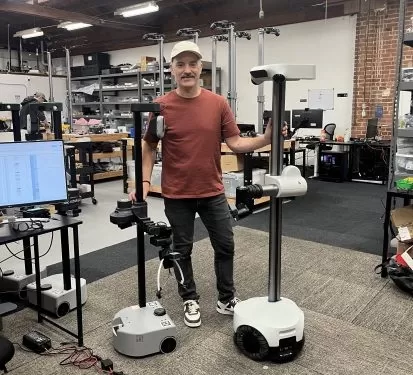 Hello Robot Readies Home Robots for Silicon Valley
Martinez, California, sits on the far northeastern edge of the San Francisco Bay Area, a world away from Silicon Valley’s tech hub. Here lives Hello Robot, a startup deliberately distancing itself from the grandiose claims of its southern rivals, ope
Hello Robot Readies Home Robots for Silicon Valley
Martinez, California, sits on the far northeastern edge of the San Francisco Bay Area, a world away from Silicon Valley’s tech hub. Here lives Hello Robot, a startup deliberately distancing itself from the grandiose claims of its southern rivals, ope
 Former Infosys Chief’s AI Startup Secures Another $53M
Hang Ten Systems, an AI startup established by former Infosys CEO Vishal Sikka just four months ago, has secured an additional $53 million in seed funding. This latest investment round was finalized merely five weeks after the initial $32 million see
Former Infosys Chief’s AI Startup Secures Another $53M
Hang Ten Systems, an AI startup established by former Infosys CEO Vishal Sikka just four months ago, has secured an additional $53 million in seed funding. This latest investment round was finalized merely five weeks after the initial $32 million see
 Crypto exchange OKX aims to empower AI agents to hire and pay each other
As AI agents start serving individuals and collaborating with each other, they require mechanisms to locate tasks, compensate for services, and establish credibility. Crypto exchange OKX anticipates this future is arriving sooner than anticipated, in
Crypto exchange OKX aims to empower AI agents to hire and pay each other
As AI agents start serving individuals and collaborating with each other, they require mechanisms to locate tasks, compensate for services, and establish credibility. Crypto exchange OKX anticipates this future is arriving sooner than anticipated, in

2026 Latest Top-Rated Best AI Paper Reading Tools for Researchers! This curated list offers powerful game-changing solutions to quickly extract key methods, results, and limitations from complex academic papers. XIX.AI provides weekly updated free vs paid comparison data along with real-world tests across diverse research fields. Discover your perfect tool to boost productivity and unlock your AI edge today. Explore now!
8 tools
xix.ai
2026 Latest Best Top-rated AI Vocal Demo Tools for Track Prototypes are here on XIX.AI! This curated list features powerful, game-changing tools that go through real-world tests to ensure top performance. You’ll find a free vs paid comparison, detailed rankings, and must-try options perfect for boosting creative efficiency and helping you unlock your AI edge. Explore now to discover your perfect tool!
10 tools
xix.ai

2026 Latest Best Top-rated AI API Mocking Tools for Frontend-Backend Collaboration are here on XIX.AI! This curated list features powerful, game-changing solutions that help teams streamline workflows, boost productivity, and create high-quality apps faster through real-world tests and strict rankings. Get a free vs paid comparison to find the must-try option that suits your needs. Explore now to unlock your AI edge!
12 tools
xix.ai

2026 Latest Best Top-rated Midjourney Style Reference Tools for Character Concepts, Posters, and Ad Visuals! XIX.AI has curated a powerful game-changing collection that undergoes weekly updated real-world tests. You can find detailed free vs paid comparison insights and reliable rankings to help you pick the must-try option that boosts your creativity and speeds up workflow significantly. Explore now to Discover your perfect tool for all your visual design needs.
11 tools
xix.ai
2026 Latest Best Top-rated AI Vocal Generation Tools for Creating Demo Vocals and Harmony Layers are here on XIX.AI. This curated collection features powerful, game-changing solutions that have passed rigorous real-world tests. We provide a weekly updated free vs paid comparison along with detailed rankings to help you find the perfect tool for boosting your creativity and productivity. Explore now to Unlock your AI edge.
12 tools
xix.ai
2026 Latest Best Top-rated AI Focus Assistants Curated to Slash Context Switching and Keep You Productive All Day. These powerful tools undergo rigorous real-world tests, featuring a free vs paid comparison along with weekly updated rankings. Discover your perfect tool to boost writing efficiency, unlock creative ideas, and stay focused without distraction. Explore now at XIX.AI to Unlock your AI edge.
9 tools
xix.ai












