


 Home
HomeSteam players largely open to AI: 43% accept, 8% refuse outright

A survey by GameDiscoverCo of 3,800 Steam players, as reported by Gamesradar, reveals surprisingly open attitudes toward AI in game development. The findings show that a large portion of respondents do not oppose AI use, with opinions far more accepting than anticipated.
Breakdown of the results: 23.4% of players are "completely fine" with AI in games, and 19.6% "can accept" it, together over 43%. The largest segment, 25.6%, remains neutral. Only 23.3% say they are "not particularly fond of" AI games, and a mere 8.1% take the strongest stance, refusing to play any AI-assisted game.
Nearly 90% of players review AI disclosures before buying, though most only "glance at" them.
Valve now mandates that Steam developers disclose AI usage on store pages, ensuring players have access to relevant information before purchase. The survey also gauged attention to these disclosures: 44.4% said they "read it carefully," 44.7% "take a quick look but not care much," and 10.9% "never look at it."
Thus, nearly 90% of Steam users notice AI disclosures before buying, showing the transparency system works. Yet the near-equal split between careful readers and quick scanners suggests that while most players care about AI, it rarely becomes a deciding factor in their purchase.
An open attitude doesn't imply a lack of controversy; the AI debate will keep evolving.
GameDiscoverCo notes that survey participants are "more engaged" than average players, making the results more representative of core gamers. This offers insight into how Steam users currently perceive the sensitive topic of AI in game development.
Combined with a prior Game Oracle report showing a 53% drop in ratings for games openly using AI, these surveys depict a nuanced picture. A subtle gap exists between players' stated acceptance and their actual purchasing resistance. As AI tech evolves and its industry applications shift, the role and limits of AI in game development will remain an ongoing debate between developers and players.
Related article
 Microsoft Unveils MAI-Transcribe-2, Its Most Accurate Transcription Model Yet, Supporting 60 Languages at Just 0.67 Yuan Per Hour
Microsoft has launched MAI-Transcribe-2, positioning it as the industry’s fastest, most precise, and cost-efficient AI speech-to-text solution. Priced at a promotional rate of $0.10 (approx. 0.67 RMB) per hour, this offer remains valid through the en
Tencent Accelerates AI Push With Doubled-Size Hunyuan Hy4, Morgan Stanley Lifts Target to HKD 550
Tencent has officially unveiled the preview of HuanYuan Hy4, accelerating its timeline ahead of Morgan Stanley’s September forecast and fulfilling the company’s Q2 earnings commitment to launch the model within the year. Since appointing Yao Shunyu a
Pearson’s Dave Treat: AI Should Guide Learning, Not Cheat
Pearson’s Chief Technology Officer, Dave TreatOn academic integrity, AI adoption, and the critical skills that matter as agentic AI transforms educationDave Treat joined Pearson nearly two years ago as Chief Technology Officer, later assuming the rol
Related Special Topic Recommendations
code
Microsoft Unveils MAI-Transcribe-2, Its Most Accurate Transcription Model Yet, Supporting 60 Languages at Just 0.67 Yuan Per Hour
Microsoft has launched MAI-Transcribe-2, positioning it as the industry’s fastest, most precise, and cost-efficient AI speech-to-text solution. Priced at a promotional rate of $0.10 (approx. 0.67 RMB) per hour, this offer remains valid through the en
Tencent Accelerates AI Push With Doubled-Size Hunyuan Hy4, Morgan Stanley Lifts Target to HKD 550
Tencent has officially unveiled the preview of HuanYuan Hy4, accelerating its timeline ahead of Morgan Stanley’s September forecast and fulfilling the company’s Q2 earnings commitment to launch the model within the year. Since appointing Yao Shunyu a
Pearson’s Dave Treat: AI Should Guide Learning, Not Cheat
Pearson’s Chief Technology Officer, Dave TreatOn academic integrity, AI adoption, and the critical skills that matter as agentic AI transforms educationDave Treat joined Pearson nearly two years ago as Chief Technology Officer, later assuming the rol
Related Special Topic Recommendations
code
 Best AI Coding Chatbots: Debug Python, JS, and SQL in One Place
2026 Latest Best Top-Rated AI Coding Chatbots Curated for Developers! Experience powerful game-changing tools that help you debug Python, JS, and SQL issues quickly. Get a free vs paid comparison along with real-world tests and detailed rankings to find the perfect fit for boosting your coding productivity. Try XIX.AI today to unlock your AI edge! Explore now.
 12 tools
 xix.ai
Prompt
AI Prompt Versioning Platforms for Reusable Claude and ChatGPT Playbooks
xix.ai
Prompt
AI Prompt Versioning Platforms for Reusable Claude and ChatGPT Playbooks
2026 Latest Best Top-rated AI Prompt Versioning Platforms for Reusable Playbooks are here on XIX.AI! Our curated list includes powerful game-changing tools that help you keep track of all prompts, test variations efficiently, and boost productivity across writing, content creation, and more. Get a free vs paid comparison along with real-world tests and updated rankings weekly. Explore now to discover your perfect tool for staying ahead in AI tasks!
9 tools
xix.ai
writing
Best AI Writing Assistants for Long Articles: Outline and Draft Faster
2026 Latest Best AI Writing Assistants for Long Articles: Outline and Draft Faster. XIX.AI curates the top-rated, must-try tools that offer powerful, game-changing support to boost writing efficiency significantly. You’ll find detailed free vs paid comparison, real-world tests, and updated rankings weekly. Explore now to Discover your perfect tool and Start creating today to Unlock your AI edge.
8 tools
xix.ai
Education and Learning
ChatGPT Study Tools for Exam Revision, Flashcards, and Homework Explanations
2026 Latest Best ChatGPT Study Tools for Exam Revision, Flashcards, and Homework Explanations! XIX.AI has curated a top-rated list of powerful game-changing tools designed to boost your productivity. These must-try solutions offer free vs paid comparison, real-world tests, and detailed rankings to help you find the perfect option for efficient exam preparation and homework support. Explore now to unlock your AI edge!
10 tools
xix.ai
Education and Learning
AI Study Planner Tools for Exam Preparation
2026 Latest Best Top-Rated AI Study Planner Tools for Exam Preparation are here on XIX.AI! This curated collection features powerful, game-changing tools that help you streamline your review process, boost focus, and create personalized study schedules. We conduct real-world tests to determine the top options, offering a free vs paid comparison along with weekly updated rankings. Must-try solutions designed to maximize your productivity and help you ace every exam. Explore now to find your perfect tool!
14 tools
xix.ai
SEO
Best AI Keyword Gap Tools for Organic Growth
2026 Latest Best Top-rated AI Keyword Gap Tools for Organic Growth! XIX.AI has carefully curated a powerful, game-changing collection of the best tools available, featuring weekly updated rankings and real-world tests. You can find a detailed free vs paid comparison to help you choose the perfect option that boosts your content creation efficiency and unlocks your AI edge. Explore now!
8 tools
xix.ai

 Comments (1)
0/500
Comments (1)
0/500
![IsabellaDavis]()
I was totally surprised to see 43% of Steam users are okay with AI in games, way higher than I expected! It makes me wonder if developers will start using it more often in future titles, though I’m a bit worried about it making the gameplay feel too robotic.
A survey by GameDiscoverCo of 3,800 Steam players, as reported by Gamesradar, reveals surprisingly open attitudes toward AI in game development. The findings show that a large portion of respondents do not oppose AI use, with opinions far more accepting than anticipated.
Breakdown of the results: 23.4% of players are "completely fine" with AI in games, and 19.6% "can accept" it, together over 43%. The largest segment, 25.6%, remains neutral. Only 23.3% say they are "not particularly fond of" AI games, and a mere 8.1% take the strongest stance, refusing to play any AI-assisted game.
Nearly 90% of players review AI disclosures before buying, though most only "glance at" them.
Valve now mandates that Steam developers disclose AI usage on store pages, ensuring players have access to relevant information before purchase. The survey also gauged attention to these disclosures: 44.4% said they "read it carefully," 44.7% "take a quick look but not care much," and 10.9% "never look at it."
Thus, nearly 90% of Steam users notice AI disclosures before buying, showing the transparency system works. Yet the near-equal split between careful readers and quick scanners suggests that while most players care about AI, it rarely becomes a deciding factor in their purchase.
An open attitude doesn't imply a lack of controversy; the AI debate will keep evolving.
GameDiscoverCo notes that survey participants are "more engaged" than average players, making the results more representative of core gamers. This offers insight into how Steam users currently perceive the sensitive topic of AI in game development.
Combined with a prior Game Oracle report showing a 53% drop in ratings for games openly using AI, these surveys depict a nuanced picture. A subtle gap exists between players' stated acceptance and their actual purchasing resistance. As AI tech evolves and its industry applications shift, the role and limits of AI in game development will remain an ongoing debate between developers and players.








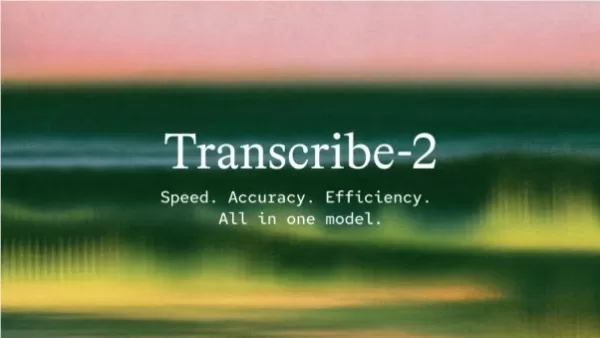 Microsoft Unveils MAI-Transcribe-2, Its Most Accurate Transcription Model Yet, Supporting 60 Languages at Just 0.67 Yuan Per Hour
Microsoft has launched MAI-Transcribe-2, positioning it as the industry’s fastest, most precise, and cost-efficient AI speech-to-text solution. Priced at a promotional rate of $0.10 (approx. 0.67 RMB) per hour, this offer remains valid through the en
Microsoft Unveils MAI-Transcribe-2, Its Most Accurate Transcription Model Yet, Supporting 60 Languages at Just 0.67 Yuan Per Hour
Microsoft has launched MAI-Transcribe-2, positioning it as the industry’s fastest, most precise, and cost-efficient AI speech-to-text solution. Priced at a promotional rate of $0.10 (approx. 0.67 RMB) per hour, this offer remains valid through the en
 Tencent Accelerates AI Push With Doubled-Size Hunyuan Hy4, Morgan Stanley Lifts Target to HKD 550
Tencent has officially unveiled the preview of HuanYuan Hy4, accelerating its timeline ahead of Morgan Stanley’s September forecast and fulfilling the company’s Q2 earnings commitment to launch the model within the year. Since appointing Yao Shunyu a
Tencent Accelerates AI Push With Doubled-Size Hunyuan Hy4, Morgan Stanley Lifts Target to HKD 550
Tencent has officially unveiled the preview of HuanYuan Hy4, accelerating its timeline ahead of Morgan Stanley’s September forecast and fulfilling the company’s Q2 earnings commitment to launch the model within the year. Since appointing Yao Shunyu a
 Pearson’s Dave Treat: AI Should Guide Learning, Not Cheat
Pearson’s Chief Technology Officer, Dave TreatOn academic integrity, AI adoption, and the critical skills that matter as agentic AI transforms educationDave Treat joined Pearson nearly two years ago as Chief Technology Officer, later assuming the rol
Pearson’s Dave Treat: AI Should Guide Learning, Not Cheat
Pearson’s Chief Technology Officer, Dave TreatOn academic integrity, AI adoption, and the critical skills that matter as agentic AI transforms educationDave Treat joined Pearson nearly two years ago as Chief Technology Officer, later assuming the rol
2026 Latest Best Top-Rated AI Coding Chatbots Curated for Developers! Experience powerful game-changing tools that help you debug Python, JS, and SQL issues quickly. Get a free vs paid comparison along with real-world tests and detailed rankings to find the perfect fit for boosting your coding productivity. Try XIX.AI today to unlock your AI edge! Explore now.
12 tools
xix.ai

2026 Latest Best Top-rated AI Prompt Versioning Platforms for Reusable Playbooks are here on XIX.AI! Our curated list includes powerful game-changing tools that help you keep track of all prompts, test variations efficiently, and boost productivity across writing, content creation, and more. Get a free vs paid comparison along with real-world tests and updated rankings weekly. Explore now to discover your perfect tool for staying ahead in AI tasks!
9 tools
xix.ai
2026 Latest Best AI Writing Assistants for Long Articles: Outline and Draft Faster. XIX.AI curates the top-rated, must-try tools that offer powerful, game-changing support to boost writing efficiency significantly. You’ll find detailed free vs paid comparison, real-world tests, and updated rankings weekly. Explore now to Discover your perfect tool and Start creating today to Unlock your AI edge.
8 tools
xix.ai
2026 Latest Best ChatGPT Study Tools for Exam Revision, Flashcards, and Homework Explanations! XIX.AI has curated a top-rated list of powerful game-changing tools designed to boost your productivity. These must-try solutions offer free vs paid comparison, real-world tests, and detailed rankings to help you find the perfect option for efficient exam preparation and homework support. Explore now to unlock your AI edge!
10 tools
xix.ai

2026 Latest Best Top-Rated AI Study Planner Tools for Exam Preparation are here on XIX.AI! This curated collection features powerful, game-changing tools that help you streamline your review process, boost focus, and create personalized study schedules. We conduct real-world tests to determine the top options, offering a free vs paid comparison along with weekly updated rankings. Must-try solutions designed to maximize your productivity and help you ace every exam. Explore now to find your perfect tool!
14 tools
xix.ai

2026 Latest Best Top-rated AI Keyword Gap Tools for Organic Growth! XIX.AI has carefully curated a powerful, game-changing collection of the best tools available, featuring weekly updated rankings and real-world tests. You can find a detailed free vs paid comparison to help you choose the perfect option that boosts your content creation efficiency and unlocks your AI edge. Explore now!
8 tools
xix.ai

I was totally surprised to see 43% of Steam users are okay with AI in games, way higher than I expected! It makes me wonder if developers will start using it more often in future titles, though I’m a bit worried about it making the gameplay feel too robotic.












