


 Home
Home
SpaceX Valuation Reaches $1.78 Trillion as AI Business Surges 100x in Five Years, Becoming Biggest Chip
As SpaceX officially launches its IPO roadshow, market attention is squarely on its valuation expectations. According to multiple media reports, lead underwriter Goldman Sachs presented a valuation model to potential investors suggesting SpaceX could reach up to $1.78 trillion at its initial public offering. However, the core factor behind this eye-popping figure is not its traditional aerospace operations—it's the company's rapidly expanding artificial intelligence segment.
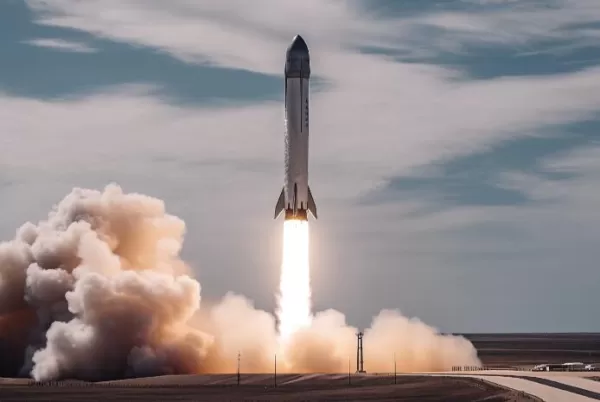
Goldman Sachs forecasts that SpaceX's AI revenue will surge from $3.2 billion in 2025 to $322 billion in 2030—a more than 100-fold increase in five years. Over the same period, total company revenue is expected to climb from $18.7 billion in 2024 to $474 billion. Goldman also estimates that adjusted EBITDA will grow from $6.6 billion in 2025 to $352 billion in 2030, with free cash flow turning positive at $72 billion in 2031, compared to a negative $13.8 billion last year.
Based on the prospectus, SpaceX's long-term growth trajectory depends heavily on its AI business. Its AI subsidiary xAI is assigned a potential market of up to $26.5 trillion, far exceeding the combined ~$2 trillion market for Starlink satellite internet and aerospace launch services. Goldman expects AI revenue to jump 388% year over year to $15.6 billion in 2026 and then to $34.5 billion in 2027. By contrast, Starlink revenue is projected at $144 billion by 2030, and rocket launch revenue is expected to grow from $4.1 billion last year to $8.3 billion—both significantly lower than the AI segment's contribution.
Yet these ambitious projections come with real challenges. To hit revenue targets, xAI's Grok series of large language models must compete with top players like Anthropic, Google, and OpenAI in key areas such as code development, cybersecurity, AI agents, and general dialogue. However, xAI has experienced frequent management turnover since its founding, with Musk removing all ten co-founders within two years. Its product commercialization has also fallen short of market expectations. The "Colossus1" supercomputing data center in Memphis, Tennessee, with a power capacity of 300 megawatts, once saw low utilization due to insufficient Grok demand, even renting computing power to competitors like Anthropic.
Goldman Sachs secured the lead underwriting role for this IPO, beating out rivals such as Morgan Stanley, JPMorgan Chase, Citigroup, Bank of America, and UBS. With a maximum fundraising target of $86 billion, the underwriting group stands to earn millions in commission fees. Market observers view this mega-IPO, which bets on AI's growth potential, as a key test of the capital market's long-term valuation of artificial intelligence.
Related article
 Meta Removes AI Photo Editing Feature Following User Backlash
Meta, the social media giant, is once again embroiled in a public debate regarding the delicate balance between artificial intelligence and user privacy. According to TechCrunch, Meta’s Superintelligence Labs introduced a new AI image generator, Muse
DeepMind CEO Hassabis: I sleep six hours a day, usually feel energetic around 1 a.m.
Fortune recently featured an interview with Demis Hassabis, CEO of Google DeepMind, revealing his unconventional approach to rest and productivity. Hassabis disclosed that he sleeps very little, structuring his waking hours into two distinct work blo
OpenAI, Anthropic Vie for Market Share Despite Revenue Shortfalls
Despite recent reports suggesting OpenAI missed revenue targets, creating pressure on tech stocks this Tuesday, private AI lab investors remain resilient. Seasoned backers have confirmed they will not reduce investment despite negative media coverage
Related Special Topic Recommendations
Animation Creation
Meta Removes AI Photo Editing Feature Following User Backlash
Meta, the social media giant, is once again embroiled in a public debate regarding the delicate balance between artificial intelligence and user privacy. According to TechCrunch, Meta’s Superintelligence Labs introduced a new AI image generator, Muse
DeepMind CEO Hassabis: I sleep six hours a day, usually feel energetic around 1 a.m.
Fortune recently featured an interview with Demis Hassabis, CEO of Google DeepMind, revealing his unconventional approach to rest and productivity. Hassabis disclosed that he sleeps very little, structuring his waking hours into two distinct work blo
OpenAI, Anthropic Vie for Market Share Despite Revenue Shortfalls
Despite recent reports suggesting OpenAI missed revenue targets, creating pressure on tech stocks this Tuesday, private AI lab investors remain resilient. Seasoned backers have confirmed they will not reduce investment despite negative media coverage
Related Special Topic Recommendations
Animation Creation
 AI Scene Animation Tools for Social Media Content
2026 Latest Best Top-rated AI Scene Animation Tools for Social Media Content are curated here by XIX.AI. These powerful game-changing tools offer real-world tests and detailed free vs paid comparison, helping creators boost productivity significantly. Explore now to unlock your AI edge.
 9 tools
 xix.ai
Video creation
AI Short-Form Video Hook Generators for Reels, Shorts, and Product Launch Campaigns
xix.ai
Video creation
AI Short-Form Video Hook Generators for Reels, Shorts, and Product Launch Campaigns
2026 Latest Best AI Short-Form Video Hook Generators for Reels Shorts and Product Launch Campaigns! XIX.AI curates top-rated powerful game-changing tools that deliver must-try results through real-world tests. This weekly updated page offers free vs paid comparison rankings to help you find the perfect solution for boosting content creativity and productivity. Explore now to Unlock your AI edge!
11 tools
xix.ai
writing
AI Article Outline Tools for Long Form Writing
2026 Latest Best Top-Rated AI Article Outline Tools for Long Form Writing! This curated collection features powerful, game-changing tools that deliver accurate, structured outlines with real-world tests to boost writing efficiency significantly. XIX.AI is part of this elite selection. Get a free vs paid comparison to help you choose the perfect tool. Explore now and Unlock your AI edge!
9 tools
xix.ai
chatbot
Best AI Roleplay Chat Apps for Language Practice, Interview Prep, and Daily Fluency
2026 Latest Best Top-rated AI Roleplay Chat Apps for Language Practice, Interview Prep, and Daily Fluency! XIX.AI curates a powerful game-changing collection that offers free vs paid comparison, real-world tests, and updated rankings weekly. These must-try tools help you boost writing skills, overcome fluency challenges, and improve communication efficiency across all daily scenarios. Explore now to discover your perfect tool for language growth!
10 tools
xix.ai
Music composition
AI Stem Separation Tools for Remix Production, Sampling Prep, and Karaoke Masters
2026 Latest Best Top-rated AI Stem Separation Tools Curated for Remix Production, Sampling Prep, and Karaoke Masters. These powerful game-changing tools offer real-world tests to deliver precise audio isolation, boosting productivity significantly. XIX.AI provides a weekly updated free vs paid comparison guide to help you find the must-try solution that suits your needs. Explore now to unlock your AI edge.
8 tools
xix.ai
Data Analysis
AI SQL Copilots for Revenue Dashboards, Funnel Analysis, and Product Metrics
2026 Latest Best AI SQL Copilots Ranked Top-Rated! XIX.AI curates a powerful game-changing collection for weekly updated real-world tests. These must-try tools help you generate accurate revenue dashboards, analyze sales funnels, and track product metrics swiftly, boosting productivity massively. Explore now to Discover your perfect tool for data-driven decision making! 238 characters
9 tools
xix.ai

 Comments (0)
0/500
Comments (0)
0/500
As SpaceX officially launches its IPO roadshow, market attention is squarely on its valuation expectations. According to multiple media reports, lead underwriter Goldman Sachs presented a valuation model to potential investors suggesting SpaceX could reach up to $1.78 trillion at its initial public offering. However, the core factor behind this eye-popping figure is not its traditional aerospace operations—it's the company's rapidly expanding artificial intelligence segment.
Goldman Sachs forecasts that SpaceX's AI revenue will surge from $3.2 billion in 2025 to $322 billion in 2030—a more than 100-fold increase in five years. Over the same period, total company revenue is expected to climb from $18.7 billion in 2024 to $474 billion. Goldman also estimates that adjusted EBITDA will grow from $6.6 billion in 2025 to $352 billion in 2030, with free cash flow turning positive at $72 billion in 2031, compared to a negative $13.8 billion last year.
Based on the prospectus, SpaceX's long-term growth trajectory depends heavily on its AI business. Its AI subsidiary xAI is assigned a potential market of up to $26.5 trillion, far exceeding the combined ~$2 trillion market for Starlink satellite internet and aerospace launch services. Goldman expects AI revenue to jump 388% year over year to $15.6 billion in 2026 and then to $34.5 billion in 2027. By contrast, Starlink revenue is projected at $144 billion by 2030, and rocket launch revenue is expected to grow from $4.1 billion last year to $8.3 billion—both significantly lower than the AI segment's contribution.
Yet these ambitious projections come with real challenges. To hit revenue targets, xAI's Grok series of large language models must compete with top players like Anthropic, Google, and OpenAI in key areas such as code development, cybersecurity, AI agents, and general dialogue. However, xAI has experienced frequent management turnover since its founding, with Musk removing all ten co-founders within two years. Its product commercialization has also fallen short of market expectations. The "Colossus1" supercomputing data center in Memphis, Tennessee, with a power capacity of 300 megawatts, once saw low utilization due to insufficient Grok demand, even renting computing power to competitors like Anthropic.
Goldman Sachs secured the lead underwriting role for this IPO, beating out rivals such as Morgan Stanley, JPMorgan Chase, Citigroup, Bank of America, and UBS. With a maximum fundraising target of $86 billion, the underwriting group stands to earn millions in commission fees. Market observers view this mega-IPO, which bets on AI's growth potential, as a key test of the capital market's long-term valuation of artificial intelligence.








 Meta Removes AI Photo Editing Feature Following User Backlash
Meta, the social media giant, is once again embroiled in a public debate regarding the delicate balance between artificial intelligence and user privacy. According to TechCrunch, Meta’s Superintelligence Labs introduced a new AI image generator, Muse
Meta Removes AI Photo Editing Feature Following User Backlash
Meta, the social media giant, is once again embroiled in a public debate regarding the delicate balance between artificial intelligence and user privacy. According to TechCrunch, Meta’s Superintelligence Labs introduced a new AI image generator, Muse
 DeepMind CEO Hassabis: I sleep six hours a day, usually feel energetic around 1 a.m.
Fortune recently featured an interview with Demis Hassabis, CEO of Google DeepMind, revealing his unconventional approach to rest and productivity. Hassabis disclosed that he sleeps very little, structuring his waking hours into two distinct work blo
DeepMind CEO Hassabis: I sleep six hours a day, usually feel energetic around 1 a.m.
Fortune recently featured an interview with Demis Hassabis, CEO of Google DeepMind, revealing his unconventional approach to rest and productivity. Hassabis disclosed that he sleeps very little, structuring his waking hours into two distinct work blo
 OpenAI, Anthropic Vie for Market Share Despite Revenue Shortfalls
Despite recent reports suggesting OpenAI missed revenue targets, creating pressure on tech stocks this Tuesday, private AI lab investors remain resilient. Seasoned backers have confirmed they will not reduce investment despite negative media coverage
OpenAI, Anthropic Vie for Market Share Despite Revenue Shortfalls
Despite recent reports suggesting OpenAI missed revenue targets, creating pressure on tech stocks this Tuesday, private AI lab investors remain resilient. Seasoned backers have confirmed they will not reduce investment despite negative media coverage

2026 Latest Best Top-rated AI Scene Animation Tools for Social Media Content are curated here by XIX.AI. These powerful game-changing tools offer real-world tests and detailed free vs paid comparison, helping creators boost productivity significantly. Explore now to unlock your AI edge.
9 tools
xix.ai

2026 Latest Best AI Short-Form Video Hook Generators for Reels Shorts and Product Launch Campaigns! XIX.AI curates top-rated powerful game-changing tools that deliver must-try results through real-world tests. This weekly updated page offers free vs paid comparison rankings to help you find the perfect solution for boosting content creativity and productivity. Explore now to Unlock your AI edge!
11 tools
xix.ai

2026 Latest Best Top-Rated AI Article Outline Tools for Long Form Writing! This curated collection features powerful, game-changing tools that deliver accurate, structured outlines with real-world tests to boost writing efficiency significantly. XIX.AI is part of this elite selection. Get a free vs paid comparison to help you choose the perfect tool. Explore now and Unlock your AI edge!
9 tools
xix.ai

2026 Latest Best Top-rated AI Roleplay Chat Apps for Language Practice, Interview Prep, and Daily Fluency! XIX.AI curates a powerful game-changing collection that offers free vs paid comparison, real-world tests, and updated rankings weekly. These must-try tools help you boost writing skills, overcome fluency challenges, and improve communication efficiency across all daily scenarios. Explore now to discover your perfect tool for language growth!
10 tools
xix.ai
2026 Latest Best Top-rated AI Stem Separation Tools Curated for Remix Production, Sampling Prep, and Karaoke Masters. These powerful game-changing tools offer real-world tests to deliver precise audio isolation, boosting productivity significantly. XIX.AI provides a weekly updated free vs paid comparison guide to help you find the must-try solution that suits your needs. Explore now to unlock your AI edge.
8 tools
xix.ai

2026 Latest Best AI SQL Copilots Ranked Top-Rated! XIX.AI curates a powerful game-changing collection for weekly updated real-world tests. These must-try tools help you generate accurate revenue dashboards, analyze sales funnels, and track product metrics swiftly, boosting productivity massively. Explore now to Discover your perfect tool for data-driven decision making! 238 characters
9 tools
xix.ai












