


 Home
HomeSolar Scores Again: Microsoft Boosts AI Data Centers with 475 MW
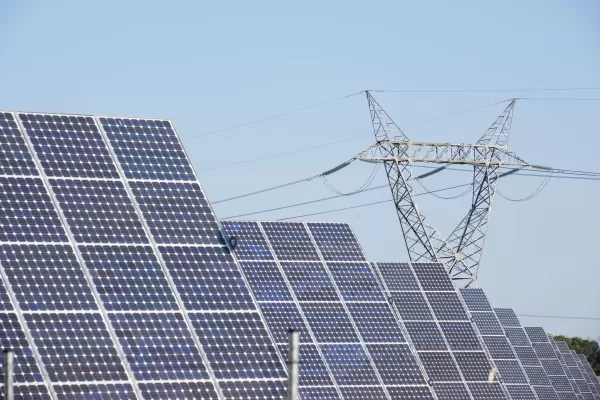
Microsoft is ramping up its renewable energy game, adding another 475 megawatts to its already impressive portfolio. This move is all about keeping up with the voracious energy demands of its expanding data centers. The tech giant has inked a deal with AES, an energy provider, to tap into three solar projects spread across the Midwest—Illinois, Michigan, and Missouri.
This expansion isn't just for show; it's a response to Microsoft's urgent need for more power. Solar energy is a no-brainer for data centers—it's quick to set up, cost-effective, and flexible. It's like the perfect puzzle piece for tech companies needing power, and they need it yesterday.
Microsoft's Solar Journey
Microsoft isn't new to the solar scene. Just in February, they locked in 389 megawatts from three solar projects in Illinois and Texas. And towards the end of last year, they were the driving force behind a whopping $9 billion renewable power coalition, spearheaded by Acadia. With over 34 GW of capacity already under their belt, it's clear Microsoft is all in on renewables.
The Renewable vs. Nuclear Debate
While there's been a buzz about tech companies eyeing nuclear power recently, the speed and affordability of renewables keep solar deals hot. Sure, renewable power alone isn't as steady as nuclear or natural gas, but developers are getting savvy by pairing it with battery storage. This combo ensures a more consistent power supply, around the clock.
Yes, this hybrid approach is pricier than standalone solar or wind, but with the plummeting costs of both solar panels and batteries, these hybrid power plants are starting to nip at the heels of new natural gas plants in terms of price. Meanwhile, new nuclear projects? They're still way out of budget compared to both renewables and natural gas.
The Urgency for Tech Companies
For tech giants and data center developers, time is literally money. The demand for new computing power is skyrocketing, with projections suggesting that up to half of all new AI servers might be underpowered by 2027. And with most new natural gas and nuclear plants not slated to come online until well after that, the pressure is on.
Enter renewables, the quick fix. Utility-scale solar projects can start churning out power in just 18 months. That rapid turnaround is a major draw, leading to some jaw-dropping deals. Take Microsoft's agreement with Brookfield Asset Management last summer, for instance. They committed to 10.5 gigawatts of renewable capacity across the U.S. and Europe, all set to be delivered by 2030.
It's clear that for Microsoft and others in the tech world, renewable energy isn't just a nice-to-have—it's a must-have, and they're going all out to secure it.
Related article
 Ctrip Business Travel Unveils AI Ecosystem with 7 Industry Agents and 17 Core Capabilities
Ctrip Business Travel has officially unveiled the "Ctrip Business Travel AI Ecosystem," leveraging large language models to fundamentally restructure corporate travel management. This comprehensive ecosystem addresses four core scenarios: travel arra
Stripe to Acquire OpenRouter as AI Model Routing Gains Momentum
Stripe has agreed to acquire OpenRouter, an AI model-routing platform that gives developers access to hundreds of models through a single interface. The deal adds model selection and routing to Stripe’s existing work around AI usage and token-based b
Former OpenAI Researcher Barrett Zoph Returns to Google to Support Gemini Development
Barret Zoph, who previously abruptly left and joined OpenAI due to a disagreement with Thinking Machines Lab CEO Miriam Mularati, has once again changed employers. Alphabet's Google announced that Zoph will return as Vice President of Research, bring
Related Special Topic Recommendations
Design & Art
Ctrip Business Travel Unveils AI Ecosystem with 7 Industry Agents and 17 Core Capabilities
Ctrip Business Travel has officially unveiled the "Ctrip Business Travel AI Ecosystem," leveraging large language models to fundamentally restructure corporate travel management. This comprehensive ecosystem addresses four core scenarios: travel arra
Stripe to Acquire OpenRouter as AI Model Routing Gains Momentum
Stripe has agreed to acquire OpenRouter, an AI model-routing platform that gives developers access to hundreds of models through a single interface. The deal adds model selection and routing to Stripe’s existing work around AI usage and token-based b
Former OpenAI Researcher Barrett Zoph Returns to Google to Support Gemini Development
Barret Zoph, who previously abruptly left and joined OpenAI due to a disagreement with Thinking Machines Lab CEO Miriam Mularati, has once again changed employers. Alphabet's Google announced that Zoph will return as Vice President of Research, bring
Related Special Topic Recommendations
Design & Art
 Top AI Illustration Tools: Create Editorial Scenes and Cover Art Faster
2026 Latest Top-rated AI Illustration Tools: Our curated list features the best powerfully designed tools for creating stunning editorial scenes and eye-catching cover art quickly. Each option has gone through rigorous real-world tests, offering a free vs paid comparison to help you find the perfect match for your workflow. Try these must-try solutions today to unlock your AI edge and boost your creative productivity. Explore now at XIX.AI.
 10 tools
 xix.ai
Education and Learning
Top AI Tutors for Exam Prep: Practice Math, Science, and English
xix.ai
Education and Learning
Top AI Tutors for Exam Prep: Practice Math, Science, and English
2026 Latest Top-Rated Best AI Tutors for Exam Prep are here on XIX.AI! Our curated list features powerful game-changing tools that offer free vs paid comparison, real-world tests, and weekly updated rankings. They help boost your writing efficiency, simplify complex topic learning, and unlock your academic potential. Explore now to Discover your perfect exam prep tool and Start creating today to Unlock your AI edge!
10 tools
xix.ai
Finance
AI Budget Planning Tools for Personal Money Management
2026 Latest Best Top-Rated AI Budget Planning Tools for Personal Money Management are here on XIX.AI! This curated collection features powerful, game-changing solutions that help you conduct real-world tests, understand spending habits, and create personalized plans to boost productivity. Enjoy a free vs paid comparison along with detailed rankings. Must-try tools designed to simplify money management and unlock your AI edge. Explore now!
11 tools
xix.ai
Health & Wellness
AI Sleep Tracking Assistants: Improve Recovery with Better Bedtime Habits
2026 Latest Best Top-Rated AI Sleep Tracking Assistants curated for ultimate recovery. This fully updated weekly guide features powerful tools that deliver real-world tests, free vs paid comparison, and detailed rankings to help you find the must-try solution that boosts sleep quality and supports better bedtime habits. Explore now at XIX.AI to Unlock your AI edge.
10 tools
xix.ai
Data Analysis
AI SQL Copilots for Product and Revenue Analytics
2026 Latest Best Top-Rated AI SQL Copilots for Product and Revenue Analytics! XIX.AI has curated a powerful, game-changing collection of must-try tools that undergo real-world tests through weekly updated rankings. These tools help users boost productivity significantly by accelerating data analysis, streamlining complex queries, and generating accurate insights to drive smarter business decisions. Explore now to Discover your perfect tool for unlocking your AI edge!
14 tools
xix.ai
Education and Learning
Best AI Homework Helpers That Teach: Learn Concepts, Not Just Answers
2026 Latest Best Top-Rated AI Homework Helpers That Teach Core Concepts Not Just Answers Powerful Tools for Students Must-Try Curated List Weekly Updated Free vs Paid Comparison Real-World Tests Accurate Rankings to Help You Unlock Your Full Learning Potential Explore now to Discover your perfect tool for smarter studying.
10 tools
xix.ai

 Comments (19)
0/500
Comments (19)
0/500
![DouglasMartínez]()
Wow, Microsoft's really going all-in on solar for its AI data centers! 475 MW is massive. It's great to see them tackling the energy demand head-on, but I can't help but wonder about the total footprint. Are these new builds, or are they just offsetting existing fossil fuel use? Still, a step in the right direction for sure. 🌞
![DonaldJackson]()
Microsoft's solar push is impressive, but can renewables truly keep pace with AI's insatiable energy appetite? Feels like we're just patching a leaky dam while the reservoir keeps rising. 🤔
![GregoryRamirez]()
Microsoft macht wieder Solar-Geschäfte! 475 MW sind eine riesige Menge – aber reicht das überhaupt für den KI-Stromfresser? 😅 Ich frage mich, ob die Rechenzentren trotzdem noch auf fossile Brennstoffe zurückgreifen müssen, wenn die Sonne mal nicht scheint. Trotzdem ein Schritt in die richtige Richtung! 🌞
![CharlesJohnson]()
¿475 MW más para data centers? Me preocupa que la expansión de la IA siga consumiendo recursos a este ritmo 😬 ¿Realmente necesitamos tanta energía para algoritmos?
![RalphMartínez]()
This is huge for sustainable AI! Microsoft’s 475 MW solar boost shows they’re serious about green data centers. Excited to see how this impacts the industry! 🌞
![DouglasScott]()
Super cool to see Microsoft doubling down on solar for their AI data centers! 475 MW is no joke—wonder how much faster this’ll make their AI crunch numbers. 🌞
Microsoft is ramping up its renewable energy game, adding another 475 megawatts to its already impressive portfolio. This move is all about keeping up with the voracious energy demands of its expanding data centers. The tech giant has inked a deal with AES, an energy provider, to tap into three solar projects spread across the Midwest—Illinois, Michigan, and Missouri.
This expansion isn't just for show; it's a response to Microsoft's urgent need for more power. Solar energy is a no-brainer for data centers—it's quick to set up, cost-effective, and flexible. It's like the perfect puzzle piece for tech companies needing power, and they need it yesterday.
Microsoft's Solar Journey
Microsoft isn't new to the solar scene. Just in February, they locked in 389 megawatts from three solar projects in Illinois and Texas. And towards the end of last year, they were the driving force behind a whopping $9 billion renewable power coalition, spearheaded by Acadia. With over 34 GW of capacity already under their belt, it's clear Microsoft is all in on renewables.
The Renewable vs. Nuclear Debate
While there's been a buzz about tech companies eyeing nuclear power recently, the speed and affordability of renewables keep solar deals hot. Sure, renewable power alone isn't as steady as nuclear or natural gas, but developers are getting savvy by pairing it with battery storage. This combo ensures a more consistent power supply, around the clock.
Yes, this hybrid approach is pricier than standalone solar or wind, but with the plummeting costs of both solar panels and batteries, these hybrid power plants are starting to nip at the heels of new natural gas plants in terms of price. Meanwhile, new nuclear projects? They're still way out of budget compared to both renewables and natural gas.
The Urgency for Tech Companies
For tech giants and data center developers, time is literally money. The demand for new computing power is skyrocketing, with projections suggesting that up to half of all new AI servers might be underpowered by 2027. And with most new natural gas and nuclear plants not slated to come online until well after that, the pressure is on.
Enter renewables, the quick fix. Utility-scale solar projects can start churning out power in just 18 months. That rapid turnaround is a major draw, leading to some jaw-dropping deals. Take Microsoft's agreement with Brookfield Asset Management last summer, for instance. They committed to 10.5 gigawatts of renewable capacity across the U.S. and Europe, all set to be delivered by 2030.
It's clear that for Microsoft and others in the tech world, renewable energy isn't just a nice-to-have—it's a must-have, and they're going all out to secure it.








 Ctrip Business Travel Unveils AI Ecosystem with 7 Industry Agents and 17 Core Capabilities
Ctrip Business Travel has officially unveiled the "Ctrip Business Travel AI Ecosystem," leveraging large language models to fundamentally restructure corporate travel management. This comprehensive ecosystem addresses four core scenarios: travel arra
Ctrip Business Travel Unveils AI Ecosystem with 7 Industry Agents and 17 Core Capabilities
Ctrip Business Travel has officially unveiled the "Ctrip Business Travel AI Ecosystem," leveraging large language models to fundamentally restructure corporate travel management. This comprehensive ecosystem addresses four core scenarios: travel arra
 Stripe to Acquire OpenRouter as AI Model Routing Gains Momentum
Stripe has agreed to acquire OpenRouter, an AI model-routing platform that gives developers access to hundreds of models through a single interface. The deal adds model selection and routing to Stripe’s existing work around AI usage and token-based b
Stripe to Acquire OpenRouter as AI Model Routing Gains Momentum
Stripe has agreed to acquire OpenRouter, an AI model-routing platform that gives developers access to hundreds of models through a single interface. The deal adds model selection and routing to Stripe’s existing work around AI usage and token-based b
 Former OpenAI Researcher Barrett Zoph Returns to Google to Support Gemini Development
Barret Zoph, who previously abruptly left and joined OpenAI due to a disagreement with Thinking Machines Lab CEO Miriam Mularati, has once again changed employers. Alphabet's Google announced that Zoph will return as Vice President of Research, bring
Former OpenAI Researcher Barrett Zoph Returns to Google to Support Gemini Development
Barret Zoph, who previously abruptly left and joined OpenAI due to a disagreement with Thinking Machines Lab CEO Miriam Mularati, has once again changed employers. Alphabet's Google announced that Zoph will return as Vice President of Research, bring

2026 Latest Top-rated AI Illustration Tools: Our curated list features the best powerfully designed tools for creating stunning editorial scenes and eye-catching cover art quickly. Each option has gone through rigorous real-world tests, offering a free vs paid comparison to help you find the perfect match for your workflow. Try these must-try solutions today to unlock your AI edge and boost your creative productivity. Explore now at XIX.AI.
10 tools
xix.ai

2026 Latest Top-Rated Best AI Tutors for Exam Prep are here on XIX.AI! Our curated list features powerful game-changing tools that offer free vs paid comparison, real-world tests, and weekly updated rankings. They help boost your writing efficiency, simplify complex topic learning, and unlock your academic potential. Explore now to Discover your perfect exam prep tool and Start creating today to Unlock your AI edge!
10 tools
xix.ai

2026 Latest Best Top-Rated AI Budget Planning Tools for Personal Money Management are here on XIX.AI! This curated collection features powerful, game-changing solutions that help you conduct real-world tests, understand spending habits, and create personalized plans to boost productivity. Enjoy a free vs paid comparison along with detailed rankings. Must-try tools designed to simplify money management and unlock your AI edge. Explore now!
11 tools
xix.ai

2026 Latest Best Top-Rated AI Sleep Tracking Assistants curated for ultimate recovery. This fully updated weekly guide features powerful tools that deliver real-world tests, free vs paid comparison, and detailed rankings to help you find the must-try solution that boosts sleep quality and supports better bedtime habits. Explore now at XIX.AI to Unlock your AI edge.
10 tools
xix.ai

2026 Latest Best Top-Rated AI SQL Copilots for Product and Revenue Analytics! XIX.AI has curated a powerful, game-changing collection of must-try tools that undergo real-world tests through weekly updated rankings. These tools help users boost productivity significantly by accelerating data analysis, streamlining complex queries, and generating accurate insights to drive smarter business decisions. Explore now to Discover your perfect tool for unlocking your AI edge!
14 tools
xix.ai

2026 Latest Best Top-Rated AI Homework Helpers That Teach Core Concepts Not Just Answers Powerful Tools for Students Must-Try Curated List Weekly Updated Free vs Paid Comparison Real-World Tests Accurate Rankings to Help You Unlock Your Full Learning Potential Explore now to Discover your perfect tool for smarter studying.
10 tools
xix.ai

Wow, Microsoft's really going all-in on solar for its AI data centers! 475 MW is massive. It's great to see them tackling the energy demand head-on, but I can't help but wonder about the total footprint. Are these new builds, or are they just offsetting existing fossil fuel use? Still, a step in the right direction for sure. 🌞
Microsoft's solar push is impressive, but can renewables truly keep pace with AI's insatiable energy appetite? Feels like we're just patching a leaky dam while the reservoir keeps rising. 🤔
Microsoft macht wieder Solar-Geschäfte! 475 MW sind eine riesige Menge – aber reicht das überhaupt für den KI-Stromfresser? 😅 Ich frage mich, ob die Rechenzentren trotzdem noch auf fossile Brennstoffe zurückgreifen müssen, wenn die Sonne mal nicht scheint. Trotzdem ein Schritt in die richtige Richtung! 🌞
¿475 MW más para data centers? Me preocupa que la expansión de la IA siga consumiendo recursos a este ritmo 😬 ¿Realmente necesitamos tanta energía para algoritmos?
This is huge for sustainable AI! Microsoft’s 475 MW solar boost shows they’re serious about green data centers. Excited to see how this impacts the industry! 🌞
Super cool to see Microsoft doubling down on solar for their AI data centers! 475 MW is no joke—wonder how much faster this’ll make their AI crunch numbers. 🌞












