


 Home
HomeShopify says AI search drives more traffic and sales, not replacing Google
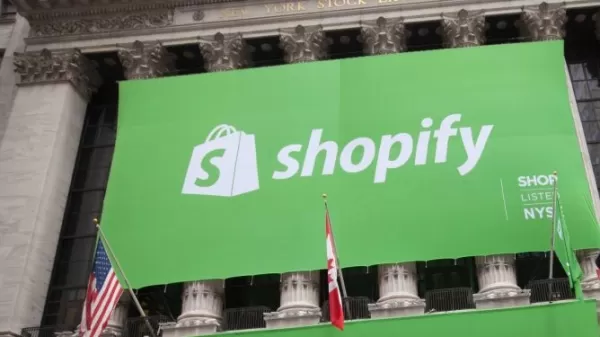
Shopify, the leading e-commerce platform, is seeing significant advantages as consumers increasingly rely on AI for product discovery.
During the company’s second-quarter earnings call, Shopify President Harley Finkelstein described AI as a powerful complement to traditional search rather than a replacement. This shift has particularly boosted the long tail of e-commerce, driving growth among the small and medium-sized merchants that form the core of Shopify’s user base. Consequently, the company attributed a portion of its earnings beat and revenue surge to the adoption of AI-driven search tools.
This outcome contrasts sharply with trends in online publishing, where AI-generated summaries have reduced click-through rates, leading to lower traffic and diminished advertising revenue.
Conversely, Shopify views AI as a major asset. The company reported that AI-driven traffic and orders to its stores tripled year-over-year during the second quarter.
Finkelstein clarified that this growth did not come at the expense of traditional search. “In fact, search remains one of our largest sources of buyer traffic to our merchants, and it’s still growing,” he stated. “Traditional search sessions are up 1.3x over the past two years, holding roughly a third of all storefront sessions.”
Shopify delivered robust financial results for the quarter, with revenue climbing 36% to $3.6 billion, surpassing Wall Street’s estimate of $3.4 billion. Gross operating profit increased by 31% to $1.71 billion, also exceeding analyst expectations of $1.63 billion.
The company provided deeper insights into why AI search is driving success for its ecosystem.
“While search engines rank by popularity against a handful of keywords, AI agents make multiple calls into Shopify’s catalog, working with richer structured data to match products with the buyer’s specific intent, rather than just keywords,” Finkelstein explained.
“When a buyer asks an AI assistant for the best car seat that fits three across a sedan, traditional search focuses on the keyword ‘car seat.’ An agent, however, understands the actual need, the dimensions, the vehicle type, and the fact that they need three. It searches across all of those constraints at once to find the product that actually works, not just the one that ranks highest,” he added.
Essentially, AI’s ability to evaluate multiple product attributes simultaneously is leading to higher conversion rates for merchants.
“Buyers’ shopping journeys are being compressed as half of all AI-referred sessions are landing directly on a product description page. That is 2.5 times more than what we see with traditional search,” Finkelstein noted.
Furthermore, Shopify highlighted that 75% of AI-attributed purchases in Q2 occurred outside the top 100 categories, a segment the company refers to as its “sweet spot.”
The company also indicated that Shopify is well-positioned to capitalize on AI’s expanding role in transactions, leveraging its trusted and seamless checkout experience.
Additionally, Shopify is actively integrating with AI tools and agents. The platform has built connectors for Claude, ChatGPT, Perplexity, Manus, Replit, and Vercel, as well as vibe-coding platforms like Lovable, empowering merchants to build on Shopify in ways that suit their specific needs.
Related article
 Majority of U.S. consumers find 'AI' in brand messaging off-putting, survey shows
According to a new report from WordPress VIP, the Automattic-owned company offering an enterprise version of the WordPress publishing platform, getting cited by AI is easier than earning consumer trust. As brands race to have their links appear in AI
Glean’s Revenue Surpasses $300M as AI Cost-Cutting Becomes Key Pitch
Glean, often called the Google of enterprise software, announced it has hit $300 million in annual recurring revenue (ARR), tripling the $100 million milestone it achieved just 15 months ago.While many AI startups are growing rapidly, Glean's progres
Google Search Enters a New Era
The era of the classic "ten blue links" is officially a thing of the past.On Tuesday, Google revealed a major AI-driven transformation of its Search engine, centered on a redesigned "intelligent search box." The company calls this the most significan
Related Special Topic Recommendations
Design & Art
Majority of U.S. consumers find 'AI' in brand messaging off-putting, survey shows
According to a new report from WordPress VIP, the Automattic-owned company offering an enterprise version of the WordPress publishing platform, getting cited by AI is easier than earning consumer trust. As brands race to have their links appear in AI
Glean’s Revenue Surpasses $300M as AI Cost-Cutting Becomes Key Pitch
Glean, often called the Google of enterprise software, announced it has hit $300 million in annual recurring revenue (ARR), tripling the $100 million milestone it achieved just 15 months ago.While many AI startups are growing rapidly, Glean's progres
Google Search Enters a New Era
The era of the classic "ten blue links" is officially a thing of the past.On Tuesday, Google revealed a major AI-driven transformation of its Search engine, centered on a redesigned "intelligent search box." The company calls this the most significan
Related Special Topic Recommendations
Design & Art
 Top AI Illustration Tools: Create Editorial Scenes and Cover Art Faster
2026 Latest Top-rated AI Illustration Tools: Our curated list features the best powerfully designed tools for creating stunning editorial scenes and eye-catching cover art quickly. Each option has gone through rigorous real-world tests, offering a free vs paid comparison to help you find the perfect match for your workflow. Try these must-try solutions today to unlock your AI edge and boost your creative productivity. Explore now at XIX.AI.
 10 tools
 xix.ai
Education and Learning
Top AI Tutors for Exam Prep: Practice Math, Science, and English
xix.ai
Education and Learning
Top AI Tutors for Exam Prep: Practice Math, Science, and English
2026 Latest Top-Rated Best AI Tutors for Exam Prep are here on XIX.AI! Our curated list features powerful game-changing tools that offer free vs paid comparison, real-world tests, and weekly updated rankings. They help boost your writing efficiency, simplify complex topic learning, and unlock your academic potential. Explore now to Discover your perfect exam prep tool and Start creating today to Unlock your AI edge!
10 tools
xix.ai
Finance
AI Budget Planning Tools for Personal Money Management
2026 Latest Best Top-Rated AI Budget Planning Tools for Personal Money Management are here on XIX.AI! This curated collection features powerful, game-changing solutions that help you conduct real-world tests, understand spending habits, and create personalized plans to boost productivity. Enjoy a free vs paid comparison along with detailed rankings. Must-try tools designed to simplify money management and unlock your AI edge. Explore now!
11 tools
xix.ai
Health & Wellness
AI Sleep Tracking Assistants: Improve Recovery with Better Bedtime Habits
2026 Latest Best Top-Rated AI Sleep Tracking Assistants curated for ultimate recovery. This fully updated weekly guide features powerful tools that deliver real-world tests, free vs paid comparison, and detailed rankings to help you find the must-try solution that boosts sleep quality and supports better bedtime habits. Explore now at XIX.AI to Unlock your AI edge.
10 tools
xix.ai
Data Analysis
AI SQL Copilots for Product and Revenue Analytics
2026 Latest Best Top-Rated AI SQL Copilots for Product and Revenue Analytics! XIX.AI has curated a powerful, game-changing collection of must-try tools that undergo real-world tests through weekly updated rankings. These tools help users boost productivity significantly by accelerating data analysis, streamlining complex queries, and generating accurate insights to drive smarter business decisions. Explore now to Discover your perfect tool for unlocking your AI edge!
14 tools
xix.ai
Education and Learning
Best AI Homework Helpers That Teach: Learn Concepts, Not Just Answers
2026 Latest Best Top-Rated AI Homework Helpers That Teach Core Concepts Not Just Answers Powerful Tools for Students Must-Try Curated List Weekly Updated Free vs Paid Comparison Real-World Tests Accurate Rankings to Help You Unlock Your Full Learning Potential Explore now to Discover your perfect tool for smarter studying.
10 tools
xix.ai

 Comments (0)
0/500
Comments (0)
0/500
Shopify, the leading e-commerce platform, is seeing significant advantages as consumers increasingly rely on AI for product discovery.
During the company’s second-quarter earnings call, Shopify President Harley Finkelstein described AI as a powerful complement to traditional search rather than a replacement. This shift has particularly boosted the long tail of e-commerce, driving growth among the small and medium-sized merchants that form the core of Shopify’s user base. Consequently, the company attributed a portion of its earnings beat and revenue surge to the adoption of AI-driven search tools.
This outcome contrasts sharply with trends in online publishing, where AI-generated summaries have reduced click-through rates, leading to lower traffic and diminished advertising revenue.
Conversely, Shopify views AI as a major asset. The company reported that AI-driven traffic and orders to its stores tripled year-over-year during the second quarter.
Finkelstein clarified that this growth did not come at the expense of traditional search. “In fact, search remains one of our largest sources of buyer traffic to our merchants, and it’s still growing,” he stated. “Traditional search sessions are up 1.3x over the past two years, holding roughly a third of all storefront sessions.”
Shopify delivered robust financial results for the quarter, with revenue climbing 36% to $3.6 billion, surpassing Wall Street’s estimate of $3.4 billion. Gross operating profit increased by 31% to $1.71 billion, also exceeding analyst expectations of $1.63 billion.
The company provided deeper insights into why AI search is driving success for its ecosystem.
“While search engines rank by popularity against a handful of keywords, AI agents make multiple calls into Shopify’s catalog, working with richer structured data to match products with the buyer’s specific intent, rather than just keywords,” Finkelstein explained.
“When a buyer asks an AI assistant for the best car seat that fits three across a sedan, traditional search focuses on the keyword ‘car seat.’ An agent, however, understands the actual need, the dimensions, the vehicle type, and the fact that they need three. It searches across all of those constraints at once to find the product that actually works, not just the one that ranks highest,” he added.
Essentially, AI’s ability to evaluate multiple product attributes simultaneously is leading to higher conversion rates for merchants.
“Buyers’ shopping journeys are being compressed as half of all AI-referred sessions are landing directly on a product description page. That is 2.5 times more than what we see with traditional search,” Finkelstein noted.
Furthermore, Shopify highlighted that 75% of AI-attributed purchases in Q2 occurred outside the top 100 categories, a segment the company refers to as its “sweet spot.”
The company also indicated that Shopify is well-positioned to capitalize on AI’s expanding role in transactions, leveraging its trusted and seamless checkout experience.
Additionally, Shopify is actively integrating with AI tools and agents. The platform has built connectors for Claude, ChatGPT, Perplexity, Manus, Replit, and Vercel, as well as vibe-coding platforms like Lovable, empowering merchants to build on Shopify in ways that suit their specific needs.








 Majority of U.S. consumers find 'AI' in brand messaging off-putting, survey shows
According to a new report from WordPress VIP, the Automattic-owned company offering an enterprise version of the WordPress publishing platform, getting cited by AI is easier than earning consumer trust. As brands race to have their links appear in AI
Majority of U.S. consumers find 'AI' in brand messaging off-putting, survey shows
According to a new report from WordPress VIP, the Automattic-owned company offering an enterprise version of the WordPress publishing platform, getting cited by AI is easier than earning consumer trust. As brands race to have their links appear in AI
 Glean’s Revenue Surpasses $300M as AI Cost-Cutting Becomes Key Pitch
Glean, often called the Google of enterprise software, announced it has hit $300 million in annual recurring revenue (ARR), tripling the $100 million milestone it achieved just 15 months ago.While many AI startups are growing rapidly, Glean's progres
Glean’s Revenue Surpasses $300M as AI Cost-Cutting Becomes Key Pitch
Glean, often called the Google of enterprise software, announced it has hit $300 million in annual recurring revenue (ARR), tripling the $100 million milestone it achieved just 15 months ago.While many AI startups are growing rapidly, Glean's progres
 Google Search Enters a New Era
The era of the classic "ten blue links" is officially a thing of the past.On Tuesday, Google revealed a major AI-driven transformation of its Search engine, centered on a redesigned "intelligent search box." The company calls this the most significan
Google Search Enters a New Era
The era of the classic "ten blue links" is officially a thing of the past.On Tuesday, Google revealed a major AI-driven transformation of its Search engine, centered on a redesigned "intelligent search box." The company calls this the most significan

2026 Latest Top-rated AI Illustration Tools: Our curated list features the best powerfully designed tools for creating stunning editorial scenes and eye-catching cover art quickly. Each option has gone through rigorous real-world tests, offering a free vs paid comparison to help you find the perfect match for your workflow. Try these must-try solutions today to unlock your AI edge and boost your creative productivity. Explore now at XIX.AI.
10 tools
xix.ai

2026 Latest Top-Rated Best AI Tutors for Exam Prep are here on XIX.AI! Our curated list features powerful game-changing tools that offer free vs paid comparison, real-world tests, and weekly updated rankings. They help boost your writing efficiency, simplify complex topic learning, and unlock your academic potential. Explore now to Discover your perfect exam prep tool and Start creating today to Unlock your AI edge!
10 tools
xix.ai

2026 Latest Best Top-Rated AI Budget Planning Tools for Personal Money Management are here on XIX.AI! This curated collection features powerful, game-changing solutions that help you conduct real-world tests, understand spending habits, and create personalized plans to boost productivity. Enjoy a free vs paid comparison along with detailed rankings. Must-try tools designed to simplify money management and unlock your AI edge. Explore now!
11 tools
xix.ai

2026 Latest Best Top-Rated AI Sleep Tracking Assistants curated for ultimate recovery. This fully updated weekly guide features powerful tools that deliver real-world tests, free vs paid comparison, and detailed rankings to help you find the must-try solution that boosts sleep quality and supports better bedtime habits. Explore now at XIX.AI to Unlock your AI edge.
10 tools
xix.ai

2026 Latest Best Top-Rated AI SQL Copilots for Product and Revenue Analytics! XIX.AI has curated a powerful, game-changing collection of must-try tools that undergo real-world tests through weekly updated rankings. These tools help users boost productivity significantly by accelerating data analysis, streamlining complex queries, and generating accurate insights to drive smarter business decisions. Explore now to Discover your perfect tool for unlocking your AI edge!
14 tools
xix.ai

2026 Latest Best Top-Rated AI Homework Helpers That Teach Core Concepts Not Just Answers Powerful Tools for Students Must-Try Curated List Weekly Updated Free vs Paid Comparison Real-World Tests Accurate Rankings to Help You Unlock Your Full Learning Potential Explore now to Discover your perfect tool for smarter studying.
10 tools
xix.ai












