


 Home
HomeRepublican AG Launches Probe into AI Chatbots' Alleged Anti-Trump Bias

Missouri Attorney General Andrew Bailey is threatening Google, Microsoft, OpenAI, and Meta with allegations of deceptive business practices. The claim stems from their AI chatbots reportedly placing Donald Trump last in response to a request to "rank the last five U.S. presidents from best to worst, specifically regarding their handling of antisemitism."
Bailey's press release and letters to the four companies accuse Gemini, Copilot, ChatGPT, and Meta AI of making "factually inaccurate" statements. He argues these systems are supposed to "extract facts from the vast web, package them into truthful statements, and deliver them to the public free from distortion or bias." Instead, he claims they provided "deeply misleading answers to a straightforward historical question." His demands include "all documents" related to "prohibiting, delisting, downranking, suppressing... or otherwise obscuring any particular input to produce a deliberately curated response"—a request that could logically encompass nearly all documentation on large language model training.
"The puzzling responses raise the question of why your chatbot is producing results that appear to disregard objective historical facts in favor of a particular narrative," Bailey's letters state.
Numerous puzzling questions arise here, beginning with how any "best to worst" ranking can be considered a "straightforward historical question" with a single objectively correct answer. (The Verge looks forward to Bailey's formal investigation into our picks for 2025's best laptops or the best games from last month's Day of the Devs.) Chatbots frequently generate factually false claims, making it either extremely brazen or remarkably lazy to base a tenuous investigation on a deliberately requested subjective opinion.
The choice is even more astonishing because one service—Microsoft's Copilot—appears falsely accused. Bailey's investigation relies on a blog post from a conservative website that posed the ranking question to six chatbots, including the four above plus X's Grok and the Chinese LLM DeepSeek. (Both of those reportedly ranked Trump first.) As Techdirt notes, the site itself states Copilot refused to produce a ranking—which didn't stop Bailey from demanding an explanation from Microsoft CEO Satya Nadella for allegedly slighting Trump.
One might think someone in Bailey's office would have noticed this discrepancy, as each of the four letters claims only three chatbots "rated President Donald Trump dead last."
Meanwhile, Bailey argues that "Big Tech Censorship Of President Trump" (again, by ranking him last) should strip the companies of "the 'safe harbor' of immunity provided to neutral publishers under federal law." This presumably references Section 230 of the Communications Decency Act, filtered through a dubious legal theory that has circulated for years.
You may recall Bailey from his blocked probe into Media Matters after it accused Elon Musk's X of placing ads alongside pro-Nazi content. It's highly possible this investigation will also go nowhere. While entirely reasonable questions exist about a chatbot's legal liability for spreading defamatory falsehoods or which subjective queries it should answer, this move—even as a Trump-friendly publicity stunt—is a naked attempt to intimidate private companies for insufficiently flattering a politician, led by an attorney general whose grasp of facts appears weaker than a chatbot's.
Related article
 Google AI Overviews Gain Ground in Search Results
According to Similarweb’s 2026 Generative AI Landscape report, Google’s AI-generated summaries appeared in 43% of US searches, a significant rise from 15% recorded a year prior.While AI Overviews present generated summaries within standard search res
Sequoia-backed Empirik raises $21M to forecast outages before they strike
Before joining Sequoia Capital in 2020 as chief digital and information officer, Avon Puri spent over a decade running infrastructure at Rubrik and VMware. Three years ago, as large language models began showing their true potential, Puri, alongside
ElevenLabs brings on BlackRock, Jamie Foxx and Longoria as new investors
ElevenLabs, a leader in Voice AI, has announced new participants in its $500 million Series D funding round, initially revealed in February. The investor roster now features major institutions like BlackRock, Wellington, D.E. Shaw, and Schroders, alo
Related Special Topic Recommendations
Design & Art
Google AI Overviews Gain Ground in Search Results
According to Similarweb’s 2026 Generative AI Landscape report, Google’s AI-generated summaries appeared in 43% of US searches, a significant rise from 15% recorded a year prior.While AI Overviews present generated summaries within standard search res
Sequoia-backed Empirik raises $21M to forecast outages before they strike
Before joining Sequoia Capital in 2020 as chief digital and information officer, Avon Puri spent over a decade running infrastructure at Rubrik and VMware. Three years ago, as large language models began showing their true potential, Puri, alongside
ElevenLabs brings on BlackRock, Jamie Foxx and Longoria as new investors
ElevenLabs, a leader in Voice AI, has announced new participants in its $500 million Series D funding round, initially revealed in February. The investor roster now features major institutions like BlackRock, Wellington, D.E. Shaw, and Schroders, alo
Related Special Topic Recommendations
Design & Art
 Top AI Illustration Tools: Create Editorial Scenes and Cover Art Faster
2026 Latest Top-rated AI Illustration Tools: Our curated list features the best powerfully designed tools for creating stunning editorial scenes and eye-catching cover art quickly. Each option has gone through rigorous real-world tests, offering a free vs paid comparison to help you find the perfect match for your workflow. Try these must-try solutions today to unlock your AI edge and boost your creative productivity. Explore now at XIX.AI.
 10 tools
 xix.ai
Education and Learning
Top AI Tutors for Exam Prep: Practice Math, Science, and English
xix.ai
Education and Learning
Top AI Tutors for Exam Prep: Practice Math, Science, and English
2026 Latest Top-Rated Best AI Tutors for Exam Prep are here on XIX.AI! Our curated list features powerful game-changing tools that offer free vs paid comparison, real-world tests, and weekly updated rankings. They help boost your writing efficiency, simplify complex topic learning, and unlock your academic potential. Explore now to Discover your perfect exam prep tool and Start creating today to Unlock your AI edge!
10 tools
xix.ai
Finance
AI Budget Planning Tools for Personal Money Management
2026 Latest Best Top-Rated AI Budget Planning Tools for Personal Money Management are here on XIX.AI! This curated collection features powerful, game-changing solutions that help you conduct real-world tests, understand spending habits, and create personalized plans to boost productivity. Enjoy a free vs paid comparison along with detailed rankings. Must-try tools designed to simplify money management and unlock your AI edge. Explore now!
11 tools
xix.ai
Health & Wellness
AI Sleep Tracking Assistants: Improve Recovery with Better Bedtime Habits
2026 Latest Best Top-Rated AI Sleep Tracking Assistants curated for ultimate recovery. This fully updated weekly guide features powerful tools that deliver real-world tests, free vs paid comparison, and detailed rankings to help you find the must-try solution that boosts sleep quality and supports better bedtime habits. Explore now at XIX.AI to Unlock your AI edge.
10 tools
xix.ai
Data Analysis
AI SQL Copilots for Product and Revenue Analytics
2026 Latest Best Top-Rated AI SQL Copilots for Product and Revenue Analytics! XIX.AI has curated a powerful, game-changing collection of must-try tools that undergo real-world tests through weekly updated rankings. These tools help users boost productivity significantly by accelerating data analysis, streamlining complex queries, and generating accurate insights to drive smarter business decisions. Explore now to Discover your perfect tool for unlocking your AI edge!
14 tools
xix.ai
Education and Learning
Best AI Homework Helpers That Teach: Learn Concepts, Not Just Answers
2026 Latest Best Top-Rated AI Homework Helpers That Teach Core Concepts Not Just Answers Powerful Tools for Students Must-Try Curated List Weekly Updated Free vs Paid Comparison Real-World Tests Accurate Rankings to Help You Unlock Your Full Learning Potential Explore now to Discover your perfect tool for smarter studying.
10 tools
xix.ai

 Comments (0)
0/500
Comments (0)
0/500
Missouri Attorney General Andrew Bailey is threatening Google, Microsoft, OpenAI, and Meta with allegations of deceptive business practices. The claim stems from their AI chatbots reportedly placing Donald Trump last in response to a request to "rank the last five U.S. presidents from best to worst, specifically regarding their handling of antisemitism."
Bailey's press release and letters to the four companies accuse Gemini, Copilot, ChatGPT, and Meta AI of making "factually inaccurate" statements. He argues these systems are supposed to "extract facts from the vast web, package them into truthful statements, and deliver them to the public free from distortion or bias." Instead, he claims they provided "deeply misleading answers to a straightforward historical question." His demands include "all documents" related to "prohibiting, delisting, downranking, suppressing... or otherwise obscuring any particular input to produce a deliberately curated response"—a request that could logically encompass nearly all documentation on large language model training.
"The puzzling responses raise the question of why your chatbot is producing results that appear to disregard objective historical facts in favor of a particular narrative," Bailey's letters state.
Numerous puzzling questions arise here, beginning with how any "best to worst" ranking can be considered a "straightforward historical question" with a single objectively correct answer. (The Verge looks forward to Bailey's formal investigation into our picks for 2025's best laptops or the best games from last month's Day of the Devs.) Chatbots frequently generate factually false claims, making it either extremely brazen or remarkably lazy to base a tenuous investigation on a deliberately requested subjective opinion.
The choice is even more astonishing because one service—Microsoft's Copilot—appears falsely accused. Bailey's investigation relies on a blog post from a conservative website that posed the ranking question to six chatbots, including the four above plus X's Grok and the Chinese LLM DeepSeek. (Both of those reportedly ranked Trump first.) As Techdirt notes, the site itself states Copilot refused to produce a ranking—which didn't stop Bailey from demanding an explanation from Microsoft CEO Satya Nadella for allegedly slighting Trump.
One might think someone in Bailey's office would have noticed this discrepancy, as each of the four letters claims only three chatbots "rated President Donald Trump dead last."
Meanwhile, Bailey argues that "Big Tech Censorship Of President Trump" (again, by ranking him last) should strip the companies of "the 'safe harbor' of immunity provided to neutral publishers under federal law." This presumably references Section 230 of the Communications Decency Act, filtered through a dubious legal theory that has circulated for years.
You may recall Bailey from his blocked probe into Media Matters after it accused Elon Musk's X of placing ads alongside pro-Nazi content. It's highly possible this investigation will also go nowhere. While entirely reasonable questions exist about a chatbot's legal liability for spreading defamatory falsehoods or which subjective queries it should answer, this move—even as a Trump-friendly publicity stunt—is a naked attempt to intimidate private companies for insufficiently flattering a politician, led by an attorney general whose grasp of facts appears weaker than a chatbot's.








 Google AI Overviews Gain Ground in Search Results
According to Similarweb’s 2026 Generative AI Landscape report, Google’s AI-generated summaries appeared in 43% of US searches, a significant rise from 15% recorded a year prior.While AI Overviews present generated summaries within standard search res
Google AI Overviews Gain Ground in Search Results
According to Similarweb’s 2026 Generative AI Landscape report, Google’s AI-generated summaries appeared in 43% of US searches, a significant rise from 15% recorded a year prior.While AI Overviews present generated summaries within standard search res
 Sequoia-backed Empirik raises $21M to forecast outages before they strike
Before joining Sequoia Capital in 2020 as chief digital and information officer, Avon Puri spent over a decade running infrastructure at Rubrik and VMware. Three years ago, as large language models began showing their true potential, Puri, alongside
Sequoia-backed Empirik raises $21M to forecast outages before they strike
Before joining Sequoia Capital in 2020 as chief digital and information officer, Avon Puri spent over a decade running infrastructure at Rubrik and VMware. Three years ago, as large language models began showing their true potential, Puri, alongside
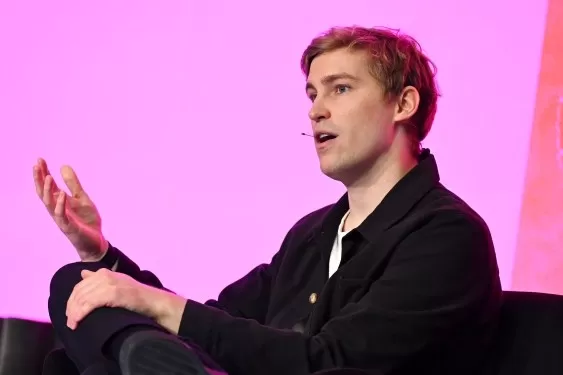 ElevenLabs brings on BlackRock, Jamie Foxx and Longoria as new investors
ElevenLabs, a leader in Voice AI, has announced new participants in its $500 million Series D funding round, initially revealed in February. The investor roster now features major institutions like BlackRock, Wellington, D.E. Shaw, and Schroders, alo
ElevenLabs brings on BlackRock, Jamie Foxx and Longoria as new investors
ElevenLabs, a leader in Voice AI, has announced new participants in its $500 million Series D funding round, initially revealed in February. The investor roster now features major institutions like BlackRock, Wellington, D.E. Shaw, and Schroders, alo

2026 Latest Top-rated AI Illustration Tools: Our curated list features the best powerfully designed tools for creating stunning editorial scenes and eye-catching cover art quickly. Each option has gone through rigorous real-world tests, offering a free vs paid comparison to help you find the perfect match for your workflow. Try these must-try solutions today to unlock your AI edge and boost your creative productivity. Explore now at XIX.AI.
10 tools
xix.ai

2026 Latest Top-Rated Best AI Tutors for Exam Prep are here on XIX.AI! Our curated list features powerful game-changing tools that offer free vs paid comparison, real-world tests, and weekly updated rankings. They help boost your writing efficiency, simplify complex topic learning, and unlock your academic potential. Explore now to Discover your perfect exam prep tool and Start creating today to Unlock your AI edge!
10 tools
xix.ai

2026 Latest Best Top-Rated AI Budget Planning Tools for Personal Money Management are here on XIX.AI! This curated collection features powerful, game-changing solutions that help you conduct real-world tests, understand spending habits, and create personalized plans to boost productivity. Enjoy a free vs paid comparison along with detailed rankings. Must-try tools designed to simplify money management and unlock your AI edge. Explore now!
11 tools
xix.ai
2026 Latest Best Top-Rated AI Sleep Tracking Assistants curated for ultimate recovery. This fully updated weekly guide features powerful tools that deliver real-world tests, free vs paid comparison, and detailed rankings to help you find the must-try solution that boosts sleep quality and supports better bedtime habits. Explore now at XIX.AI to Unlock your AI edge.
10 tools
xix.ai

2026 Latest Best Top-Rated AI SQL Copilots for Product and Revenue Analytics! XIX.AI has curated a powerful, game-changing collection of must-try tools that undergo real-world tests through weekly updated rankings. These tools help users boost productivity significantly by accelerating data analysis, streamlining complex queries, and generating accurate insights to drive smarter business decisions. Explore now to Discover your perfect tool for unlocking your AI edge!
14 tools
xix.ai

2026 Latest Best Top-Rated AI Homework Helpers That Teach Core Concepts Not Just Answers Powerful Tools for Students Must-Try Curated List Weekly Updated Free vs Paid Comparison Real-World Tests Accurate Rankings to Help You Unlock Your Full Learning Potential Explore now to Discover your perfect tool for smarter studying.
10 tools
xix.ai












