


 Home
HomeQualcomm Teams Up with Neura Robotics in Strategic AI Partnership
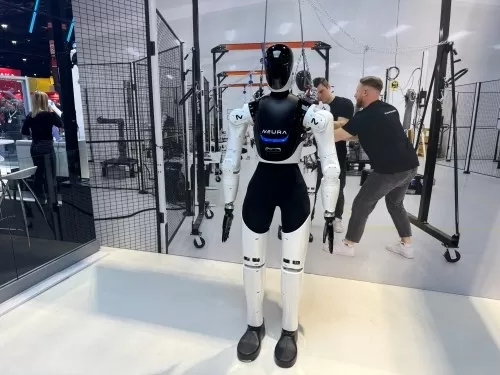
German robotics firm Neura Robotics has entered into a strategic collaboration with semiconductor leader Qualcomm to develop the next wave of robots and embodied AI systems. This agreement represents the latest in a series of alliances emerging within the physical AI sector, linking robotics innovators with established hardware and software providers.
Although specific product details were not disclosed in Monday’s announcement, the two companies intend to jointly construct the "brain and nervous system" for robots. The goal is to accelerate the adoption of humanoid and general-purpose robots across both home and industrial environments.
Neura will incorporate Qualcomm’s Dragonwing Robotics IQ10 processors as reference designs into its robotic platforms. The IQ10 series, unveiled earlier this year at CES, is engineered specifically for autonomous mobile robots (AMRs) and humanoid systems.
Additionally, Neura plans to leverage its Neuraverse simulation and training platform—launched in June 2025—to test and optimize robots powered by Qualcomm’s IQ10 processors.
“This partnership is a significant milestone in realizing practical physical AI: open, scalable, and trustworthy,” stated David Reger, CEO and founder of Neura Robotics, in a press release. “By combining our cognitive robotics platforms and the Neuraverse ecosystem with Qualcomm Technologies’ expertise in edge AI and connectivity, we aim to fast-track a future where cognitive robots work safely alongside people in various industries and daily life.”
The collaboration offers clear benefits for both parties. It also illustrates a model that is likely to gain traction among robotics firms aiming to commercialize their products. For example, Boston Dynamics announced a strategic alliance with Google DeepMind in January to accelerate development of its Atlas humanoid robot using Google’s foundational AI models.
While Boston Dynamics and Neura’s partnerships focus on different technologies—AI models versus semiconductors—the underlying strategy is similar. Rather than simply acting as customers of tech suppliers, robotics companies are forming deeper partnerships to better integrate and leverage these technologies.
A robotics company with strong software capabilities can achieve faster and more cost-effective market entry and scaling by collaborating with hardware specialists who have already solved complex technical challenges, such as developing dexterous robotic hands.
In Neura’s situation, the company gains the ability to design and test robots optimized for the chips they use, while Qualcomm gains valuable insight into how robotics firms utilize its processors.
As more AI giants like Nvidia view physical AI as the next major growth area, they will seek greater involvement in how their technology is applied. The takeaway: anticipate more such partnerships in the near future.
Related article
 Nvidia H200 China deal survives Trump-Xi summit, but not as expected
President Trump traveled to Beijing with Jensen Huang joining the delegation at the eleventh hour, departing two days later with vague remarks about potential chip export developments. No deal materialized. Since Trump first authorized sales in Decem
Nvidia to Derive 25% of Next Year’s Revenue from Funded Labs
Nvidia has deployed nearly US$50 billion into AI labs purchasing its chips, securing commitments for over $500 billion in total.On August 26, CFO Colette Kress informed analysts that these labs, backed by Nvidia’s balance sheet, will account for roug
ElevenLabs brings on BlackRock, Jamie Foxx and Longoria as new investors
ElevenLabs, a leader in Voice AI, has announced new participants in its $500 million Series D funding round, initially revealed in February. The investor roster now features major institutions like BlackRock, Wellington, D.E. Shaw, and Schroders, alo
Related Special Topic Recommendations
Design & Art
Nvidia H200 China deal survives Trump-Xi summit, but not as expected
President Trump traveled to Beijing with Jensen Huang joining the delegation at the eleventh hour, departing two days later with vague remarks about potential chip export developments. No deal materialized. Since Trump first authorized sales in Decem
Nvidia to Derive 25% of Next Year’s Revenue from Funded Labs
Nvidia has deployed nearly US$50 billion into AI labs purchasing its chips, securing commitments for over $500 billion in total.On August 26, CFO Colette Kress informed analysts that these labs, backed by Nvidia’s balance sheet, will account for roug
ElevenLabs brings on BlackRock, Jamie Foxx and Longoria as new investors
ElevenLabs, a leader in Voice AI, has announced new participants in its $500 million Series D funding round, initially revealed in February. The investor roster now features major institutions like BlackRock, Wellington, D.E. Shaw, and Schroders, alo
Related Special Topic Recommendations
Design & Art
 Top AI Illustration Tools: Create Editorial Scenes and Cover Art Faster
2026 Latest Top-rated AI Illustration Tools: Our curated list features the best powerfully designed tools for creating stunning editorial scenes and eye-catching cover art quickly. Each option has gone through rigorous real-world tests, offering a free vs paid comparison to help you find the perfect match for your workflow. Try these must-try solutions today to unlock your AI edge and boost your creative productivity. Explore now at XIX.AI.
 10 tools
 xix.ai
Education and Learning
Top AI Tutors for Exam Prep: Practice Math, Science, and English
xix.ai
Education and Learning
Top AI Tutors for Exam Prep: Practice Math, Science, and English
2026 Latest Top-Rated Best AI Tutors for Exam Prep are here on XIX.AI! Our curated list features powerful game-changing tools that offer free vs paid comparison, real-world tests, and weekly updated rankings. They help boost your writing efficiency, simplify complex topic learning, and unlock your academic potential. Explore now to Discover your perfect exam prep tool and Start creating today to Unlock your AI edge!
10 tools
xix.ai
Finance
AI Budget Planning Tools for Personal Money Management
2026 Latest Best Top-Rated AI Budget Planning Tools for Personal Money Management are here on XIX.AI! This curated collection features powerful, game-changing solutions that help you conduct real-world tests, understand spending habits, and create personalized plans to boost productivity. Enjoy a free vs paid comparison along with detailed rankings. Must-try tools designed to simplify money management and unlock your AI edge. Explore now!
11 tools
xix.ai
Health & Wellness
AI Sleep Tracking Assistants: Improve Recovery with Better Bedtime Habits
2026 Latest Best Top-Rated AI Sleep Tracking Assistants curated for ultimate recovery. This fully updated weekly guide features powerful tools that deliver real-world tests, free vs paid comparison, and detailed rankings to help you find the must-try solution that boosts sleep quality and supports better bedtime habits. Explore now at XIX.AI to Unlock your AI edge.
10 tools
xix.ai
Data Analysis
AI SQL Copilots for Product and Revenue Analytics
2026 Latest Best Top-Rated AI SQL Copilots for Product and Revenue Analytics! XIX.AI has curated a powerful, game-changing collection of must-try tools that undergo real-world tests through weekly updated rankings. These tools help users boost productivity significantly by accelerating data analysis, streamlining complex queries, and generating accurate insights to drive smarter business decisions. Explore now to Discover your perfect tool for unlocking your AI edge!
14 tools
xix.ai
Education and Learning
Best AI Homework Helpers That Teach: Learn Concepts, Not Just Answers
2026 Latest Best Top-Rated AI Homework Helpers That Teach Core Concepts Not Just Answers Powerful Tools for Students Must-Try Curated List Weekly Updated Free vs Paid Comparison Real-World Tests Accurate Rankings to Help You Unlock Your Full Learning Potential Explore now to Discover your perfect tool for smarter studying.
10 tools
xix.ai

 Comments (3)
0/500
Comments (3)
0/500
![MarkJohnson]()
Qualcomm and Neura Robotics? Finally someone is making robots that don't look like they're about to malfunction in a grocery store aisle! 🤖🇩🇪 I'm cautiously optimistic, but let's see if they can actually handle real-world chaos or if it's just another press release. The embodied AI hype is real, but execution is everything.
![StevenMartin]()
Interesting partnership! I wonder if this means we'll see more affordable consumer robots soon, or if it's mostly for industrial applications. The 'embodied AI' part is what really catches my eye—machines that can physically interact with the world. Hope they prioritize safety and ethical guidelines from the start, not as an afterthought. 🤖
![LarryMartin]()
퀄컴이 로봇 공학 분야에 본격 진출했네요. 특정 용도 로봇을 넘어 '구체화된 AI'라는 접근이 더 흥미롭습니다. 반도체 설계에 생체 역학이나 물리적 상호작용 최적화 같은 요소가 어떻게 녹아들까요? 🤔 향후 시장 판도에 큰 변화가 올 수도 있겠어요.
German robotics firm Neura Robotics has entered into a strategic collaboration with semiconductor leader Qualcomm to develop the next wave of robots and embodied AI systems. This agreement represents the latest in a series of alliances emerging within the physical AI sector, linking robotics innovators with established hardware and software providers.
Although specific product details were not disclosed in Monday’s announcement, the two companies intend to jointly construct the "brain and nervous system" for robots. The goal is to accelerate the adoption of humanoid and general-purpose robots across both home and industrial environments.
Neura will incorporate Qualcomm’s Dragonwing Robotics IQ10 processors as reference designs into its robotic platforms. The IQ10 series, unveiled earlier this year at CES, is engineered specifically for autonomous mobile robots (AMRs) and humanoid systems.
Additionally, Neura plans to leverage its Neuraverse simulation and training platform—launched in June 2025—to test and optimize robots powered by Qualcomm’s IQ10 processors.
“This partnership is a significant milestone in realizing practical physical AI: open, scalable, and trustworthy,” stated David Reger, CEO and founder of Neura Robotics, in a press release. “By combining our cognitive robotics platforms and the Neuraverse ecosystem with Qualcomm Technologies’ expertise in edge AI and connectivity, we aim to fast-track a future where cognitive robots work safely alongside people in various industries and daily life.”
The collaboration offers clear benefits for both parties. It also illustrates a model that is likely to gain traction among robotics firms aiming to commercialize their products. For example, Boston Dynamics announced a strategic alliance with Google DeepMind in January to accelerate development of its Atlas humanoid robot using Google’s foundational AI models.
While Boston Dynamics and Neura’s partnerships focus on different technologies—AI models versus semiconductors—the underlying strategy is similar. Rather than simply acting as customers of tech suppliers, robotics companies are forming deeper partnerships to better integrate and leverage these technologies.
A robotics company with strong software capabilities can achieve faster and more cost-effective market entry and scaling by collaborating with hardware specialists who have already solved complex technical challenges, such as developing dexterous robotic hands.
In Neura’s situation, the company gains the ability to design and test robots optimized for the chips they use, while Qualcomm gains valuable insight into how robotics firms utilize its processors.
As more AI giants like Nvidia view physical AI as the next major growth area, they will seek greater involvement in how their technology is applied. The takeaway: anticipate more such partnerships in the near future.








 Nvidia H200 China deal survives Trump-Xi summit, but not as expected
President Trump traveled to Beijing with Jensen Huang joining the delegation at the eleventh hour, departing two days later with vague remarks about potential chip export developments. No deal materialized. Since Trump first authorized sales in Decem
Nvidia H200 China deal survives Trump-Xi summit, but not as expected
President Trump traveled to Beijing with Jensen Huang joining the delegation at the eleventh hour, departing two days later with vague remarks about potential chip export developments. No deal materialized. Since Trump first authorized sales in Decem
 Nvidia to Derive 25% of Next Year’s Revenue from Funded Labs
Nvidia has deployed nearly US$50 billion into AI labs purchasing its chips, securing commitments for over $500 billion in total.On August 26, CFO Colette Kress informed analysts that these labs, backed by Nvidia’s balance sheet, will account for roug
Nvidia to Derive 25% of Next Year’s Revenue from Funded Labs
Nvidia has deployed nearly US$50 billion into AI labs purchasing its chips, securing commitments for over $500 billion in total.On August 26, CFO Colette Kress informed analysts that these labs, backed by Nvidia’s balance sheet, will account for roug
 ElevenLabs brings on BlackRock, Jamie Foxx and Longoria as new investors
ElevenLabs, a leader in Voice AI, has announced new participants in its $500 million Series D funding round, initially revealed in February. The investor roster now features major institutions like BlackRock, Wellington, D.E. Shaw, and Schroders, alo
ElevenLabs brings on BlackRock, Jamie Foxx and Longoria as new investors
ElevenLabs, a leader in Voice AI, has announced new participants in its $500 million Series D funding round, initially revealed in February. The investor roster now features major institutions like BlackRock, Wellington, D.E. Shaw, and Schroders, alo

2026 Latest Top-rated AI Illustration Tools: Our curated list features the best powerfully designed tools for creating stunning editorial scenes and eye-catching cover art quickly. Each option has gone through rigorous real-world tests, offering a free vs paid comparison to help you find the perfect match for your workflow. Try these must-try solutions today to unlock your AI edge and boost your creative productivity. Explore now at XIX.AI.
10 tools
xix.ai

2026 Latest Top-Rated Best AI Tutors for Exam Prep are here on XIX.AI! Our curated list features powerful game-changing tools that offer free vs paid comparison, real-world tests, and weekly updated rankings. They help boost your writing efficiency, simplify complex topic learning, and unlock your academic potential. Explore now to Discover your perfect exam prep tool and Start creating today to Unlock your AI edge!
10 tools
xix.ai

2026 Latest Best Top-Rated AI Budget Planning Tools for Personal Money Management are here on XIX.AI! This curated collection features powerful, game-changing solutions that help you conduct real-world tests, understand spending habits, and create personalized plans to boost productivity. Enjoy a free vs paid comparison along with detailed rankings. Must-try tools designed to simplify money management and unlock your AI edge. Explore now!
11 tools
xix.ai

2026 Latest Best Top-Rated AI Sleep Tracking Assistants curated for ultimate recovery. This fully updated weekly guide features powerful tools that deliver real-world tests, free vs paid comparison, and detailed rankings to help you find the must-try solution that boosts sleep quality and supports better bedtime habits. Explore now at XIX.AI to Unlock your AI edge.
10 tools
xix.ai

2026 Latest Best Top-Rated AI SQL Copilots for Product and Revenue Analytics! XIX.AI has curated a powerful, game-changing collection of must-try tools that undergo real-world tests through weekly updated rankings. These tools help users boost productivity significantly by accelerating data analysis, streamlining complex queries, and generating accurate insights to drive smarter business decisions. Explore now to Discover your perfect tool for unlocking your AI edge!
14 tools
xix.ai

2026 Latest Best Top-Rated AI Homework Helpers That Teach Core Concepts Not Just Answers Powerful Tools for Students Must-Try Curated List Weekly Updated Free vs Paid Comparison Real-World Tests Accurate Rankings to Help You Unlock Your Full Learning Potential Explore now to Discover your perfect tool for smarter studying.
10 tools
xix.ai

Qualcomm and Neura Robotics? Finally someone is making robots that don't look like they're about to malfunction in a grocery store aisle! 🤖🇩🇪 I'm cautiously optimistic, but let's see if they can actually handle real-world chaos or if it's just another press release. The embodied AI hype is real, but execution is everything.
Interesting partnership! I wonder if this means we'll see more affordable consumer robots soon, or if it's mostly for industrial applications. The 'embodied AI' part is what really catches my eye—machines that can physically interact with the world. Hope they prioritize safety and ethical guidelines from the start, not as an afterthought. 🤖
퀄컴이 로봇 공학 분야에 본격 진출했네요. 특정 용도 로봇을 넘어 '구체화된 AI'라는 접근이 더 흥미롭습니다. 반도체 설계에 생체 역학이나 물리적 상호작용 최적화 같은 요소가 어떻게 녹아들까요? 🤔 향후 시장 판도에 큰 변화가 올 수도 있겠어요.












