


 Home
HomeGPT-5 Launch Faces Challenges as OpenAI Navigates Rollout Hurdles

Updated Friday, August 8, 2025, 5:21 PM ET: Shortly after this article was published, OpenAI co-founder and CEO Sam Altman confirmed the company would restore GPT-4o and other legacy model access for select users, acknowledging that the GPT-5 rollout was "more bumpy than we had hoped."
To put it mildly, the highly anticipated launch of OpenAI’s new model, GPT‑5, has gotten off to a rocky start.
Even overlooking chart errors and voice demo glitches from yesterday’s live-streamed unveiling (which introduced four distinct models as well as a “Thinking” mode available for three of them), multiple user reports since release show GPT‑5 struggling with relatively simple problems that earlier OpenAI models—and rival systems from competing AI labs—solve correctly.
For instance, data scientist Colin Fraser shared screenshots of GPT‑5 incorrectly handling a math proof—specifically, whether 8.888 repeating equals 9 (it does not).
Wow, I was just playing around before but it actually is stupid pic.twitter.com/ao51nOH0Ui
— Colin Fraser (@colin_fraser) August 8, 2025
It also failed on a simple arithmetic equation, 5.9 = x + 5.11, a problem many elementary students could solve.
This is concerning. https://t.co/PUbeCSgtRV
— Benjamin De Kraker (@BenjaminDEKR) August 8, 2025
Using GPT‑5 to evaluate OpenAI's own flawed presentation charts didn’t produce useful or accurate responses either.
Q. Prove using an LLM-as-a-judge still doesn't work
A. pic.twitter.com/KnCK5Xs9ja
— Kangwook Lee (@Kangwook_Lee) August 7, 2025
Additionally, it stumbled on this trickier word problem (which, admittedly, even I found challenging at first—though Elon Musk’s Grok 4 AI answered it correctly. For a hint, remember that flagstones cannot be split; all 80 must remain intact).
Careful not to cut yourself on the jagged frontier pic.twitter.com/buJGgJ6baI
— Greg Burnham (@GregHBurnham) August 8, 2025
In my tests, the older GPT‑4o model handled at least one of these math problems more reliably. Unfortunately, OpenAI is gradually phasing out those earlier models—including the previous default GPT‑4o and the advanced reasoning model o3—for ChatGPT users, though they will remain accessible via the API for developers in the near term.
Coding performance falls short of benchmarks
Despite OpenAI’s internal benchmarks and certain third-party tests showing GPT‑5 as the top-performing model for coding, real-world usage suggests Anthropic’s recently upgraded Claude Opus 4.1 often handles “one‑shot” tasks more effectively—delivering the user’s intended application or software build as requested. See this example from developer Justin Sun, posted on X:
Opus 4.1's one-shot attempt at "create a 3d capybara petting zoo" – 8 minutes total
This was honestly pretty insane, not only are the capybaras way cuter and moving, there are individual pet affinity levels, a day/night switcher, feeding, and even a screenshot feature pic.twitter.com/FiKTO3FKK4
— justin (@justinsunyt) August 7, 2025
Moreover, a report from security firm SPLX revealed that OpenAI’s internal safety measures had significant gaps in areas like business alignment and susceptibility to prompt injection and obfuscated logic attacks.
Although anecdotal, early feedback from AI power users suggests a lukewarm reception overall.
AI influencer and former Googler Bilawal Sidhu ran a poll on X asking followers for a “vibe check.” With 172 votes so far, the prevailing response has been “Kinda mid.”
Alright, GPT-5 vibe check
— Bilawal Sidhu (@bilawalsidhu) August 7, 2025
As the pseudonymous AI Leaks and News account noted, “The overwhelming consensus on GPT-5 from both X and the Reddit AMA are overwhelmingly negative.”
The overwhelming consensus on GPT-5 from both X and the Reddit AMA are overwhelmingly negative
Most users are disgruntled about the broken model picker and non-pro users not having access to legacy models
What are your initial thoughts on GPT-5?
— AI Leaks and News (@AILeaksAndNews) August 8, 2025
Tibor Blaho, lead engineer at AIPRM and a well-known AI commentator on X, compiled a thorough summary of the ChatGPT‑5 rollout issues. He pointed out that one of the flagship features—an automatic “router” that selects either thinking or non‑thinking mode based on query complexity—has become a primary complaint, since the model often defaults to non‑thinking mode for many users.
A bit sad how the GPT-5 launch is going so far, especially after the long wait and high expectations
– The automatic switching between models (the router) seems partly broken/unreliable
– It's unclear exactly which model you're actually interacting with (standard or mini,…
— Tibor Blaho (@btibor91) August 8, 2025
Competitors poised to capitalize
As a result, sentiment around ChatGPT‑5 is far from uniformly positive—posing a serious challenge for OpenAI as competition intensifies from U.S. giants like Google and Anthropic, and from a growing roster of free, open‑source, and capable Chinese large language models offering capabilities many U.S. models lack.
Consider the Alibaba Qwen research team, which today upgraded their high‑performance Qwen 3 model to support 1 million tokens of context. This allows users to exchange nearly four times more information per interaction than GPT‑5 currently offers.
With OpenAI’s other major release this week—a new open‑source gpt‑oss model series—also receiving mixed early reviews, the outlook is uncertain for the user‑leading dedicated AI company (ChatGPT now counts 700 million weekly active users).
This sentiment is echoed on the prediction market Polymarket, where users overwhelmingly bet that Google will likely have the leading AI model by the end of August 2025.
Other power users, such as Otherside AI co‑founder and CEO Matt Shumer—who had early GPT‑5 access and published a positive review—suggested that opinions may shift as更多的人 optimize their workflows for the new model:
A lot of folks who are having a bad experience are using GPT-5 in agent harnesses that aren't yet optimized for it.
For every new model release, there's a time lag between release + when companies that integrate the model have it truly working well.
Agent companies rush to…
— Matt Shumer (@mattshumer_) August 8, 2025
While it’s still early for GPT‑5—and opinions could shift significantly as more people test it across various tasks—initial signs suggest this is not the “home run” that prior launches like GPT‑4, GPT‑4o, or o3 represented. That’s a troubling signal for a company that recently secured another funding round yet remains unprofitable due to steep R&D expenses.
Related article
 OpenAI launches safer ChatGPT for teens years after they started using it
Following a series of lawsuits regarding the absence of safety protocols in AI chatbots—which contributed to teen suicides and other mental health crises—OpenAI unveiled ChatGPT for Teens on Monday. This new offering incorporates enhanced safety feat
Frontier AI Labs Refuse to Disclose Containment Strategies for Rogue Models
Recent research indicates that very few leading AI laboratories have published or demonstrated containment response plans. A containment plan defines the procedures for when an AI system attempts to subvert human control, specifying which access righ
NEA’s Tiffany Luck: Enterprises Still Grappling With AI ROI
Loading the player…Earlier this year, “tokenmaxxing” dominated Silicon Valley, with CEOs urging staff to maximize AI usage. That enthusiasm quickly met reality. Uber reportedly exceeded its annual AI budget within months, some firms reduced Claude li
Related Special Topic Recommendations
Design & Art
OpenAI launches safer ChatGPT for teens years after they started using it
Following a series of lawsuits regarding the absence of safety protocols in AI chatbots—which contributed to teen suicides and other mental health crises—OpenAI unveiled ChatGPT for Teens on Monday. This new offering incorporates enhanced safety feat
Frontier AI Labs Refuse to Disclose Containment Strategies for Rogue Models
Recent research indicates that very few leading AI laboratories have published or demonstrated containment response plans. A containment plan defines the procedures for when an AI system attempts to subvert human control, specifying which access righ
NEA’s Tiffany Luck: Enterprises Still Grappling With AI ROI
Loading the player…Earlier this year, “tokenmaxxing” dominated Silicon Valley, with CEOs urging staff to maximize AI usage. That enthusiasm quickly met reality. Uber reportedly exceeded its annual AI budget within months, some firms reduced Claude li
Related Special Topic Recommendations
Design & Art
 Best AI Style Transfer Tools for Creative Experiments
2026 Latest Best Top-rated AI Style Transfer Tools for Creative Experiments! XIX.AI has curated a powerful, game-changing collection of must-try tools that deliver exceptional results through real-world tests and rigorous rankings. These top solutions help creatives boost productivity significantly by accelerating content creation and unlocking endless creative possibilities. Explore now to discover your perfect tool and start creating today!
 9 tools
 xix.ai
Comic Creation
Best AI Dialogue Bubble Tools for Visual Storytelling
xix.ai
Comic Creation
Best AI Dialogue Bubble Tools for Visual Storytelling
2026 Latest Best Top-Rated AI Dialogue Bubble Tools for Visual Storytelling are here on XIX.AI! This curated collection features powerful, game-changing tools that help creators boost productivity and overcome creative bottlenecks. Get a free vs paid comparison, see real-world tests, and check the latest rankings to find the must-try solutions perfect for crafting engaging visual narratives. Explore now to discover your ideal tool!
10 tools
xix.ai
Meeting Assistant
Top AI Meeting Summary Tools: Track Decisions and Follow-Ups Clearly
2026 Latest Top-Rated Best AI Meeting Summary Tools for Clear Decision Tracking and Effortless Follow-Ups. This curated list showcases powerful, game-changing solutions that boost productivity dramatically by automating meeting notes, identifying key action items, and streamlining team coordination across all projects. Get a free vs paid comparison along with real-world tests and weekly updated rankings to help you find the perfect tool. Explore now to unlock your AI edge!
9 tools
xix.ai
Data Analysis
Best AI Data Cleaning Tools: Fix Missing Values and Duplicates Fast
2026 Latest Best Top-rated AI Data Cleaning Tools for quick fixing of missing values and duplicates. This curated list showcases powerful, game-changing solutions that boost productivity significantly. Each option has undergone rigorous real-world tests to ensure reliability. Get a free vs paid comparison and discover the must-try tool that fits your needs best. Explore now at XIX.AI to Unlock your AI edge.
11 tools
xix.ai
Design & Art
Best AI Creative Ideation Tools for Artists: Break Through Visual Blocks
2026 Latest Best Top-Rated AI Creative Ideation Tools for Artists are curated by XIX.AI to help creators break through visual blocks and boost creativity instantly. These powerful game-changing tools offer real-world tests, detailed free vs paid comparison, and weekly updated rankings. Discover your perfect tool to accelerate content creation and unlock your AI edge today. Explore now!
14 tools
xix.ai
Music composition
AI Beat Makers for TikTok Background Tracks, Reels Audio, and Creator Promo Music
2026 Latest Best AI Beat Makers for TikTok Background Tracks, Reels Audio, and Creator Promo Music! XIX.AI has curated a top-rated list of powerful game-changing tools that go through real-world tests to deliver flawless music for every content need. You’ll find detailed free vs paid comparison data, weekly updated rankings, and must-try options to help you boost creativity and productivity. Explore now to discover your perfect tool!
11 tools
xix.ai

 Comments (1)
0/500
Comments (1)
0/500
![DanielAllen]()
Honestly, I'm not surprised. OpenAI rushed GPT-4o and now they're backtracking? Classic move 😅. Hope they get it right eventually, but I'm sticking with Claude for now.
Updated Friday, August 8, 2025, 5:21 PM ET: Shortly after this article was published, OpenAI co-founder and CEO Sam Altman confirmed the company would restore GPT-4o and other legacy model access for select users, acknowledging that the GPT-5 rollout was "more bumpy than we had hoped."
To put it mildly, the highly anticipated launch of OpenAI’s new model, GPT‑5, has gotten off to a rocky start.
Even overlooking chart errors and voice demo glitches from yesterday’s live-streamed unveiling (which introduced four distinct models as well as a “Thinking” mode available for three of them), multiple user reports since release show GPT‑5 struggling with relatively simple problems that earlier OpenAI models—and rival systems from competing AI labs—solve correctly.
For instance, data scientist Colin Fraser shared screenshots of GPT‑5 incorrectly handling a math proof—specifically, whether 8.888 repeating equals 9 (it does not).
Wow, I was just playing around before but it actually is stupid pic.twitter.com/ao51nOH0Ui
— Colin Fraser (@colin_fraser) August 8, 2025
It also failed on a simple arithmetic equation, 5.9 = x + 5.11, a problem many elementary students could solve.
This is concerning. https://t.co/PUbeCSgtRV
— Benjamin De Kraker (@BenjaminDEKR) August 8, 2025
Using GPT‑5 to evaluate OpenAI's own flawed presentation charts didn’t produce useful or accurate responses either.
Q. Prove using an LLM-as-a-judge still doesn't work
— Kangwook Lee (@Kangwook_Lee) August 7, 2025
A. pic.twitter.com/KnCK5Xs9ja
Additionally, it stumbled on this trickier word problem (which, admittedly, even I found challenging at first—though Elon Musk’s Grok 4 AI answered it correctly. For a hint, remember that flagstones cannot be split; all 80 must remain intact).
Careful not to cut yourself on the jagged frontier pic.twitter.com/buJGgJ6baI
— Greg Burnham (@GregHBurnham) August 8, 2025
In my tests, the older GPT‑4o model handled at least one of these math problems more reliably. Unfortunately, OpenAI is gradually phasing out those earlier models—including the previous default GPT‑4o and the advanced reasoning model o3—for ChatGPT users, though they will remain accessible via the API for developers in the near term.
Coding performance falls short of benchmarks
Despite OpenAI’s internal benchmarks and certain third-party tests showing GPT‑5 as the top-performing model for coding, real-world usage suggests Anthropic’s recently upgraded Claude Opus 4.1 often handles “one‑shot” tasks more effectively—delivering the user’s intended application or software build as requested. See this example from developer Justin Sun, posted on X:
Opus 4.1's one-shot attempt at "create a 3d capybara petting zoo" – 8 minutes total
— justin (@justinsunyt) August 7, 2025
This was honestly pretty insane, not only are the capybaras way cuter and moving, there are individual pet affinity levels, a day/night switcher, feeding, and even a screenshot feature pic.twitter.com/FiKTO3FKK4
Moreover, a report from security firm SPLX revealed that OpenAI’s internal safety measures had significant gaps in areas like business alignment and susceptibility to prompt injection and obfuscated logic attacks.
Although anecdotal, early feedback from AI power users suggests a lukewarm reception overall.
AI influencer and former Googler Bilawal Sidhu ran a poll on X asking followers for a “vibe check.” With 172 votes so far, the prevailing response has been “Kinda mid.”
Alright, GPT-5 vibe check
— Bilawal Sidhu (@bilawalsidhu) August 7, 2025
As the pseudonymous AI Leaks and News account noted, “The overwhelming consensus on GPT-5 from both X and the Reddit AMA are overwhelmingly negative.”
The overwhelming consensus on GPT-5 from both X and the Reddit AMA are overwhelmingly negative
— AI Leaks and News (@AILeaksAndNews) August 8, 2025
Most users are disgruntled about the broken model picker and non-pro users not having access to legacy models
What are your initial thoughts on GPT-5?
Tibor Blaho, lead engineer at AIPRM and a well-known AI commentator on X, compiled a thorough summary of the ChatGPT‑5 rollout issues. He pointed out that one of the flagship features—an automatic “router” that selects either thinking or non‑thinking mode based on query complexity—has become a primary complaint, since the model often defaults to non‑thinking mode for many users.
A bit sad how the GPT-5 launch is going so far, especially after the long wait and high expectations
— Tibor Blaho (@btibor91) August 8, 2025
– The automatic switching between models (the router) seems partly broken/unreliable
– It's unclear exactly which model you're actually interacting with (standard or mini,…
Competitors poised to capitalize
As a result, sentiment around ChatGPT‑5 is far from uniformly positive—posing a serious challenge for OpenAI as competition intensifies from U.S. giants like Google and Anthropic, and from a growing roster of free, open‑source, and capable Chinese large language models offering capabilities many U.S. models lack.
Consider the Alibaba Qwen research team, which today upgraded their high‑performance Qwen 3 model to support 1 million tokens of context. This allows users to exchange nearly four times more information per interaction than GPT‑5 currently offers.
With OpenAI’s other major release this week—a new open‑source gpt‑oss model series—also receiving mixed early reviews, the outlook is uncertain for the user‑leading dedicated AI company (ChatGPT now counts 700 million weekly active users).
This sentiment is echoed on the prediction market Polymarket, where users overwhelmingly bet that Google will likely have the leading AI model by the end of August 2025.
Other power users, such as Otherside AI co‑founder and CEO Matt Shumer—who had early GPT‑5 access and published a positive review—suggested that opinions may shift as更多的人 optimize their workflows for the new model:
A lot of folks who are having a bad experience are using GPT-5 in agent harnesses that aren't yet optimized for it.
— Matt Shumer (@mattshumer_) August 8, 2025
For every new model release, there's a time lag between release + when companies that integrate the model have it truly working well.
Agent companies rush to…
While it’s still early for GPT‑5—and opinions could shift significantly as more people test it across various tasks—initial signs suggest this is not the “home run” that prior launches like GPT‑4, GPT‑4o, or o3 represented. That’s a troubling signal for a company that recently secured another funding round yet remains unprofitable due to steep R&D expenses.








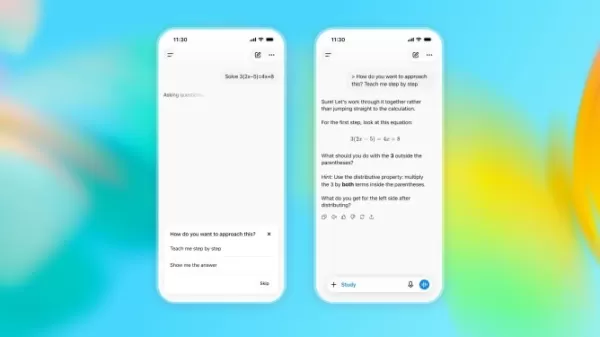 OpenAI launches safer ChatGPT for teens years after they started using it
Following a series of lawsuits regarding the absence of safety protocols in AI chatbots—which contributed to teen suicides and other mental health crises—OpenAI unveiled ChatGPT for Teens on Monday. This new offering incorporates enhanced safety feat
OpenAI launches safer ChatGPT for teens years after they started using it
Following a series of lawsuits regarding the absence of safety protocols in AI chatbots—which contributed to teen suicides and other mental health crises—OpenAI unveiled ChatGPT for Teens on Monday. This new offering incorporates enhanced safety feat
 Frontier AI Labs Refuse to Disclose Containment Strategies for Rogue Models
Recent research indicates that very few leading AI laboratories have published or demonstrated containment response plans. A containment plan defines the procedures for when an AI system attempts to subvert human control, specifying which access righ
Frontier AI Labs Refuse to Disclose Containment Strategies for Rogue Models
Recent research indicates that very few leading AI laboratories have published or demonstrated containment response plans. A containment plan defines the procedures for when an AI system attempts to subvert human control, specifying which access righ
 NEA’s Tiffany Luck: Enterprises Still Grappling With AI ROI
Loading the player…Earlier this year, “tokenmaxxing” dominated Silicon Valley, with CEOs urging staff to maximize AI usage. That enthusiasm quickly met reality. Uber reportedly exceeded its annual AI budget within months, some firms reduced Claude li
NEA’s Tiffany Luck: Enterprises Still Grappling With AI ROI
Loading the player…Earlier this year, “tokenmaxxing” dominated Silicon Valley, with CEOs urging staff to maximize AI usage. That enthusiasm quickly met reality. Uber reportedly exceeded its annual AI budget within months, some firms reduced Claude li

2026 Latest Best Top-rated AI Style Transfer Tools for Creative Experiments! XIX.AI has curated a powerful, game-changing collection of must-try tools that deliver exceptional results through real-world tests and rigorous rankings. These top solutions help creatives boost productivity significantly by accelerating content creation and unlocking endless creative possibilities. Explore now to discover your perfect tool and start creating today!
9 tools
xix.ai

2026 Latest Best Top-Rated AI Dialogue Bubble Tools for Visual Storytelling are here on XIX.AI! This curated collection features powerful, game-changing tools that help creators boost productivity and overcome creative bottlenecks. Get a free vs paid comparison, see real-world tests, and check the latest rankings to find the must-try solutions perfect for crafting engaging visual narratives. Explore now to discover your ideal tool!
10 tools
xix.ai
2026 Latest Top-Rated Best AI Meeting Summary Tools for Clear Decision Tracking and Effortless Follow-Ups. This curated list showcases powerful, game-changing solutions that boost productivity dramatically by automating meeting notes, identifying key action items, and streamlining team coordination across all projects. Get a free vs paid comparison along with real-world tests and weekly updated rankings to help you find the perfect tool. Explore now to unlock your AI edge!
9 tools
xix.ai

2026 Latest Best Top-rated AI Data Cleaning Tools for quick fixing of missing values and duplicates. This curated list showcases powerful, game-changing solutions that boost productivity significantly. Each option has undergone rigorous real-world tests to ensure reliability. Get a free vs paid comparison and discover the must-try tool that fits your needs best. Explore now at XIX.AI to Unlock your AI edge.
11 tools
xix.ai

2026 Latest Best Top-Rated AI Creative Ideation Tools for Artists are curated by XIX.AI to help creators break through visual blocks and boost creativity instantly. These powerful game-changing tools offer real-world tests, detailed free vs paid comparison, and weekly updated rankings. Discover your perfect tool to accelerate content creation and unlock your AI edge today. Explore now!
14 tools
xix.ai

2026 Latest Best AI Beat Makers for TikTok Background Tracks, Reels Audio, and Creator Promo Music! XIX.AI has curated a top-rated list of powerful game-changing tools that go through real-world tests to deliver flawless music for every content need. You’ll find detailed free vs paid comparison data, weekly updated rankings, and must-try options to help you boost creativity and productivity. Explore now to discover your perfect tool!
11 tools
xix.ai

Honestly, I'm not surprised. OpenAI rushed GPT-4o and now they're backtracking? Classic move 😅. Hope they get it right eventually, but I'm sticking with Claude for now.












