


 Home
Home
OpenAI Widens Advertising Platform Access, Adds Precision Targeting for Free ChatGPT Users
OpenAI is moving quickly to scale its advertising business. The company has started inviting more potential advertisers to run targeted ads within its free ChatGPT offering in selected regions, marking a shift from early limited testing toward a self-service model. This expansion is part of OpenAI’s broader effort to find sustainable ways to generate revenue while preserving user experience.
Ad targeting and core parameters: Advertisers can currently reach free ChatGPT users in the United States, Canada, Australia, and New Zealand. These regions serve as key test markets, where users will encounter naturally placed ads while interacting with ChatGPT—for instance, when exploring options, comparing choices, or making decisions.

The platform requires a minimum daily budget of $25 and suggests a cost-per-click (CPC) of around $3.50. This pricing reflects OpenAI’s move from an earlier, high-barrier CPM model to a more flexible CPC approach, designed to attract advertisers of all sizes. In earlier trials, the suggested CPC range typically fell between $3 and $5, consistent with a premium positioning within high-intent conversational environments.
From closed testing to self-service openness: OpenAI’s advertising journey began in February 2026, when it ran small-scale tests in the United States with free and Go plan users. Ads were clearly labeled and kept separate from ChatGPT’s core responses. User conversation privacy was maintained, and personal chat content was never shared with advertisers. The company emphasized that ads would not affect AI response quality and gave users the option to remove ads by upgrading to a paid subscription.
In May, OpenAI launched the Ads Manager self-service platform, significantly lowering the entry barrier. Previously, pilot programs required a high minimum spend (e.g., $50,000), but now U.S. advertisers can self-register without making large commitments. This change, combined with integrations with ad tech partners like Criteo, as well as forthcoming support for third-party measurement and CPA bidding options, has made the platform far more practical for a wider range of businesses.
The official advertising platform website (ads.openai.com) highlights a key advantage: the high-intent context of ChatGPT users. These users are not passively browsing—they are actively exploring and making decisions, giving advertisers rich signals that go beyond traditional keywords. This enables more relevant and personalized targeting. Early participants, such as Best Buy, have reported positive results.
Strategic significance and industry impact: This move is significant for OpenAI. While the free tier of ChatGPT attracts hundreds of millions of users, maintaining high-performance infrastructure requires continuous substantial investment. Advertising revenue can fund feature expansion without compromising free access, while also helping OpenAI explore the future of AI-native advertising. The company has set a 2026 advertising revenue target of roughly $2.5 billion, and this expanded invitation is a step toward that goal.
For advertisers, this opens up a unique, high-quality traffic pool, particularly suited for brands that want to reach users at moments of decision-making—such as consumer electronics, retail, and financial services. Compared to traditional search or social ads, the contextual depth of ChatGPT’s environment can drive higher relevance and conversion potential. However, it also raises the bar for creativity and compliance: ads must be useful, non-disruptive, and meet strict privacy standards.
User experience and privacy protection: OpenAI repeatedly emphasizes that user trust comes first. Ads are clearly labeled and independent of AI responses; users can control how their data is used, and paid subscribers (e.g., Plus/Pro) are generally unaffected. The company will continue iterating based on test feedback to ensure that ads support free access without undermining ChatGPT’s core value as a reliable tool.
As the invitation pool expands, more advertisers will have the chance to test this emerging platform. Marketers recommend starting with small budgets, focusing on post-click conversions, and optimizing using their own website pixels. OpenAI’s advertising expansion reflects the ongoing balance AI giants must strike between technological innovation and business sustainability. Whether this platform becomes a mainstream advertising channel will depend on actual ROI, user acceptance, and the evolving regulatory landscape. Advertisers can follow updates and registration opportunities through ads.openai.com.
Related article
 Google Tests Remy AI Agent for Gemini as Focus Shifts to User Control
According to Business Insider, Google is testing Remy, a new AI personal agent for Gemini. This tool aims to execute tasks on behalf of users, streamlining both professional workflows and daily routines.Currently, Remy is undergoing testing in an int
How to fix Core Web Vitals for better SEO rankings
Streamline Report Card Comments with AI ToolsIntroductionAI Tools for Generating Report Card CommentsMagic SchoolAlmanac AIChat GPTUsing Magic School to Generate Report Card CommentsLogging into Magic SchoolSelecting the Report Card Comments ToolCust
Slackbot Becomes an AI Agent
Slackbot, the automated assistant embedded in Salesforce’s corporate messaging platform Slack, is evolving into an AI agent. Salesforce CTO Parker Harris envisions it achieving viral status comparable to OpenAI’s ChatGPT.The cloud software giant laun
Related Special Topic Recommendations
writing
Google Tests Remy AI Agent for Gemini as Focus Shifts to User Control
According to Business Insider, Google is testing Remy, a new AI personal agent for Gemini. This tool aims to execute tasks on behalf of users, streamlining both professional workflows and daily routines.Currently, Remy is undergoing testing in an int
How to fix Core Web Vitals for better SEO rankings
Streamline Report Card Comments with AI ToolsIntroductionAI Tools for Generating Report Card CommentsMagic SchoolAlmanac AIChat GPTUsing Magic School to Generate Report Card CommentsLogging into Magic SchoolSelecting the Report Card Comments ToolCust
Slackbot Becomes an AI Agent
Slackbot, the automated assistant embedded in Salesforce’s corporate messaging platform Slack, is evolving into an AI agent. Salesforce CTO Parker Harris envisions it achieving viral status comparable to OpenAI’s ChatGPT.The cloud software giant laun
Related Special Topic Recommendations
writing
 Best AI Outline Generators for Long-Form SEO Articles
2026 Latest Best Top-Rated AI Outline Generators for Long-Form SEO Articles, meticulously curated by XIX.AI. These powerful tools offer game-changing assistance in creating high-quality content quickly, boosting writing efficiency significantly. Get a free vs paid comparison along with real-world tests and detailed rankings to help you find the must-try option that suits your needs. Explore now to unlock your AI edge.
 8 tools
 xix.ai
Education and Learning
AI Study Tools for Homework and Exam Prep
xix.ai
Education and Learning
AI Study Tools for Homework and Exam Prep
2026 Latest Best AI Study Tools for Homework and Exam Prep! XIX.AI curates a top-rated list of powerful, game-changing tools that help students boost productivity, streamline homework completion, and ace exams through real-world tests. Get a free vs paid comparison, detailed rankings, and must-try options to unlock your AI edge. Explore now!
10 tools
xix.ai
Music composition
AI Vocal Demo Tools for Songwriters, Hooks, Toplines, and Multilingual Draft Sessions
2026 Latest Best AI Vocal Demo Tools for Songwriters, Hook Creators, and Multi-Language Content Teams! XIX.AI has curated a top-rated list of powerful game-changing tools that go through rigorous real-world tests. You’ll find detailed free vs paid comparison data, comprehensive rankings, and must-try options to help you boost writing efficiency and unlock your creative potential. Explore now to discover your perfect tool for all your content needs!
9 tools
xix.ai
Business
Best AI Competitive Research Tools for Small Businesses
2026 Latest Best Top-rated AI Competitive Research Tools for Small Businesses! XIX.AI has curated a highly powerful game-changing collection, updated weekly with rigorous real-world tests and detailed rankings. You can find a comprehensive free vs paid comparison to help you identify the must-try tools that boost your productivity and give you a competitive edge. Explore now to discover your perfect tool!
9 tools
xix.ai
Image editing
Photoshop AI Retouch Tools for Ecommerce Apparel, Skin Cleanup, and Color Consistency
2026 Latest Best Photoshop AI retouch tools for ecommerce apparel, skin cleanup, and color consistency! This top-rated curated list features powerful game-changing solutions that help you boost writing efficiency, streamline content creation, and achieve perfect visual results effortlessly. Each tool has undergone real-world tests through weekly updated rankings, complete with free vs paid comparison details. Backed by XIX.AI, it’s the must-try guide for anyone aiming to unlock your AI edge. Explore now!
10 tools
xix.ai
Prompt
Best AI Prompt Libraries for ChatGPT Workflows
2026 Latest Best Top-Rated AI Prompt Libraries for optimizing all types of ChatGPT workflows. XIX.AI has curated a powerful, game-changing collection that goes through rigorous real-world tests to ensure top performance. You can find detailed free vs paid comparisons and expert rankings to help you choose the must-try tools that boost your productivity and unlock your AI edge. Explore now!
11 tools
xix.ai

 Comments (0)
0/500
Comments (0)
0/500
OpenAI is moving quickly to scale its advertising business. The company has started inviting more potential advertisers to run targeted ads within its free ChatGPT offering in selected regions, marking a shift from early limited testing toward a self-service model. This expansion is part of OpenAI’s broader effort to find sustainable ways to generate revenue while preserving user experience.
Ad targeting and core parameters: Advertisers can currently reach free ChatGPT users in the United States, Canada, Australia, and New Zealand. These regions serve as key test markets, where users will encounter naturally placed ads while interacting with ChatGPT—for instance, when exploring options, comparing choices, or making decisions.
The platform requires a minimum daily budget of $25 and suggests a cost-per-click (CPC) of around $3.50. This pricing reflects OpenAI’s move from an earlier, high-barrier CPM model to a more flexible CPC approach, designed to attract advertisers of all sizes. In earlier trials, the suggested CPC range typically fell between $3 and $5, consistent with a premium positioning within high-intent conversational environments.
From closed testing to self-service openness: OpenAI’s advertising journey began in February 2026, when it ran small-scale tests in the United States with free and Go plan users. Ads were clearly labeled and kept separate from ChatGPT’s core responses. User conversation privacy was maintained, and personal chat content was never shared with advertisers. The company emphasized that ads would not affect AI response quality and gave users the option to remove ads by upgrading to a paid subscription.
In May, OpenAI launched the Ads Manager self-service platform, significantly lowering the entry barrier. Previously, pilot programs required a high minimum spend (e.g., $50,000), but now U.S. advertisers can self-register without making large commitments. This change, combined with integrations with ad tech partners like Criteo, as well as forthcoming support for third-party measurement and CPA bidding options, has made the platform far more practical for a wider range of businesses.
The official advertising platform website (ads.openai.com) highlights a key advantage: the high-intent context of ChatGPT users. These users are not passively browsing—they are actively exploring and making decisions, giving advertisers rich signals that go beyond traditional keywords. This enables more relevant and personalized targeting. Early participants, such as Best Buy, have reported positive results.
Strategic significance and industry impact: This move is significant for OpenAI. While the free tier of ChatGPT attracts hundreds of millions of users, maintaining high-performance infrastructure requires continuous substantial investment. Advertising revenue can fund feature expansion without compromising free access, while also helping OpenAI explore the future of AI-native advertising. The company has set a 2026 advertising revenue target of roughly $2.5 billion, and this expanded invitation is a step toward that goal.
For advertisers, this opens up a unique, high-quality traffic pool, particularly suited for brands that want to reach users at moments of decision-making—such as consumer electronics, retail, and financial services. Compared to traditional search or social ads, the contextual depth of ChatGPT’s environment can drive higher relevance and conversion potential. However, it also raises the bar for creativity and compliance: ads must be useful, non-disruptive, and meet strict privacy standards.
User experience and privacy protection: OpenAI repeatedly emphasizes that user trust comes first. Ads are clearly labeled and independent of AI responses; users can control how their data is used, and paid subscribers (e.g., Plus/Pro) are generally unaffected. The company will continue iterating based on test feedback to ensure that ads support free access without undermining ChatGPT’s core value as a reliable tool.
As the invitation pool expands, more advertisers will have the chance to test this emerging platform. Marketers recommend starting with small budgets, focusing on post-click conversions, and optimizing using their own website pixels. OpenAI’s advertising expansion reflects the ongoing balance AI giants must strike between technological innovation and business sustainability. Whether this platform becomes a mainstream advertising channel will depend on actual ROI, user acceptance, and the evolving regulatory landscape. Advertisers can follow updates and registration opportunities through ads.openai.com.







 Google Tests Remy AI Agent for Gemini as Focus Shifts to User Control
According to Business Insider, Google is testing Remy, a new AI personal agent for Gemini. This tool aims to execute tasks on behalf of users, streamlining both professional workflows and daily routines.Currently, Remy is undergoing testing in an int
Google Tests Remy AI Agent for Gemini as Focus Shifts to User Control
According to Business Insider, Google is testing Remy, a new AI personal agent for Gemini. This tool aims to execute tasks on behalf of users, streamlining both professional workflows and daily routines.Currently, Remy is undergoing testing in an int
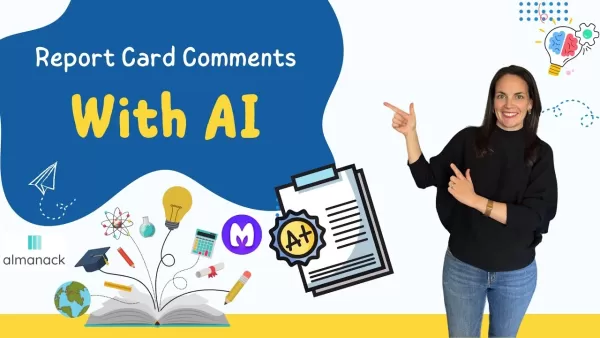 How to fix Core Web Vitals for better SEO rankings
Streamline Report Card Comments with AI ToolsIntroductionAI Tools for Generating Report Card CommentsMagic SchoolAlmanac AIChat GPTUsing Magic School to Generate Report Card CommentsLogging into Magic SchoolSelecting the Report Card Comments ToolCust
How to fix Core Web Vitals for better SEO rankings
Streamline Report Card Comments with AI ToolsIntroductionAI Tools for Generating Report Card CommentsMagic SchoolAlmanac AIChat GPTUsing Magic School to Generate Report Card CommentsLogging into Magic SchoolSelecting the Report Card Comments ToolCust
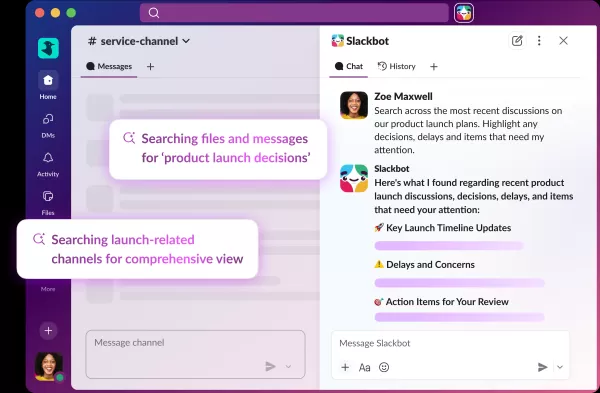 Slackbot Becomes an AI Agent
Slackbot, the automated assistant embedded in Salesforce’s corporate messaging platform Slack, is evolving into an AI agent. Salesforce CTO Parker Harris envisions it achieving viral status comparable to OpenAI’s ChatGPT.The cloud software giant laun
Slackbot Becomes an AI Agent
Slackbot, the automated assistant embedded in Salesforce’s corporate messaging platform Slack, is evolving into an AI agent. Salesforce CTO Parker Harris envisions it achieving viral status comparable to OpenAI’s ChatGPT.The cloud software giant laun

2026 Latest Best Top-Rated AI Outline Generators for Long-Form SEO Articles, meticulously curated by XIX.AI. These powerful tools offer game-changing assistance in creating high-quality content quickly, boosting writing efficiency significantly. Get a free vs paid comparison along with real-world tests and detailed rankings to help you find the must-try option that suits your needs. Explore now to unlock your AI edge.
8 tools
xix.ai

2026 Latest Best AI Study Tools for Homework and Exam Prep! XIX.AI curates a top-rated list of powerful, game-changing tools that help students boost productivity, streamline homework completion, and ace exams through real-world tests. Get a free vs paid comparison, detailed rankings, and must-try options to unlock your AI edge. Explore now!
10 tools
xix.ai

2026 Latest Best AI Vocal Demo Tools for Songwriters, Hook Creators, and Multi-Language Content Teams! XIX.AI has curated a top-rated list of powerful game-changing tools that go through rigorous real-world tests. You’ll find detailed free vs paid comparison data, comprehensive rankings, and must-try options to help you boost writing efficiency and unlock your creative potential. Explore now to discover your perfect tool for all your content needs!
9 tools
xix.ai

2026 Latest Best Top-rated AI Competitive Research Tools for Small Businesses! XIX.AI has curated a highly powerful game-changing collection, updated weekly with rigorous real-world tests and detailed rankings. You can find a comprehensive free vs paid comparison to help you identify the must-try tools that boost your productivity and give you a competitive edge. Explore now to discover your perfect tool!
9 tools
xix.ai

2026 Latest Best Photoshop AI retouch tools for ecommerce apparel, skin cleanup, and color consistency! This top-rated curated list features powerful game-changing solutions that help you boost writing efficiency, streamline content creation, and achieve perfect visual results effortlessly. Each tool has undergone real-world tests through weekly updated rankings, complete with free vs paid comparison details. Backed by XIX.AI, it’s the must-try guide for anyone aiming to unlock your AI edge. Explore now!
10 tools
xix.ai
2026 Latest Best Top-Rated AI Prompt Libraries for optimizing all types of ChatGPT workflows. XIX.AI has curated a powerful, game-changing collection that goes through rigorous real-world tests to ensure top performance. You can find detailed free vs paid comparisons and expert rankings to help you choose the must-try tools that boost your productivity and unlock your AI edge. Explore now!
11 tools
xix.ai












