


 Home
HomeOpenAI Reaffirms Nonprofit Control Over Business Operations
OpenAI has reversed its initial plan to convert to a fully for-profit model, deciding instead to keep its non-profit division in control of the organization.
The company announced that its business arm, which has operated under the non-profit since 2019, will transition into a Public Benefit Corporation (PBC). The original non-profit will retain control and hold a significant ownership stake in the new PBC.
"OpenAI was founded as a non-profit and remains under its oversight and control today," wrote OpenAI Board Chairman Bret Taylor in a company blog statement. "This structure will continue moving forward."
OpenAI stated the decision followed consultations with civic leaders and constructive discussions with the Attorney General offices in Delaware and California.
"We appreciate both offices and look forward to continuing these important conversations to ensure OpenAI can effectively pursue its mission," Taylor added.
Founded as a non-profit in 2015, OpenAI shifted to a "capped-profit" model in 2019 and was recently attempting another restructuring into a for-profit entity. The 2019 change kept the non-profit wing, which maintains a controlling stake in the corporate arm.
The company argued the conversion was necessary to raise capital for growth, claiming it would preserve non-profit status and direct extra resources toward charitable initiatives in healthcare, education, and science. In return for its controlling stake, the non-profit was positioned to gain billions of dollars.
Techcrunch event Exhibit at TechCrunch Sessions: AI
Secure your spot at TC Sessions: AI and showcase your innovation to 1,200+ decision-makers without a major investment. Offer available through May 9 or while booths remain.
Exhibit at TechCrunch Sessions: AI
Secure your spot at TC Sessions: AI and showcase your innovation to 1,200+ decision-makers without a major investment. Offer available through May 9 or while booths remain.
Berkeley, CA | June 5 BOOK NOW The proposed shift faced significant opposition, notably from early investor Elon Musk, who sued OpenAI, accusing the startup of abandoning its non-profit mission to benefit humanity with AI.
Musk sought a preliminary injunction to block the conversion. A federal judge denied the injunction but allowed the case to proceed to a jury trial scheduled for spring 2026.
Several weeks ago, a group of former OpenAI employees and Encode, a non-profit that co-sponsored California's SB 1047 AI safety bill, filed amicus briefs supporting Musk's lawsuit. Separately, a coalition including non-profits and labor groups like the California Teamsters petitioned California Attorney General Rob Bonta to stop the conversion, alleging OpenAI failed to protect its charitable assets.
Several Nobel laureates, law professors, and civil society organizations had also written to Bonta and Delaware Attorney General Kathy Jennings, urging them to halt the restructuring.
Reports indicated high stakes for OpenAI, which faced a deadline to complete the for-profit conversion by the end of this year or next to avoid risking some recently raised capital. The consequences of reversing course are now unclear.
In a Monday letter to staff published on the OpenAI blog, CEO Sam Altman suggested the company might eventually need "trillions of dollars" to achieve its goal of making its services "broadly available to all of humanity."
"[The non-profit] will become a major shareholder in the PBC, with an ownership level validated by independent financial advisors," Altman wrote. "We are moving to a standard capital structure where everyone holds stock. ... We look forward to finalizing the plan details through continued dialogue with them, our partner Microsoft, and our newly appointed non-profit commissioners."
Related article
 PHP Armageddon: OpenAI, Google’s Wiz uncover ancient holes, sparking internet panic
The U.S. National Security Agency issued a critical alert on Wednesday regarding two severe vulnerabilities in PHP, for which patches have already been released by the PHP Foundation.As a server-side scripting language, PHP powers approximately 70% o
OpenAI launches GPT-5.5 Instant as ChatGPT’s new default model
OpenAI launched GPT-5.5 Instant on Monday, replacing GPT-5.3 Instant as the default ChatGPT model. The company states that this update minimizes hallucinations in high-stakes fields like law, medicine, and finance, while preserving the fast response
Nvidia to Derive 25% of Next Year’s Revenue from Funded Labs
Nvidia has deployed nearly US$50 billion into AI labs purchasing its chips, securing commitments for over $500 billion in total.On August 26, CFO Colette Kress informed analysts that these labs, backed by Nvidia’s balance sheet, will account for roug
Related Special Topic Recommendations
Design & Art
PHP Armageddon: OpenAI, Google’s Wiz uncover ancient holes, sparking internet panic
The U.S. National Security Agency issued a critical alert on Wednesday regarding two severe vulnerabilities in PHP, for which patches have already been released by the PHP Foundation.As a server-side scripting language, PHP powers approximately 70% o
OpenAI launches GPT-5.5 Instant as ChatGPT’s new default model
OpenAI launched GPT-5.5 Instant on Monday, replacing GPT-5.3 Instant as the default ChatGPT model. The company states that this update minimizes hallucinations in high-stakes fields like law, medicine, and finance, while preserving the fast response
Nvidia to Derive 25% of Next Year’s Revenue from Funded Labs
Nvidia has deployed nearly US$50 billion into AI labs purchasing its chips, securing commitments for over $500 billion in total.On August 26, CFO Colette Kress informed analysts that these labs, backed by Nvidia’s balance sheet, will account for roug
Related Special Topic Recommendations
Design & Art
 Top AI Illustration Tools: Create Editorial Scenes and Cover Art Faster
2026 Latest Top-rated AI Illustration Tools: Our curated list features the best powerfully designed tools for creating stunning editorial scenes and eye-catching cover art quickly. Each option has gone through rigorous real-world tests, offering a free vs paid comparison to help you find the perfect match for your workflow. Try these must-try solutions today to unlock your AI edge and boost your creative productivity. Explore now at XIX.AI.
 10 tools
 xix.ai
Education and Learning
Top AI Tutors for Exam Prep: Practice Math, Science, and English
xix.ai
Education and Learning
Top AI Tutors for Exam Prep: Practice Math, Science, and English
2026 Latest Top-Rated Best AI Tutors for Exam Prep are here on XIX.AI! Our curated list features powerful game-changing tools that offer free vs paid comparison, real-world tests, and weekly updated rankings. They help boost your writing efficiency, simplify complex topic learning, and unlock your academic potential. Explore now to Discover your perfect exam prep tool and Start creating today to Unlock your AI edge!
10 tools
xix.ai
Finance
AI Budget Planning Tools for Personal Money Management
2026 Latest Best Top-Rated AI Budget Planning Tools for Personal Money Management are here on XIX.AI! This curated collection features powerful, game-changing solutions that help you conduct real-world tests, understand spending habits, and create personalized plans to boost productivity. Enjoy a free vs paid comparison along with detailed rankings. Must-try tools designed to simplify money management and unlock your AI edge. Explore now!
11 tools
xix.ai
Health & Wellness
AI Sleep Tracking Assistants: Improve Recovery with Better Bedtime Habits
2026 Latest Best Top-Rated AI Sleep Tracking Assistants curated for ultimate recovery. This fully updated weekly guide features powerful tools that deliver real-world tests, free vs paid comparison, and detailed rankings to help you find the must-try solution that boosts sleep quality and supports better bedtime habits. Explore now at XIX.AI to Unlock your AI edge.
10 tools
xix.ai
Data Analysis
AI SQL Copilots for Product and Revenue Analytics
2026 Latest Best Top-Rated AI SQL Copilots for Product and Revenue Analytics! XIX.AI has curated a powerful, game-changing collection of must-try tools that undergo real-world tests through weekly updated rankings. These tools help users boost productivity significantly by accelerating data analysis, streamlining complex queries, and generating accurate insights to drive smarter business decisions. Explore now to Discover your perfect tool for unlocking your AI edge!
14 tools
xix.ai
Education and Learning
Best AI Homework Helpers That Teach: Learn Concepts, Not Just Answers
2026 Latest Best Top-Rated AI Homework Helpers That Teach Core Concepts Not Just Answers Powerful Tools for Students Must-Try Curated List Weekly Updated Free vs Paid Comparison Real-World Tests Accurate Rankings to Help You Unlock Your Full Learning Potential Explore now to Discover your perfect tool for smarter studying.
10 tools
xix.ai

 Comments (0)
0/500
Comments (0)
0/500
OpenAI has reversed its initial plan to convert to a fully for-profit model, deciding instead to keep its non-profit division in control of the organization.
The company announced that its business arm, which has operated under the non-profit since 2019, will transition into a Public Benefit Corporation (PBC). The original non-profit will retain control and hold a significant ownership stake in the new PBC.
"OpenAI was founded as a non-profit and remains under its oversight and control today," wrote OpenAI Board Chairman Bret Taylor in a company blog statement. "This structure will continue moving forward."
OpenAI stated the decision followed consultations with civic leaders and constructive discussions with the Attorney General offices in Delaware and California.
"We appreciate both offices and look forward to continuing these important conversations to ensure OpenAI can effectively pursue its mission," Taylor added.
Founded as a non-profit in 2015, OpenAI shifted to a "capped-profit" model in 2019 and was recently attempting another restructuring into a for-profit entity. The 2019 change kept the non-profit wing, which maintains a controlling stake in the corporate arm.
The company argued the conversion was necessary to raise capital for growth, claiming it would preserve non-profit status and direct extra resources toward charitable initiatives in healthcare, education, and science. In return for its controlling stake, the non-profit was positioned to gain billions of dollars.
Techcrunch eventExhibit at TechCrunch Sessions: AI
Secure your spot at TC Sessions: AI and showcase your innovation to 1,200+ decision-makers without a major investment. Offer available through May 9 or while booths remain.
Exhibit at TechCrunch Sessions: AI
Secure your spot at TC Sessions: AI and showcase your innovation to 1,200+ decision-makers without a major investment. Offer available through May 9 or while booths remain.
Berkeley, CA | June 5 BOOK NOWThe proposed shift faced significant opposition, notably from early investor Elon Musk, who sued OpenAI, accusing the startup of abandoning its non-profit mission to benefit humanity with AI.
Musk sought a preliminary injunction to block the conversion. A federal judge denied the injunction but allowed the case to proceed to a jury trial scheduled for spring 2026.
Several weeks ago, a group of former OpenAI employees and Encode, a non-profit that co-sponsored California's SB 1047 AI safety bill, filed amicus briefs supporting Musk's lawsuit. Separately, a coalition including non-profits and labor groups like the California Teamsters petitioned California Attorney General Rob Bonta to stop the conversion, alleging OpenAI failed to protect its charitable assets.
Several Nobel laureates, law professors, and civil society organizations had also written to Bonta and Delaware Attorney General Kathy Jennings, urging them to halt the restructuring.
Reports indicated high stakes for OpenAI, which faced a deadline to complete the for-profit conversion by the end of this year or next to avoid risking some recently raised capital. The consequences of reversing course are now unclear.
In a Monday letter to staff published on the OpenAI blog, CEO Sam Altman suggested the company might eventually need "trillions of dollars" to achieve its goal of making its services "broadly available to all of humanity."
"[The non-profit] will become a major shareholder in the PBC, with an ownership level validated by independent financial advisors," Altman wrote. "We are moving to a standard capital structure where everyone holds stock. ... We look forward to finalizing the plan details through continued dialogue with them, our partner Microsoft, and our newly appointed non-profit commissioners."








 PHP Armageddon: OpenAI, Google’s Wiz uncover ancient holes, sparking internet panic
The U.S. National Security Agency issued a critical alert on Wednesday regarding two severe vulnerabilities in PHP, for which patches have already been released by the PHP Foundation.As a server-side scripting language, PHP powers approximately 70% o
PHP Armageddon: OpenAI, Google’s Wiz uncover ancient holes, sparking internet panic
The U.S. National Security Agency issued a critical alert on Wednesday regarding two severe vulnerabilities in PHP, for which patches have already been released by the PHP Foundation.As a server-side scripting language, PHP powers approximately 70% o
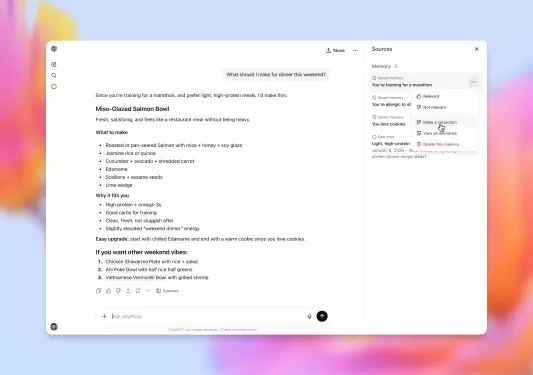 OpenAI launches GPT-5.5 Instant as ChatGPT’s new default model
OpenAI launched GPT-5.5 Instant on Monday, replacing GPT-5.3 Instant as the default ChatGPT model. The company states that this update minimizes hallucinations in high-stakes fields like law, medicine, and finance, while preserving the fast response
OpenAI launches GPT-5.5 Instant as ChatGPT’s new default model
OpenAI launched GPT-5.5 Instant on Monday, replacing GPT-5.3 Instant as the default ChatGPT model. The company states that this update minimizes hallucinations in high-stakes fields like law, medicine, and finance, while preserving the fast response
 Nvidia to Derive 25% of Next Year’s Revenue from Funded Labs
Nvidia has deployed nearly US$50 billion into AI labs purchasing its chips, securing commitments for over $500 billion in total.On August 26, CFO Colette Kress informed analysts that these labs, backed by Nvidia’s balance sheet, will account for roug
Nvidia to Derive 25% of Next Year’s Revenue from Funded Labs
Nvidia has deployed nearly US$50 billion into AI labs purchasing its chips, securing commitments for over $500 billion in total.On August 26, CFO Colette Kress informed analysts that these labs, backed by Nvidia’s balance sheet, will account for roug

2026 Latest Top-rated AI Illustration Tools: Our curated list features the best powerfully designed tools for creating stunning editorial scenes and eye-catching cover art quickly. Each option has gone through rigorous real-world tests, offering a free vs paid comparison to help you find the perfect match for your workflow. Try these must-try solutions today to unlock your AI edge and boost your creative productivity. Explore now at XIX.AI.
10 tools
xix.ai

2026 Latest Top-Rated Best AI Tutors for Exam Prep are here on XIX.AI! Our curated list features powerful game-changing tools that offer free vs paid comparison, real-world tests, and weekly updated rankings. They help boost your writing efficiency, simplify complex topic learning, and unlock your academic potential. Explore now to Discover your perfect exam prep tool and Start creating today to Unlock your AI edge!
10 tools
xix.ai

2026 Latest Best Top-Rated AI Budget Planning Tools for Personal Money Management are here on XIX.AI! This curated collection features powerful, game-changing solutions that help you conduct real-world tests, understand spending habits, and create personalized plans to boost productivity. Enjoy a free vs paid comparison along with detailed rankings. Must-try tools designed to simplify money management and unlock your AI edge. Explore now!
11 tools
xix.ai

2026 Latest Best Top-Rated AI Sleep Tracking Assistants curated for ultimate recovery. This fully updated weekly guide features powerful tools that deliver real-world tests, free vs paid comparison, and detailed rankings to help you find the must-try solution that boosts sleep quality and supports better bedtime habits. Explore now at XIX.AI to Unlock your AI edge.
10 tools
xix.ai

2026 Latest Best Top-Rated AI SQL Copilots for Product and Revenue Analytics! XIX.AI has curated a powerful, game-changing collection of must-try tools that undergo real-world tests through weekly updated rankings. These tools help users boost productivity significantly by accelerating data analysis, streamlining complex queries, and generating accurate insights to drive smarter business decisions. Explore now to Discover your perfect tool for unlocking your AI edge!
14 tools
xix.ai

2026 Latest Best Top-Rated AI Homework Helpers That Teach Core Concepts Not Just Answers Powerful Tools for Students Must-Try Curated List Weekly Updated Free vs Paid Comparison Real-World Tests Accurate Rankings to Help You Unlock Your Full Learning Potential Explore now to Discover your perfect tool for smarter studying.
10 tools
xix.ai












