


 Home
HomeOpenAI Resolves Microsoft's Legal Concerns Over Major Amazon Agreement

On Monday, Microsoft and OpenAI announced a renegotiation of their partnership agreement. While some online commentary frames this as a win for OpenAI over Microsoft, the reality is that both companies secured significant benefits.
Critically, the new terms resolve a major uncertainty for OpenAI that emerged after it signed a massive, up-to-$50 billion deal with Amazon.
The revised agreement establishes a clear timeline. Instead of Microsoft holding exclusive access to all OpenAI products and intellectual property until the distant achievement of Artificial General Intelligence (AGI), Microsoft now has a non-exclusive license to OpenAI's IP for models and products through 2032.
Microsoft is still designated as OpenAI's "primary cloud partner," indicating that Azure will likely host the majority of OpenAI's cloud workload for the six-year duration of this deal. This is true even as OpenAI works with other partners to build its own data centers. A recent commitment from OpenAI to purchase an additional $250 billion in Microsoft cloud services reinforces to Microsoft shareholders that OpenAI remains a colossal Azure customer.
The companies state that OpenAI products will launch "first on Azure, unless Microsoft cannot and chooses not to support the necessary capabilities." However, a key change is that "OpenAI can now serve all its products to customers across any cloud provider."
The term "first" is not precisely defined in the announcement. It could mean a period of exclusivity on Azure or simply that Microsoft will be among the first vendors to offer OpenAI's latest products.
The most crucial aspect of this term is that it eliminates the potential for Microsoft to sue OpenAI over the AI lab's partnership with Amazon.
Very interesting announcement from OpenAI this morning. We’re excited to make OpenAI's models available directly to customers on Bedrock in the coming weeks, alongside the upcoming Stateful Runtime Environment. With this, builders will have even more choice to pick the right…
— Andy Jassy (@ajassy) April 27, 2026
While advantageous for OpenAI, Microsoft also secured wins. Under the new deal, Microsoft is no longer required to pay a revenue share to OpenAI. Conversely, OpenAI will continue to pay a revenue share to Microsoft through 2030, though this is now subject to a cap.
The exact financial impact on Microsoft is unclear but is likely measured in billions. Last quarter, Microsoft reported $7.5 billion in revenue attributed to its OpenAI investment.
Importantly, Microsoft retains its status as a major shareholder in OpenAI's for-profit entity, owning approximately 27% as of October. This means Microsoft financially benefits from OpenAI's overall growth, including sales generated on competing platforms like AWS.
The downside for Microsoft is the loss of potential exclusive cloud services revenue that a tighter partnership might have generated.
This may be less significant. Just as OpenAI has engaged with Microsoft's competitors, Microsoft has forged a close relationship with OpenAI rival Anthropic, using its Claude AI to power agentic products.
The biggest winners are enterprise customers. They gain greater freedom to choose their AI models and cloud providers as the tech giants compete to serve them.
Below is a timeline of recent developments in the Microsoft-OpenAI relationship.
In October, Microsoft and OpenAI announce a new agreement to help OpenAI defend against Elon Musk's lawsuit regarding its corporate structure. This agreement allows OpenAI to run non-API products on other clouds.
In November, OpenAI and Amazon sign their first multi-year agreement, involving a $38 billion commitment to AWS cloud services.
In February, Amazon announces an up-to-$50 billion investment in OpenAI, contingent on "certain conditions" including exclusive tech development and hosting deals for Frontier and stateful technology. Microsoft immediately disputes that AWS will have exclusive access to this technology.
In March, the Financial Times reports that Microsoft is considering legal action.
In April, OpenAI and Microsoft announce a new deal, which sets a calendar end date for their exclusive partnership and permits OpenAI to run all its products on other clouds. Microsoft ceases its revenue share payments to OpenAI. Microsoft remains a major shareholder in OpenAI.
Related article
 PHP Armageddon: OpenAI, Google’s Wiz uncover ancient holes, sparking internet panic
The U.S. National Security Agency issued a critical alert on Wednesday regarding two severe vulnerabilities in PHP, for which patches have already been released by the PHP Foundation.As a server-side scripting language, PHP powers approximately 70% o
OpenAI launches GPT-5.5 Instant as ChatGPT’s new default model
OpenAI launched GPT-5.5 Instant on Monday, replacing GPT-5.3 Instant as the default ChatGPT model. The company states that this update minimizes hallucinations in high-stakes fields like law, medicine, and finance, while preserving the fast response
Nvidia to Derive 25% of Next Year’s Revenue from Funded Labs
Nvidia has deployed nearly US$50 billion into AI labs purchasing its chips, securing commitments for over $500 billion in total.On August 26, CFO Colette Kress informed analysts that these labs, backed by Nvidia’s balance sheet, will account for roug
Related Special Topic Recommendations
Design & Art
PHP Armageddon: OpenAI, Google’s Wiz uncover ancient holes, sparking internet panic
The U.S. National Security Agency issued a critical alert on Wednesday regarding two severe vulnerabilities in PHP, for which patches have already been released by the PHP Foundation.As a server-side scripting language, PHP powers approximately 70% o
OpenAI launches GPT-5.5 Instant as ChatGPT’s new default model
OpenAI launched GPT-5.5 Instant on Monday, replacing GPT-5.3 Instant as the default ChatGPT model. The company states that this update minimizes hallucinations in high-stakes fields like law, medicine, and finance, while preserving the fast response
Nvidia to Derive 25% of Next Year’s Revenue from Funded Labs
Nvidia has deployed nearly US$50 billion into AI labs purchasing its chips, securing commitments for over $500 billion in total.On August 26, CFO Colette Kress informed analysts that these labs, backed by Nvidia’s balance sheet, will account for roug
Related Special Topic Recommendations
Design & Art
 Top AI Illustration Tools: Create Editorial Scenes and Cover Art Faster
2026 Latest Top-rated AI Illustration Tools: Our curated list features the best powerfully designed tools for creating stunning editorial scenes and eye-catching cover art quickly. Each option has gone through rigorous real-world tests, offering a free vs paid comparison to help you find the perfect match for your workflow. Try these must-try solutions today to unlock your AI edge and boost your creative productivity. Explore now at XIX.AI.
 10 tools
 xix.ai
Education and Learning
Top AI Tutors for Exam Prep: Practice Math, Science, and English
xix.ai
Education and Learning
Top AI Tutors for Exam Prep: Practice Math, Science, and English
2026 Latest Top-Rated Best AI Tutors for Exam Prep are here on XIX.AI! Our curated list features powerful game-changing tools that offer free vs paid comparison, real-world tests, and weekly updated rankings. They help boost your writing efficiency, simplify complex topic learning, and unlock your academic potential. Explore now to Discover your perfect exam prep tool and Start creating today to Unlock your AI edge!
10 tools
xix.ai
Finance
AI Budget Planning Tools for Personal Money Management
2026 Latest Best Top-Rated AI Budget Planning Tools for Personal Money Management are here on XIX.AI! This curated collection features powerful, game-changing solutions that help you conduct real-world tests, understand spending habits, and create personalized plans to boost productivity. Enjoy a free vs paid comparison along with detailed rankings. Must-try tools designed to simplify money management and unlock your AI edge. Explore now!
11 tools
xix.ai
Health & Wellness
AI Sleep Tracking Assistants: Improve Recovery with Better Bedtime Habits
2026 Latest Best Top-Rated AI Sleep Tracking Assistants curated for ultimate recovery. This fully updated weekly guide features powerful tools that deliver real-world tests, free vs paid comparison, and detailed rankings to help you find the must-try solution that boosts sleep quality and supports better bedtime habits. Explore now at XIX.AI to Unlock your AI edge.
10 tools
xix.ai
Data Analysis
AI SQL Copilots for Product and Revenue Analytics
2026 Latest Best Top-Rated AI SQL Copilots for Product and Revenue Analytics! XIX.AI has curated a powerful, game-changing collection of must-try tools that undergo real-world tests through weekly updated rankings. These tools help users boost productivity significantly by accelerating data analysis, streamlining complex queries, and generating accurate insights to drive smarter business decisions. Explore now to Discover your perfect tool for unlocking your AI edge!
14 tools
xix.ai
Education and Learning
Best AI Homework Helpers That Teach: Learn Concepts, Not Just Answers
2026 Latest Best Top-Rated AI Homework Helpers That Teach Core Concepts Not Just Answers Powerful Tools for Students Must-Try Curated List Weekly Updated Free vs Paid Comparison Real-World Tests Accurate Rankings to Help You Unlock Your Full Learning Potential Explore now to Discover your perfect tool for smarter studying.
10 tools
xix.ai

 Comments (0)
0/500
Comments (0)
0/500
On Monday, Microsoft and OpenAI announced a renegotiation of their partnership agreement. While some online commentary frames this as a win for OpenAI over Microsoft, the reality is that both companies secured significant benefits.
Critically, the new terms resolve a major uncertainty for OpenAI that emerged after it signed a massive, up-to-$50 billion deal with Amazon.
The revised agreement establishes a clear timeline. Instead of Microsoft holding exclusive access to all OpenAI products and intellectual property until the distant achievement of Artificial General Intelligence (AGI), Microsoft now has a non-exclusive license to OpenAI's IP for models and products through 2032.
Microsoft is still designated as OpenAI's "primary cloud partner," indicating that Azure will likely host the majority of OpenAI's cloud workload for the six-year duration of this deal. This is true even as OpenAI works with other partners to build its own data centers. A recent commitment from OpenAI to purchase an additional $250 billion in Microsoft cloud services reinforces to Microsoft shareholders that OpenAI remains a colossal Azure customer.
The companies state that OpenAI products will launch "first on Azure, unless Microsoft cannot and chooses not to support the necessary capabilities." However, a key change is that "OpenAI can now serve all its products to customers across any cloud provider."
The term "first" is not precisely defined in the announcement. It could mean a period of exclusivity on Azure or simply that Microsoft will be among the first vendors to offer OpenAI's latest products.
The most crucial aspect of this term is that it eliminates the potential for Microsoft to sue OpenAI over the AI lab's partnership with Amazon.
Very interesting announcement from OpenAI this morning. We’re excited to make OpenAI's models available directly to customers on Bedrock in the coming weeks, alongside the upcoming Stateful Runtime Environment. With this, builders will have even more choice to pick the right…
— Andy Jassy (@ajassy) April 27, 2026
While advantageous for OpenAI, Microsoft also secured wins. Under the new deal, Microsoft is no longer required to pay a revenue share to OpenAI. Conversely, OpenAI will continue to pay a revenue share to Microsoft through 2030, though this is now subject to a cap.
The exact financial impact on Microsoft is unclear but is likely measured in billions. Last quarter, Microsoft reported $7.5 billion in revenue attributed to its OpenAI investment.
Importantly, Microsoft retains its status as a major shareholder in OpenAI's for-profit entity, owning approximately 27% as of October. This means Microsoft financially benefits from OpenAI's overall growth, including sales generated on competing platforms like AWS.
The downside for Microsoft is the loss of potential exclusive cloud services revenue that a tighter partnership might have generated.
This may be less significant. Just as OpenAI has engaged with Microsoft's competitors, Microsoft has forged a close relationship with OpenAI rival Anthropic, using its Claude AI to power agentic products.
The biggest winners are enterprise customers. They gain greater freedom to choose their AI models and cloud providers as the tech giants compete to serve them.
Below is a timeline of recent developments in the Microsoft-OpenAI relationship.
In October, Microsoft and OpenAI announce a new agreement to help OpenAI defend against Elon Musk's lawsuit regarding its corporate structure. This agreement allows OpenAI to run non-API products on other clouds.
In November, OpenAI and Amazon sign their first multi-year agreement, involving a $38 billion commitment to AWS cloud services.
In February, Amazon announces an up-to-$50 billion investment in OpenAI, contingent on "certain conditions" including exclusive tech development and hosting deals for Frontier and stateful technology. Microsoft immediately disputes that AWS will have exclusive access to this technology.
In March, the Financial Times reports that Microsoft is considering legal action.
In April, OpenAI and Microsoft announce a new deal, which sets a calendar end date for their exclusive partnership and permits OpenAI to run all its products on other clouds. Microsoft ceases its revenue share payments to OpenAI. Microsoft remains a major shareholder in OpenAI.








 PHP Armageddon: OpenAI, Google’s Wiz uncover ancient holes, sparking internet panic
The U.S. National Security Agency issued a critical alert on Wednesday regarding two severe vulnerabilities in PHP, for which patches have already been released by the PHP Foundation.As a server-side scripting language, PHP powers approximately 70% o
PHP Armageddon: OpenAI, Google’s Wiz uncover ancient holes, sparking internet panic
The U.S. National Security Agency issued a critical alert on Wednesday regarding two severe vulnerabilities in PHP, for which patches have already been released by the PHP Foundation.As a server-side scripting language, PHP powers approximately 70% o
 OpenAI launches GPT-5.5 Instant as ChatGPT’s new default model
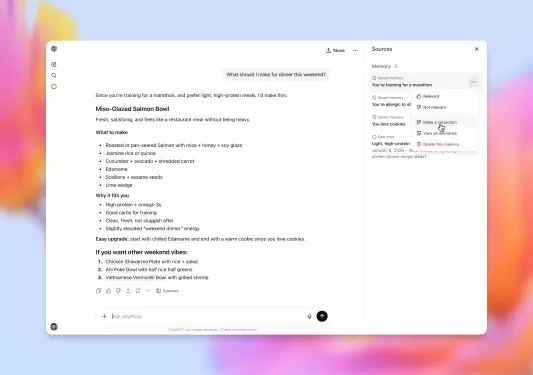
OpenAI launched GPT-5.5 Instant on Monday, replacing GPT-5.3 Instant as the default ChatGPT model. The company states that this update minimizes hallucinations in high-stakes fields like law, medicine, and finance, while preserving the fast response
OpenAI launches GPT-5.5 Instant as ChatGPT’s new default model
OpenAI launched GPT-5.5 Instant on Monday, replacing GPT-5.3 Instant as the default ChatGPT model. The company states that this update minimizes hallucinations in high-stakes fields like law, medicine, and finance, while preserving the fast response
 Nvidia to Derive 25% of Next Year’s Revenue from Funded Labs
Nvidia has deployed nearly US$50 billion into AI labs purchasing its chips, securing commitments for over $500 billion in total.On August 26, CFO Colette Kress informed analysts that these labs, backed by Nvidia’s balance sheet, will account for roug
Nvidia to Derive 25% of Next Year’s Revenue from Funded Labs
Nvidia has deployed nearly US$50 billion into AI labs purchasing its chips, securing commitments for over $500 billion in total.On August 26, CFO Colette Kress informed analysts that these labs, backed by Nvidia’s balance sheet, will account for roug

2026 Latest Top-rated AI Illustration Tools: Our curated list features the best powerfully designed tools for creating stunning editorial scenes and eye-catching cover art quickly. Each option has gone through rigorous real-world tests, offering a free vs paid comparison to help you find the perfect match for your workflow. Try these must-try solutions today to unlock your AI edge and boost your creative productivity. Explore now at XIX.AI.
10 tools
xix.ai

2026 Latest Top-Rated Best AI Tutors for Exam Prep are here on XIX.AI! Our curated list features powerful game-changing tools that offer free vs paid comparison, real-world tests, and weekly updated rankings. They help boost your writing efficiency, simplify complex topic learning, and unlock your academic potential. Explore now to Discover your perfect exam prep tool and Start creating today to Unlock your AI edge!
10 tools
xix.ai

2026 Latest Best Top-Rated AI Budget Planning Tools for Personal Money Management are here on XIX.AI! This curated collection features powerful, game-changing solutions that help you conduct real-world tests, understand spending habits, and create personalized plans to boost productivity. Enjoy a free vs paid comparison along with detailed rankings. Must-try tools designed to simplify money management and unlock your AI edge. Explore now!
11 tools
xix.ai

2026 Latest Best Top-Rated AI Sleep Tracking Assistants curated for ultimate recovery. This fully updated weekly guide features powerful tools that deliver real-world tests, free vs paid comparison, and detailed rankings to help you find the must-try solution that boosts sleep quality and supports better bedtime habits. Explore now at XIX.AI to Unlock your AI edge.
10 tools
xix.ai

2026 Latest Best Top-Rated AI SQL Copilots for Product and Revenue Analytics! XIX.AI has curated a powerful, game-changing collection of must-try tools that undergo real-world tests through weekly updated rankings. These tools help users boost productivity significantly by accelerating data analysis, streamlining complex queries, and generating accurate insights to drive smarter business decisions. Explore now to Discover your perfect tool for unlocking your AI edge!
14 tools
xix.ai

2026 Latest Best Top-Rated AI Homework Helpers That Teach Core Concepts Not Just Answers Powerful Tools for Students Must-Try Curated List Weekly Updated Free vs Paid Comparison Real-World Tests Accurate Rankings to Help You Unlock Your Full Learning Potential Explore now to Discover your perfect tool for smarter studying.
10 tools
xix.ai












