


 Home
HomeOpenAI Discloses Further Terms of Pentagon Partnership
OpenAI CEO Sam Altman has acknowledged that the company's agreement with the Department of Defense was finalized too quickly and that the public perception is unfavorable.
Following the breakdown of talks between Anthropic and the Pentagon on Friday, President Donald Trump ordered federal agencies to stop using Anthropic's technology after a six-month transition. Defense Secretary Pete Hegseth labeled the AI firm a supply-chain risk.
OpenAI then promptly announced its own agreement to deploy models in classified settings. With Anthropic stating it would prohibit its technology from being used in fully autonomous weapons or mass domestic surveillance—and Altman affirming OpenAI holds the same restrictions—questions arose: Was OpenAI being transparent about its safeguards? Why did it secure a deal when Anthropic could not?
As OpenAI executives defended the arrangement on social media, the company also released a blog post detailing its strategy.
The post highlighted three specific applications where OpenAI's models are not permitted: mass domestic surveillance, autonomous weapon systems, and "high-stakes automated decisions (such as 'social credit' systems)."
OpenAI stated that, unlike other AI companies that have "weakened or removed safety measures and depend mainly on usage policies as safeguards in national security deployments," its agreement upholds its red lines "through a broader, multi-layered approach."
"We maintain full control over our safety infrastructure, deploy via cloud, have authorized OpenAI personnel involved, and enforce strong contractual protections," the blog explained. "These are in addition to the robust protections already provided by U.S. law."
The company further noted, "We are unsure why Anthropic was unable to reach a similar agreement, and we hope they and other labs will consider this path."
After the post went live, Techdirt's Mike Masnick contended that the deal "does permit domestic surveillance," since it states that private data collection will follow Executive Order 12333 and other laws. Masnick characterized that order as "the legal basis the NSA uses to conduct domestic surveillance by intercepting communications outside the U.S., even when they involve U.S. citizens."
In a LinkedIn post, Katrina Mulligan, OpenAI's head of national security partnerships, argued that much of the debate about the contract language assumes "the only barrier against using AI for mass domestic surveillance and autonomous weapons is a single clause in one contract with the Department of War."
"That is not how the system operates," Mulligan stated, adding, "Deployment architecture is more critical than contract wording. By restricting our deployment to cloud API, we can prevent our models from being directly integrated into weapons, sensors, or other operational hardware."
Altman also addressed questions about the agreement on X, admitting it was rushed and provoked significant backlash against OpenAI—so much so that Anthropic's Claude surpassed OpenAI's ChatGPT on the Apple App Store that Saturday. So why proceed?
"We genuinely sought to de-escalate tensions and believed the proposed deal was beneficial," Altman said. "If we are correct and this leads to reduced friction between the Department of War and the industry, we will be seen as visionary—a company that endured considerable difficulty to support the sector. If not, we will continue to be criticized for acting hastily and without due care."
Related article
 Stripe to Acquire OpenRouter as AI Model Routing Gains Momentum
Stripe has agreed to acquire OpenRouter, an AI model-routing platform that gives developers access to hundreds of models through a single interface. The deal adds model selection and routing to Stripe’s existing work around AI usage and token-based b
Former OpenAI Researcher Barrett Zoph Returns to Google to Support Gemini Development
Barret Zoph, who previously abruptly left and joined OpenAI due to a disagreement with Thinking Machines Lab CEO Miriam Mularati, has once again changed employers. Alphabet's Google announced that Zoph will return as Vice President of Research, bring
How Recursive Intelligence Raised $335M at $4B Valuation in 4 Months
The co-founders of startup Ricursive Intelligence seemed destined to be co-founders.Anna Goldie, CEO, and Azalia Mirhoseini, CTO, are so well-known in the AI community that they were among those AI engineers who “got those weird emails from Zuckerber
Related Special Topic Recommendations
Design & Art
Stripe to Acquire OpenRouter as AI Model Routing Gains Momentum
Stripe has agreed to acquire OpenRouter, an AI model-routing platform that gives developers access to hundreds of models through a single interface. The deal adds model selection and routing to Stripe’s existing work around AI usage and token-based b
Former OpenAI Researcher Barrett Zoph Returns to Google to Support Gemini Development
Barret Zoph, who previously abruptly left and joined OpenAI due to a disagreement with Thinking Machines Lab CEO Miriam Mularati, has once again changed employers. Alphabet's Google announced that Zoph will return as Vice President of Research, bring
How Recursive Intelligence Raised $335M at $4B Valuation in 4 Months
The co-founders of startup Ricursive Intelligence seemed destined to be co-founders.Anna Goldie, CEO, and Azalia Mirhoseini, CTO, are so well-known in the AI community that they were among those AI engineers who “got those weird emails from Zuckerber
Related Special Topic Recommendations
Design & Art
 Top AI Illustration Tools: Create Editorial Scenes and Cover Art Faster
2026 Latest Top-rated AI Illustration Tools: Our curated list features the best powerfully designed tools for creating stunning editorial scenes and eye-catching cover art quickly. Each option has gone through rigorous real-world tests, offering a free vs paid comparison to help you find the perfect match for your workflow. Try these must-try solutions today to unlock your AI edge and boost your creative productivity. Explore now at XIX.AI.
 10 tools
 xix.ai
Education and Learning
Top AI Tutors for Exam Prep: Practice Math, Science, and English
xix.ai
Education and Learning
Top AI Tutors for Exam Prep: Practice Math, Science, and English
2026 Latest Top-Rated Best AI Tutors for Exam Prep are here on XIX.AI! Our curated list features powerful game-changing tools that offer free vs paid comparison, real-world tests, and weekly updated rankings. They help boost your writing efficiency, simplify complex topic learning, and unlock your academic potential. Explore now to Discover your perfect exam prep tool and Start creating today to Unlock your AI edge!
10 tools
xix.ai
Finance
AI Budget Planning Tools for Personal Money Management
2026 Latest Best Top-Rated AI Budget Planning Tools for Personal Money Management are here on XIX.AI! This curated collection features powerful, game-changing solutions that help you conduct real-world tests, understand spending habits, and create personalized plans to boost productivity. Enjoy a free vs paid comparison along with detailed rankings. Must-try tools designed to simplify money management and unlock your AI edge. Explore now!
11 tools
xix.ai
Health & Wellness
AI Sleep Tracking Assistants: Improve Recovery with Better Bedtime Habits
2026 Latest Best Top-Rated AI Sleep Tracking Assistants curated for ultimate recovery. This fully updated weekly guide features powerful tools that deliver real-world tests, free vs paid comparison, and detailed rankings to help you find the must-try solution that boosts sleep quality and supports better bedtime habits. Explore now at XIX.AI to Unlock your AI edge.
10 tools
xix.ai
Data Analysis
AI SQL Copilots for Product and Revenue Analytics
2026 Latest Best Top-Rated AI SQL Copilots for Product and Revenue Analytics! XIX.AI has curated a powerful, game-changing collection of must-try tools that undergo real-world tests through weekly updated rankings. These tools help users boost productivity significantly by accelerating data analysis, streamlining complex queries, and generating accurate insights to drive smarter business decisions. Explore now to Discover your perfect tool for unlocking your AI edge!
14 tools
xix.ai
Education and Learning
Best AI Homework Helpers That Teach: Learn Concepts, Not Just Answers
2026 Latest Best Top-Rated AI Homework Helpers That Teach Core Concepts Not Just Answers Powerful Tools for Students Must-Try Curated List Weekly Updated Free vs Paid Comparison Real-World Tests Accurate Rankings to Help You Unlock Your Full Learning Potential Explore now to Discover your perfect tool for smarter studying.
10 tools
xix.ai

 Comments (0)
0/500
Comments (0)
0/500
OpenAI CEO Sam Altman has acknowledged that the company's agreement with the Department of Defense was finalized too quickly and that the public perception is unfavorable.
Following the breakdown of talks between Anthropic and the Pentagon on Friday, President Donald Trump ordered federal agencies to stop using Anthropic's technology after a six-month transition. Defense Secretary Pete Hegseth labeled the AI firm a supply-chain risk.
OpenAI then promptly announced its own agreement to deploy models in classified settings. With Anthropic stating it would prohibit its technology from being used in fully autonomous weapons or mass domestic surveillance—and Altman affirming OpenAI holds the same restrictions—questions arose: Was OpenAI being transparent about its safeguards? Why did it secure a deal when Anthropic could not?
As OpenAI executives defended the arrangement on social media, the company also released a blog post detailing its strategy.
The post highlighted three specific applications where OpenAI's models are not permitted: mass domestic surveillance, autonomous weapon systems, and "high-stakes automated decisions (such as 'social credit' systems)."
OpenAI stated that, unlike other AI companies that have "weakened or removed safety measures and depend mainly on usage policies as safeguards in national security deployments," its agreement upholds its red lines "through a broader, multi-layered approach."
"We maintain full control over our safety infrastructure, deploy via cloud, have authorized OpenAI personnel involved, and enforce strong contractual protections," the blog explained. "These are in addition to the robust protections already provided by U.S. law."
The company further noted, "We are unsure why Anthropic was unable to reach a similar agreement, and we hope they and other labs will consider this path."
After the post went live, Techdirt's Mike Masnick contended that the deal "does permit domestic surveillance," since it states that private data collection will follow Executive Order 12333 and other laws. Masnick characterized that order as "the legal basis the NSA uses to conduct domestic surveillance by intercepting communications outside the U.S., even when they involve U.S. citizens."
In a LinkedIn post, Katrina Mulligan, OpenAI's head of national security partnerships, argued that much of the debate about the contract language assumes "the only barrier against using AI for mass domestic surveillance and autonomous weapons is a single clause in one contract with the Department of War."
"That is not how the system operates," Mulligan stated, adding, "Deployment architecture is more critical than contract wording. By restricting our deployment to cloud API, we can prevent our models from being directly integrated into weapons, sensors, or other operational hardware."
Altman also addressed questions about the agreement on X, admitting it was rushed and provoked significant backlash against OpenAI—so much so that Anthropic's Claude surpassed OpenAI's ChatGPT on the Apple App Store that Saturday. So why proceed?
"We genuinely sought to de-escalate tensions and believed the proposed deal was beneficial," Altman said. "If we are correct and this leads to reduced friction between the Department of War and the industry, we will be seen as visionary—a company that endured considerable difficulty to support the sector. If not, we will continue to be criticized for acting hastily and without due care."








 Stripe to Acquire OpenRouter as AI Model Routing Gains Momentum
Stripe has agreed to acquire OpenRouter, an AI model-routing platform that gives developers access to hundreds of models through a single interface. The deal adds model selection and routing to Stripe’s existing work around AI usage and token-based b
Stripe to Acquire OpenRouter as AI Model Routing Gains Momentum
Stripe has agreed to acquire OpenRouter, an AI model-routing platform that gives developers access to hundreds of models through a single interface. The deal adds model selection and routing to Stripe’s existing work around AI usage and token-based b
 Former OpenAI Researcher Barrett Zoph Returns to Google to Support Gemini Development
Barret Zoph, who previously abruptly left and joined OpenAI due to a disagreement with Thinking Machines Lab CEO Miriam Mularati, has once again changed employers. Alphabet's Google announced that Zoph will return as Vice President of Research, bring
Former OpenAI Researcher Barrett Zoph Returns to Google to Support Gemini Development
Barret Zoph, who previously abruptly left and joined OpenAI due to a disagreement with Thinking Machines Lab CEO Miriam Mularati, has once again changed employers. Alphabet's Google announced that Zoph will return as Vice President of Research, bring
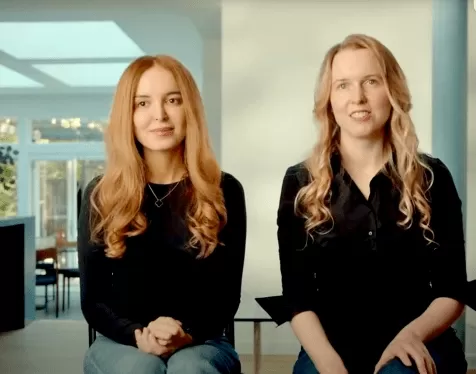 How Recursive Intelligence Raised $335M at $4B Valuation in 4 Months
The co-founders of startup Ricursive Intelligence seemed destined to be co-founders.Anna Goldie, CEO, and Azalia Mirhoseini, CTO, are so well-known in the AI community that they were among those AI engineers who “got those weird emails from Zuckerber
How Recursive Intelligence Raised $335M at $4B Valuation in 4 Months
The co-founders of startup Ricursive Intelligence seemed destined to be co-founders.Anna Goldie, CEO, and Azalia Mirhoseini, CTO, are so well-known in the AI community that they were among those AI engineers who “got those weird emails from Zuckerber

2026 Latest Top-rated AI Illustration Tools: Our curated list features the best powerfully designed tools for creating stunning editorial scenes and eye-catching cover art quickly. Each option has gone through rigorous real-world tests, offering a free vs paid comparison to help you find the perfect match for your workflow. Try these must-try solutions today to unlock your AI edge and boost your creative productivity. Explore now at XIX.AI.
10 tools
xix.ai

2026 Latest Top-Rated Best AI Tutors for Exam Prep are here on XIX.AI! Our curated list features powerful game-changing tools that offer free vs paid comparison, real-world tests, and weekly updated rankings. They help boost your writing efficiency, simplify complex topic learning, and unlock your academic potential. Explore now to Discover your perfect exam prep tool and Start creating today to Unlock your AI edge!
10 tools
xix.ai

2026 Latest Best Top-Rated AI Budget Planning Tools for Personal Money Management are here on XIX.AI! This curated collection features powerful, game-changing solutions that help you conduct real-world tests, understand spending habits, and create personalized plans to boost productivity. Enjoy a free vs paid comparison along with detailed rankings. Must-try tools designed to simplify money management and unlock your AI edge. Explore now!
11 tools
xix.ai

2026 Latest Best Top-Rated AI Sleep Tracking Assistants curated for ultimate recovery. This fully updated weekly guide features powerful tools that deliver real-world tests, free vs paid comparison, and detailed rankings to help you find the must-try solution that boosts sleep quality and supports better bedtime habits. Explore now at XIX.AI to Unlock your AI edge.
10 tools
xix.ai

2026 Latest Best Top-Rated AI SQL Copilots for Product and Revenue Analytics! XIX.AI has curated a powerful, game-changing collection of must-try tools that undergo real-world tests through weekly updated rankings. These tools help users boost productivity significantly by accelerating data analysis, streamlining complex queries, and generating accurate insights to drive smarter business decisions. Explore now to Discover your perfect tool for unlocking your AI edge!
14 tools
xix.ai

2026 Latest Best Top-Rated AI Homework Helpers That Teach Core Concepts Not Just Answers Powerful Tools for Students Must-Try Curated List Weekly Updated Free vs Paid Comparison Real-World Tests Accurate Rankings to Help You Unlock Your Full Learning Potential Explore now to Discover your perfect tool for smarter studying.
10 tools
xix.ai












