


 Home
HomeOpenAI may loosen safeguards if competitors launch potentially dangerous AI models
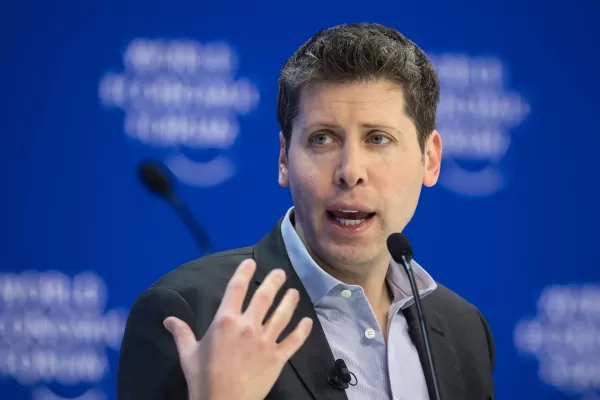
OpenAI Adjusts Safety Protocol Amid Competitive Pressures
OpenAI has revised its Preparedness Framework, the internal mechanism guiding AI model safety assessments and safeguard implementation throughout development cycles. The updated policy notably includes provisions allowing potential relaxation of safety measures if competing firms launch high-risk systems without equivalent protections.
This modification underscores growing market forces compelling AI developers to accelerate deployment timelines. OpenAI faces mounting scrutiny regarding allegedly diminishing safety prioritization to enable swifter releases, including delayed publication of safety assessment documentation. Recent legal proceedings saw 12 former employees supporting Elon Musk's case against OpenAI, warning that planned corporate restructuring could further erode safety standards.
Balancing Competition and Safety
Anticipating criticism, OpenAI emphasized any policy adjustments would maintain rigorous protection levels. "While we may adapt requirements if competitors deploy high-risk systems lacking comparable safeguards," stated Tuesday's blog update, "we commit to thorough risk verification, transparency about modifications, and maintaining superior protective measures."
The revised framework highlights OpenAI's increasing reliance on automated evaluation tools alongside traditional human-led testing. Company representatives assert these automated systems enable maintaining release pace without compromising assessment quality.
Controversial Testing Practices Emerge
Reports contradict OpenAI's official stance, with insider accounts revealing compressed safety review periods. According to Financial Times sources, testers recently received under one week to evaluate an impending model - drastically shorter than previous timelines. Additional concerns emerged regarding safety testing occurring predominantly on pre-release model variants rather than public deployment versions.
OpenAI quietly reducing safety commitments.
Omitted from Framework changes:
• No safety tests required for finetuned models
— Steven Adler (@sjgadler) April 15, 2025
Redefined Risk Classification System
The updated framework introduces streamlined model categorization focusing on two capability thresholds:
- High Capability: Models amplifying existing severe harm vectors
- Critical Capability: Models establishing novel severe harm pathways
"High-capability systems mandate risk-mitigating safeguards pre-deployment," clarified OpenAI. "Critical-capability models require additional developmental phase protections."
This marks the framework's first substantial revision since 2023, reflecting evolving industry dynamics and internal operational changes at OpenAI.
Related article
 PHP Armageddon: OpenAI, Google’s Wiz uncover ancient holes, sparking internet panic
The U.S. National Security Agency issued a critical alert on Wednesday regarding two severe vulnerabilities in PHP, for which patches have already been released by the PHP Foundation.As a server-side scripting language, PHP powers approximately 70% o
OpenAI launches GPT-5.5 Instant as ChatGPT’s new default model
OpenAI launched GPT-5.5 Instant on Monday, replacing GPT-5.3 Instant as the default ChatGPT model. The company states that this update minimizes hallucinations in high-stakes fields like law, medicine, and finance, while preserving the fast response
Nvidia to Derive 25% of Next Year’s Revenue from Funded Labs
Nvidia has deployed nearly US$50 billion into AI labs purchasing its chips, securing commitments for over $500 billion in total.On August 26, CFO Colette Kress informed analysts that these labs, backed by Nvidia’s balance sheet, will account for roug
Related Special Topic Recommendations
Design & Art
PHP Armageddon: OpenAI, Google’s Wiz uncover ancient holes, sparking internet panic
The U.S. National Security Agency issued a critical alert on Wednesday regarding two severe vulnerabilities in PHP, for which patches have already been released by the PHP Foundation.As a server-side scripting language, PHP powers approximately 70% o
OpenAI launches GPT-5.5 Instant as ChatGPT’s new default model
OpenAI launched GPT-5.5 Instant on Monday, replacing GPT-5.3 Instant as the default ChatGPT model. The company states that this update minimizes hallucinations in high-stakes fields like law, medicine, and finance, while preserving the fast response
Nvidia to Derive 25% of Next Year’s Revenue from Funded Labs
Nvidia has deployed nearly US$50 billion into AI labs purchasing its chips, securing commitments for over $500 billion in total.On August 26, CFO Colette Kress informed analysts that these labs, backed by Nvidia’s balance sheet, will account for roug
Related Special Topic Recommendations
Design & Art
 Top AI Illustration Tools: Create Editorial Scenes and Cover Art Faster
2026 Latest Top-rated AI Illustration Tools: Our curated list features the best powerfully designed tools for creating stunning editorial scenes and eye-catching cover art quickly. Each option has gone through rigorous real-world tests, offering a free vs paid comparison to help you find the perfect match for your workflow. Try these must-try solutions today to unlock your AI edge and boost your creative productivity. Explore now at XIX.AI.
 10 tools
 xix.ai
Education and Learning
Top AI Tutors for Exam Prep: Practice Math, Science, and English
xix.ai
Education and Learning
Top AI Tutors for Exam Prep: Practice Math, Science, and English
2026 Latest Top-Rated Best AI Tutors for Exam Prep are here on XIX.AI! Our curated list features powerful game-changing tools that offer free vs paid comparison, real-world tests, and weekly updated rankings. They help boost your writing efficiency, simplify complex topic learning, and unlock your academic potential. Explore now to Discover your perfect exam prep tool and Start creating today to Unlock your AI edge!
10 tools
xix.ai
Finance
AI Budget Planning Tools for Personal Money Management
2026 Latest Best Top-Rated AI Budget Planning Tools for Personal Money Management are here on XIX.AI! This curated collection features powerful, game-changing solutions that help you conduct real-world tests, understand spending habits, and create personalized plans to boost productivity. Enjoy a free vs paid comparison along with detailed rankings. Must-try tools designed to simplify money management and unlock your AI edge. Explore now!
11 tools
xix.ai
Health & Wellness
AI Sleep Tracking Assistants: Improve Recovery with Better Bedtime Habits
2026 Latest Best Top-Rated AI Sleep Tracking Assistants curated for ultimate recovery. This fully updated weekly guide features powerful tools that deliver real-world tests, free vs paid comparison, and detailed rankings to help you find the must-try solution that boosts sleep quality and supports better bedtime habits. Explore now at XIX.AI to Unlock your AI edge.
10 tools
xix.ai
Data Analysis
AI SQL Copilots for Product and Revenue Analytics
2026 Latest Best Top-Rated AI SQL Copilots for Product and Revenue Analytics! XIX.AI has curated a powerful, game-changing collection of must-try tools that undergo real-world tests through weekly updated rankings. These tools help users boost productivity significantly by accelerating data analysis, streamlining complex queries, and generating accurate insights to drive smarter business decisions. Explore now to Discover your perfect tool for unlocking your AI edge!
14 tools
xix.ai
Education and Learning
Best AI Homework Helpers That Teach: Learn Concepts, Not Just Answers
2026 Latest Best Top-Rated AI Homework Helpers That Teach Core Concepts Not Just Answers Powerful Tools for Students Must-Try Curated List Weekly Updated Free vs Paid Comparison Real-World Tests Accurate Rankings to Help You Unlock Your Full Learning Potential Explore now to Discover your perfect tool for smarter studying.
10 tools
xix.ai

 Comments (2)
0/500
Comments (2)
0/500
![WillieHernández]()
またOpenAIの方針転換...競争が激化する中、安全性と開発速度のバランスって本当に難しいですよね。個人的には過去のChatGPTの制限が緩和された時みたいに、今回もユーザー体験が向上するなら歓迎だけど、やっぱり倫理的基準は守ってほしいな😅 他の企業が危険なAIを出したら同じ土俵に上がる必要性ある?
![PaulTaylor]()
Interesante cómo la competencia puede influir en los estándares de seguridad 😕 No sé si relajar protocolos sea buena idea, pero entiendo la presión del mercado. ¿Hasta qué punto la carrera por la IA está poniendo en riesgo controles importantes?
OpenAI Adjusts Safety Protocol Amid Competitive Pressures
OpenAI has revised its Preparedness Framework, the internal mechanism guiding AI model safety assessments and safeguard implementation throughout development cycles. The updated policy notably includes provisions allowing potential relaxation of safety measures if competing firms launch high-risk systems without equivalent protections.
This modification underscores growing market forces compelling AI developers to accelerate deployment timelines. OpenAI faces mounting scrutiny regarding allegedly diminishing safety prioritization to enable swifter releases, including delayed publication of safety assessment documentation. Recent legal proceedings saw 12 former employees supporting Elon Musk's case against OpenAI, warning that planned corporate restructuring could further erode safety standards.
Balancing Competition and Safety
Anticipating criticism, OpenAI emphasized any policy adjustments would maintain rigorous protection levels. "While we may adapt requirements if competitors deploy high-risk systems lacking comparable safeguards," stated Tuesday's blog update, "we commit to thorough risk verification, transparency about modifications, and maintaining superior protective measures."
The revised framework highlights OpenAI's increasing reliance on automated evaluation tools alongside traditional human-led testing. Company representatives assert these automated systems enable maintaining release pace without compromising assessment quality.
Controversial Testing Practices Emerge
Reports contradict OpenAI's official stance, with insider accounts revealing compressed safety review periods. According to Financial Times sources, testers recently received under one week to evaluate an impending model - drastically shorter than previous timelines. Additional concerns emerged regarding safety testing occurring predominantly on pre-release model variants rather than public deployment versions.
OpenAI quietly reducing safety commitments.
— Steven Adler (@sjgadler) April 15, 2025
Omitted from Framework changes:
• No safety tests required for finetuned models
Redefined Risk Classification System
The updated framework introduces streamlined model categorization focusing on two capability thresholds:
- High Capability: Models amplifying existing severe harm vectors
- Critical Capability: Models establishing novel severe harm pathways
"High-capability systems mandate risk-mitigating safeguards pre-deployment," clarified OpenAI. "Critical-capability models require additional developmental phase protections."
This marks the framework's first substantial revision since 2023, reflecting evolving industry dynamics and internal operational changes at OpenAI.








 PHP Armageddon: OpenAI, Google’s Wiz uncover ancient holes, sparking internet panic
The U.S. National Security Agency issued a critical alert on Wednesday regarding two severe vulnerabilities in PHP, for which patches have already been released by the PHP Foundation.As a server-side scripting language, PHP powers approximately 70% o
PHP Armageddon: OpenAI, Google’s Wiz uncover ancient holes, sparking internet panic
The U.S. National Security Agency issued a critical alert on Wednesday regarding two severe vulnerabilities in PHP, for which patches have already been released by the PHP Foundation.As a server-side scripting language, PHP powers approximately 70% o
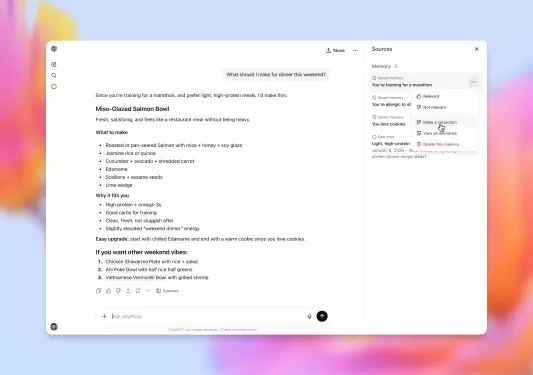 OpenAI launches GPT-5.5 Instant as ChatGPT’s new default model
OpenAI launched GPT-5.5 Instant on Monday, replacing GPT-5.3 Instant as the default ChatGPT model. The company states that this update minimizes hallucinations in high-stakes fields like law, medicine, and finance, while preserving the fast response
OpenAI launches GPT-5.5 Instant as ChatGPT’s new default model
OpenAI launched GPT-5.5 Instant on Monday, replacing GPT-5.3 Instant as the default ChatGPT model. The company states that this update minimizes hallucinations in high-stakes fields like law, medicine, and finance, while preserving the fast response
 Nvidia to Derive 25% of Next Year’s Revenue from Funded Labs
Nvidia has deployed nearly US$50 billion into AI labs purchasing its chips, securing commitments for over $500 billion in total.On August 26, CFO Colette Kress informed analysts that these labs, backed by Nvidia’s balance sheet, will account for roug
Nvidia to Derive 25% of Next Year’s Revenue from Funded Labs
Nvidia has deployed nearly US$50 billion into AI labs purchasing its chips, securing commitments for over $500 billion in total.On August 26, CFO Colette Kress informed analysts that these labs, backed by Nvidia’s balance sheet, will account for roug

2026 Latest Top-rated AI Illustration Tools: Our curated list features the best powerfully designed tools for creating stunning editorial scenes and eye-catching cover art quickly. Each option has gone through rigorous real-world tests, offering a free vs paid comparison to help you find the perfect match for your workflow. Try these must-try solutions today to unlock your AI edge and boost your creative productivity. Explore now at XIX.AI.
10 tools
xix.ai

2026 Latest Top-Rated Best AI Tutors for Exam Prep are here on XIX.AI! Our curated list features powerful game-changing tools that offer free vs paid comparison, real-world tests, and weekly updated rankings. They help boost your writing efficiency, simplify complex topic learning, and unlock your academic potential. Explore now to Discover your perfect exam prep tool and Start creating today to Unlock your AI edge!
10 tools
xix.ai

2026 Latest Best Top-Rated AI Budget Planning Tools for Personal Money Management are here on XIX.AI! This curated collection features powerful, game-changing solutions that help you conduct real-world tests, understand spending habits, and create personalized plans to boost productivity. Enjoy a free vs paid comparison along with detailed rankings. Must-try tools designed to simplify money management and unlock your AI edge. Explore now!
11 tools
xix.ai

2026 Latest Best Top-Rated AI Sleep Tracking Assistants curated for ultimate recovery. This fully updated weekly guide features powerful tools that deliver real-world tests, free vs paid comparison, and detailed rankings to help you find the must-try solution that boosts sleep quality and supports better bedtime habits. Explore now at XIX.AI to Unlock your AI edge.
10 tools
xix.ai

2026 Latest Best Top-Rated AI SQL Copilots for Product and Revenue Analytics! XIX.AI has curated a powerful, game-changing collection of must-try tools that undergo real-world tests through weekly updated rankings. These tools help users boost productivity significantly by accelerating data analysis, streamlining complex queries, and generating accurate insights to drive smarter business decisions. Explore now to Discover your perfect tool for unlocking your AI edge!
14 tools
xix.ai

2026 Latest Best Top-Rated AI Homework Helpers That Teach Core Concepts Not Just Answers Powerful Tools for Students Must-Try Curated List Weekly Updated Free vs Paid Comparison Real-World Tests Accurate Rankings to Help You Unlock Your Full Learning Potential Explore now to Discover your perfect tool for smarter studying.
10 tools
xix.ai

またOpenAIの方針転換...競争が激化する中、安全性と開発速度のバランスって本当に難しいですよね。個人的には過去のChatGPTの制限が緩和された時みたいに、今回もユーザー体験が向上するなら歓迎だけど、やっぱり倫理的基準は守ってほしいな😅 他の企業が危険なAIを出したら同じ土俵に上がる必要性ある?
Interesante cómo la competencia puede influir en los estándares de seguridad 😕 No sé si relajar protocolos sea buena idea, pero entiendo la presión del mercado. ¿Hasta qué punto la carrera por la IA está poniendo en riesgo controles importantes?












