


 Home
HomeOffshore Floating Data Centers Emerge as Earthbound Alternative
The energy demands of AI data centers have become so intense that discussions are emerging about deploying servers into space to harness continuous solar power – and it's not just Elon Musk proposing this.
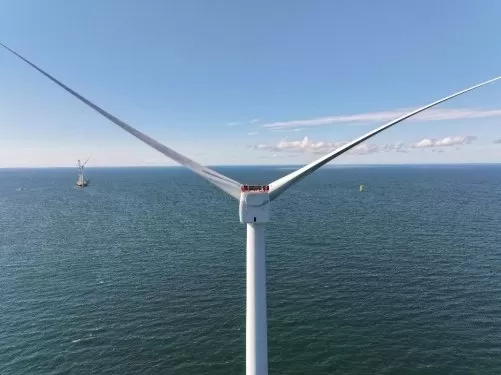
One startup believes the ocean offers a more viable alternative. Offshore wind developer Aikido intends to submerge a 100-kilowatt demonstration data center off Norway's coast this year. The compact unit will be housed within the submerged sections of a floating offshore wind turbine.
If the trial succeeds, the company aims to construct a larger version for deployment off the UK coast by 2028. That upgraded model will feature a 15 to 18 megawatt turbine supplying power to a 10 to 12 megawatt data center.
Moving offshore addresses several key challenges. Direct access to power is an obvious advantage, with the energy source positioned directly above. Offshore winds are more consistent than on land, and a small battery system could manage any temporary calm periods.
Submerged data centers could also alleviate opposition from NIMBY groups – "not in my backyard" – who often resist nearby data centers due to noise and environmental concerns.
Additionally, floating in cold seawater simplifies server cooling. (This contrasts with orbital data centers, where cooling presents particular difficulties in the vacuum of space.)
However, while offshore data centers solve certain problems, they introduce new complications. The marine environment is notoriously harsh. Although submerged servers would avoid direct wave impact, they wouldn't remain perfectly stationary, requiring secure fastening. Seawater's corrosive nature also demands specially designed equipment – including the container, power, and data connections – with enhanced corrosion resistance.
Aikido isn't pioneering the concept of underwater data centers. Microsoft first explored the idea over ten years ago and conducted a moderately successful experiment off Scotland in 2018. During the 25-month trial, only six out of more than 850 servers failed. (The data hall was filled with inert nitrogen gas, which likely contributed to the low failure rate.)
Microsoft secured numerous patents over the years, making them openly available in 2021. However, by 2024, the company had discontinued the project.
Related article
 Texas suspends new data centers amid governor’s call for audits
Technology firms and software engineers are actively scouting the United States for optimal data center locations, with Texas’s relaxed regulatory framework and seemingly abundant energy supply proving highly attractive. In fact, only Virginia curren
Massachusetts imposes fresh clean power mandates on data centers
Massachusetts has joined the growing list of states requiring data centers to supply their own power, but with a significant caveat. A new state regulation mandates that developers constructing facilities exceeding 25 megawatts must either provide cl
TerraPower’s nuclear reactor emerges as key solution for powering AI data centers
Nuclear power startups are positioning themselves as the solution to AI data centers’ most pressing challenge: reliable, always-on energy. TerraPower, founded by Bill Gates, is the latest entrant, with Bloomberg reporting that the company plans to un
Related Special Topic Recommendations
Design & Art
Texas suspends new data centers amid governor’s call for audits
Technology firms and software engineers are actively scouting the United States for optimal data center locations, with Texas’s relaxed regulatory framework and seemingly abundant energy supply proving highly attractive. In fact, only Virginia curren
Massachusetts imposes fresh clean power mandates on data centers
Massachusetts has joined the growing list of states requiring data centers to supply their own power, but with a significant caveat. A new state regulation mandates that developers constructing facilities exceeding 25 megawatts must either provide cl
TerraPower’s nuclear reactor emerges as key solution for powering AI data centers
Nuclear power startups are positioning themselves as the solution to AI data centers’ most pressing challenge: reliable, always-on energy. TerraPower, founded by Bill Gates, is the latest entrant, with Bloomberg reporting that the company plans to un
Related Special Topic Recommendations
Design & Art
 Top AI Illustration Tools: Create Editorial Scenes and Cover Art Faster
2026 Latest Top-rated AI Illustration Tools: Our curated list features the best powerfully designed tools for creating stunning editorial scenes and eye-catching cover art quickly. Each option has gone through rigorous real-world tests, offering a free vs paid comparison to help you find the perfect match for your workflow. Try these must-try solutions today to unlock your AI edge and boost your creative productivity. Explore now at XIX.AI.
 10 tools
 xix.ai
Education and Learning
Top AI Tutors for Exam Prep: Practice Math, Science, and English
xix.ai
Education and Learning
Top AI Tutors for Exam Prep: Practice Math, Science, and English
2026 Latest Top-Rated Best AI Tutors for Exam Prep are here on XIX.AI! Our curated list features powerful game-changing tools that offer free vs paid comparison, real-world tests, and weekly updated rankings. They help boost your writing efficiency, simplify complex topic learning, and unlock your academic potential. Explore now to Discover your perfect exam prep tool and Start creating today to Unlock your AI edge!
10 tools
xix.ai
Finance
AI Budget Planning Tools for Personal Money Management
2026 Latest Best Top-Rated AI Budget Planning Tools for Personal Money Management are here on XIX.AI! This curated collection features powerful, game-changing solutions that help you conduct real-world tests, understand spending habits, and create personalized plans to boost productivity. Enjoy a free vs paid comparison along with detailed rankings. Must-try tools designed to simplify money management and unlock your AI edge. Explore now!
11 tools
xix.ai
Health & Wellness
AI Sleep Tracking Assistants: Improve Recovery with Better Bedtime Habits
2026 Latest Best Top-Rated AI Sleep Tracking Assistants curated for ultimate recovery. This fully updated weekly guide features powerful tools that deliver real-world tests, free vs paid comparison, and detailed rankings to help you find the must-try solution that boosts sleep quality and supports better bedtime habits. Explore now at XIX.AI to Unlock your AI edge.
10 tools
xix.ai
Data Analysis
AI SQL Copilots for Product and Revenue Analytics
2026 Latest Best Top-Rated AI SQL Copilots for Product and Revenue Analytics! XIX.AI has curated a powerful, game-changing collection of must-try tools that undergo real-world tests through weekly updated rankings. These tools help users boost productivity significantly by accelerating data analysis, streamlining complex queries, and generating accurate insights to drive smarter business decisions. Explore now to Discover your perfect tool for unlocking your AI edge!
14 tools
xix.ai
Education and Learning
Best AI Homework Helpers That Teach: Learn Concepts, Not Just Answers
2026 Latest Best Top-Rated AI Homework Helpers That Teach Core Concepts Not Just Answers Powerful Tools for Students Must-Try Curated List Weekly Updated Free vs Paid Comparison Real-World Tests Accurate Rankings to Help You Unlock Your Full Learning Potential Explore now to Discover your perfect tool for smarter studying.
10 tools
xix.ai

 Comments (3)
0/500
Comments (3)
0/500
![ThomasRoberts]()
Wait, so instead of launching servers into space, we're just gonna float them on the ocean? That's... actually kinda genius? 🌊 Less rocket fuel, more saltwater corrosion though. Wonder how they'd handle hurricanes. Still, beats the heck out of those land-based power hogs. 😅
![JonathanNelson]()
Whoa, floating data centers? That's way more practical than blasting servers into space. But won't the salty sea air corrode everything? Guess we'll need some serious waterproofing and maybe a few dolphins to do tech support 🐬😂
![AlbertRoberts]()
Interesting idea, but floating data centers? The ocean is already struggling with pollution and temperature changes. Wouldn't this just add more heat and risk to marine ecosystems? Seems like we're solving one problem by creating another. 🌊🤔
The energy demands of AI data centers have become so intense that discussions are emerging about deploying servers into space to harness continuous solar power – and it's not just Elon Musk proposing this.
One startup believes the ocean offers a more viable alternative. Offshore wind developer Aikido intends to submerge a 100-kilowatt demonstration data center off Norway's coast this year. The compact unit will be housed within the submerged sections of a floating offshore wind turbine.
If the trial succeeds, the company aims to construct a larger version for deployment off the UK coast by 2028. That upgraded model will feature a 15 to 18 megawatt turbine supplying power to a 10 to 12 megawatt data center.
Moving offshore addresses several key challenges. Direct access to power is an obvious advantage, with the energy source positioned directly above. Offshore winds are more consistent than on land, and a small battery system could manage any temporary calm periods.
Submerged data centers could also alleviate opposition from NIMBY groups – "not in my backyard" – who often resist nearby data centers due to noise and environmental concerns.
Additionally, floating in cold seawater simplifies server cooling. (This contrasts with orbital data centers, where cooling presents particular difficulties in the vacuum of space.)
However, while offshore data centers solve certain problems, they introduce new complications. The marine environment is notoriously harsh. Although submerged servers would avoid direct wave impact, they wouldn't remain perfectly stationary, requiring secure fastening. Seawater's corrosive nature also demands specially designed equipment – including the container, power, and data connections – with enhanced corrosion resistance.
Aikido isn't pioneering the concept of underwater data centers. Microsoft first explored the idea over ten years ago and conducted a moderately successful experiment off Scotland in 2018. During the 25-month trial, only six out of more than 850 servers failed. (The data hall was filled with inert nitrogen gas, which likely contributed to the low failure rate.)
Microsoft secured numerous patents over the years, making them openly available in 2021. However, by 2024, the company had discontinued the project.








 Texas suspends new data centers amid governor’s call for audits
Technology firms and software engineers are actively scouting the United States for optimal data center locations, with Texas’s relaxed regulatory framework and seemingly abundant energy supply proving highly attractive. In fact, only Virginia curren
Texas suspends new data centers amid governor’s call for audits
Technology firms and software engineers are actively scouting the United States for optimal data center locations, with Texas’s relaxed regulatory framework and seemingly abundant energy supply proving highly attractive. In fact, only Virginia curren
 Massachusetts imposes fresh clean power mandates on data centers
Massachusetts has joined the growing list of states requiring data centers to supply their own power, but with a significant caveat. A new state regulation mandates that developers constructing facilities exceeding 25 megawatts must either provide cl
Massachusetts imposes fresh clean power mandates on data centers
Massachusetts has joined the growing list of states requiring data centers to supply their own power, but with a significant caveat. A new state regulation mandates that developers constructing facilities exceeding 25 megawatts must either provide cl
 TerraPower’s nuclear reactor emerges as key solution for powering AI data centers
Nuclear power startups are positioning themselves as the solution to AI data centers’ most pressing challenge: reliable, always-on energy. TerraPower, founded by Bill Gates, is the latest entrant, with Bloomberg reporting that the company plans to un
TerraPower’s nuclear reactor emerges as key solution for powering AI data centers
Nuclear power startups are positioning themselves as the solution to AI data centers’ most pressing challenge: reliable, always-on energy. TerraPower, founded by Bill Gates, is the latest entrant, with Bloomberg reporting that the company plans to un

2026 Latest Top-rated AI Illustration Tools: Our curated list features the best powerfully designed tools for creating stunning editorial scenes and eye-catching cover art quickly. Each option has gone through rigorous real-world tests, offering a free vs paid comparison to help you find the perfect match for your workflow. Try these must-try solutions today to unlock your AI edge and boost your creative productivity. Explore now at XIX.AI.
10 tools
xix.ai

2026 Latest Top-Rated Best AI Tutors for Exam Prep are here on XIX.AI! Our curated list features powerful game-changing tools that offer free vs paid comparison, real-world tests, and weekly updated rankings. They help boost your writing efficiency, simplify complex topic learning, and unlock your academic potential. Explore now to Discover your perfect exam prep tool and Start creating today to Unlock your AI edge!
10 tools
xix.ai

2026 Latest Best Top-Rated AI Budget Planning Tools for Personal Money Management are here on XIX.AI! This curated collection features powerful, game-changing solutions that help you conduct real-world tests, understand spending habits, and create personalized plans to boost productivity. Enjoy a free vs paid comparison along with detailed rankings. Must-try tools designed to simplify money management and unlock your AI edge. Explore now!
11 tools
xix.ai

2026 Latest Best Top-Rated AI Sleep Tracking Assistants curated for ultimate recovery. This fully updated weekly guide features powerful tools that deliver real-world tests, free vs paid comparison, and detailed rankings to help you find the must-try solution that boosts sleep quality and supports better bedtime habits. Explore now at XIX.AI to Unlock your AI edge.
10 tools
xix.ai

2026 Latest Best Top-Rated AI SQL Copilots for Product and Revenue Analytics! XIX.AI has curated a powerful, game-changing collection of must-try tools that undergo real-world tests through weekly updated rankings. These tools help users boost productivity significantly by accelerating data analysis, streamlining complex queries, and generating accurate insights to drive smarter business decisions. Explore now to Discover your perfect tool for unlocking your AI edge!
14 tools
xix.ai

2026 Latest Best Top-Rated AI Homework Helpers That Teach Core Concepts Not Just Answers Powerful Tools for Students Must-Try Curated List Weekly Updated Free vs Paid Comparison Real-World Tests Accurate Rankings to Help You Unlock Your Full Learning Potential Explore now to Discover your perfect tool for smarter studying.
10 tools
xix.ai

Wait, so instead of launching servers into space, we're just gonna float them on the ocean? That's... actually kinda genius? 🌊 Less rocket fuel, more saltwater corrosion though. Wonder how they'd handle hurricanes. Still, beats the heck out of those land-based power hogs. 😅
Whoa, floating data centers? That's way more practical than blasting servers into space. But won't the salty sea air corrode everything? Guess we'll need some serious waterproofing and maybe a few dolphins to do tech support 🐬😂
Interesting idea, but floating data centers? The ocean is already struggling with pollution and temperature changes. Wouldn't this just add more heat and risk to marine ecosystems? Seems like we're solving one problem by creating another. 🌊🤔












