


 Home
HomeNVIDIA Invests $26 Billion Beyond Chips to Challenge OpenAI and DeepSeek
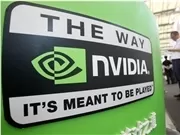
On March 12, 2026, global chip leader NVIDIA sent shockwaves through the industry. As reported by Wired, NVIDIA has officially announced a five-year investment plan of up to $26 billion (approximately 178.79 billion Chinese yuan) to develop open-source AI large language models . This initiative represents the most significant strategic shift in NVIDIA 's history—transforming from a dedicated hardware provider into a frontier artificial intelligence research lab capable of directly challenging OpenAI and DeepSeek.
A Top-Down Offensive: Outspending GPT-4 by 8x to Forge the Premier Model
This $26 billion commitment will comprehensively fund model development, computing infrastructure, and elite talent acquisition. To put this in perspective, OpenAI's training cost for GPT-4 was around $3 billion, making NVIDIA 's investment over eight times larger.
Leveraging its commanding position in core computing resources, NVIDIA is quietly assembling a dream team of researchers. Reports confirm the company has recently completed pre-training of a massive model with 550 billion parameters. NVIDIA states that developing these models serves not only to benchmark computational power but also to conduct "extreme stress tests" on supercomputing-level infrastructure, including storage and networking.
The Middle Path: Advocating "Open Weights" to Solve Enterprise Customization Challenges
Technically, NVIDIA has chosen a highly strategic middle ground. Eschewing both OpenAI's fully closed and Meta's fully open approaches, NVIDIA is focusing on a "open weights" strategy:
High Transparency: Key model parameters are made publicly available, allowing businesses to download and run models on their own infrastructure.
Deep Optimization: These models are fundamentally optimized for NVIDIA's own hardware, delivering performance far beyond that of generalized models.
At a time when major enterprises desperately need transparent and customizable models, this strategy directly targets a critical industry pain point and is poised to build a substantial technological moat.
Commercial Ambition: Targeting $50 Billion in Incremental Revenue Within Three Years
Financial analysts suggest NVIDIA 's move is more than just capital expenditure. If NVIDIA can capture a 10% share of the foundational model market while maintaining its hardware dominance, it could generate an estimated $50 billion in additional annual revenue within three years.
The current industry landscape remains delicately poised: leading U.S. closed-source models primarily offer cloud-only access, while Chinese firms like DeepSeek and Alibaba are capturing the global developer community with open-source strategies. NVIDIA 's entry into the open-source ecosystem is both a defense of its core interests and a bid to shape future industry standards.
Release Timeline: First Models Expected by Late 2026
The associated funding is slated for rollout over the next 18 to 24 months. NVIDIA anticipates its first industry-leading open-source large models will be officially released by late 2026 or early 2027.
When the hardware titan begins coding in earnest, the next phase of global AI competition will extend beyond raw compute—it will become a comprehensive battle of ecosystems, data, and model sophistication. NVIDIA 's $26 billion bet has the potential to fundamentally rewrite the rules of the large language model market.
Related article
 DeepMind CEO Hassabis: I sleep six hours a day, usually feel energetic around 1 a.m.
Fortune recently featured an interview with Demis Hassabis, CEO of Google DeepMind, revealing his unconventional approach to rest and productivity. Hassabis disclosed that he sleeps very little, structuring his waking hours into two distinct work blo
OpenAI, Anthropic Vie for Market Share Despite Revenue Shortfalls
Despite recent reports suggesting OpenAI missed revenue targets, creating pressure on tech stocks this Tuesday, private AI lab investors remain resilient. Seasoned backers have confirmed they will not reduce investment despite negative media coverage
California AV Compliance: A New Era of Tickets, Geofences, and 1M Miles
Guident operates an AuveTech shuttle in South Florida, managing a four-mile route in West Palm Beach and a one-mile route in Boca Raton using its remote monitoring technology. | Credit: GuidentCalifornia is redefining the regulatory landscape for dri
Related Special Topic Recommendations
writing
DeepMind CEO Hassabis: I sleep six hours a day, usually feel energetic around 1 a.m.
Fortune recently featured an interview with Demis Hassabis, CEO of Google DeepMind, revealing his unconventional approach to rest and productivity. Hassabis disclosed that he sleeps very little, structuring his waking hours into two distinct work blo
OpenAI, Anthropic Vie for Market Share Despite Revenue Shortfalls
Despite recent reports suggesting OpenAI missed revenue targets, creating pressure on tech stocks this Tuesday, private AI lab investors remain resilient. Seasoned backers have confirmed they will not reduce investment despite negative media coverage
California AV Compliance: A New Era of Tickets, Geofences, and 1M Miles
Guident operates an AuveTech shuttle in South Florida, managing a four-mile route in West Palm Beach and a one-mile route in Boca Raton using its remote monitoring technology. | Credit: GuidentCalifornia is redefining the regulatory landscape for dri
Related Special Topic Recommendations
writing
 AI Article Outline Tools for Long Form Writing
2026 Latest Best Top-Rated AI Article Outline Tools for Long Form Writing! This curated collection features powerful, game-changing tools that deliver accurate, structured outlines with real-world tests to boost writing efficiency significantly. XIX.AI is part of this elite selection. Get a free vs paid comparison to help you choose the perfect tool. Explore now and Unlock your AI edge!
 9 tools
 xix.ai
chatbot
Best AI Roleplay Chat Apps for Language Practice, Interview Prep, and Daily Fluency
xix.ai
chatbot
Best AI Roleplay Chat Apps for Language Practice, Interview Prep, and Daily Fluency
2026 Latest Best Top-rated AI Roleplay Chat Apps for Language Practice, Interview Prep, and Daily Fluency! XIX.AI curates a powerful game-changing collection that offers free vs paid comparison, real-world tests, and updated rankings weekly. These must-try tools help you boost writing skills, overcome fluency challenges, and improve communication efficiency across all daily scenarios. Explore now to discover your perfect tool for language growth!
10 tools
xix.ai
Music composition
AI Stem Separation Tools for Remix Production, Sampling Prep, and Karaoke Masters
2026 Latest Best Top-rated AI Stem Separation Tools Curated for Remix Production, Sampling Prep, and Karaoke Masters. These powerful game-changing tools offer real-world tests to deliver precise audio isolation, boosting productivity significantly. XIX.AI provides a weekly updated free vs paid comparison guide to help you find the must-try solution that suits your needs. Explore now to unlock your AI edge.
8 tools
xix.ai
Data Analysis
AI SQL Copilots for Revenue Dashboards, Funnel Analysis, and Product Metrics
2026 Latest Best AI SQL Copilots Ranked Top-Rated! XIX.AI curates a powerful game-changing collection for weekly updated real-world tests. These must-try tools help you generate accurate revenue dashboards, analyze sales funnels, and track product metrics swiftly, boosting productivity massively. Explore now to Discover your perfect tool for data-driven decision making! 238 characters
9 tools
xix.ai
Music composition
Best AI Melody Writing Tools for Song Drafts
2026 Latest Best Top-Rated AI Melody Writing Tools for Song Drafts! XIX.AI has curated a highly powerful game-changing collection that goes through rigorous real-world tests to deliver the best writing experience. You can find detailed free vs paid comparisons, accurate rankings, and must-try options designed to help you create stunning song drafts effortlessly and boost your creative productivity significantly. Explore now to discover your perfect tool!
8 tools
xix.ai
chatbot
Best AI Conversation Trainer Tools for Interview Practice
2026 Latest Best Top-rated AI Conversation Trainer Tools for Interview Practice are here on XIX.AI! This curated collection features powerful, game-changing tools that go through rigorous real-world tests to deliver accurate feedback. You’ll find a free vs paid comparison and detailed rankings to help you choose the must-try option that boosts your confidence and skills. Explore now to Discover your perfect tool for interview success!
12 tools
xix.ai

 Comments (0)
0/500
Comments (0)
0/500
On March 12, 2026, global chip leader
A Top-Down Offensive: Outspending GPT-4 by 8x to Forge the Premier Model
This $26 billion commitment will comprehensively fund model development, computing infrastructure, and elite talent acquisition. To put this in perspective, OpenAI's training cost for GPT-4 was around $3 billion, making
Leveraging its commanding position in core computing resources,
The Middle Path: Advocating "Open Weights" to Solve Enterprise Customization Challenges
Technically,
High Transparency: Key model parameters are made publicly available, allowing businesses to download and run models on their own infrastructure.
Deep Optimization: These models are fundamentally optimized for NVIDIA's own hardware, delivering performance far beyond that of generalized models.
At a time when major enterprises desperately need transparent and customizable models, this strategy directly targets a critical industry pain point and is poised to build a substantial technological moat.
Commercial Ambition: Targeting $50 Billion in Incremental Revenue Within Three Years
Financial analysts suggest
The current industry landscape remains delicately poised: leading U.S. closed-source models primarily offer cloud-only access, while Chinese firms like
Release Timeline: First Models Expected by Late 2026
The associated funding is slated for rollout over the next 18 to 24 months.
When the hardware titan begins coding in earnest, the next phase of global








 DeepMind CEO Hassabis: I sleep six hours a day, usually feel energetic around 1 a.m.
Fortune recently featured an interview with Demis Hassabis, CEO of Google DeepMind, revealing his unconventional approach to rest and productivity. Hassabis disclosed that he sleeps very little, structuring his waking hours into two distinct work blo
DeepMind CEO Hassabis: I sleep six hours a day, usually feel energetic around 1 a.m.
Fortune recently featured an interview with Demis Hassabis, CEO of Google DeepMind, revealing his unconventional approach to rest and productivity. Hassabis disclosed that he sleeps very little, structuring his waking hours into two distinct work blo
 OpenAI, Anthropic Vie for Market Share Despite Revenue Shortfalls
Despite recent reports suggesting OpenAI missed revenue targets, creating pressure on tech stocks this Tuesday, private AI lab investors remain resilient. Seasoned backers have confirmed they will not reduce investment despite negative media coverage
California AV Compliance: A New Era of Tickets, Geofences, and 1M Miles
Guident operates an AuveTech shuttle in South Florida, managing a four-mile route in West Palm Beach and a one-mile route in Boca Raton using its remote monitoring technology. | Credit: GuidentCalifornia is redefining the regulatory landscape for dri
OpenAI, Anthropic Vie for Market Share Despite Revenue Shortfalls
Despite recent reports suggesting OpenAI missed revenue targets, creating pressure on tech stocks this Tuesday, private AI lab investors remain resilient. Seasoned backers have confirmed they will not reduce investment despite negative media coverage
California AV Compliance: A New Era of Tickets, Geofences, and 1M Miles
Guident operates an AuveTech shuttle in South Florida, managing a four-mile route in West Palm Beach and a one-mile route in Boca Raton using its remote monitoring technology. | Credit: GuidentCalifornia is redefining the regulatory landscape for dri

2026 Latest Best Top-Rated AI Article Outline Tools for Long Form Writing! This curated collection features powerful, game-changing tools that deliver accurate, structured outlines with real-world tests to boost writing efficiency significantly. XIX.AI is part of this elite selection. Get a free vs paid comparison to help you choose the perfect tool. Explore now and Unlock your AI edge!
9 tools
xix.ai

2026 Latest Best Top-rated AI Roleplay Chat Apps for Language Practice, Interview Prep, and Daily Fluency! XIX.AI curates a powerful game-changing collection that offers free vs paid comparison, real-world tests, and updated rankings weekly. These must-try tools help you boost writing skills, overcome fluency challenges, and improve communication efficiency across all daily scenarios. Explore now to discover your perfect tool for language growth!
10 tools
xix.ai
2026 Latest Best Top-rated AI Stem Separation Tools Curated for Remix Production, Sampling Prep, and Karaoke Masters. These powerful game-changing tools offer real-world tests to deliver precise audio isolation, boosting productivity significantly. XIX.AI provides a weekly updated free vs paid comparison guide to help you find the must-try solution that suits your needs. Explore now to unlock your AI edge.
8 tools
xix.ai

2026 Latest Best AI SQL Copilots Ranked Top-Rated! XIX.AI curates a powerful game-changing collection for weekly updated real-world tests. These must-try tools help you generate accurate revenue dashboards, analyze sales funnels, and track product metrics swiftly, boosting productivity massively. Explore now to Discover your perfect tool for data-driven decision making! 238 characters
9 tools
xix.ai

2026 Latest Best Top-Rated AI Melody Writing Tools for Song Drafts! XIX.AI has curated a highly powerful game-changing collection that goes through rigorous real-world tests to deliver the best writing experience. You can find detailed free vs paid comparisons, accurate rankings, and must-try options designed to help you create stunning song drafts effortlessly and boost your creative productivity significantly. Explore now to discover your perfect tool!
8 tools
xix.ai
2026 Latest Best Top-rated AI Conversation Trainer Tools for Interview Practice are here on XIX.AI! This curated collection features powerful, game-changing tools that go through rigorous real-world tests to deliver accurate feedback. You’ll find a free vs paid comparison and detailed rankings to help you choose the must-try option that boosts your confidence and skills. Explore now to Discover your perfect tool for interview success!
12 tools
xix.ai












