


 Home
HomeNvidia Q1 Earnings Surge 69%, Topping Analyst Estimates
NVIDIA, the AI and graphics chipmaker driving societal transformation, reported first-quarter revenue (ended April 27, 2025) of $44.1 billion. This represents a 12% sequential increase and a substantial 69% year-over-year growth.
On April 9, 2025, the U.S. government informed NVIDIA that exports of its H20 products to China require a license. Due to these new regulations and diminished demand for the H20, NVIDIA recorded a $4.5 billion charge in fiscal Q1 2026 related to excess H20 inventory and purchase commitments. Following the earnings report, NVIDIA's stock rose 4.4% in after-hours trading.
Prior to the new export rules, H20 product sales for fiscal Q1 2026 were $4.6 billion. The company was unable to ship an additional $2.5 billion worth of H20 revenue during the quarter. Excluding the $4.5 billion charge, the first quarter non-GAAP gross margin would have been 71.3%.

NVIDIA founder and CEO Jensen Huang For the quarter, GAAP and non-GAAP earnings per diluted share were $0.76 and $0.81, respectively. Excluding the $4.5 billion charge and related tax impact, first quarter non-GAAP diluted EPS would have been 96 cents. Analysts had expected net income of 75 cents per share on Q1 revenue of $43.2 billion.
“Our breakthrough Blackwell NVL72 AI supercomputer—a 'thinking machine' engineered for reasoning—is now in full-scale production with system manufacturers and cloud service providers,” stated Jensen Huang, founder and CEO of NVIDIA. “Global demand for NVIDIA's AI infrastructure is exceptionally strong. AI inference token generation has surged tenfold in just one year, and as AI agents become mainstream, demand for AI computing will accelerate. Nations worldwide are recognizing AI as critical infrastructure, akin to electricity and the internet, and NVIDIA is central to this profound shift.”
NVIDIA shareholders experienced a brief scare with the emergence of DeepSeek. On January 27, the stock dropped 17%, erasing $600 billion in market value, on investor concerns that DeepSeek's efficient AI models could reduce demand for NVIDIA's high-margin hardware. The stock has since recovered from that decline.
NVIDIA downplayed these concerns and announced several new products during the quarter at last week's Computex trade show in Taiwan.
For its Q2 outlook, NVIDIA expects revenue of approximately $45 billion, plus or minus 2%. This forecast includes an $8 billion reduction in expected H20 revenue due to export control restrictions.
GAAP and non-GAAP gross margins are projected to be 71.8% and 72.0%, respectively, plus or minus 50 basis points. The company continues to work toward achieving gross margins in the mid-70% range later this year.
GAAP and non-GAAP operating expenses are expected to be around $5.7 billion and $4.0 billion, respectively. Full-year fiscal 2026 operating expense growth is anticipated to be in the mid-30% range.
Data Center revenues
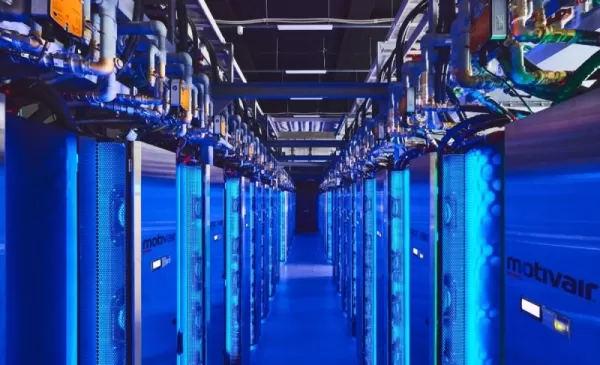
NVIDIA powers the world's most powerful quantum research supercomputer. First-quarter Data Center revenue reached $39.1 billion, up 10% sequentially and 73% year-over-year.
NVIDIA announced it is constructing factories in the U.S. and collaborating with partners to produce NVIDIA AI supercomputers domestically.
The company also introduced NVIDIA Blackwell Ultra and NVIDIA Dynamo for accelerating and scaling AI reasoning models. It announced a partnership with HUMAIN to build AI factories in Saudi Arabia to propel the next wave of AI development.
Also in the Middle East, alongside strategic partners G42, OpenAI, Oracle, SoftBank Group, and Cisco, it unveiled Stargate UAE, a next-generation AI infrastructure cluster in Abu Dhabi.
The company plans to collaborate with Foxconn and the Taiwan government to build an AI factory supercomputer. It also announced joint initiatives with Alphabet and Google to advance agentic AI solutions, robotics, and drug discovery.
Additionally, NVIDIA revealed that Blackwell cloud instances are now available on AWS, Google Cloud, Microsoft Azure, and Oracle Cloud Infrastructure.
Gaming and AI PC
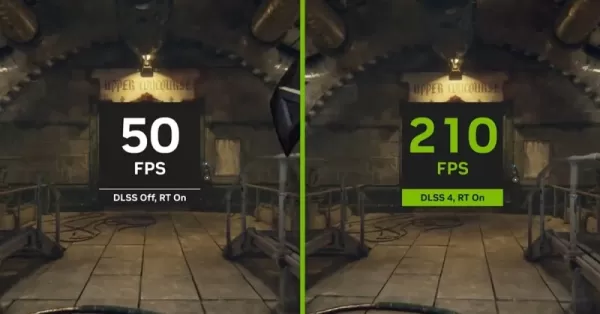
Warhammer 40,000: Space Marine 2 sees a significant performance boost with the RTX 5060 compared to the RTX 3060. First-quarter Gaming revenue hit a record $3.8 billion, increasing 48% from the previous quarter and 42% from a year ago.
NVIDIA also announced the GeForce RTX 5070 and RTX 5060, bringing Blackwell graphics to gamers with prices starting at $299 for desktops and $1,099 for laptops.
“Strong adoption by gamers has made Blackwell our fastest ramp ever,” stated Colette Kress, CFO of NVIDIA, on an analyst call. “Improved supply and availability in Q1” fueled Blackwell's launch, and she expects continued progress in Q2. She noted the GeForce platform has a footprint of 100 million users, and AI PC models can run Microsoft's Copilot+ AI technology.
The company said NVIDIA DLSS 4 is now available in over 125 games, including Black Myth: Wukong, DOOM: The Dark Ages, Indiana Jones and the Great Circle, Marvel Rivals, and Star Wars Outlaws.
It also highlighted that the Nintendo Switch 2, launching June 5, is powered by an NVIDIA processor and AI-driven DLSS, enabling up to 4K gaming—a “giant leap” for current gaming consoles.
NVIDIA launched the RTX Remix modding platform, attracting over two million gamers alongside the release of the Half-Life 2 RTX demo.
Professional Visualization
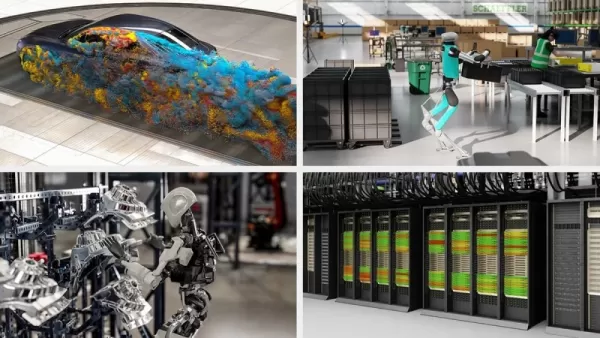
The NVIDIA Omniverse platform continues to expand. First-quarter revenue was $509 million, flat sequentially but up 19% year-over-year.
The company announced the NVIDIA RTX PRO Blackwell series for workstations and servers.
It unveiled the NVIDIA DGX Spark and DGX Station personal AI supercomputers, powered by the NVIDIA Grace Blackwell platform.
NVIDIA announced that leading industrial software providers—including Accenture, Ansys, Databricks, SAP, Schneider Electric with ETAP, and Siemens—are integrating the NVIDIA Omniverse platform into their solutions to accelerate industrial digitalization with physical AI.
Automotive and Robotics
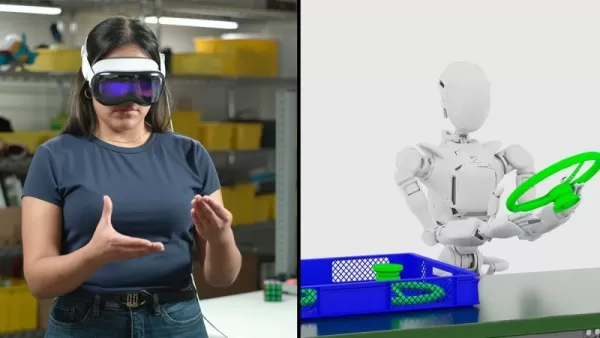
NVIDIA Isaac GR00T simplifies the design of humanoid robots. First-quarter Automotive revenue was $567 million, down 1% sequentially but up 72% year-over-year.
The company announced a collaboration with General Motors on next-generation vehicles, factories, and robots using NVIDIA Omniverse, NVIDIA Cosmos, and NVIDIA Drive AGX.
It also announced NVIDIA Isaac GR00T N1, the world's first open humanoid robot foundation model, followed by GR00T N1.5; NVIDIA Isaac GR00T-Dreams, a blueprint for generating synthetic motion data; and NVIDIA Blackwell systems to accelerate humanoid robot development.
Related article
 Stripe to Acquire OpenRouter as AI Model Routing Gains Momentum
Stripe has agreed to acquire OpenRouter, an AI model-routing platform that gives developers access to hundreds of models through a single interface. The deal adds model selection and routing to Stripe’s existing work around AI usage and token-based b
Former OpenAI Researcher Barrett Zoph Returns to Google to Support Gemini Development
Barret Zoph, who previously abruptly left and joined OpenAI due to a disagreement with Thinking Machines Lab CEO Miriam Mularati, has once again changed employers. Alphabet's Google announced that Zoph will return as Vice President of Research, bring
How Recursive Intelligence Raised $335M at $4B Valuation in 4 Months
The co-founders of startup Ricursive Intelligence seemed destined to be co-founders.Anna Goldie, CEO, and Azalia Mirhoseini, CTO, are so well-known in the AI community that they were among those AI engineers who “got those weird emails from Zuckerber
Related Special Topic Recommendations
Design & Art
Stripe to Acquire OpenRouter as AI Model Routing Gains Momentum
Stripe has agreed to acquire OpenRouter, an AI model-routing platform that gives developers access to hundreds of models through a single interface. The deal adds model selection and routing to Stripe’s existing work around AI usage and token-based b
Former OpenAI Researcher Barrett Zoph Returns to Google to Support Gemini Development
Barret Zoph, who previously abruptly left and joined OpenAI due to a disagreement with Thinking Machines Lab CEO Miriam Mularati, has once again changed employers. Alphabet's Google announced that Zoph will return as Vice President of Research, bring
How Recursive Intelligence Raised $335M at $4B Valuation in 4 Months
The co-founders of startup Ricursive Intelligence seemed destined to be co-founders.Anna Goldie, CEO, and Azalia Mirhoseini, CTO, are so well-known in the AI community that they were among those AI engineers who “got those weird emails from Zuckerber
Related Special Topic Recommendations
Design & Art
 Top AI Illustration Tools: Create Editorial Scenes and Cover Art Faster
2026 Latest Top-rated AI Illustration Tools: Our curated list features the best powerfully designed tools for creating stunning editorial scenes and eye-catching cover art quickly. Each option has gone through rigorous real-world tests, offering a free vs paid comparison to help you find the perfect match for your workflow. Try these must-try solutions today to unlock your AI edge and boost your creative productivity. Explore now at XIX.AI.
 10 tools
 xix.ai
Education and Learning
Top AI Tutors for Exam Prep: Practice Math, Science, and English
xix.ai
Education and Learning
Top AI Tutors for Exam Prep: Practice Math, Science, and English
2026 Latest Top-Rated Best AI Tutors for Exam Prep are here on XIX.AI! Our curated list features powerful game-changing tools that offer free vs paid comparison, real-world tests, and weekly updated rankings. They help boost your writing efficiency, simplify complex topic learning, and unlock your academic potential. Explore now to Discover your perfect exam prep tool and Start creating today to Unlock your AI edge!
10 tools
xix.ai
Finance
AI Budget Planning Tools for Personal Money Management
2026 Latest Best Top-Rated AI Budget Planning Tools for Personal Money Management are here on XIX.AI! This curated collection features powerful, game-changing solutions that help you conduct real-world tests, understand spending habits, and create personalized plans to boost productivity. Enjoy a free vs paid comparison along with detailed rankings. Must-try tools designed to simplify money management and unlock your AI edge. Explore now!
11 tools
xix.ai
Health & Wellness
AI Sleep Tracking Assistants: Improve Recovery with Better Bedtime Habits
2026 Latest Best Top-Rated AI Sleep Tracking Assistants curated for ultimate recovery. This fully updated weekly guide features powerful tools that deliver real-world tests, free vs paid comparison, and detailed rankings to help you find the must-try solution that boosts sleep quality and supports better bedtime habits. Explore now at XIX.AI to Unlock your AI edge.
10 tools
xix.ai
Data Analysis
AI SQL Copilots for Product and Revenue Analytics
2026 Latest Best Top-Rated AI SQL Copilots for Product and Revenue Analytics! XIX.AI has curated a powerful, game-changing collection of must-try tools that undergo real-world tests through weekly updated rankings. These tools help users boost productivity significantly by accelerating data analysis, streamlining complex queries, and generating accurate insights to drive smarter business decisions. Explore now to Discover your perfect tool for unlocking your AI edge!
14 tools
xix.ai
Education and Learning
Best AI Homework Helpers That Teach: Learn Concepts, Not Just Answers
2026 Latest Best Top-Rated AI Homework Helpers That Teach Core Concepts Not Just Answers Powerful Tools for Students Must-Try Curated List Weekly Updated Free vs Paid Comparison Real-World Tests Accurate Rankings to Help You Unlock Your Full Learning Potential Explore now to Discover your perfect tool for smarter studying.
10 tools
xix.ai

 Comments (0)
0/500
Comments (0)
0/500
NVIDIA, the AI and graphics chipmaker driving societal transformation, reported first-quarter revenue (ended April 27, 2025) of $44.1 billion. This represents a 12% sequential increase and a substantial 69% year-over-year growth.
On April 9, 2025, the U.S. government informed NVIDIA that exports of its H20 products to China require a license. Due to these new regulations and diminished demand for the H20, NVIDIA recorded a $4.5 billion charge in fiscal Q1 2026 related to excess H20 inventory and purchase commitments. Following the earnings report, NVIDIA's stock rose 4.4% in after-hours trading.
Prior to the new export rules, H20 product sales for fiscal Q1 2026 were $4.6 billion. The company was unable to ship an additional $2.5 billion worth of H20 revenue during the quarter. Excluding the $4.5 billion charge, the first quarter non-GAAP gross margin would have been 71.3%.
For the quarter, GAAP and non-GAAP earnings per diluted share were $0.76 and $0.81, respectively. Excluding the $4.5 billion charge and related tax impact, first quarter non-GAAP diluted EPS would have been 96 cents. Analysts had expected net income of 75 cents per share on Q1 revenue of $43.2 billion.
“Our breakthrough Blackwell NVL72 AI supercomputer—a 'thinking machine' engineered for reasoning—is now in full-scale production with system manufacturers and cloud service providers,” stated Jensen Huang, founder and CEO of NVIDIA. “Global demand for NVIDIA's AI infrastructure is exceptionally strong. AI inference token generation has surged tenfold in just one year, and as AI agents become mainstream, demand for AI computing will accelerate. Nations worldwide are recognizing AI as critical infrastructure, akin to electricity and the internet, and NVIDIA is central to this profound shift.”
NVIDIA shareholders experienced a brief scare with the emergence of DeepSeek. On January 27, the stock dropped 17%, erasing $600 billion in market value, on investor concerns that DeepSeek's efficient AI models could reduce demand for NVIDIA's high-margin hardware. The stock has since recovered from that decline.
NVIDIA downplayed these concerns and announced several new products during the quarter at last week's Computex trade show in Taiwan.
For its Q2 outlook, NVIDIA expects revenue of approximately $45 billion, plus or minus 2%. This forecast includes an $8 billion reduction in expected H20 revenue due to export control restrictions.
GAAP and non-GAAP gross margins are projected to be 71.8% and 72.0%, respectively, plus or minus 50 basis points. The company continues to work toward achieving gross margins in the mid-70% range later this year.
GAAP and non-GAAP operating expenses are expected to be around $5.7 billion and $4.0 billion, respectively. Full-year fiscal 2026 operating expense growth is anticipated to be in the mid-30% range.
Data Center revenues
First-quarter Data Center revenue reached $39.1 billion, up 10% sequentially and 73% year-over-year.
NVIDIA announced it is constructing factories in the U.S. and collaborating with partners to produce NVIDIA AI supercomputers domestically.
The company also introduced NVIDIA Blackwell Ultra and NVIDIA Dynamo for accelerating and scaling AI reasoning models. It announced a partnership with HUMAIN to build AI factories in Saudi Arabia to propel the next wave of AI development.
Also in the Middle East, alongside strategic partners G42, OpenAI, Oracle, SoftBank Group, and Cisco, it unveiled Stargate UAE, a next-generation AI infrastructure cluster in Abu Dhabi.
The company plans to collaborate with Foxconn and the Taiwan government to build an AI factory supercomputer. It also announced joint initiatives with Alphabet and Google to advance agentic AI solutions, robotics, and drug discovery.
Additionally, NVIDIA revealed that Blackwell cloud instances are now available on AWS, Google Cloud, Microsoft Azure, and Oracle Cloud Infrastructure.
Gaming and AI PC
First-quarter Gaming revenue hit a record $3.8 billion, increasing 48% from the previous quarter and 42% from a year ago.
NVIDIA also announced the GeForce RTX 5070 and RTX 5060, bringing Blackwell graphics to gamers with prices starting at $299 for desktops and $1,099 for laptops.
“Strong adoption by gamers has made Blackwell our fastest ramp ever,” stated Colette Kress, CFO of NVIDIA, on an analyst call. “Improved supply and availability in Q1” fueled Blackwell's launch, and she expects continued progress in Q2. She noted the GeForce platform has a footprint of 100 million users, and AI PC models can run Microsoft's Copilot+ AI technology.
The company said NVIDIA DLSS 4 is now available in over 125 games, including Black Myth: Wukong, DOOM: The Dark Ages, Indiana Jones and the Great Circle, Marvel Rivals, and Star Wars Outlaws.
It also highlighted that the Nintendo Switch 2, launching June 5, is powered by an NVIDIA processor and AI-driven DLSS, enabling up to 4K gaming—a “giant leap” for current gaming consoles.
NVIDIA launched the RTX Remix modding platform, attracting over two million gamers alongside the release of the Half-Life 2 RTX demo.
Professional Visualization
First-quarter revenue was $509 million, flat sequentially but up 19% year-over-year.
The company announced the NVIDIA RTX PRO Blackwell series for workstations and servers.
It unveiled the NVIDIA DGX Spark and DGX Station personal AI supercomputers, powered by the NVIDIA Grace Blackwell platform.
NVIDIA announced that leading industrial software providers—including Accenture, Ansys, Databricks, SAP, Schneider Electric with ETAP, and Siemens—are integrating the NVIDIA Omniverse platform into their solutions to accelerate industrial digitalization with physical AI.
Automotive and Robotics
First-quarter Automotive revenue was $567 million, down 1% sequentially but up 72% year-over-year.
The company announced a collaboration with General Motors on next-generation vehicles, factories, and robots using NVIDIA Omniverse, NVIDIA Cosmos, and NVIDIA Drive AGX.
It also announced NVIDIA Isaac GR00T N1, the world's first open humanoid robot foundation model, followed by GR00T N1.5; NVIDIA Isaac GR00T-Dreams, a blueprint for generating synthetic motion data; and NVIDIA Blackwell systems to accelerate humanoid robot development.








 Stripe to Acquire OpenRouter as AI Model Routing Gains Momentum
Stripe has agreed to acquire OpenRouter, an AI model-routing platform that gives developers access to hundreds of models through a single interface. The deal adds model selection and routing to Stripe’s existing work around AI usage and token-based b
Stripe to Acquire OpenRouter as AI Model Routing Gains Momentum
Stripe has agreed to acquire OpenRouter, an AI model-routing platform that gives developers access to hundreds of models through a single interface. The deal adds model selection and routing to Stripe’s existing work around AI usage and token-based b
 Former OpenAI Researcher Barrett Zoph Returns to Google to Support Gemini Development
Barret Zoph, who previously abruptly left and joined OpenAI due to a disagreement with Thinking Machines Lab CEO Miriam Mularati, has once again changed employers. Alphabet's Google announced that Zoph will return as Vice President of Research, bring
Former OpenAI Researcher Barrett Zoph Returns to Google to Support Gemini Development
Barret Zoph, who previously abruptly left and joined OpenAI due to a disagreement with Thinking Machines Lab CEO Miriam Mularati, has once again changed employers. Alphabet's Google announced that Zoph will return as Vice President of Research, bring
 How Recursive Intelligence Raised $335M at $4B Valuation in 4 Months
The co-founders of startup Ricursive Intelligence seemed destined to be co-founders.Anna Goldie, CEO, and Azalia Mirhoseini, CTO, are so well-known in the AI community that they were among those AI engineers who “got those weird emails from Zuckerber
How Recursive Intelligence Raised $335M at $4B Valuation in 4 Months
The co-founders of startup Ricursive Intelligence seemed destined to be co-founders.Anna Goldie, CEO, and Azalia Mirhoseini, CTO, are so well-known in the AI community that they were among those AI engineers who “got those weird emails from Zuckerber

2026 Latest Top-rated AI Illustration Tools: Our curated list features the best powerfully designed tools for creating stunning editorial scenes and eye-catching cover art quickly. Each option has gone through rigorous real-world tests, offering a free vs paid comparison to help you find the perfect match for your workflow. Try these must-try solutions today to unlock your AI edge and boost your creative productivity. Explore now at XIX.AI.
10 tools
xix.ai

2026 Latest Top-Rated Best AI Tutors for Exam Prep are here on XIX.AI! Our curated list features powerful game-changing tools that offer free vs paid comparison, real-world tests, and weekly updated rankings. They help boost your writing efficiency, simplify complex topic learning, and unlock your academic potential. Explore now to Discover your perfect exam prep tool and Start creating today to Unlock your AI edge!
10 tools
xix.ai

2026 Latest Best Top-Rated AI Budget Planning Tools for Personal Money Management are here on XIX.AI! This curated collection features powerful, game-changing solutions that help you conduct real-world tests, understand spending habits, and create personalized plans to boost productivity. Enjoy a free vs paid comparison along with detailed rankings. Must-try tools designed to simplify money management and unlock your AI edge. Explore now!
11 tools
xix.ai

2026 Latest Best Top-Rated AI Sleep Tracking Assistants curated for ultimate recovery. This fully updated weekly guide features powerful tools that deliver real-world tests, free vs paid comparison, and detailed rankings to help you find the must-try solution that boosts sleep quality and supports better bedtime habits. Explore now at XIX.AI to Unlock your AI edge.
10 tools
xix.ai

2026 Latest Best Top-Rated AI SQL Copilots for Product and Revenue Analytics! XIX.AI has curated a powerful, game-changing collection of must-try tools that undergo real-world tests through weekly updated rankings. These tools help users boost productivity significantly by accelerating data analysis, streamlining complex queries, and generating accurate insights to drive smarter business decisions. Explore now to Discover your perfect tool for unlocking your AI edge!
14 tools
xix.ai

2026 Latest Best Top-Rated AI Homework Helpers That Teach Core Concepts Not Just Answers Powerful Tools for Students Must-Try Curated List Weekly Updated Free vs Paid Comparison Real-World Tests Accurate Rankings to Help You Unlock Your Full Learning Potential Explore now to Discover your perfect tool for smarter studying.
10 tools
xix.ai












