


 Home
HomeMinimax 2.7 Goes Open-Source, DeepSeek V4 on the Horizon
MiniMax, the large model developer, has kept its promise and today officially open-sourced its MiniMax 2.7 model, which was released in March. This is another major domestic open-source model following Zhipu GLM-5.1, showing that domestic large models are further aligning with top international standards in programming capabilities and cost-effectiveness.

Significant Gains in Programming Ability, Catching Up to Claude Opus
MiniMax 2.7 This open-source release draws the most attention due to its enhanced programming ability. According to official and test data:
SWE-Pro Benchmark: M2.7 scored 56.22%, nearly matching Claude Opus's top performance.
MMClaw Evaluation: Its actual performance in the OpenClaw environment significantly surpasses M2.5, approaching the latest Sonnet4.6.
Cost Advantage: Compared to overseas paid models like GPT-5.4Pro and Claude Opus, MiniMax 2.7 offers developers a more cost-effective, high-performance option.
Currently, domestic models already hold a significant share of the global open-source large model market. With the successive open-sourcing of GLM-5.1 and MiniMax 2.7, the competitive landscape among leading players has shifted subtly. Rumors suggest that due to strategic adjustments, the upcoming Qwen3.6Plus may no longer adopt a fully open-source operating model. Instead, it will continue to focus on deepening the open-source ecosystem and consolidating the developer base.
All Eyes on DeepSeek V4
With other major companies making their moves, the biggest suspense now centers on DeepSeek. Reports indicate that Liang Wenfeng has statedDeepSeek V4 will be released in late April. V4 will natively support multimodal, offering "fast, expert, and visual" modes, and will be fully compatible with domestic AI hardware systems, focusing on security, controllability, and low-cost deployment.
Related article
 OpenAI Unveils Codex Cloud Environments for Seamless Cross-Device Use
OpenAI has expanded its software engineering agent, Codex, with new capabilities that extend its utility beyond individual laptops. These updates introduce reusable cloud development environments, enabling access from any device.Announced during Open
Tencent WorkBuddy Launches on HarmonyOS PC App Market
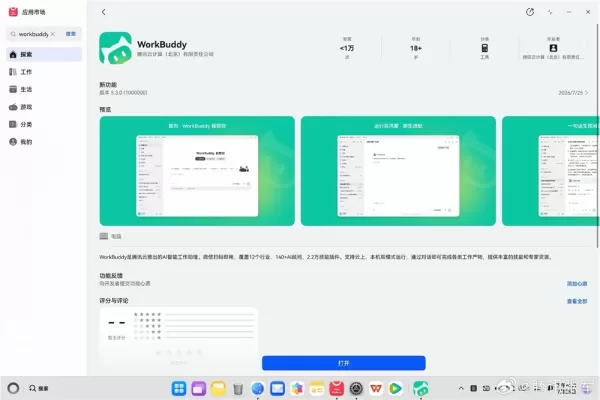
On July 27, Zhang Jun, Tencent’s public relations director, announced the official launch of the company’s AI office assistant, WorkBuddy, on the HarmonyOS PC app market. This marks the debut of the first desktop AI agent within the HarmonyOS ecosyst
Alibaba DAMO Academy Unveils DAMO EAGLE AI for Non-Invasive Esophageal Cancer Detection
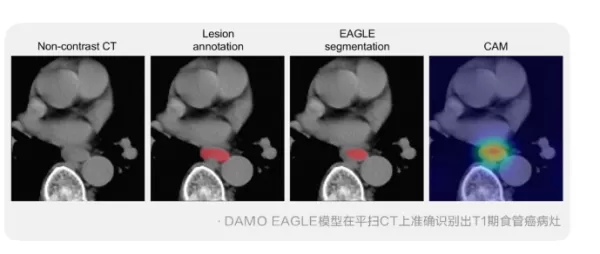
Alibaba has unveiled its latest cancer screening AI tool, DAMO EAGLE. Developed jointly by Alibaba DAMO Academy, Sichuan Cancer Hospital, and Sun Yat-sen University Cancer Center, this model detects esophageal cancer—including early-stage and precanc
Related Special Topic Recommendations
code
OpenAI Unveils Codex Cloud Environments for Seamless Cross-Device Use
OpenAI has expanded its software engineering agent, Codex, with new capabilities that extend its utility beyond individual laptops. These updates introduce reusable cloud development environments, enabling access from any device.Announced during Open
Tencent WorkBuddy Launches on HarmonyOS PC App Market
On July 27, Zhang Jun, Tencent’s public relations director, announced the official launch of the company’s AI office assistant, WorkBuddy, on the HarmonyOS PC app market. This marks the debut of the first desktop AI agent within the HarmonyOS ecosyst
Alibaba DAMO Academy Unveils DAMO EAGLE AI for Non-Invasive Esophageal Cancer Detection
Alibaba has unveiled its latest cancer screening AI tool, DAMO EAGLE. Developed jointly by Alibaba DAMO Academy, Sichuan Cancer Hospital, and Sun Yat-sen University Cancer Center, this model detects esophageal cancer—including early-stage and precanc
Related Special Topic Recommendations
code
 Best AI Coding Tools for Python and JavaScript
2026 Latest Best Top-Rated AI Coding Tools for Python and JavaScript are here on XIX.AI’s curated list. These powerful game-changing tools have undergone rigorous real-world tests to deliver exceptional results for writing efficient code, fixing bugs, and boosting productivity. Get a free vs paid comparison and see which options suit your needs. Explore now to Discover your perfect coding tool and Unlock your AI edge.
 10 tools
 xix.ai
Academic Research
Best AI Citation Mapping Tools for Research Discovery
xix.ai
Academic Research
Best AI Citation Mapping Tools for Research Discovery
2026 Latest Best Top-Rated AI Citation Mapping Tools for Research Discovery! XIX.AI has curated a powerful, game-changing collection of must-try tools that go through rigorous real-world tests to deliver accurate results. You’ll find detailed free vs paid comparisons, weekly updated rankings, and insights to help you boost your research efficiency and uncover valuable data faster. Explore now to discover your perfect tool for academic work! 238 characters
11 tools
xix.ai
SEO
AI Meta Tag Tools for Faster On Page SEO
2026 Latest Best Top-rated AI Meta Tag Tools for Faster On Page SEO! XIX.AI has curated a powerful, game-changing collection of highly reliable tools that undergo rigorous real-world tests. You’ll find a free vs paid comparison along with detailed rankings to help you choose the perfect option for boosting your content’s search visibility and improving writing efficiency. Explore now to Unlock your AI edge!
9 tools
xix.ai
Health & Wellness
AI Habit Tracking Tools for Personal Health Goals
2026 Latest Best AI Habit Tracking Tools for Personal Health Goals are here on XIX.AI! Our curated top-rated list includes powerful, game-changing solutions that help you stay consistent with your goals through real-world tests and strict rankings. We also offer a free vs paid comparison to help you choose the perfect fit. Explore now to Unlock your AI edge in achieving better health outcomes.
10 tools
xix.ai
Data Analysis
Best AI Anomaly Detection Tools for Dashboard Monitoring
2026 Latest Best Top-rated AI Anomaly Detection Tools for Dashboard Monitoring are here on XIX.AI! This curated list features powerful, game-changing solutions that deliver accurate real-world tests through weekly updated rankings. You’ll find a free vs paid comparison and insights into how these tools boost productivity by helping users spot issues fast, streamlining workflow efficiency. Discover your perfect tool to unlock your AI edge today. Explore now!
9 tools
xix.ai
Animation Creation
AI Lip-Sync Generators for Dialogue-Driven Character Animation and Motion Scenes
2026 Latest Best AI Lip-Sync Generators for Dialogue-Driven Character Animation and Motion Scenes! XIX.AI has curated a top-rated list of powerful, game-changing tools that deliver flawless synchronized lip movements for animated characters. Each option undergoes rigorous real-world tests to ensure reliability, and our weekly updated rankings help you find the must-try solution that boosts your animation workflow efficiency. Explore now to discover your perfect tool!
9 tools
xix.ai

 Comments (0)
0/500
Comments (0)
0/500
MiniMax, the large model developer, has kept its promise and today officially open-sourced its MiniMax 2.7 model, which was released in March. This is another major domestic open-source model following Zhipu GLM-5.1, showing that domestic large models are further aligning with top international standards in programming capabilities and cost-effectiveness.
Significant Gains in Programming Ability, Catching Up to Claude Opus
SWE-Pro Benchmark: M2.7 scored 56.22%, nearly matching Claude Opus's top performance.
MMClaw Evaluation: Its actual performance in the OpenClaw environment significantly surpasses M2.5, approaching the latest Sonnet4.6.
Cost Advantage: Compared to overseas paid models like GPT-5.4Pro and Claude Opus, MiniMax 2.7 offers developers a more cost-effective, high-performance option.
Currently, domestic models already hold a significant share of the global open-source large model market. With the successive open-sourcing of GLM-5.1 and MiniMax 2.7, the competitive landscape among leading players has shifted subtly. Rumors suggest that due to strategic adjustments, the upcoming Qwen3.6Plus may no longer adopt a fully open-source operating model. Instead, it will continue to focus on deepening the open-source ecosystem and consolidating the developer base.
All Eyes on DeepSeek V4
With other major companies making their moves, the biggest suspense now centers on DeepSeek. Reports indicate that Liang Wenfeng has stated








 OpenAI Unveils Codex Cloud Environments for Seamless Cross-Device Use
OpenAI has expanded its software engineering agent, Codex, with new capabilities that extend its utility beyond individual laptops. These updates introduce reusable cloud development environments, enabling access from any device.Announced during Open
OpenAI Unveils Codex Cloud Environments for Seamless Cross-Device Use
OpenAI has expanded its software engineering agent, Codex, with new capabilities that extend its utility beyond individual laptops. These updates introduce reusable cloud development environments, enabling access from any device.Announced during Open
 Tencent WorkBuddy Launches on HarmonyOS PC App Market
On July 27, Zhang Jun, Tencent’s public relations director, announced the official launch of the company’s AI office assistant, WorkBuddy, on the HarmonyOS PC app market. This marks the debut of the first desktop AI agent within the HarmonyOS ecosyst
Tencent WorkBuddy Launches on HarmonyOS PC App Market
On July 27, Zhang Jun, Tencent’s public relations director, announced the official launch of the company’s AI office assistant, WorkBuddy, on the HarmonyOS PC app market. This marks the debut of the first desktop AI agent within the HarmonyOS ecosyst
 Alibaba DAMO Academy Unveils DAMO EAGLE AI for Non-Invasive Esophageal Cancer Detection
Alibaba has unveiled its latest cancer screening AI tool, DAMO EAGLE. Developed jointly by Alibaba DAMO Academy, Sichuan Cancer Hospital, and Sun Yat-sen University Cancer Center, this model detects esophageal cancer—including early-stage and precanc
Alibaba DAMO Academy Unveils DAMO EAGLE AI for Non-Invasive Esophageal Cancer Detection
Alibaba has unveiled its latest cancer screening AI tool, DAMO EAGLE. Developed jointly by Alibaba DAMO Academy, Sichuan Cancer Hospital, and Sun Yat-sen University Cancer Center, this model detects esophageal cancer—including early-stage and precanc

2026 Latest Best Top-Rated AI Coding Tools for Python and JavaScript are here on XIX.AI’s curated list. These powerful game-changing tools have undergone rigorous real-world tests to deliver exceptional results for writing efficient code, fixing bugs, and boosting productivity. Get a free vs paid comparison and see which options suit your needs. Explore now to Discover your perfect coding tool and Unlock your AI edge.
10 tools
xix.ai

2026 Latest Best Top-Rated AI Citation Mapping Tools for Research Discovery! XIX.AI has curated a powerful, game-changing collection of must-try tools that go through rigorous real-world tests to deliver accurate results. You’ll find detailed free vs paid comparisons, weekly updated rankings, and insights to help you boost your research efficiency and uncover valuable data faster. Explore now to discover your perfect tool for academic work! 238 characters
11 tools
xix.ai

2026 Latest Best Top-rated AI Meta Tag Tools for Faster On Page SEO! XIX.AI has curated a powerful, game-changing collection of highly reliable tools that undergo rigorous real-world tests. You’ll find a free vs paid comparison along with detailed rankings to help you choose the perfect option for boosting your content’s search visibility and improving writing efficiency. Explore now to Unlock your AI edge!
9 tools
xix.ai

2026 Latest Best AI Habit Tracking Tools for Personal Health Goals are here on XIX.AI! Our curated top-rated list includes powerful, game-changing solutions that help you stay consistent with your goals through real-world tests and strict rankings. We also offer a free vs paid comparison to help you choose the perfect fit. Explore now to Unlock your AI edge in achieving better health outcomes.
10 tools
xix.ai

2026 Latest Best Top-rated AI Anomaly Detection Tools for Dashboard Monitoring are here on XIX.AI! This curated list features powerful, game-changing solutions that deliver accurate real-world tests through weekly updated rankings. You’ll find a free vs paid comparison and insights into how these tools boost productivity by helping users spot issues fast, streamlining workflow efficiency. Discover your perfect tool to unlock your AI edge today. Explore now!
9 tools
xix.ai

2026 Latest Best AI Lip-Sync Generators for Dialogue-Driven Character Animation and Motion Scenes! XIX.AI has curated a top-rated list of powerful, game-changing tools that deliver flawless synchronized lip movements for animated characters. Each option undergoes rigorous real-world tests to ensure reliability, and our weekly updated rankings help you find the must-try solution that boosts your animation workflow efficiency. Explore now to discover your perfect tool!
9 tools
xix.ai












