


 Home
MingTang Intelligent Unveils MiniCPM-V 4.7 for Edge Devices, Delivering 13+ Token/s on 3GB Memory
Mingshi Intelligence unveiled its latest edge-side multimodal large model, MiniCPM-V 4.7, available in two configurations: 35B-A3B and 1B. The 35B-A3B variant marks the first Mixture of Experts (MoE) model in the MiniCPM-V series, leveraging a proprietary "forward-looking expert scheduling" technology to deliver lossless, smooth inference on edge devices, making it the first open-source MoE capable of running efficiently without cloud dependency.
The standout metric is its performance: on an iPhone 17 Pro Max, the model consumes only 3GB of memory while achieving a decoding speed exceeding 13 tokens per second. This efficiency enables local multimodal reasoning on high-end smartphones, eliminating the need to transmit data to the cloud and ensuring enhanced privacy and reduced latency.
Multi-platform support and open-source fine-tuning solutions
Regarding compatibility, version 4.7 supports iOS, Android, and HarmonyOS, and is optimized for chip architectures including Intel, AMD, Arm, Rockchip, and Huanmo, covering both mobile and local computing environments. Mingshi also released the Self-Replay Fine-Tuning (SRFT) solution, empowering developers to expand model capabilities at a lower cost while mitigating catastrophic forgetting, thereby streamlining secondary development.
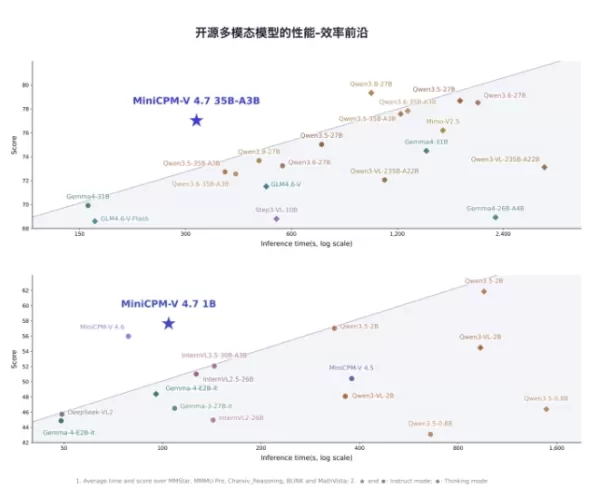
Performance benchmarks are equally impressive: in Instruct mode, the 35B-A3B variant outperforms Qwen3.6 35B-A3B with faster inference times and higher overall scores, while the 1B version builds upon the previous 4.6 release, demonstrating significant advantages in overall scoring and inference efficiency over Qwen3.5 0.8B. As edge models become increasingly compact and competitive, Mingshi’s latest iteration further lowers the barrier to deploying MoE large models directly on smartphones.
Related article
 Nvidia’s Vera chip: The US$200 billion gamble Jensen Huang wants you to notice
The Nvidia Vera chip rarely grabs headlines when earnings exceed expectations, yet it deserves the spotlight. With Q1 revenue hitting US$81.62 billion—surpassing analyst estimates of US$78.86 billion—and a Q2 guidance of US$91 billion, well above Wal
Gamma buys out Accel-backed Lica to boost design capabilities
Gamma, a leading presentation platform, has acquired Lica, an Accel-backed design startup, to establish a dedicated design research lab, according to exclusive reports from TechCrunch. Lica’s co-founders will spearhead this new initiative.Originally
Zhipu MaaS to Introduce Data Non-Preservation Mechanism, Content Destroyed After Use
On September 21, Zhipu’s MaaS platform announced the upcoming release of a "data content not stored" feature, providing enterprises and developers with enhanced data privacy safeguards. This mechanism ensures that input and output data generated duri
Related Special Topic Recommendations
Design & Art
 Top AI Illustration Tools: Create Editorial Scenes and Cover Art Faster
2026 Latest Top-rated AI Illustration Tools: Our curated list features the best powerfully designed tools for creating stunning editorial scenes and eye-catching cover art quickly. Each option has gone through rigorous real-world tests, offering a free vs paid comparison to help you find the perfect match for your workflow. Try these must-try solutions today to unlock your AI edge and boost your creative productivity. Explore now at XIX.AI.
 10 tools
 xix.ai
Education and Learning
Top AI Tutors for Exam Prep: Practice Math, Science, and English
2026 Latest Top-Rated Best AI Tutors for Exam Prep are here on XIX.AI! Our curated list features powerful game-changing tools that offer free vs paid comparison, real-world tests, and weekly updated rankings. They help boost your writing efficiency, simplify complex topic learning, and unlock your academic potential. Explore now to Discover your perfect exam prep tool and Start creating today to Unlock your AI edge!
10 tools
xix.ai
Finance
AI Budget Planning Tools for Personal Money Management
2026 Latest Best Top-Rated AI Budget Planning Tools for Personal Money Management are here on XIX.AI! This curated collection features powerful, game-changing solutions that help you conduct real-world tests, understand spending habits, and create personalized plans to boost productivity. Enjoy a free vs paid comparison along with detailed rankings. Must-try tools designed to simplify money management and unlock your AI edge. Explore now!
11 tools
xix.ai
Health & Wellness
AI Sleep Tracking Assistants: Improve Recovery with Better Bedtime Habits
2026 Latest Best Top-Rated AI Sleep Tracking Assistants curated for ultimate recovery. This fully updated weekly guide features powerful tools that deliver real-world tests, free vs paid comparison, and detailed rankings to help you find the must-try solution that boosts sleep quality and supports better bedtime habits. Explore now at XIX.AI to Unlock your AI edge.
10 tools
xix.ai
Data Analysis
AI SQL Copilots for Product and Revenue Analytics
2026 Latest Best Top-Rated AI SQL Copilots for Product and Revenue Analytics! XIX.AI has curated a powerful, game-changing collection of must-try tools that undergo real-world tests through weekly updated rankings. These tools help users boost productivity significantly by accelerating data analysis, streamlining complex queries, and generating accurate insights to drive smarter business decisions. Explore now to Discover your perfect tool for unlocking your AI edge!
14 tools
xix.ai
Education and Learning
Best AI Homework Helpers That Teach: Learn Concepts, Not Just Answers
2026 Latest Best Top-Rated AI Homework Helpers That Teach Core Concepts Not Just Answers Powerful Tools for Students Must-Try Curated List Weekly Updated Free vs Paid Comparison Real-World Tests Accurate Rankings to Help You Unlock Your Full Learning Potential Explore now to Discover your perfect tool for smarter studying.
10 tools
xix.ai

 Comments (0)
0/500
Mingshi Intelligence unveiled its latest edge-side multimodal large model, MiniCPM-V 4.7, available in two configurations: 35B-A3B and 1B. The 35B-A3B variant marks the first Mixture of Experts (MoE) model in the MiniCPM-V series, leveraging a proprietary "forward-looking expert scheduling" technology to deliver lossless, smooth inference on edge devices, making it the first open-source MoE capable of running efficiently without cloud dependency.
The standout metric is its performance: on an iPhone 17 Pro Max, the model consumes only 3GB of memory while achieving a decoding speed exceeding 13 tokens per second. This efficiency enables local multimodal reasoning on high-end smartphones, eliminating the need to transmit data to the cloud and ensuring enhanced privacy and reduced latency.
Multi-platform support and open-source fine-tuning solutions
Regarding compatibility, version 4.7 supports iOS, Android, and HarmonyOS, and is optimized for chip architectures including Intel, AMD, Arm, Rockchip, and Huanmo, covering both mobile and local computing environments. Mingshi also released the Self-Replay Fine-Tuning (SRFT) solution, empowering developers to expand model capabilities at a lower cost while mitigating catastrophic forgetting, thereby streamlining secondary development.
Performance benchmarks are equally impressive: in Instruct mode, the 35B-A3B variant outperforms Qwen3.6 35B-A3B with faster inference times and higher overall scores, while the 1B version builds upon the previous 4.6 release, demonstrating significant advantages in overall scoring and inference efficiency over Qwen3.5 0.8B. As edge models become increasingly compact and competitive, Mingshi’s latest iteration further lowers the barrier to deploying MoE large models directly on smartphones.








 Nvidia’s Vera chip: The US$200 billion gamble Jensen Huang wants you to notice
The Nvidia Vera chip rarely grabs headlines when earnings exceed expectations, yet it deserves the spotlight. With Q1 revenue hitting US$81.62 billion—surpassing analyst estimates of US$78.86 billion—and a Q2 guidance of US$91 billion, well above Wal
 Gamma buys out Accel-backed Lica to boost design capabilities
Gamma, a leading presentation platform, has acquired Lica, an Accel-backed design startup, to establish a dedicated design research lab, according to exclusive reports from TechCrunch. Lica’s co-founders will spearhead this new initiative.Originally
 Zhipu MaaS to Introduce Data Non-Preservation Mechanism, Content Destroyed After Use
On September 21, Zhipu’s MaaS platform announced the upcoming release of a "data content not stored" feature, providing enterprises and developers with enhanced data privacy safeguards. This mechanism ensures that input and output data generated duri

2026 Latest Top-rated AI Illustration Tools: Our curated list features the best powerfully designed tools for creating stunning editorial scenes and eye-catching cover art quickly. Each option has gone through rigorous real-world tests, offering a free vs paid comparison to help you find the perfect match for your workflow. Try these must-try solutions today to unlock your AI edge and boost your creative productivity. Explore now at XIX.AI.
10 tools
xix.ai

2026 Latest Top-Rated Best AI Tutors for Exam Prep are here on XIX.AI! Our curated list features powerful game-changing tools that offer free vs paid comparison, real-world tests, and weekly updated rankings. They help boost your writing efficiency, simplify complex topic learning, and unlock your academic potential. Explore now to Discover your perfect exam prep tool and Start creating today to Unlock your AI edge!
10 tools
xix.ai

2026 Latest Best Top-Rated AI Budget Planning Tools for Personal Money Management are here on XIX.AI! This curated collection features powerful, game-changing solutions that help you conduct real-world tests, understand spending habits, and create personalized plans to boost productivity. Enjoy a free vs paid comparison along with detailed rankings. Must-try tools designed to simplify money management and unlock your AI edge. Explore now!
11 tools
xix.ai

2026 Latest Best Top-Rated AI Sleep Tracking Assistants curated for ultimate recovery. This fully updated weekly guide features powerful tools that deliver real-world tests, free vs paid comparison, and detailed rankings to help you find the must-try solution that boosts sleep quality and supports better bedtime habits. Explore now at XIX.AI to Unlock your AI edge.
10 tools
xix.ai

2026 Latest Best Top-Rated AI SQL Copilots for Product and Revenue Analytics! XIX.AI has curated a powerful, game-changing collection of must-try tools that undergo real-world tests through weekly updated rankings. These tools help users boost productivity significantly by accelerating data analysis, streamlining complex queries, and generating accurate insights to drive smarter business decisions. Explore now to Discover your perfect tool for unlocking your AI edge!
14 tools
xix.ai

2026 Latest Best Top-Rated AI Homework Helpers That Teach Core Concepts Not Just Answers Powerful Tools for Students Must-Try Curated List Weekly Updated Free vs Paid Comparison Real-World Tests Accurate Rankings to Help You Unlock Your Full Learning Potential Explore now to Discover your perfect tool for smarter studying.
10 tools
xix.ai












