


 Home
HomeLightelligence Soars on Debut as Investors Bet on Optical AI Chips
# AI chips
# China tech
# Hong Kong IPO
# Lightelligence
# optical interconnect
# optoelectronic computing
# photonics
When a company generating $15.5 million in annual revenue lists on a stock exchange and its market capitalization briefly touches $10 billion, the immediate question is: what do investors see that the current financial statements don't reveal?
For Lightelligence, the answer lies in optical interconnect technology and a growing belief that traditional copper wiring between AI chips is becoming a major bottleneck.
As the first mainland Chinese photonics chipmaker to go public in Hong Kong, Lightelligence saw its share price soar nearly 400% on its first trading day.
The Shanghai-based firm opened at HK$880, far above its offer price of HK$183.2—the top of its marketed range—after raising HK$2.4 billion (about $310 million) in its IPO. The retail portion of the offering was oversubscribed by nearly 5,785 times.
What optical interconnect technology does
To grasp this investor enthusiasm, it's essential to understand the problem Lightelligence addresses. Modern AI models, like those behind large language models and image generators, rely on massive clusters of chips working in parallel. The speed at which these chips exchange data directly impacts the system's overall efficiency.
Historically, this data has traveled through copper electrical connections. However, as AI clusters expand and demand more power, copper wiring creates significant bottlenecks: it generates excessive heat, consumes substantial energy, and has inherent physical limits on data capacity over short distances.
Optical interconnect replaces these electrical signals with pulses of light.
Compared to traditional electrical interconnects, optical technology offers lower latency, significantly higher bandwidth, and superior energy efficiency. It's akin to upgrading from a narrow country lane to a multi-lane highway—handling more traffic, at greater speed, with less resistance.
Lightelligence operates in two core areas: optical interconnect, which uses light to link computing devices within and between servers in a cluster, and optical computing, which processes data using photons instead of electrons.
Its flagship optical interconnect product, LightSphere X, is billed as the first distributed optical circuit-switching solution for connecting GPU supernodes. The company claims it can boost computational efficiency (model FLOPS utilization) by over 50%, lowering the total cost of ownership for complex computing tasks.
The competitive landscape
According to Frost & Sullivan, Lightelligence is the first company to achieve commercial-scale deployment of optoelectronic hybrid computing—a notable feat in a field still dominated by research labs and pre-revenue startups. As of March 2026, the company held 410 patents, with more than half applicable to both its optical interconnect and computing divisions.
In China's scale-up optical interconnect market—specifically for connecting chips within a single high-performance computing node—Lightelligence ranked first among independent providers by revenue in 2025, capturing an 88.3% share. An important caveat: Huawei commands a dominant 98.4% of the overall market, with Lightelligence positioned as the leading third-party supplier.
By the end of 2025, the company served 44 commercial customers, supporting GPU clusters with thousands of cards. Its cornerstone investor list for the IPO featured major names including Alibaba, GIC, Temasek, BlackRock, Fidelity International, Schroders, Hillhouse Capital, Lenovo, and ZTE.
What the financial statements show
This is where the narrative becomes more nuanced. Lightelligence reported revenue of RMB 38 million (approximately $5.6 million) in 2023, RMB 60 million ($8.8 million) in 2024, and RMB 106 million ($15.5 million) in 2025—representing a compound annual growth rate of 66.9%. While revenue is climbing rapidly, losses are expanding even faster.
Net losses widened to RMB 1.34 billion in 2025, and the company's asset-liability ratio reached 473%, indicating its debts far surpass its assets. A single customer contributed 40.6% of total revenue, presenting a significant concentration risk that any potential buyer or investor must carefully consider.
The founder's pedigree helps explain the market's premium valuation.
Yichen Shen published a landmark cover paper in Nature Photonics in 2017 that proposed and validated the use of light for deep learning computations, widely seen as a milestone for optoelectronic hybrid computing. The company he built from that research now has access to public capital to fund its next growth chapter.
Frost & Sullivan forecasts the global AI computing and interconnect market will grow at a 27% compound annual rate through 2031. The multi-billion dollar question investors are effectively paying to answer is whether Lightelligence can scale its revenue to match that trajectory and bridge the chasm between its current losses and its ambitious potential.
Its stock market debut has now put a public price tag on that high-stakes bet.
See also: Inside Huawei’s plan to make thousands of AI chips think like one computer
Want to learn more about AI and big data from industry leaders? Check out the AI & Big Data Expo happening in Amsterdam, California, and London. This comprehensive event is part of TechEx and co-located with other leading technology events. Click here for more information.
AI News is powered by TechForge Media. Explore other upcoming enterprise technology events and webinars here.
Related article
 Samsung’s AI Push Drives Profit Surge Amid US$1tn Market Cap
Samsung Electronics hits a record market capitalisation as global demand for AI memory chips surges. Credit: Samsung NewsroomSouth Korea’s Samsung Electronics hits new milestones as analyst Marc Einstein predicts one of the best quarterly performance
Amazon Plans to Directly Compete with Nvidia Through Its Own AI Chip Sales
If Amazon Web Services follows through on its plans, the cloud services provider is set to expand its presence significantly within Nvidia’s market, potentially presenting one of the most serious challenges yet to Nvidia’s dominance in the AI chip se
Meta's new AI chips to start production in September
To reduce its GPU costs during an unprecedented component shortage, Meta plans to start producing the latest versions of its AI-specific chip in September, according to an internal memo cited by Reuters.
The memo said at least one chip completed its
Related Special Topic Recommendations
Animation Creation
Samsung’s AI Push Drives Profit Surge Amid US$1tn Market Cap
Samsung Electronics hits a record market capitalisation as global demand for AI memory chips surges. Credit: Samsung NewsroomSouth Korea’s Samsung Electronics hits new milestones as analyst Marc Einstein predicts one of the best quarterly performance
Amazon Plans to Directly Compete with Nvidia Through Its Own AI Chip Sales
If Amazon Web Services follows through on its plans, the cloud services provider is set to expand its presence significantly within Nvidia’s market, potentially presenting one of the most serious challenges yet to Nvidia’s dominance in the AI chip se
Meta's new AI chips to start production in September
To reduce its GPU costs during an unprecedented component shortage, Meta plans to start producing the latest versions of its AI-specific chip in September, according to an internal memo cited by Reuters.
The memo said at least one chip completed its
Related Special Topic Recommendations
Animation Creation
 AI Scene Animation Tools for Social Media Content
2026 Latest Best Top-rated AI Scene Animation Tools for Social Media Content are curated here by XIX.AI. These powerful game-changing tools offer real-world tests and detailed free vs paid comparison, helping creators boost productivity significantly. Explore now to unlock your AI edge.
 9 tools
 xix.ai
Video creation
AI Short-Form Video Hook Generators for Reels, Shorts, and Product Launch Campaigns
xix.ai
Video creation
AI Short-Form Video Hook Generators for Reels, Shorts, and Product Launch Campaigns
2026 Latest Best AI Short-Form Video Hook Generators for Reels Shorts and Product Launch Campaigns! XIX.AI curates top-rated powerful game-changing tools that deliver must-try results through real-world tests. This weekly updated page offers free vs paid comparison rankings to help you find the perfect solution for boosting content creativity and productivity. Explore now to Unlock your AI edge!
11 tools
xix.ai
writing
AI Article Outline Tools for Long Form Writing
2026 Latest Best Top-Rated AI Article Outline Tools for Long Form Writing! This curated collection features powerful, game-changing tools that deliver accurate, structured outlines with real-world tests to boost writing efficiency significantly. XIX.AI is part of this elite selection. Get a free vs paid comparison to help you choose the perfect tool. Explore now and Unlock your AI edge!
9 tools
xix.ai
chatbot
Best AI Roleplay Chat Apps for Language Practice, Interview Prep, and Daily Fluency
2026 Latest Best Top-rated AI Roleplay Chat Apps for Language Practice, Interview Prep, and Daily Fluency! XIX.AI curates a powerful game-changing collection that offers free vs paid comparison, real-world tests, and updated rankings weekly. These must-try tools help you boost writing skills, overcome fluency challenges, and improve communication efficiency across all daily scenarios. Explore now to discover your perfect tool for language growth!
10 tools
xix.ai
Music composition
AI Stem Separation Tools for Remix Production, Sampling Prep, and Karaoke Masters
2026 Latest Best Top-rated AI Stem Separation Tools Curated for Remix Production, Sampling Prep, and Karaoke Masters. These powerful game-changing tools offer real-world tests to deliver precise audio isolation, boosting productivity significantly. XIX.AI provides a weekly updated free vs paid comparison guide to help you find the must-try solution that suits your needs. Explore now to unlock your AI edge.
8 tools
xix.ai
Data Analysis
AI SQL Copilots for Revenue Dashboards, Funnel Analysis, and Product Metrics
2026 Latest Best AI SQL Copilots Ranked Top-Rated! XIX.AI curates a powerful game-changing collection for weekly updated real-world tests. These must-try tools help you generate accurate revenue dashboards, analyze sales funnels, and track product metrics swiftly, boosting productivity massively. Explore now to Discover your perfect tool for data-driven decision making! 238 characters
9 tools
xix.ai

 Comments (1)
0/500
Comments (1)
0/500
![SamuelWilson]()
Wow, $10B market cap on $15M revenue? That's a valuation gap wider than the Grand Canyon. Optical chips sound futuristic, but is this just another dot-com bubble waiting to pop? 📉🤔
When a company generating $15.5 million in annual revenue lists on a stock exchange and its market capitalization briefly touches $10 billion, the immediate question is: what do investors see that the current financial statements don't reveal?
For Lightelligence, the answer lies in optical interconnect technology and a growing belief that traditional copper wiring between AI chips is becoming a major bottleneck.
As the first mainland Chinese photonics chipmaker to go public in Hong Kong, Lightelligence saw its share price soar nearly 400% on its first trading day.
The Shanghai-based firm opened at HK$880, far above its offer price of HK$183.2—the top of its marketed range—after raising HK$2.4 billion (about $310 million) in its IPO. The retail portion of the offering was oversubscribed by nearly 5,785 times.
What optical interconnect technology does
To grasp this investor enthusiasm, it's essential to understand the problem Lightelligence addresses. Modern AI models, like those behind large language models and image generators, rely on massive clusters of chips working in parallel. The speed at which these chips exchange data directly impacts the system's overall efficiency.
Historically, this data has traveled through copper electrical connections. However, as AI clusters expand and demand more power, copper wiring creates significant bottlenecks: it generates excessive heat, consumes substantial energy, and has inherent physical limits on data capacity over short distances.
Optical interconnect replaces these electrical signals with pulses of light.
Compared to traditional electrical interconnects, optical technology offers lower latency, significantly higher bandwidth, and superior energy efficiency. It's akin to upgrading from a narrow country lane to a multi-lane highway—handling more traffic, at greater speed, with less resistance.
Lightelligence operates in two core areas: optical interconnect, which uses light to link computing devices within and between servers in a cluster, and optical computing, which processes data using photons instead of electrons.
Its flagship optical interconnect product, LightSphere X, is billed as the first distributed optical circuit-switching solution for connecting GPU supernodes. The company claims it can boost computational efficiency (model FLOPS utilization) by over 50%, lowering the total cost of ownership for complex computing tasks.
The competitive landscape
According to Frost & Sullivan, Lightelligence is the first company to achieve commercial-scale deployment of optoelectronic hybrid computing—a notable feat in a field still dominated by research labs and pre-revenue startups. As of March 2026, the company held 410 patents, with more than half applicable to both its optical interconnect and computing divisions.
In China's scale-up optical interconnect market—specifically for connecting chips within a single high-performance computing node—Lightelligence ranked first among independent providers by revenue in 2025, capturing an 88.3% share. An important caveat: Huawei commands a dominant 98.4% of the overall market, with Lightelligence positioned as the leading third-party supplier.
By the end of 2025, the company served 44 commercial customers, supporting GPU clusters with thousands of cards. Its cornerstone investor list for the IPO featured major names including Alibaba, GIC, Temasek, BlackRock, Fidelity International, Schroders, Hillhouse Capital, Lenovo, and ZTE.
What the financial statements show
This is where the narrative becomes more nuanced. Lightelligence reported revenue of RMB 38 million (approximately $5.6 million) in 2023, RMB 60 million ($8.8 million) in 2024, and RMB 106 million ($15.5 million) in 2025—representing a compound annual growth rate of 66.9%. While revenue is climbing rapidly, losses are expanding even faster.
Net losses widened to RMB 1.34 billion in 2025, and the company's asset-liability ratio reached 473%, indicating its debts far surpass its assets. A single customer contributed 40.6% of total revenue, presenting a significant concentration risk that any potential buyer or investor must carefully consider.
The founder's pedigree helps explain the market's premium valuation.
Yichen Shen published a landmark cover paper in Nature Photonics in 2017 that proposed and validated the use of light for deep learning computations, widely seen as a milestone for optoelectronic hybrid computing. The company he built from that research now has access to public capital to fund its next growth chapter.
Frost & Sullivan forecasts the global AI computing and interconnect market will grow at a 27% compound annual rate through 2031. The multi-billion dollar question investors are effectively paying to answer is whether Lightelligence can scale its revenue to match that trajectory and bridge the chasm between its current losses and its ambitious potential.
Its stock market debut has now put a public price tag on that high-stakes bet.
See also: Inside Huawei’s plan to make thousands of AI chips think like one computer
Want to learn more about AI and big data from industry leaders? Check out the AI & Big Data Expo happening in Amsterdam, California, and London. This comprehensive event is part of TechEx and co-located with other leading technology events. Click here for more information.
AI News is powered by TechForge Media. Explore other upcoming enterprise technology events and webinars here.








 Samsung’s AI Push Drives Profit Surge Amid US$1tn Market Cap
Samsung Electronics hits a record market capitalisation as global demand for AI memory chips surges. Credit: Samsung NewsroomSouth Korea’s Samsung Electronics hits new milestones as analyst Marc Einstein predicts one of the best quarterly performance
Samsung’s AI Push Drives Profit Surge Amid US$1tn Market Cap
Samsung Electronics hits a record market capitalisation as global demand for AI memory chips surges. Credit: Samsung NewsroomSouth Korea’s Samsung Electronics hits new milestones as analyst Marc Einstein predicts one of the best quarterly performance
 Amazon Plans to Directly Compete with Nvidia Through Its Own AI Chip Sales
If Amazon Web Services follows through on its plans, the cloud services provider is set to expand its presence significantly within Nvidia’s market, potentially presenting one of the most serious challenges yet to Nvidia’s dominance in the AI chip se
Amazon Plans to Directly Compete with Nvidia Through Its Own AI Chip Sales
If Amazon Web Services follows through on its plans, the cloud services provider is set to expand its presence significantly within Nvidia’s market, potentially presenting one of the most serious challenges yet to Nvidia’s dominance in the AI chip se
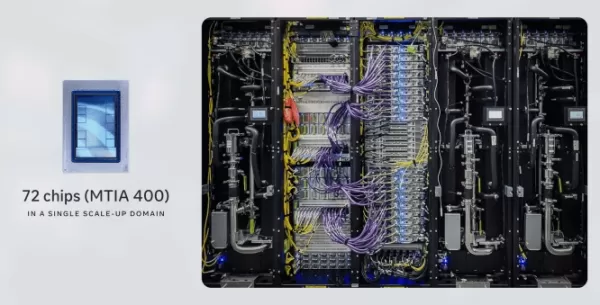 Meta's new AI chips to start production in September
To reduce its GPU costs during an unprecedented component shortage, Meta plans to start producing the latest versions of its AI-specific chip in September, according to an internal memo cited by Reuters.
The memo said at least one chip completed its
Meta's new AI chips to start production in September
To reduce its GPU costs during an unprecedented component shortage, Meta plans to start producing the latest versions of its AI-specific chip in September, according to an internal memo cited by Reuters.
The memo said at least one chip completed its

2026 Latest Best Top-rated AI Scene Animation Tools for Social Media Content are curated here by XIX.AI. These powerful game-changing tools offer real-world tests and detailed free vs paid comparison, helping creators boost productivity significantly. Explore now to unlock your AI edge.
9 tools
xix.ai

2026 Latest Best AI Short-Form Video Hook Generators for Reels Shorts and Product Launch Campaigns! XIX.AI curates top-rated powerful game-changing tools that deliver must-try results through real-world tests. This weekly updated page offers free vs paid comparison rankings to help you find the perfect solution for boosting content creativity and productivity. Explore now to Unlock your AI edge!
11 tools
xix.ai

2026 Latest Best Top-Rated AI Article Outline Tools for Long Form Writing! This curated collection features powerful, game-changing tools that deliver accurate, structured outlines with real-world tests to boost writing efficiency significantly. XIX.AI is part of this elite selection. Get a free vs paid comparison to help you choose the perfect tool. Explore now and Unlock your AI edge!
9 tools
xix.ai

2026 Latest Best Top-rated AI Roleplay Chat Apps for Language Practice, Interview Prep, and Daily Fluency! XIX.AI curates a powerful game-changing collection that offers free vs paid comparison, real-world tests, and updated rankings weekly. These must-try tools help you boost writing skills, overcome fluency challenges, and improve communication efficiency across all daily scenarios. Explore now to discover your perfect tool for language growth!
10 tools
xix.ai

2026 Latest Best Top-rated AI Stem Separation Tools Curated for Remix Production, Sampling Prep, and Karaoke Masters. These powerful game-changing tools offer real-world tests to deliver precise audio isolation, boosting productivity significantly. XIX.AI provides a weekly updated free vs paid comparison guide to help you find the must-try solution that suits your needs. Explore now to unlock your AI edge.
8 tools
xix.ai

2026 Latest Best AI SQL Copilots Ranked Top-Rated! XIX.AI curates a powerful game-changing collection for weekly updated real-world tests. These must-try tools help you generate accurate revenue dashboards, analyze sales funnels, and track product metrics swiftly, boosting productivity massively. Explore now to Discover your perfect tool for data-driven decision making! 238 characters
9 tools
xix.ai

Wow, $10B market cap on $15M revenue? That's a valuation gap wider than the Grand Canyon. Optical chips sound futuristic, but is this just another dot-com bubble waiting to pop? 📉🤔












