


 Home
Home
Lei Jun Proposes Five Measures at Two Sessions, Spotlighting Humanoid Robots and Smart Driving Safety
On March 4, 2026, Liang Jun, a National People's Congress representative and Chairman & CEO of Xiaomi Group, formally submitted five proposals. These focus on cutting-edge fields including general-purpose humanoid robots, intelligent driving safety, technology philanthropy, and talent cultivation. The goal is to accelerate the deep integration of China's AI and intelligent manufacturing sectors through coordinated policy and technical standards.
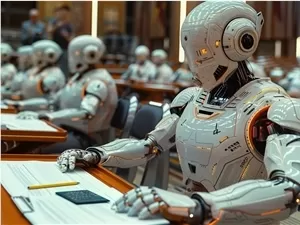
In his proposals, Liang Jun highlighted that humanoid robots represent a disruptive innovation following smartphones and new energy vehicles, currently at a critical juncture transitioning from lab research to industrial-scale production. While China holds an early technological advantage, bottlenecks like unstable manufacturing processes, high hardware costs, and limited real-world applications have kept humanoid robots in an "apprentice" phase. To overcome this, he recommended accelerating breakthroughs in engineering challenges, expanding smart manufacturing use cases, and establishing a comprehensive safety standard framework. This would help elevate humanoid robots to the status of reliable "skilled workers," injecting fresh momentum into economic growth.

Regarding the widespread adoption of intelligent driving, Liang Jun stressed the urgency of building a traffic safety culture suited for the smart vehicle era. This addresses issues such as inconsistent technical standards and lagging driver education. Concurrently, he proposed establishing a new first-level interdisciplinary discipline—"Intelligent Electric Vehicles"—to cultivate versatile, cross-disciplinary talent through industry-education collaboration, thereby supporting the industry's competitive ecosystem. On innovation mechanisms, Liang Jun suggested incorporating corporate and individual technology philanthropy into innovation assessments, guiding broader societal forces to participate in the national innovation system. Additionally, optimizing the industrial tourism environment and strengthening the "Made in China" brand were also key agenda items.
This suite of proposals reflects an industry trend where AI technology is evolving from isolated breakthroughs to systematic, large-scale implementation. By constructing a closed-loop ecosystem encompassing hardware standards, talent development, and social governance, it will significantly bolster China's global core competitiveness in the fields of general AI and intelligent connected vehicles.
Related article
 Anthropic Expands Claude AI Coding Tools to Japan in Push for Overseas Growth
Anthropic, a prominent U.S. artificial intelligence firm, is intensifying its global outreach. On Wednesday, the company hosted a major developer gathering, "Code with Claude," in Tokyo, drawing close to 500 software engineers. This initiative seeks
India’s Software Giant Cuts Hiring, Promises No Layoffs as AI Agents Scale Up
As artificial intelligence reshapes traditional labor-intensive business models, Tata Consultancy Services (TCS), a premier Indian software outsourcing firm, has unveiled its strategic response. During Tuesday’s annual general meeting, the chairman o
China Locks AI Models During Gaokam to Block Instant Homework Help
With the 2026 Gaokao fast approaching, rumors regarding the suspension of AI tools during the exam period have ignited intense online debate. In response to public concern, major AI platforms and educational apps have clarified their stance: rather t
Related Special Topic Recommendations
Design & Art
Anthropic Expands Claude AI Coding Tools to Japan in Push for Overseas Growth
Anthropic, a prominent U.S. artificial intelligence firm, is intensifying its global outreach. On Wednesday, the company hosted a major developer gathering, "Code with Claude," in Tokyo, drawing close to 500 software engineers. This initiative seeks
India’s Software Giant Cuts Hiring, Promises No Layoffs as AI Agents Scale Up
As artificial intelligence reshapes traditional labor-intensive business models, Tata Consultancy Services (TCS), a premier Indian software outsourcing firm, has unveiled its strategic response. During Tuesday’s annual general meeting, the chairman o
China Locks AI Models During Gaokam to Block Instant Homework Help
With the 2026 Gaokao fast approaching, rumors regarding the suspension of AI tools during the exam period have ignited intense online debate. In response to public concern, major AI platforms and educational apps have clarified their stance: rather t
Related Special Topic Recommendations
Design & Art
 Best AI Style Transfer Tools for Creative Experiments
2026 Latest Best Top-rated AI Style Transfer Tools for Creative Experiments! XIX.AI has curated a powerful, game-changing collection of must-try tools that deliver exceptional results through real-world tests and rigorous rankings. These top solutions help creatives boost productivity significantly by accelerating content creation and unlocking endless creative possibilities. Explore now to discover your perfect tool and start creating today!
 9 tools
 xix.ai
Comic Creation
Best AI Dialogue Bubble Tools for Visual Storytelling
xix.ai
Comic Creation
Best AI Dialogue Bubble Tools for Visual Storytelling
2026 Latest Best Top-Rated AI Dialogue Bubble Tools for Visual Storytelling are here on XIX.AI! This curated collection features powerful, game-changing tools that help creators boost productivity and overcome creative bottlenecks. Get a free vs paid comparison, see real-world tests, and check the latest rankings to find the must-try solutions perfect for crafting engaging visual narratives. Explore now to discover your ideal tool!
10 tools
xix.ai
Meeting Assistant
Top AI Meeting Summary Tools: Track Decisions and Follow-Ups Clearly
2026 Latest Top-Rated Best AI Meeting Summary Tools for Clear Decision Tracking and Effortless Follow-Ups. This curated list showcases powerful, game-changing solutions that boost productivity dramatically by automating meeting notes, identifying key action items, and streamlining team coordination across all projects. Get a free vs paid comparison along with real-world tests and weekly updated rankings to help you find the perfect tool. Explore now to unlock your AI edge!
9 tools
xix.ai
Data Analysis
Best AI Data Cleaning Tools: Fix Missing Values and Duplicates Fast
2026 Latest Best Top-rated AI Data Cleaning Tools for quick fixing of missing values and duplicates. This curated list showcases powerful, game-changing solutions that boost productivity significantly. Each option has undergone rigorous real-world tests to ensure reliability. Get a free vs paid comparison and discover the must-try tool that fits your needs best. Explore now at XIX.AI to Unlock your AI edge.
11 tools
xix.ai
Design & Art
Best AI Creative Ideation Tools for Artists: Break Through Visual Blocks
2026 Latest Best Top-Rated AI Creative Ideation Tools for Artists are curated by XIX.AI to help creators break through visual blocks and boost creativity instantly. These powerful game-changing tools offer real-world tests, detailed free vs paid comparison, and weekly updated rankings. Discover your perfect tool to accelerate content creation and unlock your AI edge today. Explore now!
14 tools
xix.ai
Music composition
AI Beat Makers for TikTok Background Tracks, Reels Audio, and Creator Promo Music
2026 Latest Best AI Beat Makers for TikTok Background Tracks, Reels Audio, and Creator Promo Music! XIX.AI has curated a top-rated list of powerful game-changing tools that go through real-world tests to deliver flawless music for every content need. You’ll find detailed free vs paid comparison data, weekly updated rankings, and must-try options to help you boost creativity and productivity. Explore now to discover your perfect tool!
11 tools
xix.ai

 Comments (0)
0/500
Comments (0)
0/500
On March 4, 2026, Liang Jun, a National People's Congress representative and Chairman & CEO of Xiaomi Group, formally submitted five proposals. These focus on cutting-edge fields including general-purpose humanoid robots, intelligent driving safety, technology philanthropy, and talent cultivation. The goal is to accelerate the deep integration of China's AI and intelligent manufacturing sectors through coordinated policy and technical standards.
In his proposals, Liang Jun highlighted that humanoid robots represent a disruptive innovation following smartphones and new energy vehicles, currently at a critical juncture transitioning from lab research to industrial-scale production. While China holds an early technological advantage, bottlenecks like unstable manufacturing processes, high hardware costs, and limited real-world applications have kept humanoid robots in an "apprentice" phase. To overcome this, he recommended accelerating breakthroughs in engineering challenges, expanding smart manufacturing use cases, and establishing a comprehensive safety standard framework. This would help elevate humanoid robots to the status of reliable "skilled workers," injecting fresh momentum into economic growth.
Regarding the widespread adoption of intelligent driving, Liang Jun stressed the urgency of building a traffic safety culture suited for the smart vehicle era. This addresses issues such as inconsistent technical standards and lagging driver education. Concurrently, he proposed establishing a new first-level interdisciplinary discipline—"Intelligent Electric Vehicles"—to cultivate versatile, cross-disciplinary talent through industry-education collaboration, thereby supporting the industry's competitive ecosystem. On innovation mechanisms, Liang Jun suggested incorporating corporate and individual technology philanthropy into innovation assessments, guiding broader societal forces to participate in the national innovation system. Additionally, optimizing the industrial tourism environment and strengthening the "Made in China" brand were also key agenda items.
This suite of proposals reflects an industry trend where AI technology is evolving from isolated breakthroughs to systematic, large-scale implementation. By constructing a closed-loop ecosystem encompassing hardware standards, talent development, and social governance, it will significantly bolster China's global core competitiveness in the fields of general AI and intelligent connected vehicles.








 Anthropic Expands Claude AI Coding Tools to Japan in Push for Overseas Growth
Anthropic, a prominent U.S. artificial intelligence firm, is intensifying its global outreach. On Wednesday, the company hosted a major developer gathering, "Code with Claude," in Tokyo, drawing close to 500 software engineers. This initiative seeks
Anthropic Expands Claude AI Coding Tools to Japan in Push for Overseas Growth
Anthropic, a prominent U.S. artificial intelligence firm, is intensifying its global outreach. On Wednesday, the company hosted a major developer gathering, "Code with Claude," in Tokyo, drawing close to 500 software engineers. This initiative seeks
 India’s Software Giant Cuts Hiring, Promises No Layoffs as AI Agents Scale Up
As artificial intelligence reshapes traditional labor-intensive business models, Tata Consultancy Services (TCS), a premier Indian software outsourcing firm, has unveiled its strategic response. During Tuesday’s annual general meeting, the chairman o
India’s Software Giant Cuts Hiring, Promises No Layoffs as AI Agents Scale Up
As artificial intelligence reshapes traditional labor-intensive business models, Tata Consultancy Services (TCS), a premier Indian software outsourcing firm, has unveiled its strategic response. During Tuesday’s annual general meeting, the chairman o
 China Locks AI Models During Gaokam to Block Instant Homework Help
With the 2026 Gaokao fast approaching, rumors regarding the suspension of AI tools during the exam period have ignited intense online debate. In response to public concern, major AI platforms and educational apps have clarified their stance: rather t
China Locks AI Models During Gaokam to Block Instant Homework Help
With the 2026 Gaokao fast approaching, rumors regarding the suspension of AI tools during the exam period have ignited intense online debate. In response to public concern, major AI platforms and educational apps have clarified their stance: rather t

2026 Latest Best Top-rated AI Style Transfer Tools for Creative Experiments! XIX.AI has curated a powerful, game-changing collection of must-try tools that deliver exceptional results through real-world tests and rigorous rankings. These top solutions help creatives boost productivity significantly by accelerating content creation and unlocking endless creative possibilities. Explore now to discover your perfect tool and start creating today!
9 tools
xix.ai

2026 Latest Best Top-Rated AI Dialogue Bubble Tools for Visual Storytelling are here on XIX.AI! This curated collection features powerful, game-changing tools that help creators boost productivity and overcome creative bottlenecks. Get a free vs paid comparison, see real-world tests, and check the latest rankings to find the must-try solutions perfect for crafting engaging visual narratives. Explore now to discover your ideal tool!
10 tools
xix.ai

2026 Latest Top-Rated Best AI Meeting Summary Tools for Clear Decision Tracking and Effortless Follow-Ups. This curated list showcases powerful, game-changing solutions that boost productivity dramatically by automating meeting notes, identifying key action items, and streamlining team coordination across all projects. Get a free vs paid comparison along with real-world tests and weekly updated rankings to help you find the perfect tool. Explore now to unlock your AI edge!
9 tools
xix.ai

2026 Latest Best Top-rated AI Data Cleaning Tools for quick fixing of missing values and duplicates. This curated list showcases powerful, game-changing solutions that boost productivity significantly. Each option has undergone rigorous real-world tests to ensure reliability. Get a free vs paid comparison and discover the must-try tool that fits your needs best. Explore now at XIX.AI to Unlock your AI edge.
11 tools
xix.ai

2026 Latest Best Top-Rated AI Creative Ideation Tools for Artists are curated by XIX.AI to help creators break through visual blocks and boost creativity instantly. These powerful game-changing tools offer real-world tests, detailed free vs paid comparison, and weekly updated rankings. Discover your perfect tool to accelerate content creation and unlock your AI edge today. Explore now!
14 tools
xix.ai

2026 Latest Best AI Beat Makers for TikTok Background Tracks, Reels Audio, and Creator Promo Music! XIX.AI has curated a top-rated list of powerful game-changing tools that go through real-world tests to deliver flawless music for every content need. You’ll find detailed free vs paid comparison data, weekly updated rankings, and must-try options to help you boost creativity and productivity. Explore now to discover your perfect tool!
11 tools
xix.ai












