


 Home
HomeHydraDB Raises $6.5 Million for AI Memory Storage Breakthrough
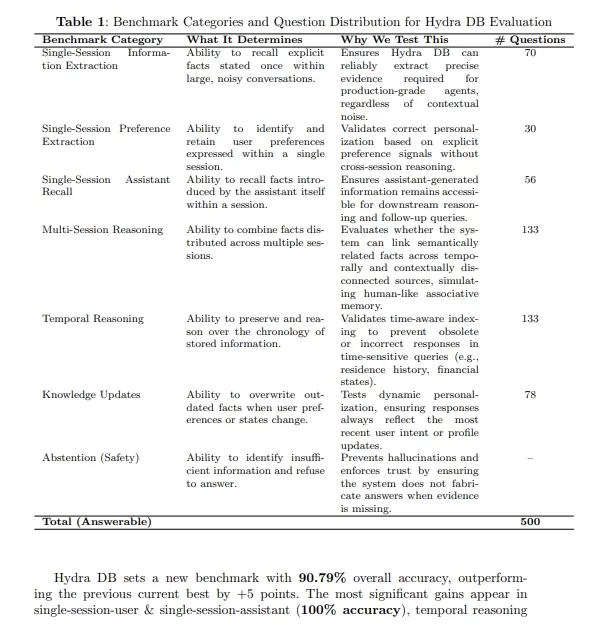
Recently, the field of AI memory technology has witnessed significant funding news. HydraDB has successfully secured $6.5 million in investment. The project openly aims to surpass traditional vector databases, offering a comprehensive upgrade to AI's long-term memory capabilities. Compared to current mainstream solutions, HydraDB employs a novel architecture designed to fundamentally address the industry's core challenge: "similarity does not equal relevance."
The Critical Flaw of Vector Databases: Similarity ≠ Relevance
The prevailing approach to AI memory involves splitting conversation content and storing it in vector databases, relying on similarity search for recall. While this method appears efficient, it often falls short in practical applications.
Real-world cases demonstrate the issue: when asked to retrieve a specific contract, an AI might return a perfectly formatted document—but one that belongs to an entirely different client. Although the similarity search finds "similar" content, it misses core contextual relevance, leading to significant inaccuracies in AI outputs.
HydraDB's Revolutionary Approach: Relationship Graph + Git-style Versioning
HydraDB moves away from fragmented storage, instead constructing an intelligent relationship graph that aligns AI memory more closely with human logic. Its core innovation is built on three key breakthroughs:
No Fragments, Only Relationships
The system avoids storing information as isolated pieces, instead capturing the relationships between entities. It can accurately connect that "you work at Company A" and "you live in New York" are part of the same person's profile, rather than treating them as separate, unrelated facts.
Append-Only Updates, Inspired by Git
When user information changes, HydraDB does not simply overwrite old data. It adopts an append-only model, similar to Git version control. If a user moves, their old address remains preserved in history, and the system retains the context for the change, preventing permanent loss of historical information.
Context-Aware Memory Entries
Each memory is stored with rich, intelligent context. For instance, if a user states, "I dislike that framework," the system intelligently contextualizes this as "the user dislikes React." This ensures accurate understanding in subsequent AI conversations without requiring manual clarification.
The Dawn of an AI Memory Revolution
Industry observers note that HydraDB's innovation directly tackles the structural limitations of vector databases. It is poised to deliver a transformative leap for AI assistants, personal knowledge bases, and enterprise RAG systems. AIbase will continue to follow HydraDB's product developments and technological progress—stay tuned for further groundbreaking updates.
Paper Link: https://research.hydradb.com/cortex.pdf
Related article
 Anthropic Expands Claude AI Coding Tools to Japan in Push for Overseas Growth
Anthropic, a prominent U.S. artificial intelligence firm, is intensifying its global outreach. On Wednesday, the company hosted a major developer gathering, "Code with Claude," in Tokyo, drawing close to 500 software engineers. This initiative seeks
India’s Software Giant Cuts Hiring, Promises No Layoffs as AI Agents Scale Up
As artificial intelligence reshapes traditional labor-intensive business models, Tata Consultancy Services (TCS), a premier Indian software outsourcing firm, has unveiled its strategic response. During Tuesday’s annual general meeting, the chairman o
China Locks AI Models During Gaokam to Block Instant Homework Help
With the 2026 Gaokao fast approaching, rumors regarding the suspension of AI tools during the exam period have ignited intense online debate. In response to public concern, major AI platforms and educational apps have clarified their stance: rather t
Related Special Topic Recommendations
Design & Art
Anthropic Expands Claude AI Coding Tools to Japan in Push for Overseas Growth
Anthropic, a prominent U.S. artificial intelligence firm, is intensifying its global outreach. On Wednesday, the company hosted a major developer gathering, "Code with Claude," in Tokyo, drawing close to 500 software engineers. This initiative seeks
India’s Software Giant Cuts Hiring, Promises No Layoffs as AI Agents Scale Up
As artificial intelligence reshapes traditional labor-intensive business models, Tata Consultancy Services (TCS), a premier Indian software outsourcing firm, has unveiled its strategic response. During Tuesday’s annual general meeting, the chairman o
China Locks AI Models During Gaokam to Block Instant Homework Help
With the 2026 Gaokao fast approaching, rumors regarding the suspension of AI tools during the exam period have ignited intense online debate. In response to public concern, major AI platforms and educational apps have clarified their stance: rather t
Related Special Topic Recommendations
Design & Art
 Best AI Style Transfer Tools for Creative Experiments
2026 Latest Best Top-rated AI Style Transfer Tools for Creative Experiments! XIX.AI has curated a powerful, game-changing collection of must-try tools that deliver exceptional results through real-world tests and rigorous rankings. These top solutions help creatives boost productivity significantly by accelerating content creation and unlocking endless creative possibilities. Explore now to discover your perfect tool and start creating today!
 9 tools
 xix.ai
Comic Creation
Best AI Dialogue Bubble Tools for Visual Storytelling
xix.ai
Comic Creation
Best AI Dialogue Bubble Tools for Visual Storytelling
2026 Latest Best Top-Rated AI Dialogue Bubble Tools for Visual Storytelling are here on XIX.AI! This curated collection features powerful, game-changing tools that help creators boost productivity and overcome creative bottlenecks. Get a free vs paid comparison, see real-world tests, and check the latest rankings to find the must-try solutions perfect for crafting engaging visual narratives. Explore now to discover your ideal tool!
10 tools
xix.ai
Meeting Assistant
Top AI Meeting Summary Tools: Track Decisions and Follow-Ups Clearly
2026 Latest Top-Rated Best AI Meeting Summary Tools for Clear Decision Tracking and Effortless Follow-Ups. This curated list showcases powerful, game-changing solutions that boost productivity dramatically by automating meeting notes, identifying key action items, and streamlining team coordination across all projects. Get a free vs paid comparison along with real-world tests and weekly updated rankings to help you find the perfect tool. Explore now to unlock your AI edge!
9 tools
xix.ai
Data Analysis
Best AI Data Cleaning Tools: Fix Missing Values and Duplicates Fast
2026 Latest Best Top-rated AI Data Cleaning Tools for quick fixing of missing values and duplicates. This curated list showcases powerful, game-changing solutions that boost productivity significantly. Each option has undergone rigorous real-world tests to ensure reliability. Get a free vs paid comparison and discover the must-try tool that fits your needs best. Explore now at XIX.AI to Unlock your AI edge.
11 tools
xix.ai
Design & Art
Best AI Creative Ideation Tools for Artists: Break Through Visual Blocks
2026 Latest Best Top-Rated AI Creative Ideation Tools for Artists are curated by XIX.AI to help creators break through visual blocks and boost creativity instantly. These powerful game-changing tools offer real-world tests, detailed free vs paid comparison, and weekly updated rankings. Discover your perfect tool to accelerate content creation and unlock your AI edge today. Explore now!
14 tools
xix.ai
Music composition
AI Beat Makers for TikTok Background Tracks, Reels Audio, and Creator Promo Music
2026 Latest Best AI Beat Makers for TikTok Background Tracks, Reels Audio, and Creator Promo Music! XIX.AI has curated a top-rated list of powerful game-changing tools that go through real-world tests to deliver flawless music for every content need. You’ll find detailed free vs paid comparison data, weekly updated rankings, and must-try options to help you boost creativity and productivity. Explore now to discover your perfect tool!
11 tools
xix.ai

 Comments (0)
0/500
Comments (0)
0/500
Recently, the field of AI memory technology has witnessed significant funding news. HydraDB has successfully secured $6.5 million in investment. The project openly aims to surpass traditional vector databases, offering a comprehensive upgrade to AI's long-term memory capabilities. Compared to current mainstream solutions, HydraDB employs a novel architecture designed to fundamentally address the industry's core challenge: "similarity does not equal relevance."
The Critical Flaw of Vector Databases: Similarity ≠ Relevance
The prevailing approach to AI memory involves splitting conversation content and storing it in vector databases, relying on similarity search for recall. While this method appears efficient, it often falls short in practical applications.
Real-world cases demonstrate the issue: when asked to retrieve a specific contract, an AI might return a perfectly formatted document—but one that belongs to an entirely different client. Although the similarity search finds "similar" content, it misses core contextual relevance, leading to significant inaccuracies in AI outputs.
HydraDB's Revolutionary Approach: Relationship Graph + Git-style Versioning
HydraDB moves away from fragmented storage, instead constructing an intelligent relationship graph that aligns AI memory more closely with human logic. Its core innovation is built on three key breakthroughs:
No Fragments, Only Relationships
The system avoids storing information as isolated pieces, instead capturing the relationships between entities. It can accurately connect that "you work at Company A" and "you live in New York" are part of the same person's profile, rather than treating them as separate, unrelated facts.
Append-Only Updates, Inspired by Git
When user information changes, HydraDB does not simply overwrite old data. It adopts an append-only model, similar to Git version control. If a user moves, their old address remains preserved in history, and the system retains the context for the change, preventing permanent loss of historical information.
Context-Aware Memory Entries
Each memory is stored with rich, intelligent context. For instance, if a user states, "I dislike that framework," the system intelligently contextualizes this as "the user dislikes React." This ensures accurate understanding in subsequent AI conversations without requiring manual clarification.
The Dawn of an AI Memory Revolution
Industry observers note that HydraDB's innovation directly tackles the structural limitations of vector databases. It is poised to deliver a transformative leap for AI assistants, personal knowledge bases, and enterprise RAG systems. AIbase will continue to follow HydraDB's product developments and technological progress—stay tuned for further groundbreaking updates.
Paper Link: https://research.hydradb.com/cortex.pdf








 Anthropic Expands Claude AI Coding Tools to Japan in Push for Overseas Growth
Anthropic, a prominent U.S. artificial intelligence firm, is intensifying its global outreach. On Wednesday, the company hosted a major developer gathering, "Code with Claude," in Tokyo, drawing close to 500 software engineers. This initiative seeks
Anthropic Expands Claude AI Coding Tools to Japan in Push for Overseas Growth
Anthropic, a prominent U.S. artificial intelligence firm, is intensifying its global outreach. On Wednesday, the company hosted a major developer gathering, "Code with Claude," in Tokyo, drawing close to 500 software engineers. This initiative seeks
 India’s Software Giant Cuts Hiring, Promises No Layoffs as AI Agents Scale Up
As artificial intelligence reshapes traditional labor-intensive business models, Tata Consultancy Services (TCS), a premier Indian software outsourcing firm, has unveiled its strategic response. During Tuesday’s annual general meeting, the chairman o
India’s Software Giant Cuts Hiring, Promises No Layoffs as AI Agents Scale Up
As artificial intelligence reshapes traditional labor-intensive business models, Tata Consultancy Services (TCS), a premier Indian software outsourcing firm, has unveiled its strategic response. During Tuesday’s annual general meeting, the chairman o
 China Locks AI Models During Gaokam to Block Instant Homework Help
With the 2026 Gaokao fast approaching, rumors regarding the suspension of AI tools during the exam period have ignited intense online debate. In response to public concern, major AI platforms and educational apps have clarified their stance: rather t
China Locks AI Models During Gaokam to Block Instant Homework Help
With the 2026 Gaokao fast approaching, rumors regarding the suspension of AI tools during the exam period have ignited intense online debate. In response to public concern, major AI platforms and educational apps have clarified their stance: rather t

2026 Latest Best Top-rated AI Style Transfer Tools for Creative Experiments! XIX.AI has curated a powerful, game-changing collection of must-try tools that deliver exceptional results through real-world tests and rigorous rankings. These top solutions help creatives boost productivity significantly by accelerating content creation and unlocking endless creative possibilities. Explore now to discover your perfect tool and start creating today!
9 tools
xix.ai

2026 Latest Best Top-Rated AI Dialogue Bubble Tools for Visual Storytelling are here on XIX.AI! This curated collection features powerful, game-changing tools that help creators boost productivity and overcome creative bottlenecks. Get a free vs paid comparison, see real-world tests, and check the latest rankings to find the must-try solutions perfect for crafting engaging visual narratives. Explore now to discover your ideal tool!
10 tools
xix.ai
2026 Latest Top-Rated Best AI Meeting Summary Tools for Clear Decision Tracking and Effortless Follow-Ups. This curated list showcases powerful, game-changing solutions that boost productivity dramatically by automating meeting notes, identifying key action items, and streamlining team coordination across all projects. Get a free vs paid comparison along with real-world tests and weekly updated rankings to help you find the perfect tool. Explore now to unlock your AI edge!
9 tools
xix.ai

2026 Latest Best Top-rated AI Data Cleaning Tools for quick fixing of missing values and duplicates. This curated list showcases powerful, game-changing solutions that boost productivity significantly. Each option has undergone rigorous real-world tests to ensure reliability. Get a free vs paid comparison and discover the must-try tool that fits your needs best. Explore now at XIX.AI to Unlock your AI edge.
11 tools
xix.ai

2026 Latest Best Top-Rated AI Creative Ideation Tools for Artists are curated by XIX.AI to help creators break through visual blocks and boost creativity instantly. These powerful game-changing tools offer real-world tests, detailed free vs paid comparison, and weekly updated rankings. Discover your perfect tool to accelerate content creation and unlock your AI edge today. Explore now!
14 tools
xix.ai

2026 Latest Best AI Beat Makers for TikTok Background Tracks, Reels Audio, and Creator Promo Music! XIX.AI has curated a top-rated list of powerful game-changing tools that go through real-world tests to deliver flawless music for every content need. You’ll find detailed free vs paid comparison data, weekly updated rankings, and must-try options to help you boost creativity and productivity. Explore now to discover your perfect tool!
11 tools
xix.ai












